A mega-mall with few shoppers: the unfulfilled promise of Tbilisi’s Hualing Sea Plaza
Georgia gave Hualing extraordinary privileges, but what did the public get?
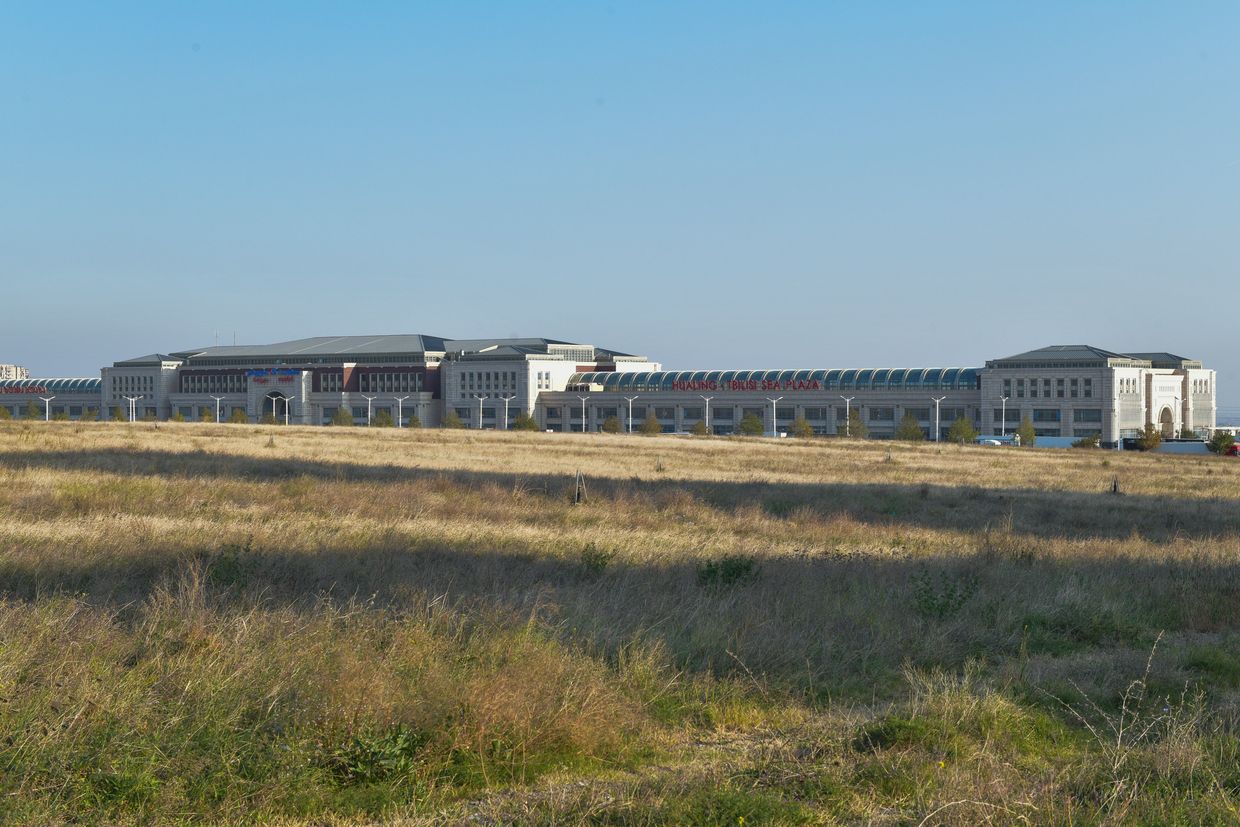
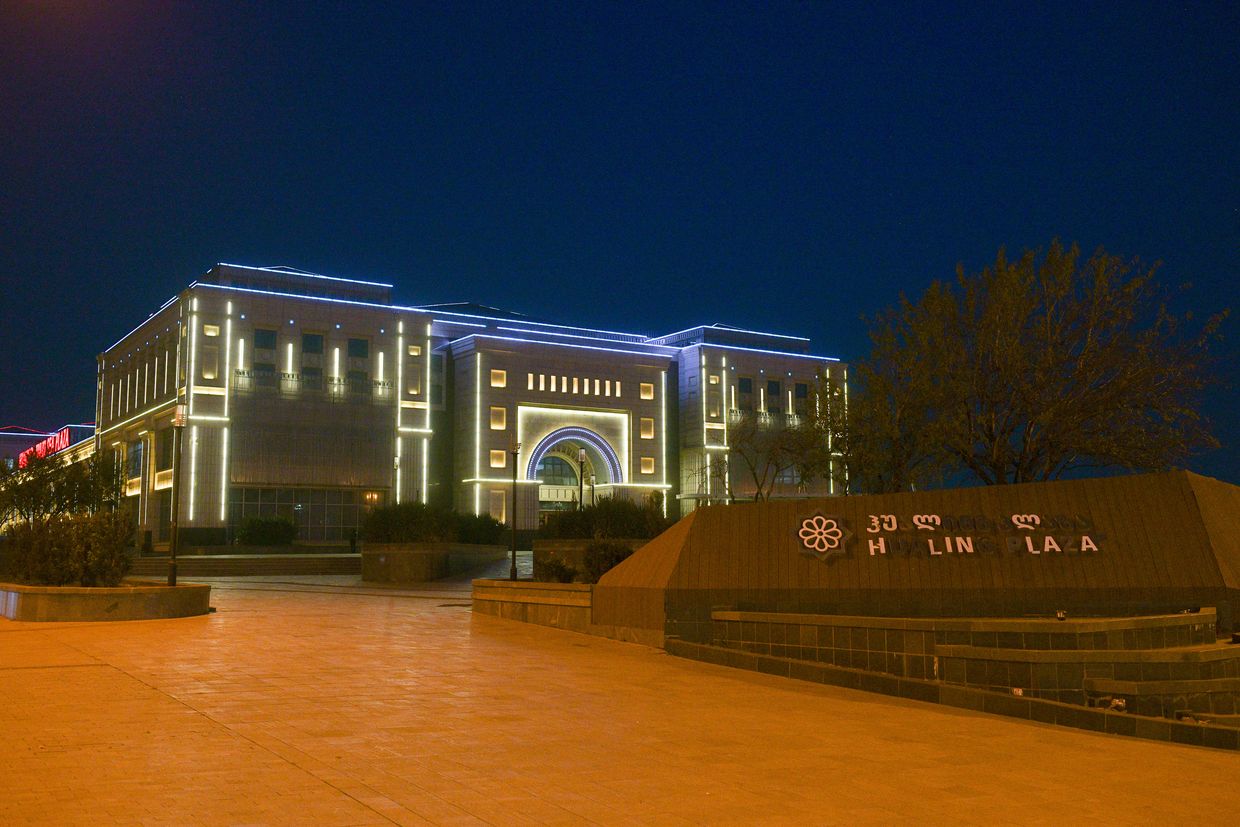
On the eastern outskirts of Tbilisi, in the vast open space between the city and the southern tip of the Tbilisi Sea reservoir, lies a long, five-floor shopping centre. There are no big brand names or flashy advertisements on its arches. Without a Carrefour supermarket sign, the unsuspecting driver — the mall stands on the highway — might not even guess that Hualing Tbilisi Sea Plaza, or simply Hualing, as Tbilisi residents call it, is in fact a mall.
Opened in 2017, five years after Hualing Group agreed to fund and build the infrastructure for the European Youth Summer Olympic Festival (EYOF 2015), the Hualing shopping centre can be considered the aftermath project of the large-scale international event, a mall that today sees few customers in proportion to its immense size.
After winning the bid to host the EYOF 2015, the government of Georgia sought a partner to build the Olympic village for the young athletes. Who they found was the Hualing Group, established in 1988 in Urumqi, China, and which already had operations in Georgia, and has significantly expanded since. Currently, Hualing are involved in multiple building projects, own a prestigious private school in Tbilisi, and hold a controlling stake in one of Georgia’s oldest banks, Bazisbanki. As for the mall, the 100% owner on paper is the Hualing International Special Economic Zone JSC. The ‘olympic’ agreement between the two ran as follows: Hualing Group builds the infrastructure for free, and in return, they retained the right to convert it into residential housing and a five-star hotel after the event — but those not were the only privileges the Chinese company received.
The project was carried out with the passing of a whole new law on ‘Supporting the Olympic movement’ that gave an investor the right to ‘enjoy preferential tax treatment provided for by the legislation of Georgia’. It also set up a Free Industrial Zone (FIZ), passing by the regulations necessary for the latter.
OC Media obtained a copy of the contract between the government and Hualing Group, which outlines that the investors recieve exemption from import duties and VAT on construction-related goods, a full VAT refund within 3–7 days on local purchases, and exemption from profit tax and dividend tax for 10 years, along with reduced and phased-in property and land taxes. These benefits apply to the development, construction, sale, and lease of project land and buildings, the operation of a five-star hotel (non-transferable to third parties), and the later conversion and sale/lease of Olympic Village apartments.
Some of the apartments were later purchased by the Georgian government and given to displaced people.
The company that operates on the Tbilisi Sea territory today is named JSC Hualing International Special Economic Zone — however, a Hualing representative told OC Media that although ‘the investment agreement provided for certain preferential conditions, these benefits have not been applicable for several years’.
‘Cities tend to use large-scale sports events to accelerate controversial or problematic projects or to get legal exceptions’, says David Gogishvili, a senior researcher in the Department of Geography and Sustainability at the University of Lausanne, who studies the impact of mega-events, including the Hualing case.
‘Chinese and Arab projects are often done in a somewhat half-hearted manner, leaving the impression that they were not important and were calculated for something else’.
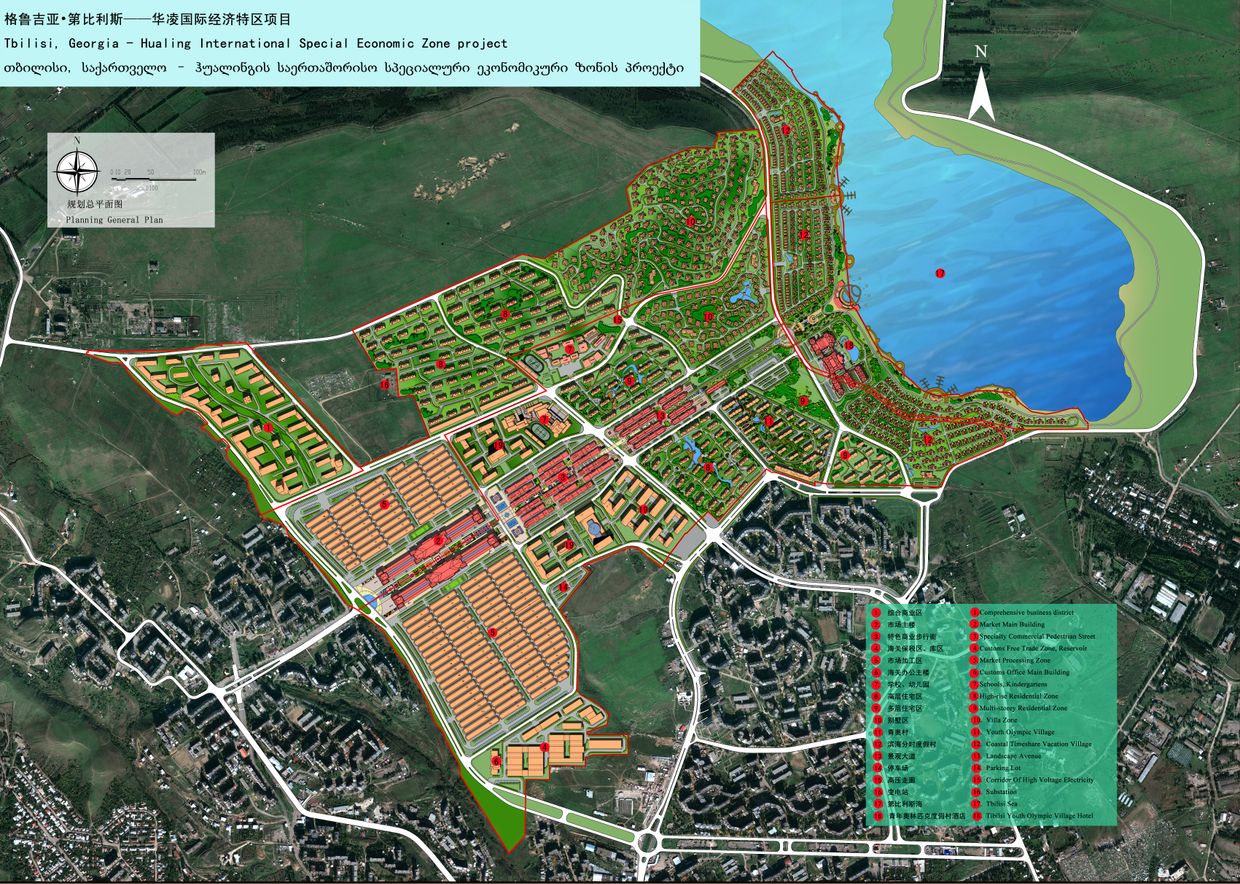
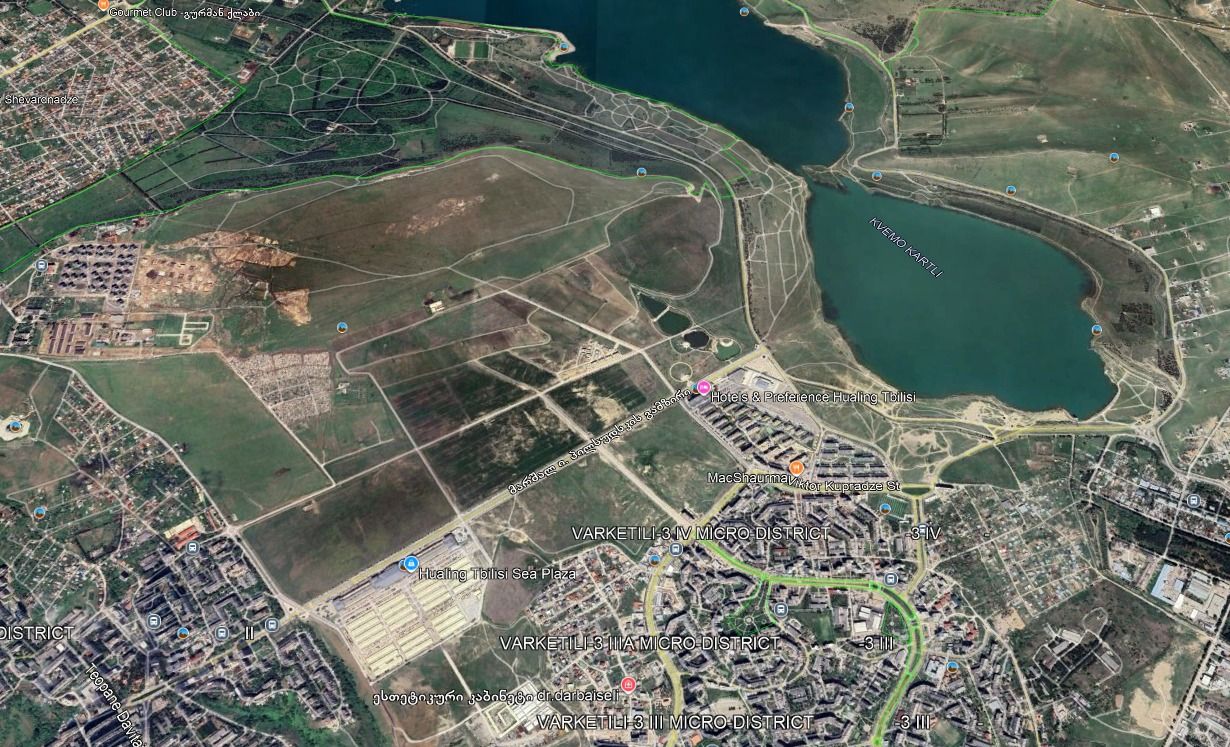
According to the company website, the total area of Tbilisi Sea Plaza is 160,000 m², the long mall structure occupying roughly one-fifth of it (another company website mentions a 110,000 m² mall area and 300,000 m² retail complex area). Upon its opening, the government bulletin listed 400 shops and a $150 million investment.
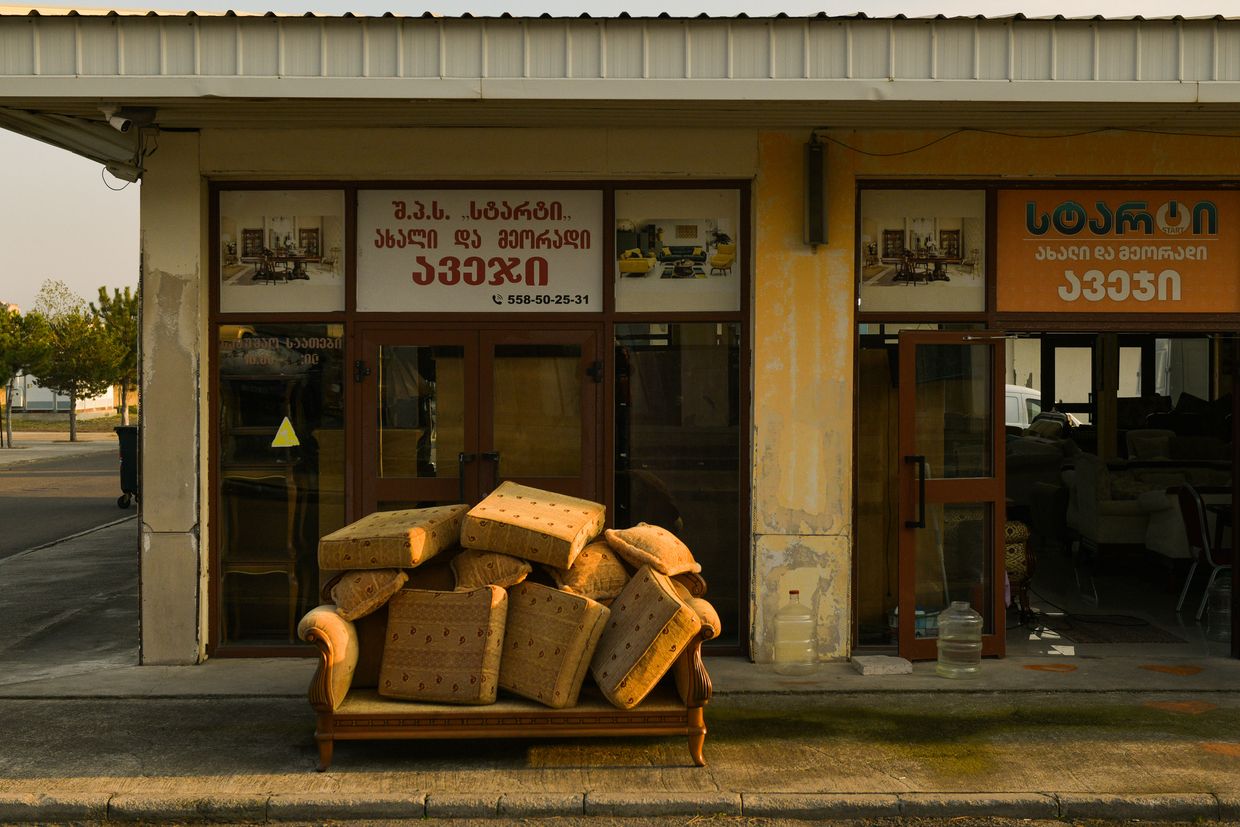
In 2021, the mall changed its concept to ‘Everything for the Home’, as executive director Tiko Maghradze announced during the opening of a Carrefour supermarket. Indeed, today, Tbilisi Sea Plaza’s Facebook page boasts over a hundred furniture stores.
Tbilisi sea plaza is easily accessible from Varketili Metro — several bus and marshutka lines end here, but the bus never comes or leaves full.
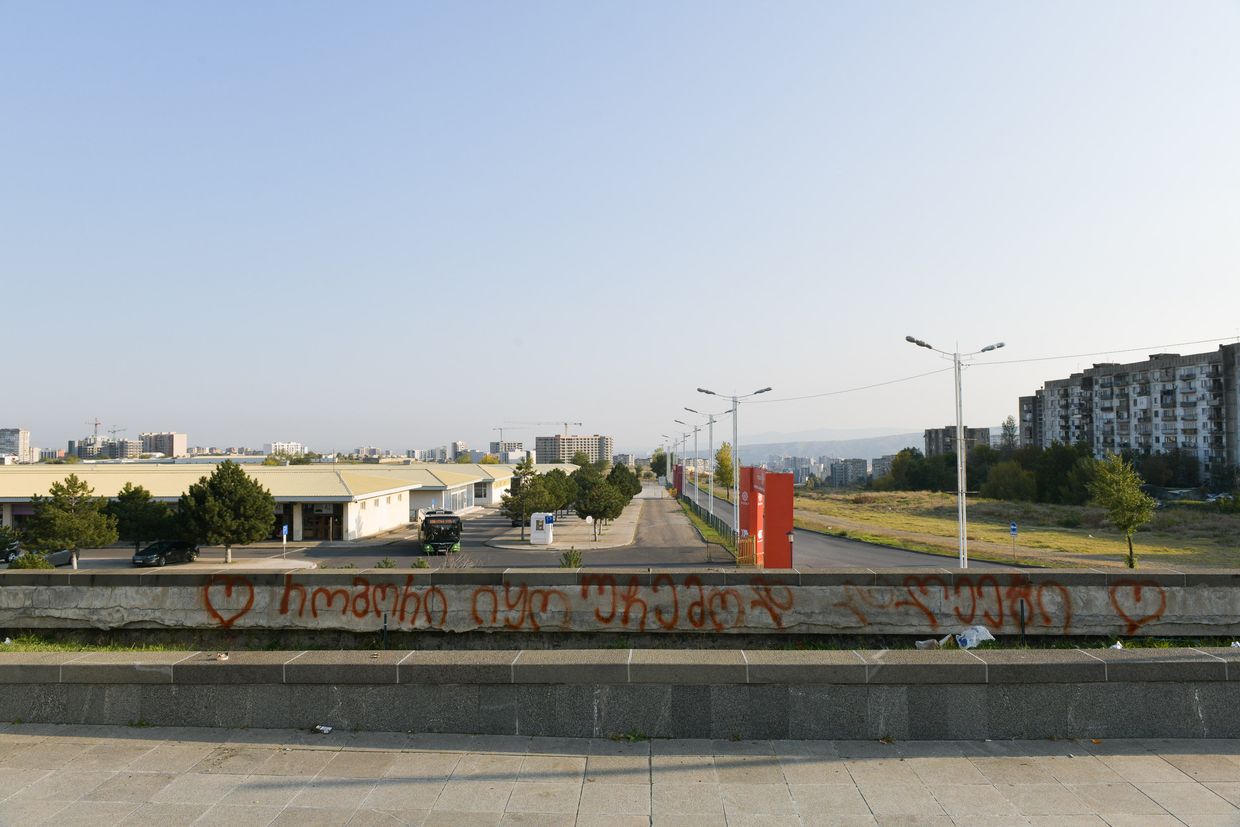
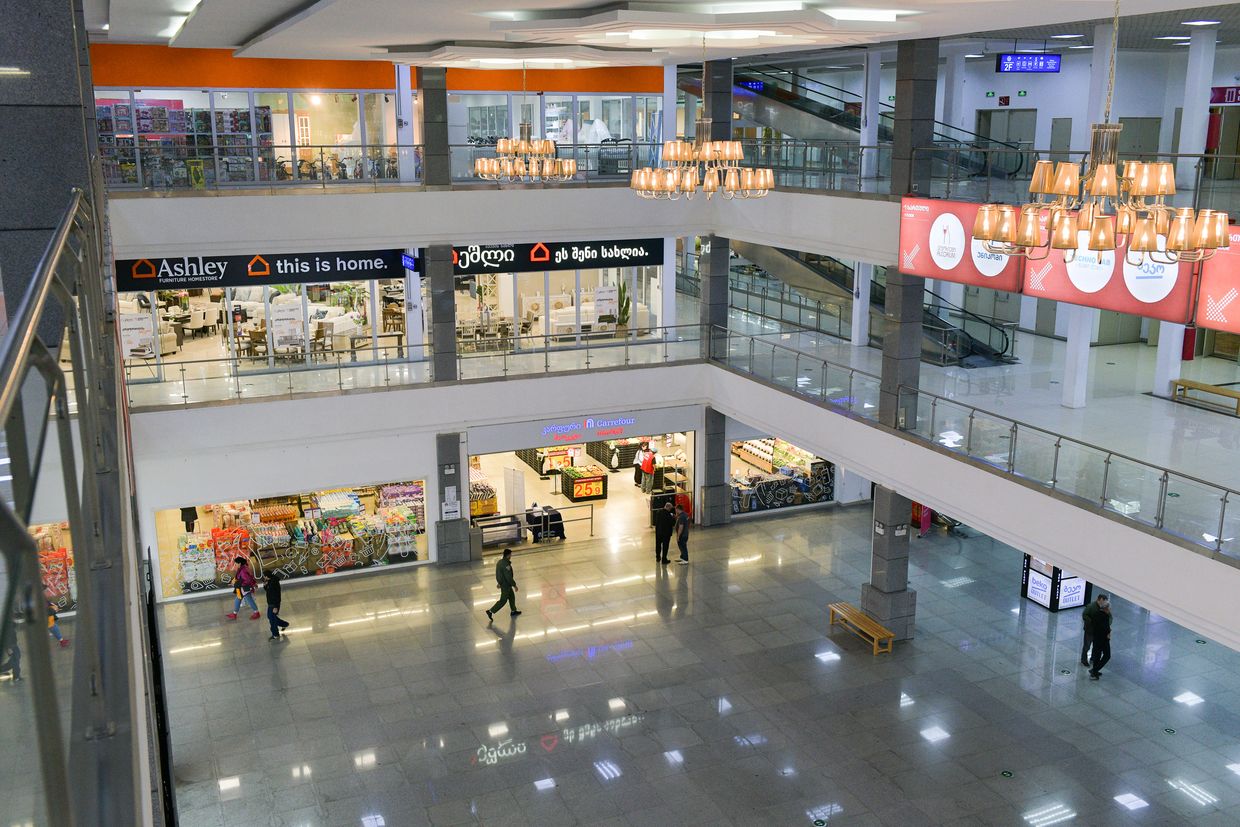
The first floor is occupied by chain stores, the Carrefour supermarket, and even a Public Service Hall. There’s a large home goods market, Mihouse, that is 100% owned by Hualing International Economic Zone, a Chinese electronics store, and a car store that ships vehicles from China — but not all brands in the mall are Chinese. For instance, the second floor furniture salons also sell Turkish, Egyptian, and Spanish brands. These salons occupy most of the space of the mall and welcome occasional customers surveying the floors.
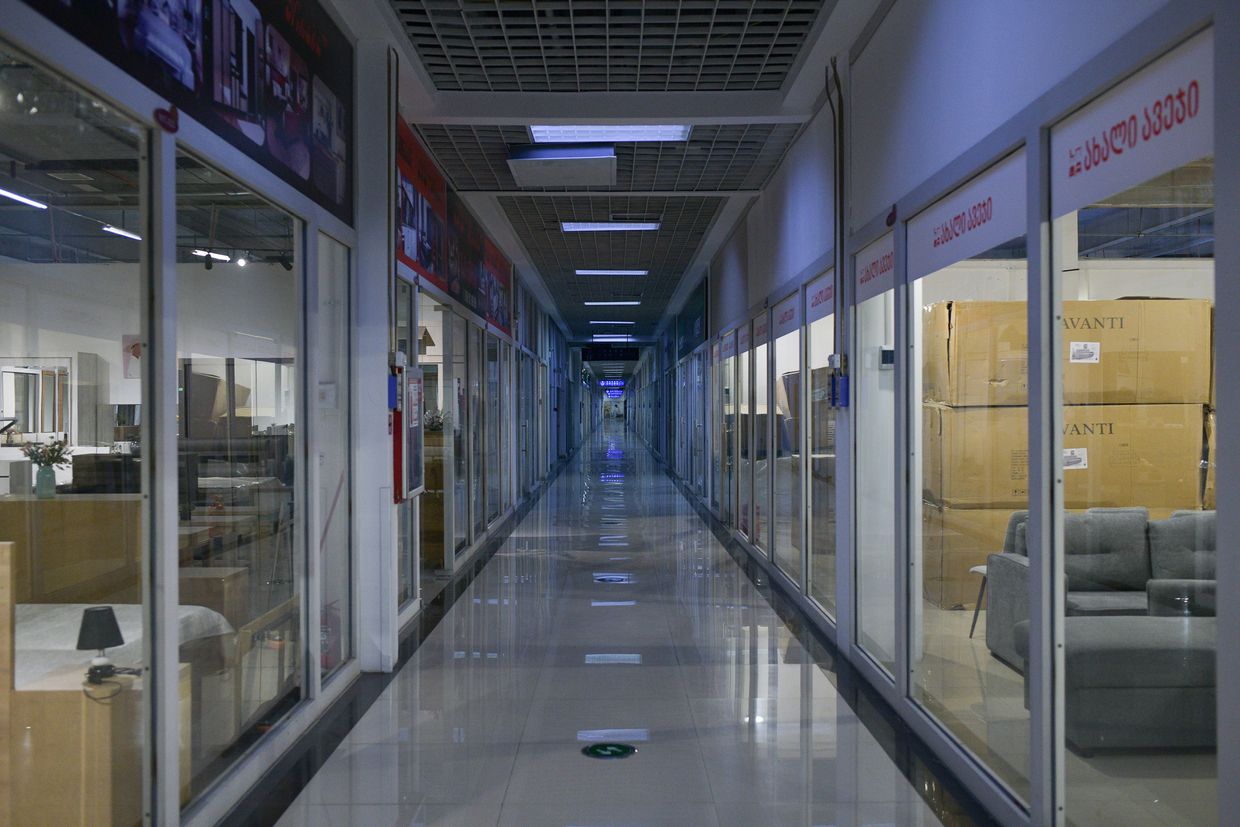
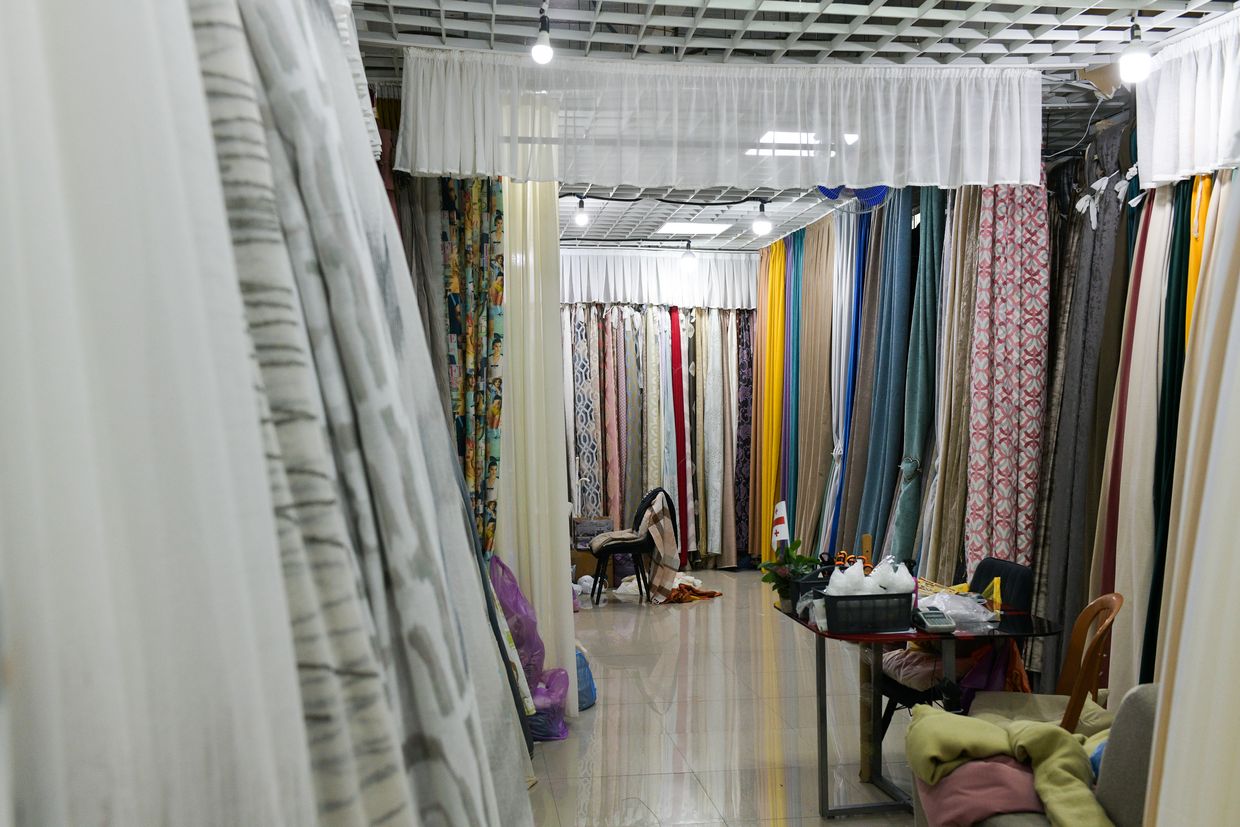
Liza Gamrkelidze, a consultant at one of the furniture salons, says that their store, as well as others around, mostly operate through online sales. Despite the convenient free parking, moderate prices, and wide selection of furniture, the mall, she says, has more potential.
‘There needs to be a marketing move’, she says, referring to Hualing at large.
The mall’s Facebook page advertises it as the ‘largest multifunctional space’ in the South Caucasus and frequently promotes different sales, but this has not translated into public engagement compared to other shopping centres in the city.
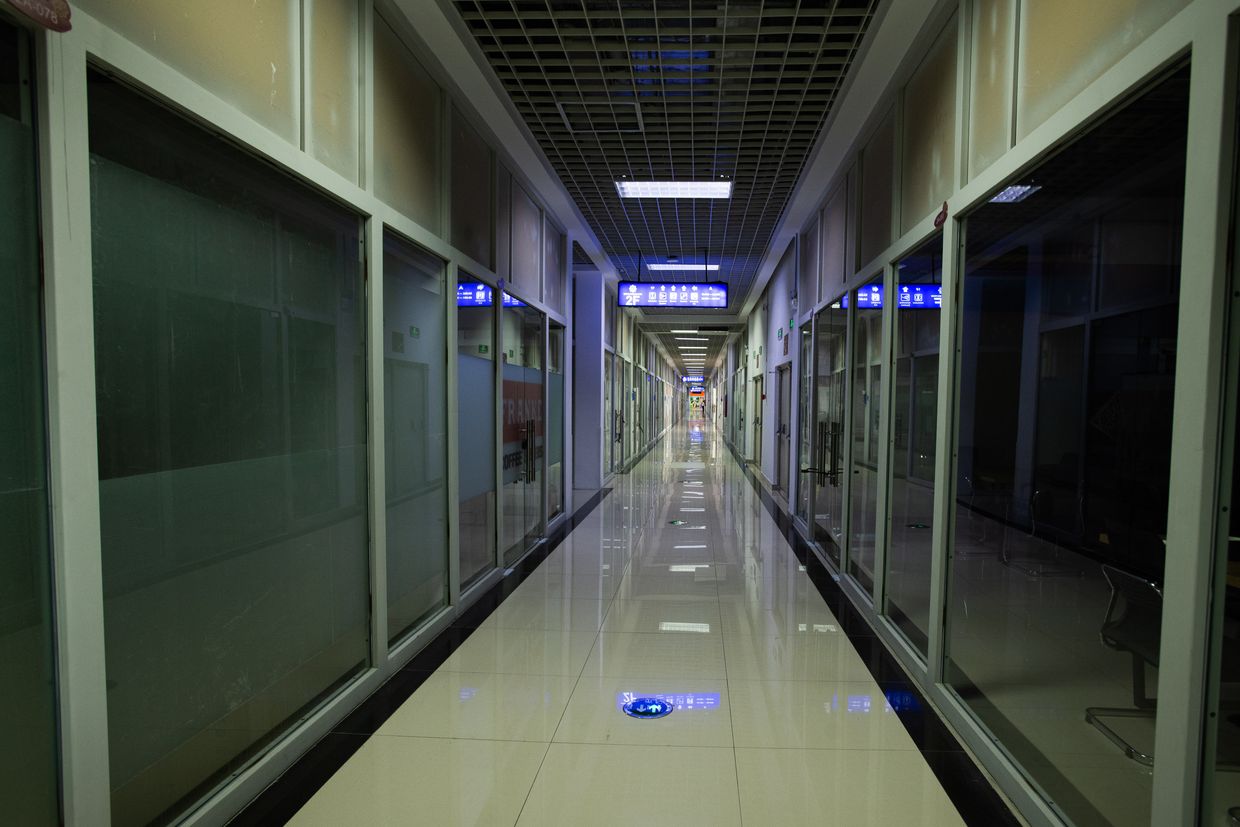
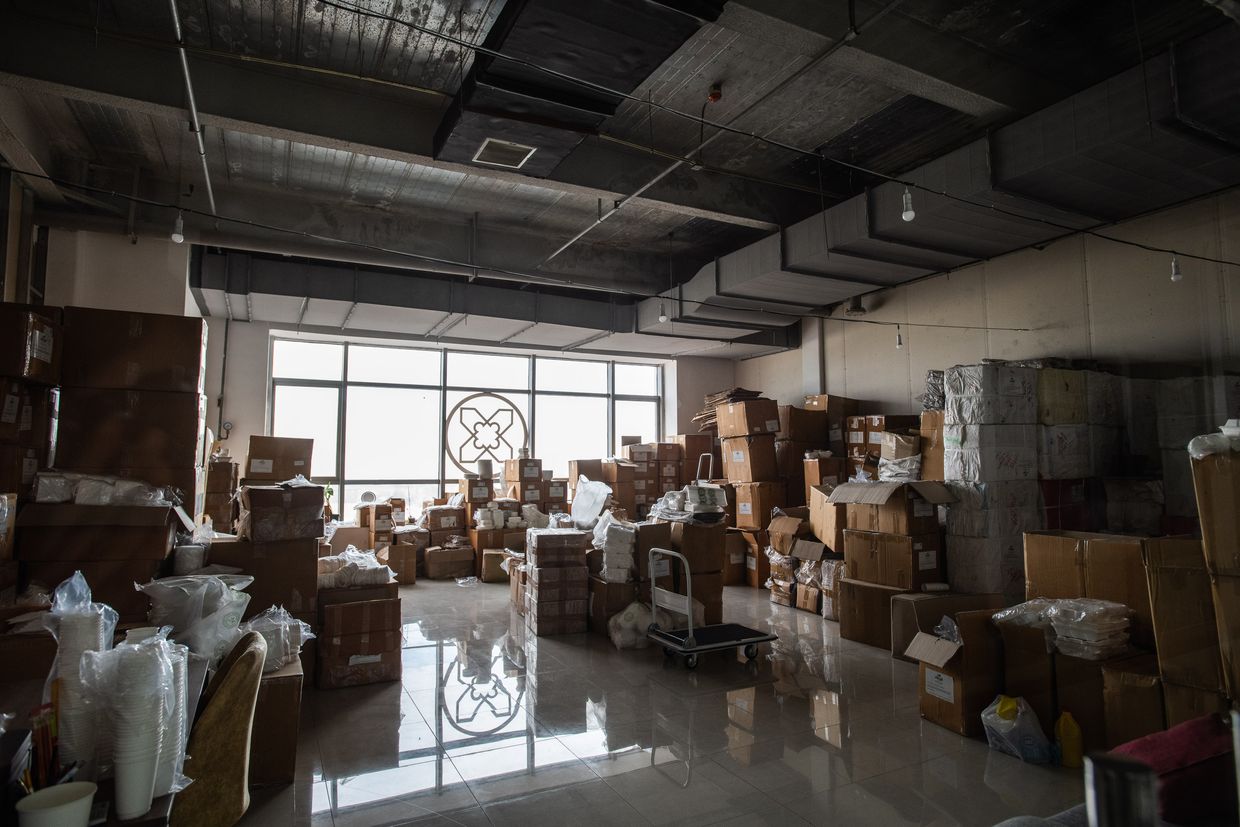
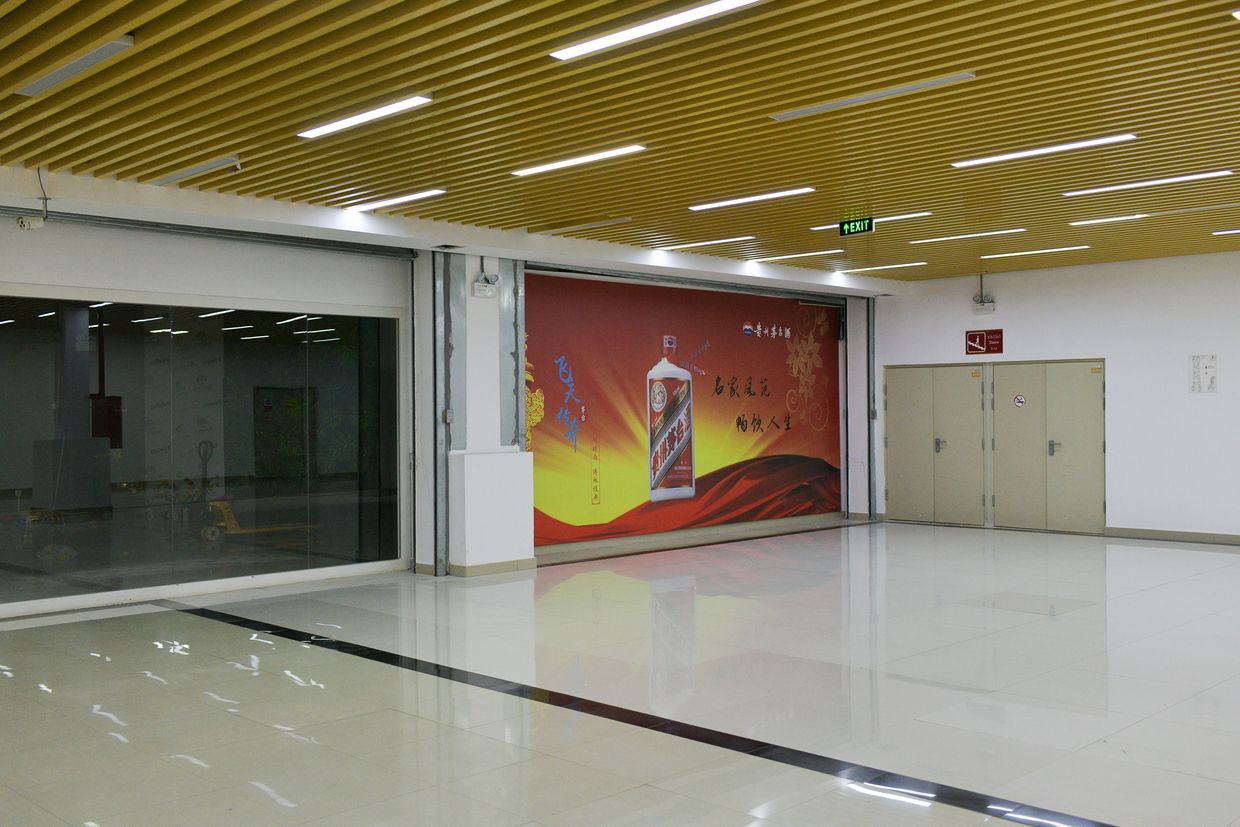
Higher up the floors start to get more and more deserted. Third-level stores are miscellaneous goods, children’s goods, and offices, often locked up or used as storage space.
Finally, the mall’s fourth floor is where events run — conferences, occasional concerts, or entertainment for children, which the shopping centre advertises on its social media. Right now, though, the event stage stands quietly in the depths of a half-darkened hall.
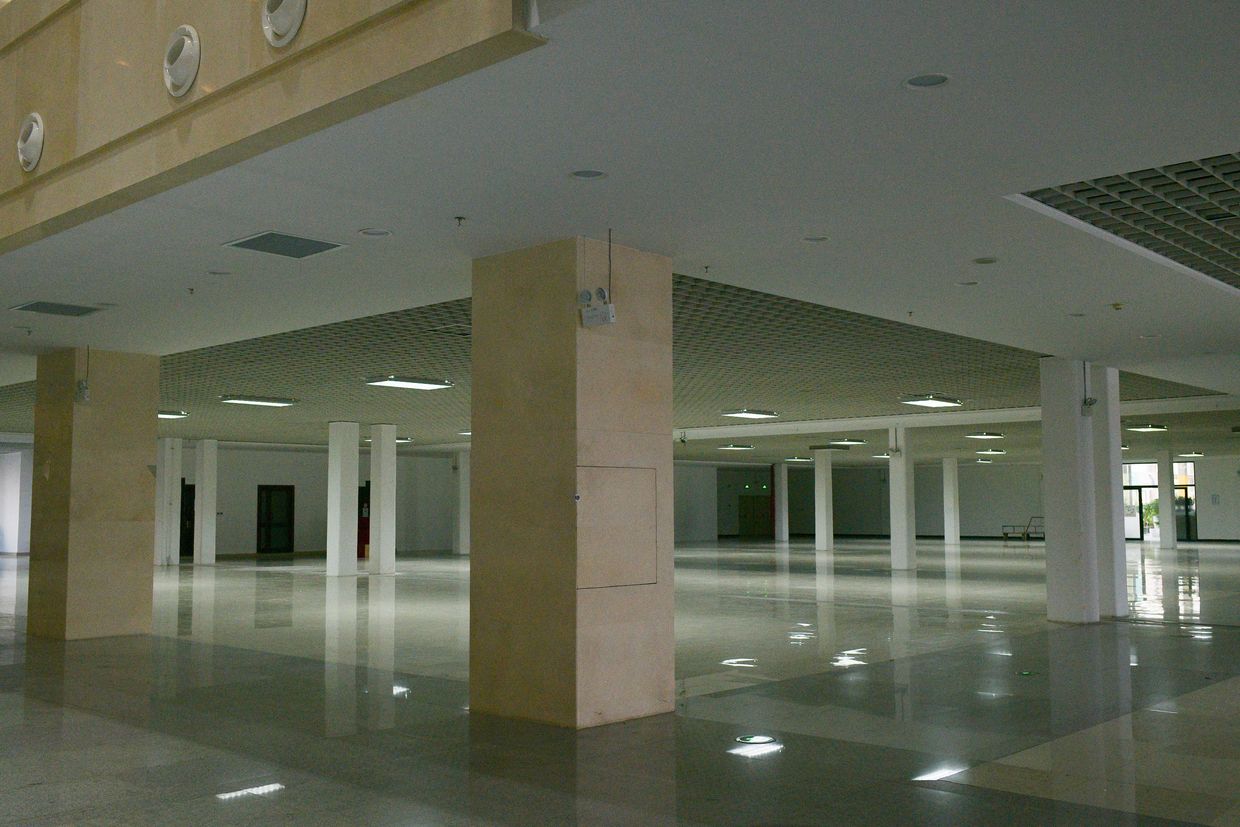
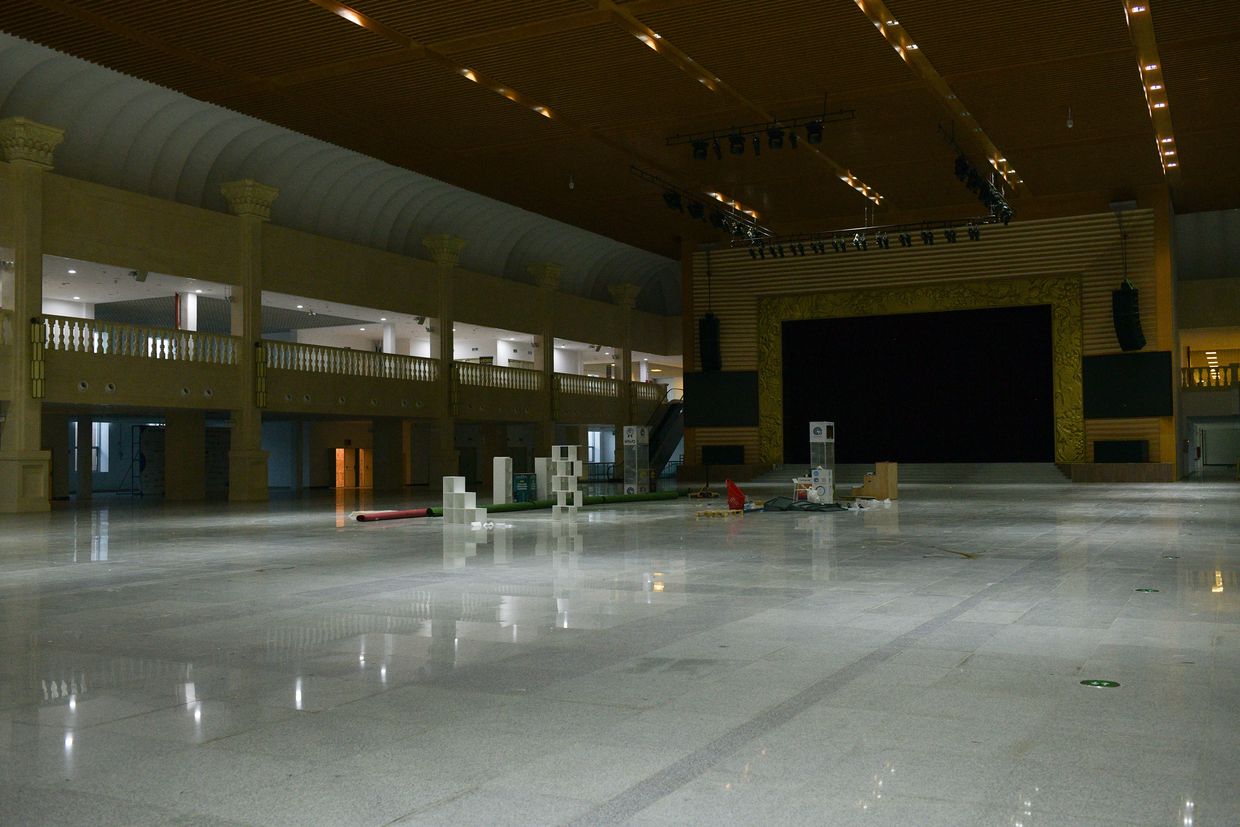
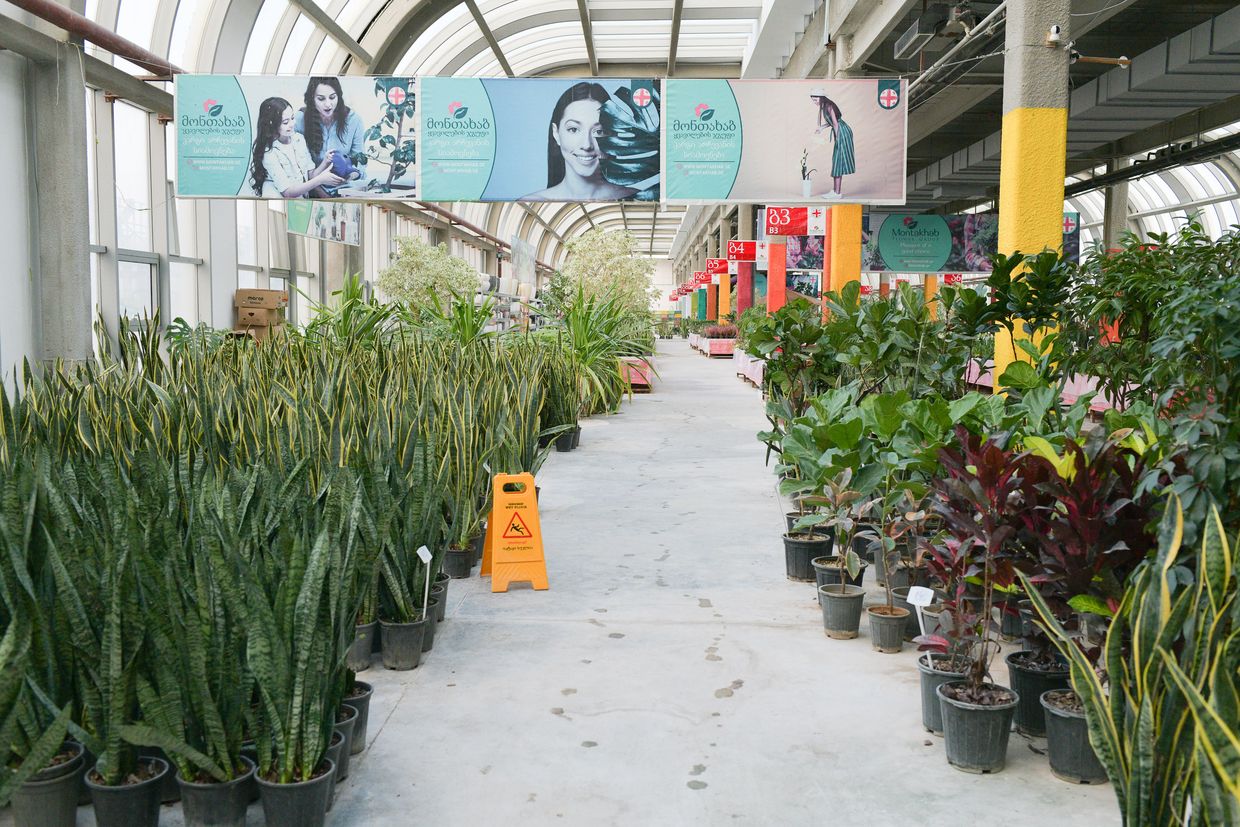
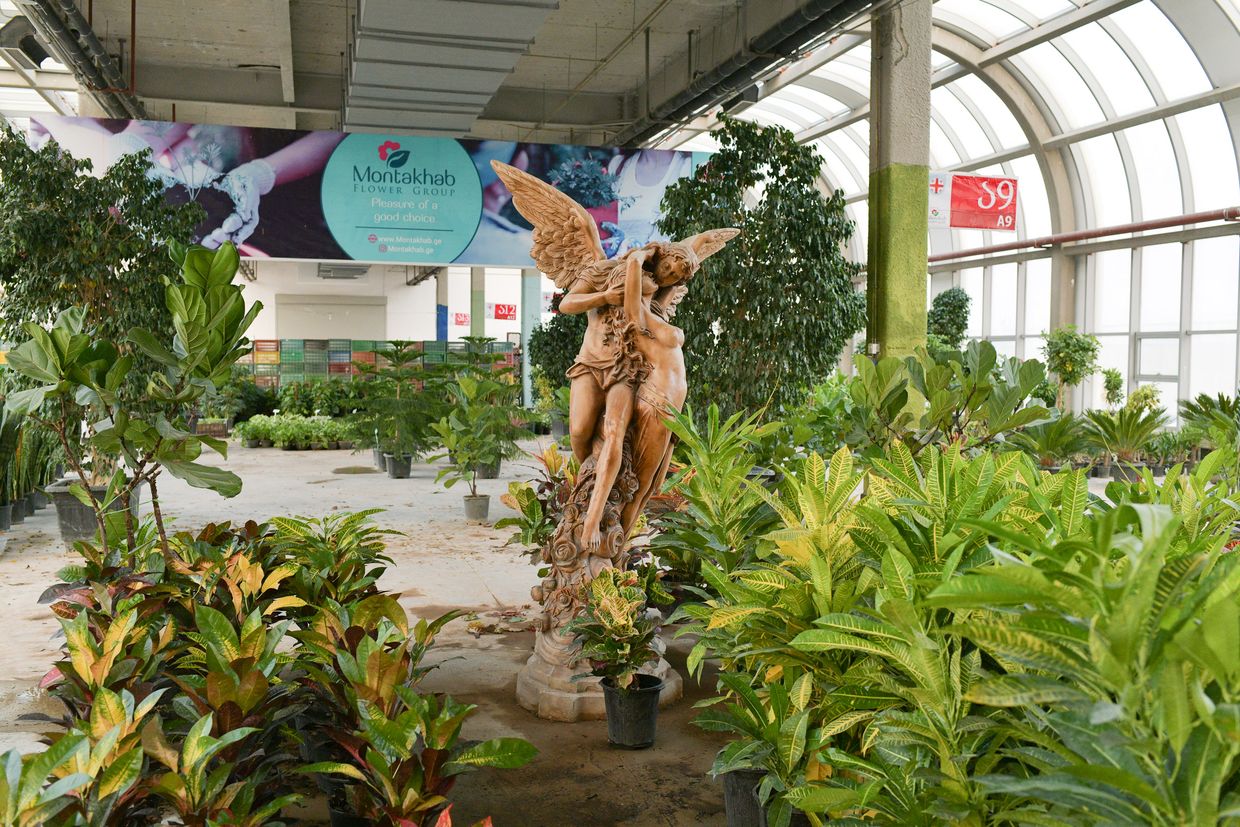
Here, unexpectedly, you also encounter the oasis of Hualing — a door to the spacious plant store Green Feel. This Iranian-owned store, too, markets itself online and, as the staff says, aims mostly at resellers from Tbilisi and the regions who buy the potted plants in bulk at a reduced price.
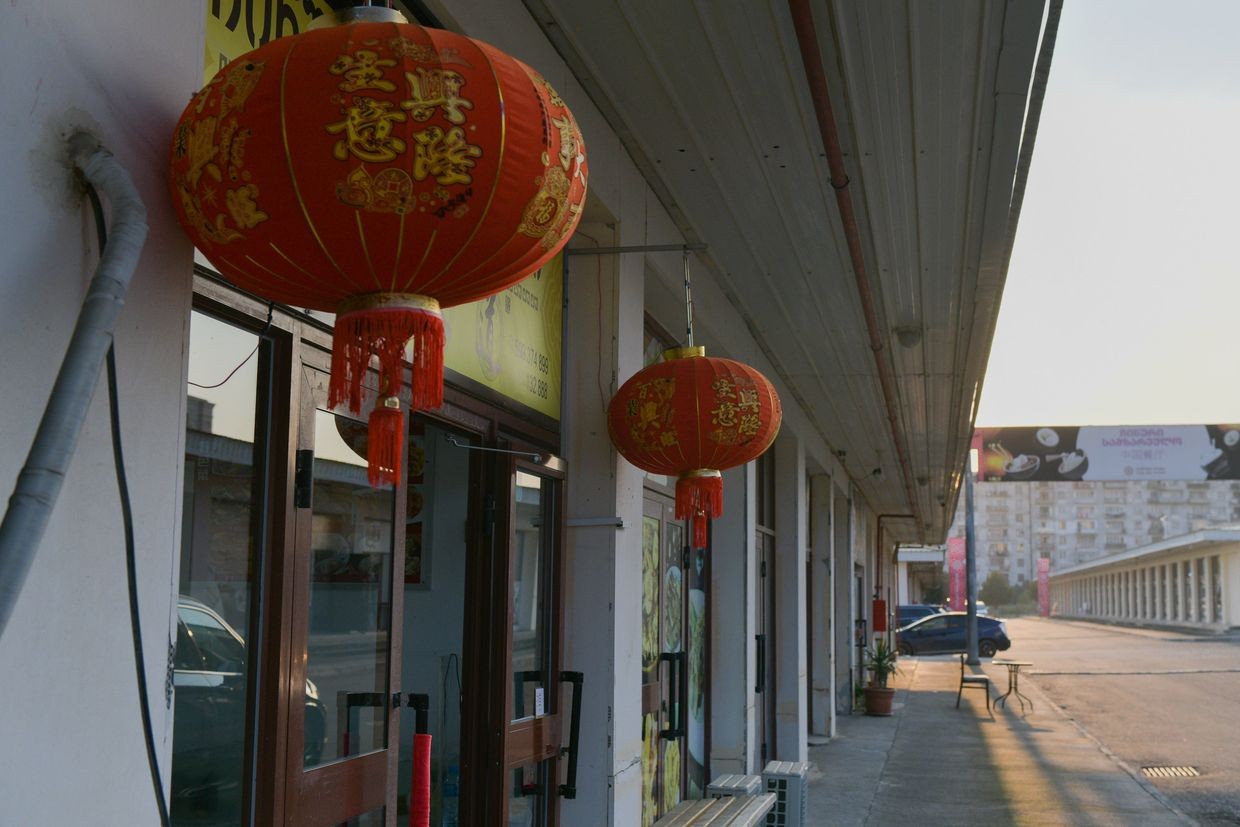
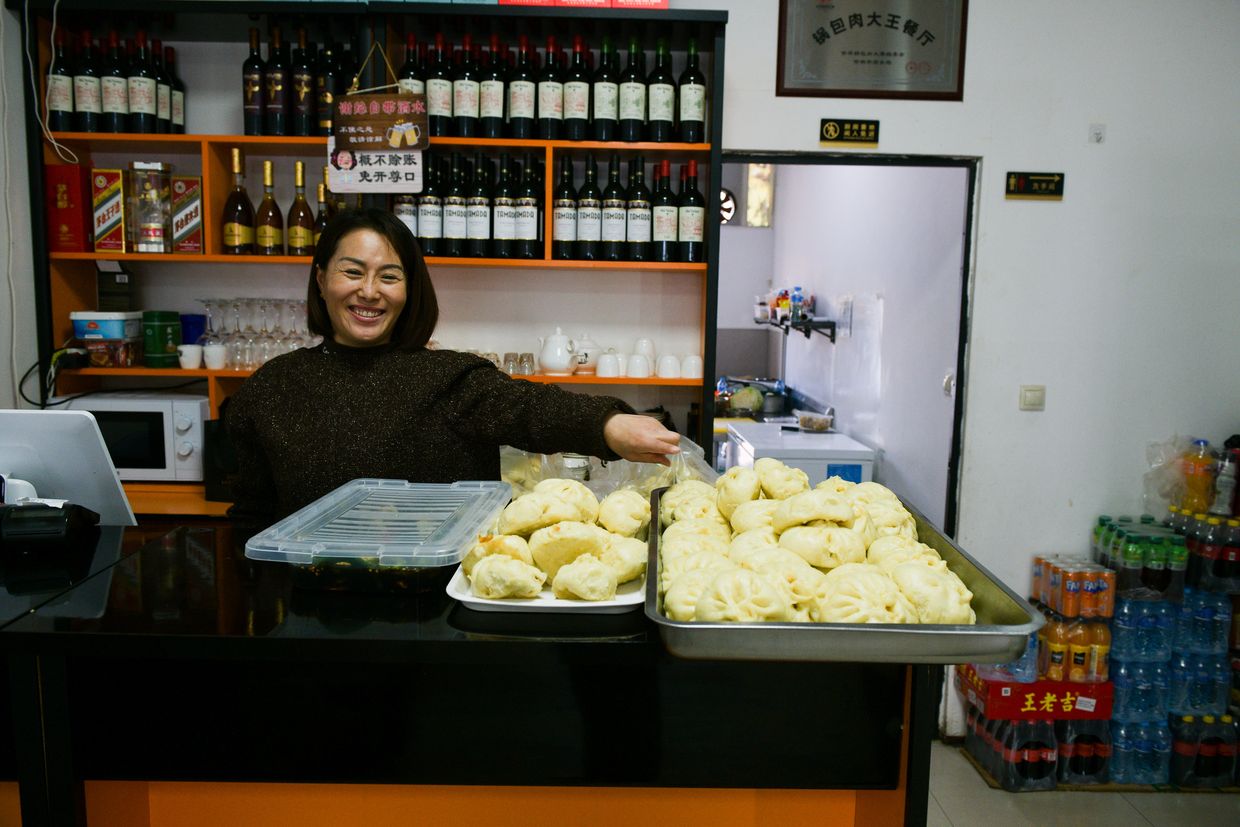
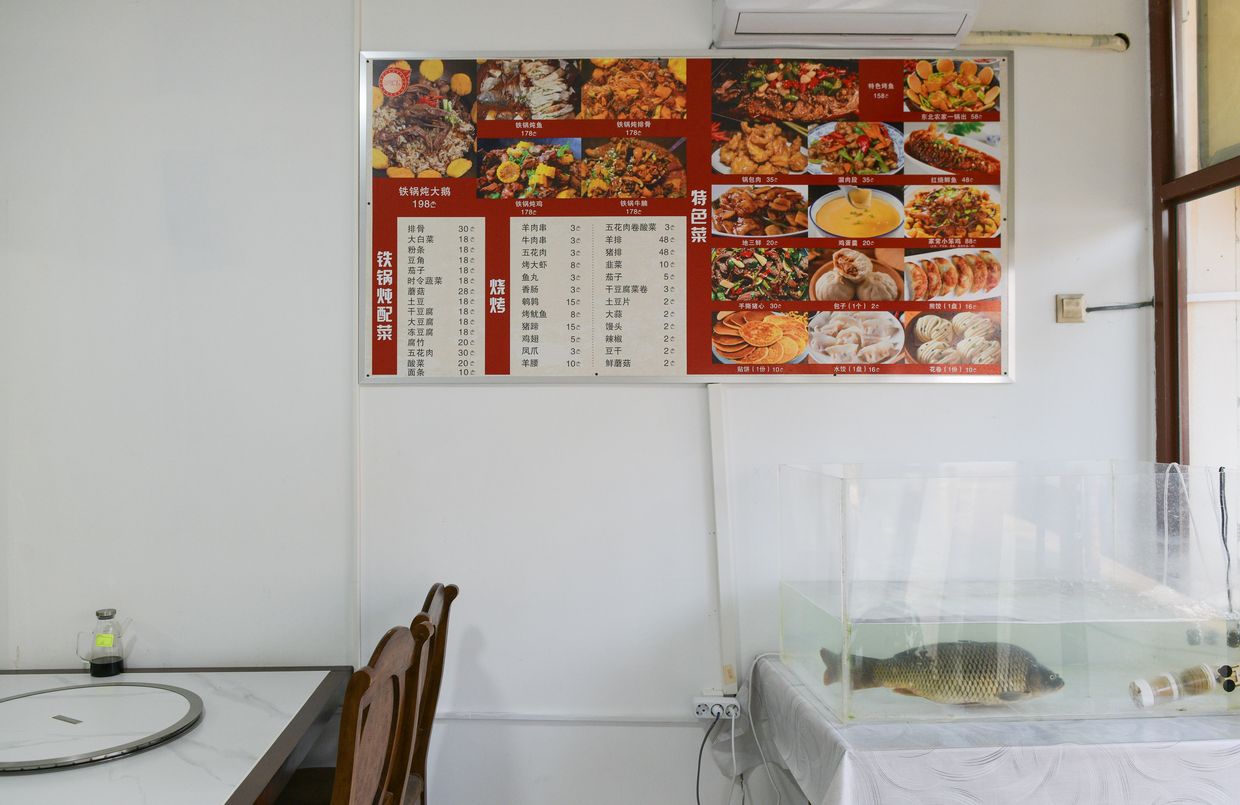
The outdoors area of the shopping centre is mostly taken up by warehouses and furniture stores. This is also where Liwen Wang has run her Chinese restaurant for the last three years, after moving to Georgia from China’s Jilin City. The restaurant serves traditional Chinese dishes, and its customers are mostly Chinese and Russian.
Local residents say that the mall can hardly compete with the nearby East Point shopping centre on the Kakheti highway or the shops around the Varketili metro station. Many use the space to walk their dogs, and children ride bikes or scooters safe from the traffic.
‘We live just nearby’, local resident Sopho Purichamiashvili says, adding that she often takes walks in Hualing’s territory with her family.
‘Varketili has amazing [public] parks, but here there’s not a lot of space to walk, so we come here, occasionally visit the Mihouse [home goods store]. But mostly we just go around the territory. This place is struggling, and they need to invite big brands to make it work better’.
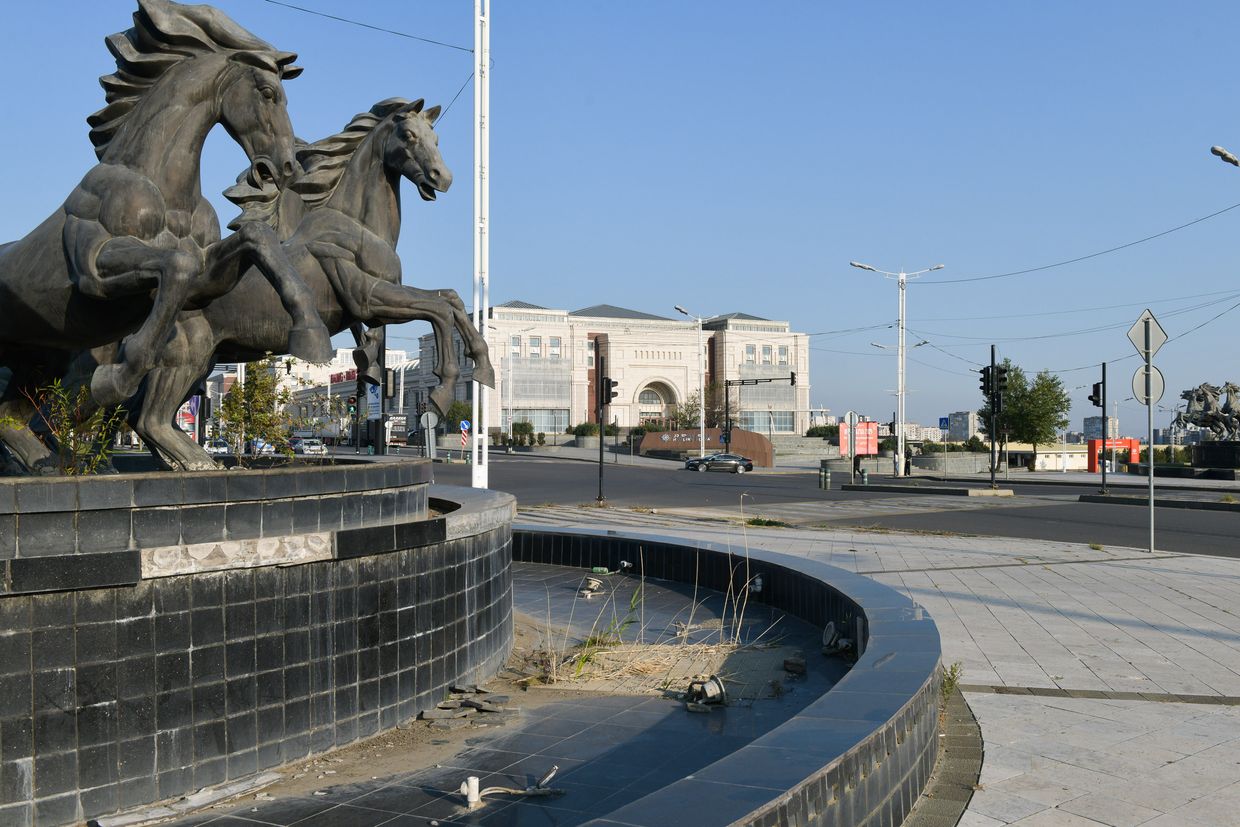
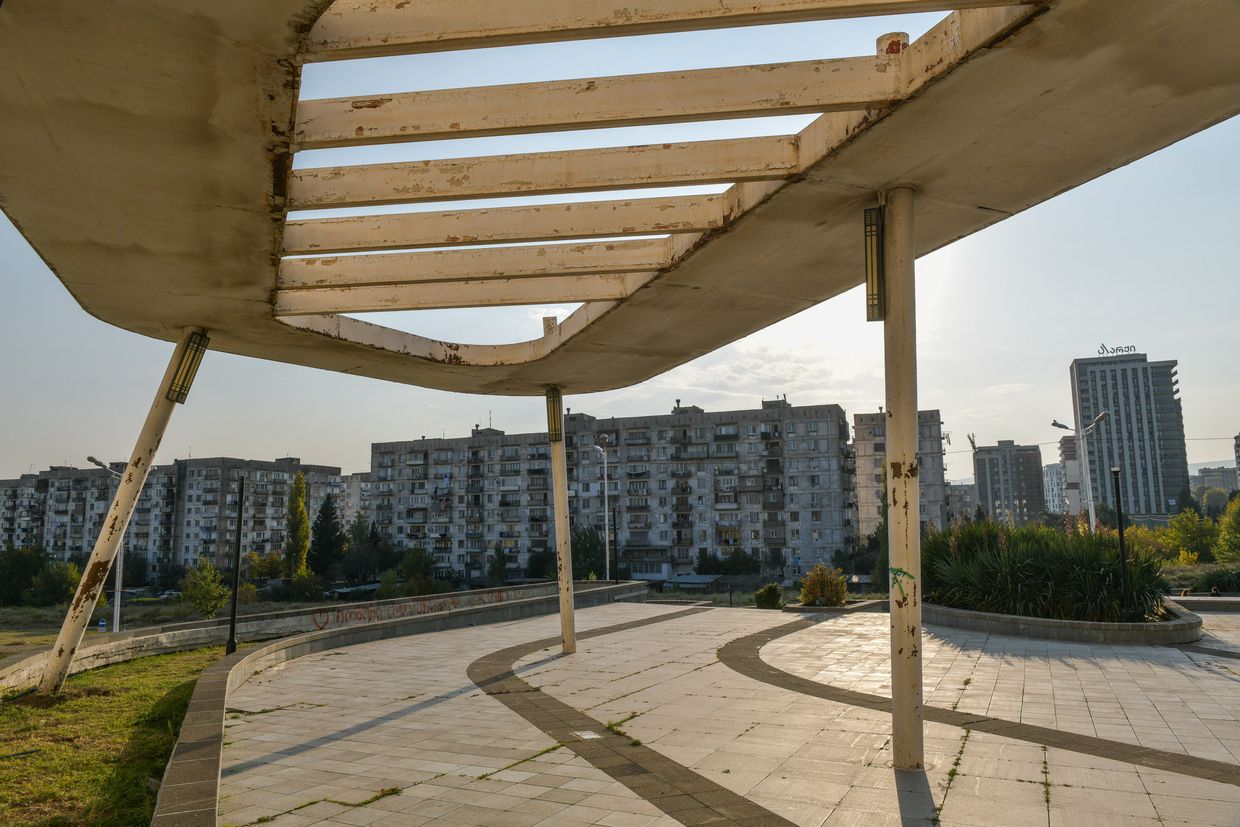
This underperformance, as Gogishvili says, is typical for megaprojects, and according to the initial project render, the Hualing Group today stands very far from its original promise — but there is no responsibility for the investor.
‘Such projects often have built-in facades or details that are there to satisfy the local authorities. In my deep belief, Hualing Mall is not in the investor’s interest at all, and by using this customs zone, China intends to move to other trade zones’, Gogishvili concludes.