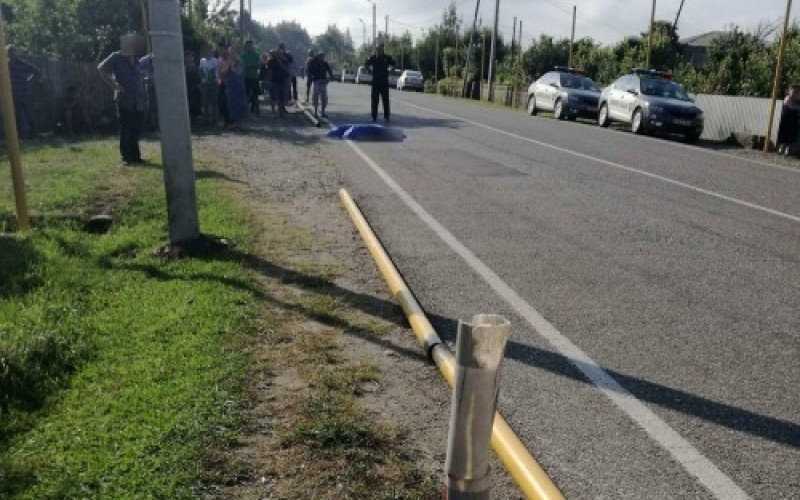
 A construction worker died in the village of Kheta, western Georgia, on 7 August after being hit by a car.
Several workers moved into the main road to avoid sparks from welding, the Georgian Public Broadcaster (GPB) quoted witnesses as saying. This is when the car hit them, leaving one injured and another dead. The injured was rushed to hospital in Kutaisi.
Police have launched an investigation for violation of traffic safety rules that results in death, which carries a possible sentence of 4–7 years in prison.
According to Netgazeti, the deceased was a 19-year-old working for a local company Construction Company Constructor 2011, which installs natural gas pipes. The company is a subcontractor of Socar Georgia.
The installation of pipes is part of a project to gasify Georgian villages.
It is not clear whether the labour safety rules were violated.
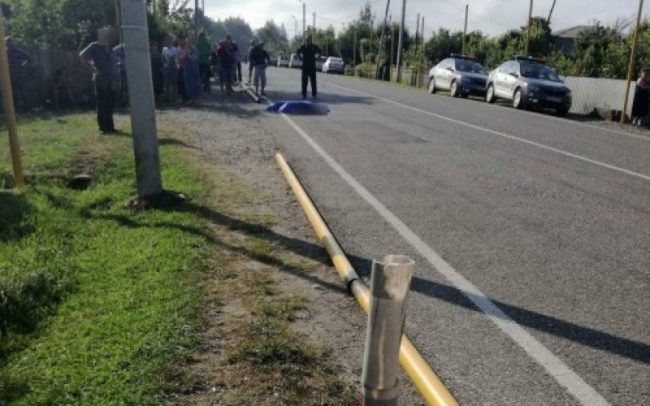
A picture from GPB shows that the metal pipes which the workers were welding are not more than half a metre from the main road. The photo shows no warning signs for cars.
According to official data from the Ministry of Internal Affairs, 270 workers died and 776 were injured in 2011–2016 as a result of occupational accidents.
[Read on OC Media: Fatal workplace accidents show ‘need for labour inspection reform’]
According to the Organisation for Economic Cooperation and Development (OECD), Georgia has the highest rate of deaths from road accidents in Europe (164 per 1 million inhabitants). Twenty-four percent of road deaths in Georgia are pedestrians.
[Read more on OC Media: Georgia’s deadly roads]