For the first time since the adoption of new protest-restricting amendments, Georgia’s Interior Ministry has published ‘instructions’ regarding anti-government demonstrations in Tbilisi. The ministry said protesters must not obstruct pedestrian or vehicle traffic.
Under the new amendments passed earlier in December, protesters must notify the Interior Ministry at least five days in advance before holding demonstrations in areas designated as ‘people’s movement’ zones, including pavements. The state has the authority to change both the location and timing of a protest. Failure to comply with the new regulations is punishable with imprisonment.
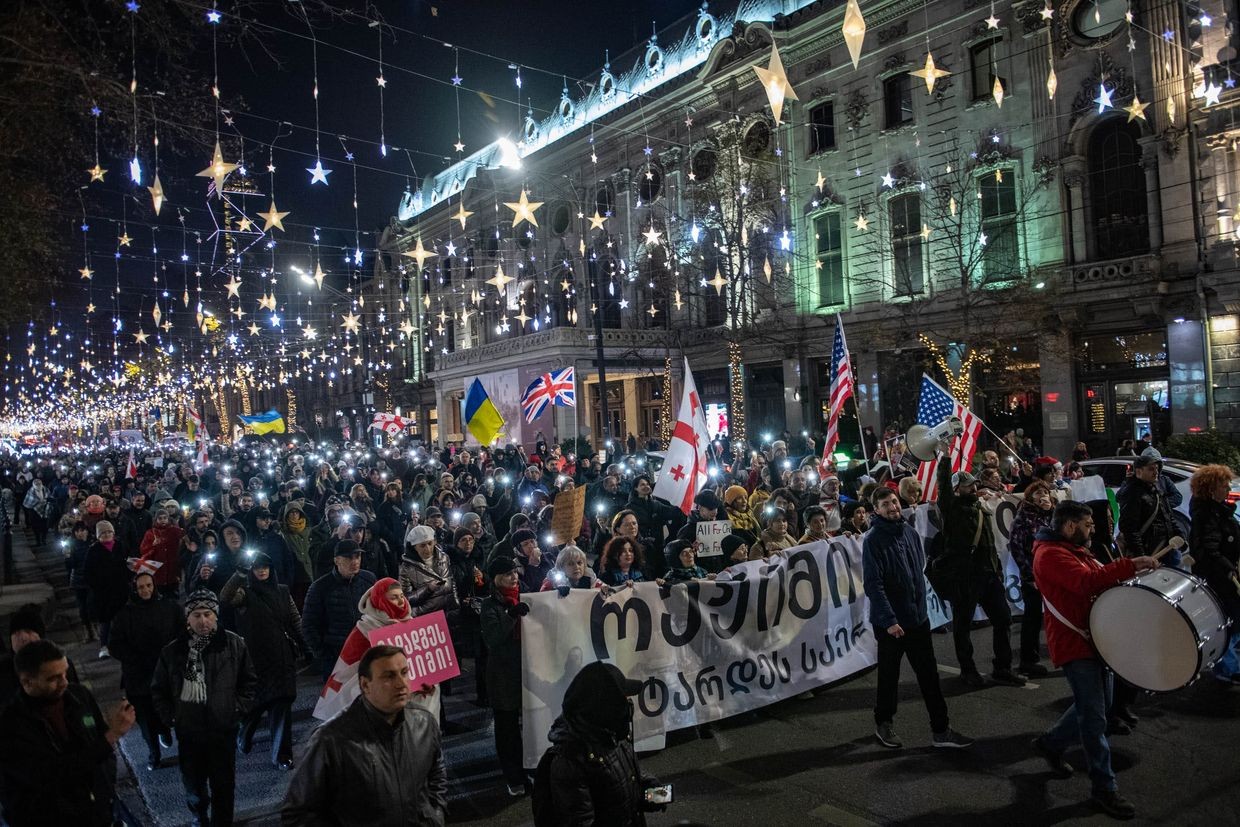
The legislation, prepared and hastily adopted by the ruling Georgian Dream party and its allies, created a new legislative reality for anti-government protesters who have been holding daily demonstrations at the parliament since November 2024.
After the police recently succeeded in preventing them from blocking the roads, the main focus of the protests has shifted to pedestrian areas — primarily the pavements around parliament and the surrounding streets.
Although it was sharply criticised as yet another attempt to further restrict protest rights, some anti-government personalities decided to engage with the authorities through the new legislation. Among them was lawyer Kakha Tsikarishvili, who formally notified the ministry about daily demonstrations planned at the parliament from 11 December to 9 January, specifying the time, location, and format.
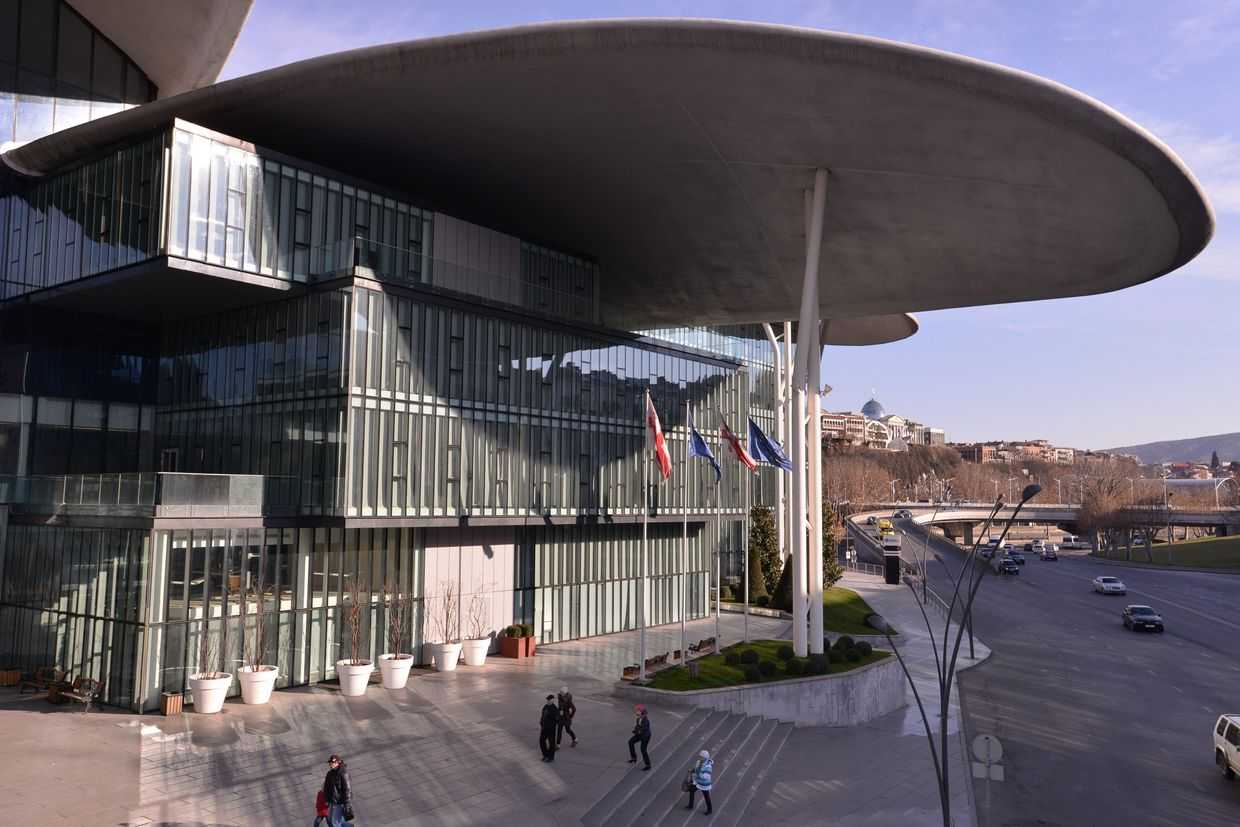
On Friday, the ministry responded to Tsikarishvili with ‘mandatory instructions for compliance’ published on its website for protesters. The ministry did not fully reject the location but specified that protesters were allowed to stand only on ‘the steps in front of the parliament and the surrounding area’ and ‘must not obstruct pedestrians on the sidewalk or vehicles on the road’.
The instructions issued by the ministry covered the period from 21 December to 9 January. The period prior to 21 December, which Tsikarishvili said he had also raised with the police, is not mentioned in the instructions.
In response, Tsikarishvili wrote on Facebook that the police should not have issued mandatory instructions to protesters, arguing that, under the law, such instructions can only be issued if the ministry changes the planned time, location, or route of the demonstration — which apparently did not happen in this case.
Tsikarishvili said he considers the recent amendments unconstitutional and is currently preparing a constitutional lawsuit against them. In the meantime, the lawyer noted, he prefers to ‘comply with the unlawful laws as far as possible to avoid disrupting continuous protests and focus on how to engage the majority of the population in the demonstrations’.
Before the ministry issued its instructions, police approached demonstrators at the parliament at least twice and told them that their protest violated the law by being unannounced. On one such occasion on Wednesday, Tsikarishvili was present at the demonstration and informed the officers that he had submitted a notification to the ministry, which had yet to respond at the time.
‘If you want to hold a gathering, you must wait for our permission’, a police officer told Tsikarishvili that time, using the term ‘permission’ even though neither the old nor the current legislation recognises such a term, while the Georgian constitution guarantees people the right to assemble peacefully ‘without prior authorisation’.
Tsikarishvili argued to the officer that protesters only needed a response from the ministry if the authorities had any objections regarding the demonstration.
‘The constitution mentions a notification, [not permission]’, the lawyer said.
The shift from notification to permission was exactly the fear that critics of the ruling party expressed after the amendments were initiated: that what the government called a ‘notification’ is effectively an attempt to make protests in the country subject to prior state approval, with any demonstration conducted without it considered illegal.
The Public Defender’s Office described the changes as ‘unclear’, emphasising that the law’s enforcement should not make holding a gathering a subject of obtaining permission, which is ‘explicitly prohibited by the 21st article of the constitution of Georgia’.
Daily anti-government protests have been taking place in Tbilisi and other cities almost continuously since 28 November 2024, when the authorities halted Georgia’s EU membership bid.
In parallel, several restrictive legislations passed by Georgian Dream have directly or indirectly targeted street protests — from harsher penalties for blocking roads to bans on face coverings and other actions.
In addition to street protests, the ruling party has targeted civil society, independent media, and the political opposition through laws adopted alongside those focused on curtailing demonstrations.
 Mikheil Gvadzabia