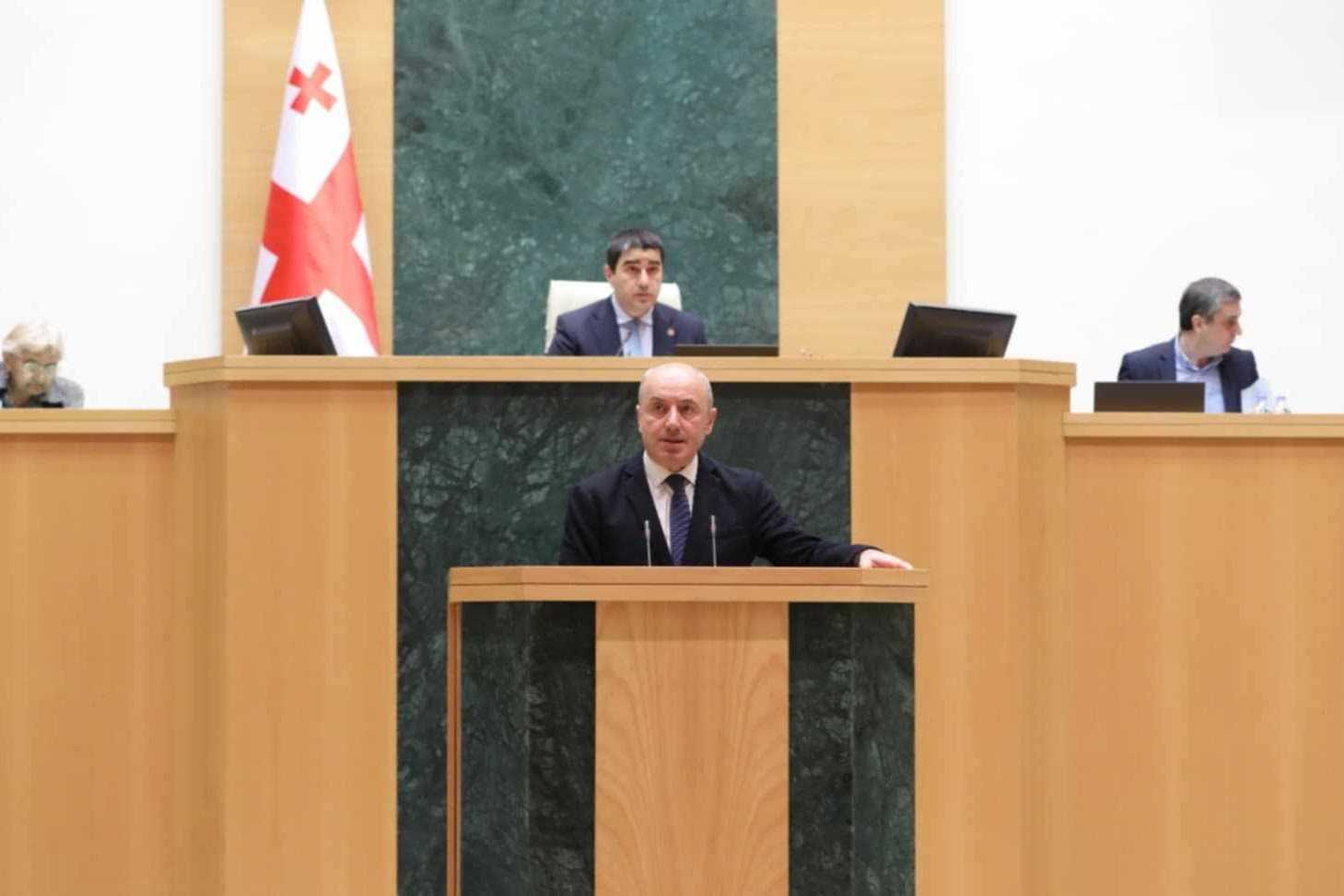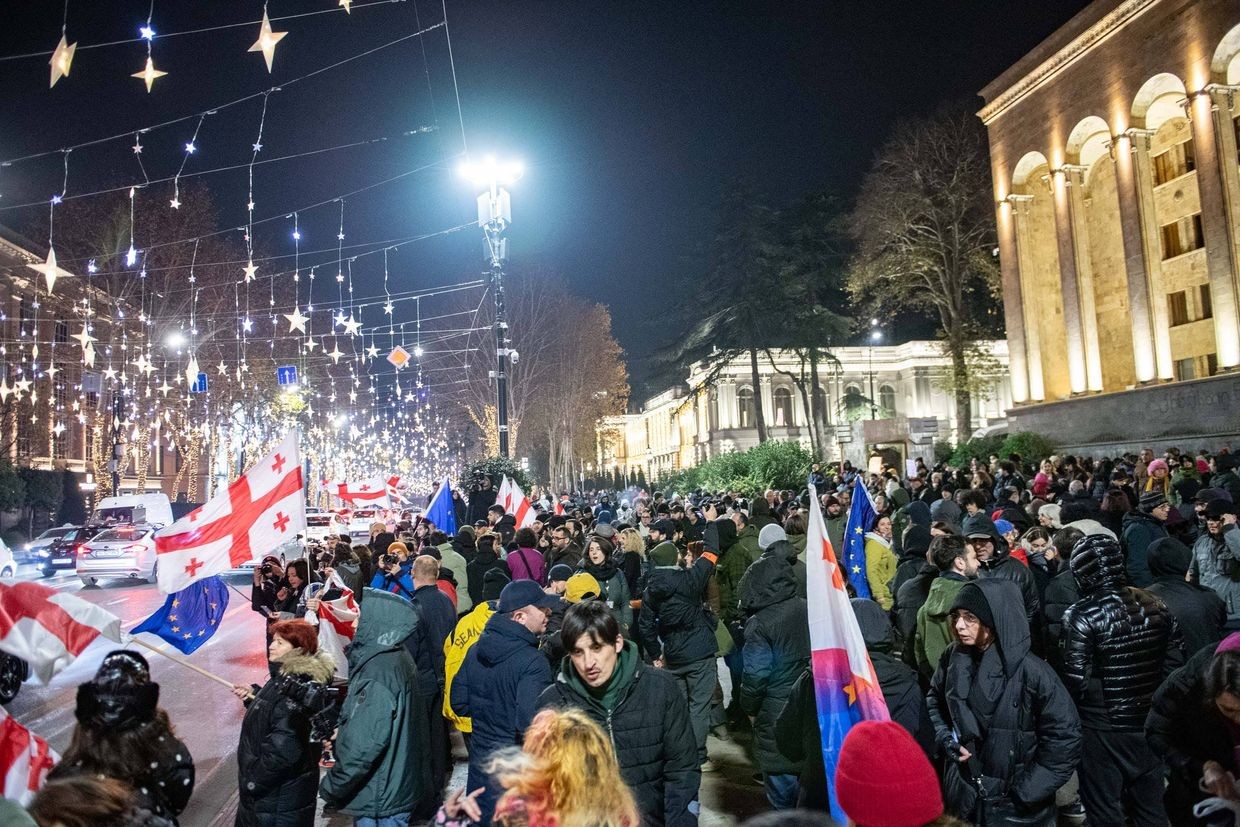
Over the past few days, several anti-government demonstrators have been summoned to Tbilisi City Court under new legislation which introduced the notion of obstructing pedestrian movement on the pavement. Those who have been summoned face administrative detention, since no fines are allowed.
Since 23 December, it has been reported that more than ten demonstrators have faced administrative cases and court summonses. The first was 18-year-old Ani Akhmeteli, accused of ‘obstructing people’s movement’ during the 17 December protest in front of the parliament in Tbilisi.
‘This is the first precedent; nothing like this has happened before, and I don’t know what they have in mind’, she wrote on Facebook on Tuesday, attaching the documents from her case.
Following Akhmeteli, other demonstrators also reported receiving police reports, bringing the total known number to more than ten.
‘They called me from the patrol police. [It turned out] I blocked the way by standing on the pavement’, wrote demonstrator Natashi Lazishvili on social media on Wednesday.
‘Mom, Dad, I’m a criminal. I know you’re proud’, he added sarcastically.
The court hearings for some demonstrators, including Akhmeteli, were held on Thursday, though the decisions were postponed.
Under the new amendments passed earlier in December, protesters must notify the Interior Ministry at least five days in advance before holding demonstrations in areas designated as ‘people’s movement’ zones, including on the pavement. The state has the authority to change both the location and timing of a protest.
Failure to comply with the law would result in imprisonment on the first offence. Protest participants could face up to 15 days in jail, while the ‘organiser’ could face 20 days. Imprisonment would be replaced by a fine only for those who are pregnant, mothers of children under 12, minors under 18, or persons with ‘severe or significant’ disabilities.
The legislation, prepared and hastily adopted by the ruling Georgian Dream party and its allies, created a new legislative reality for anti-government protesters who have been holding daily demonstrations at the parliament since November 2024.
After the police recently succeeded in preventing them from blocking the roads, the main focus of the protests has shifted to pedestrian areas — primarily the pavement around parliament and the surrounding streets.
Although it was sharply criticised as yet another attempt to further restrict protest rights, some anti-government personalities decided to engage with the authorities through the new legislation and filed notifications with the Interior Ministry.
In response to such warnings from lawyer Kakha Tsikharishvili, the ministry issued on its website ‘mandatory instructions’ for protests at parliament from 21 December to 9 January, giving tacit approval to the demonstrations while restricting their space. The instructions specified that demonstrators should remain only on the parliament steps and adjacent areas, without ‘obstructing’ pedestrians and cars.
The instructions did not cover the period before 21 December, even though, according to Tsikharishvili, he had submitted requests to the ministry for earlier days as well, but received no response. Against this backdrop, police approached the demonstrators at least twice on 16 and 17 December, informing them that their protest was illegal.
 Mikheil Gvadzabia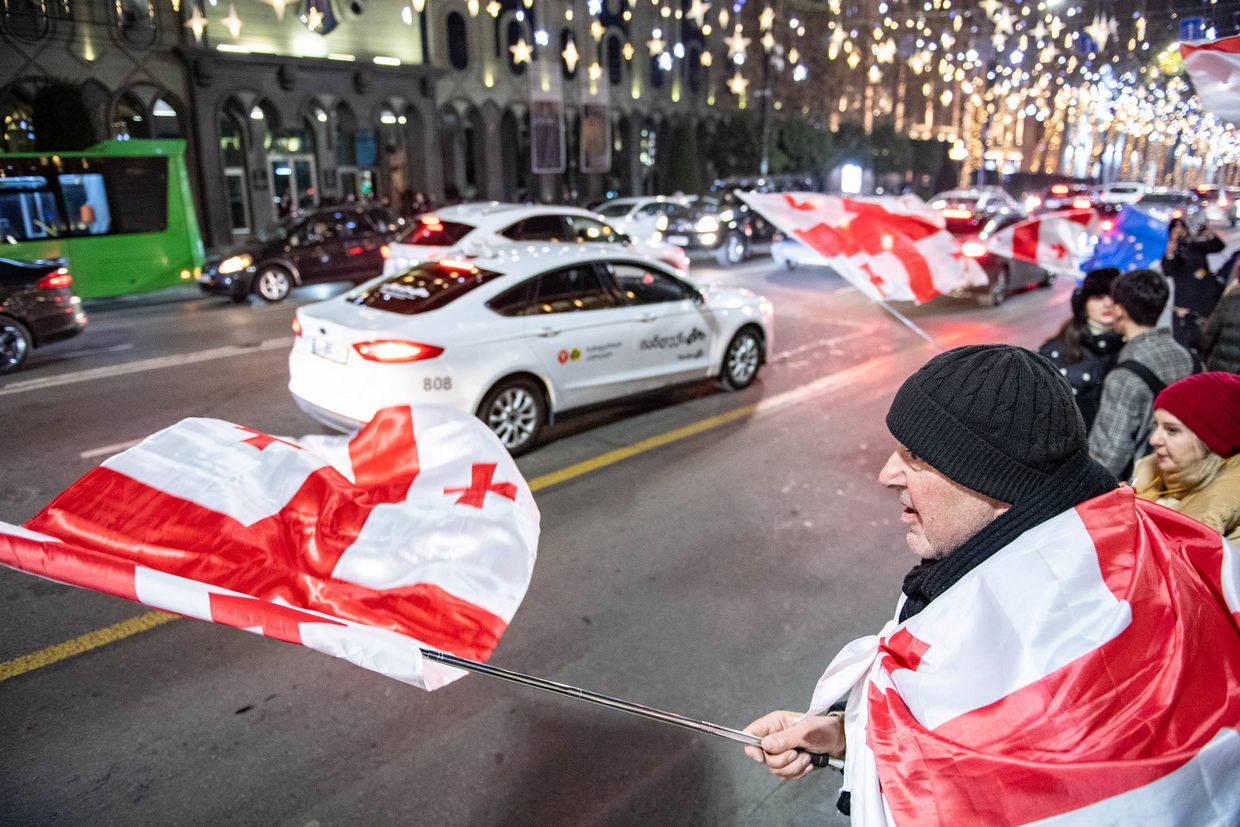
In recent days the ministry responded to more notifications regarding other protests, including a planned march from the Philharmonic Concert Hall to Parliament on 27 December. The instructions specified, among other things, which streets demonstrators should use and that they must remain on the pavement while marching.
The legislative amendments were condemned by government critics, who warned that what ruling party MPs called a ‘notification’ in fact serves to bring protests under a permit system in the country.
Daily anti-government protests have been taking place in Tbilisi and other cities almost continuously since 28 November 2024, when the authorities halted Georgia’s EU membership bid.
In parallel, several restrictive legislations passed by Georgian Dream have directly or indirectly targeted street protests — from harsher penalties for blocking roads to bans on face coverings and other actions.
The ruling party has also targeted civil society, independent media, and the political opposition through laws adopted alongside those focused on curtailing demonstrations.
OC Media