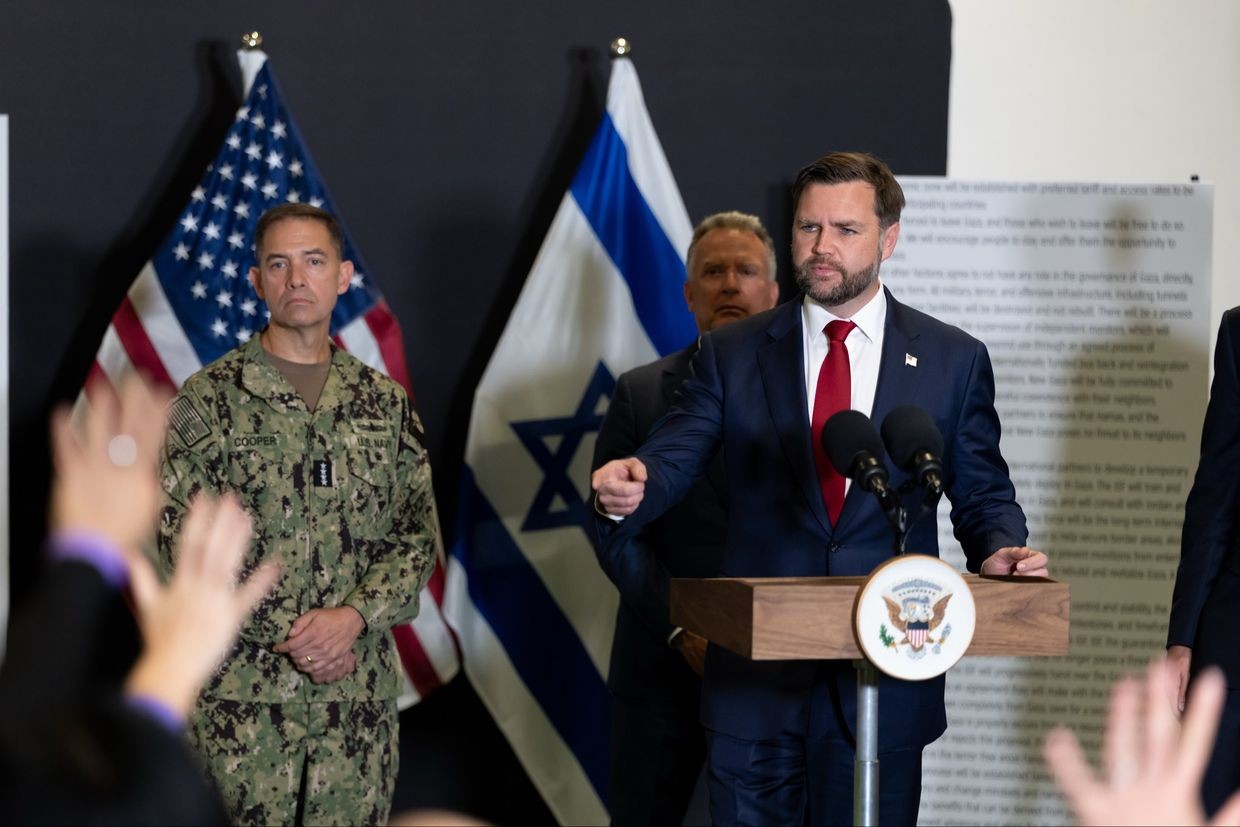
US Vice President JD Vance will visit Armenia and Azerbaijan in February, President Donald Trump announced on Saturday. It will mark the highest-level visit to the Caucasus by an American leader since then-President George W. Bush visited Georgia in 2005. No sitting US president has visited Armenia or Azerbaijan before.
In the announcement, Trump once again took credit for ending the Armenia–Azerbaijan conflict, referring to it as a ‘nasty War [sic]’. He also thanked Armenian Prime Minister Nikol Pashinyan and Azerbaijani President Ilham Aliyev for ‘upholding the Peace Agreement we signed last August’.
Trump was referring to the documents signed by the three leaders in Washington in 2025, but mistakenly claimed that the peace treaty was signed — in reality, the treaty was only initialled, not signed.
The purpose of Vance’s visit is to ‘build on our Peace efforts, and advance the Trump Route for International Peace and Prosperity [sic]’, Trump said.
The Trump Route (also known by its acronym TRIPP) is a plan to create a connection between Azerbaijan and its exclave of Nakhchivan through Armenian territory.
‘We will strengthen our strategic partnership with Azerbaijan, a beautiful Agreement for Peaceful Nuclear Cooperation with Armenia, Deals for our Great Semiconductor Makers, and the sale of Made in the USA Defence Equipment, such as body armor and boats, and more, to Azerbaijan [sic]’, Trump added.
No further details about any of the suggested US plans for the region have been specified.
Nonetheless, a decision to sell American weapons to Azerbaijan would mark a significant change in US policy to the country.
Amidst the heights of the First Nagorno-Karabakh War in 1992, the US Congress voted to amend the Freedom Support Act which was initially designed to promote the establishment of democratic governance and a free market economy in Russia and other newly independent states after the collapse of the USSR. Separate clauses for humanitarian, security, and anti-terrorism support were later added.
In October 1992, Congress amended the Freedom Support Act — section 907 — prohibiting any form of direct US assistance to the Azerbaijani government in response to lobbying efforts by the Armenian National Committee of America (ANCA), which cited Azerbaijan’s blockade of Armenians in Nagorno-Karabakh.
According to the amendment, the US president ‘may not provide assistance to the government of Azerbaijan and local governments under this or any other law unless he determines and reports to Congress that the government of Azerbaijan has taken steps to lift the blockade and other use of force against Armenia and Nagorno-Karabakh’. Thus, Azerbaijan was the only post-Soviet country that did not benefit from the Freedom Support Act, at least until 2001, when the bill was amended so that the president has the authority to temporarily waive the restrictions. Since then, it has been waived several times, though the restrictions were never entirely removed.
As part of the historic meeting between Aliyev, Pashinyan, and Trump in Washington in August 2025, Trump authorised section 907 to be temporarily waived, but not fully removed, which can only be done by an act of Congress.
 Nate Ostiller
Georgia out in the cold
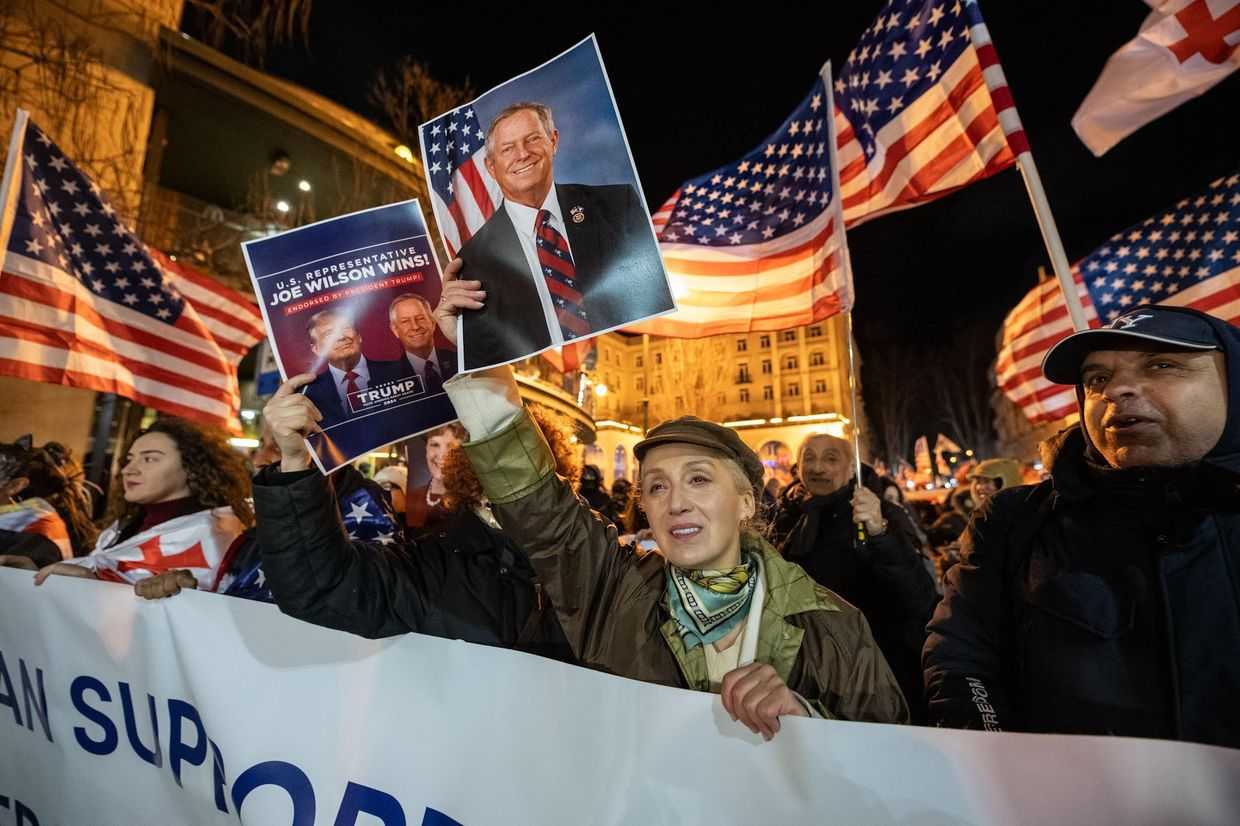
Once the closest American ally in the region, Georgia’s ties with the US have withered in recent years as the ruling Georgian Dream party has presided over democratic backsliding in the country.
While the administration of former President Joe Biden made no secret of its concerns about the ongoing political crisis in Georgia, Georgian Dream officials openly expressed hope that ties could be mended under the Trump Administration.
However, there has yet to be a noticeable warming of the US-Georgia relationship. The fact that Vance will make a rare trip to the Caucasus — but skip Georgia — has caused speculation that the snub was on purpose.
Georgian Prime Minister Irakli Kobakhidze nonetheless dismissed such implications, arguing on Monday that ‘the visit of the US Vice President is specifically dedicated to the so-called TRIPP route — therefore, it is logical that in this case the addressees of the visit are these two specific countries!’.
When asked by a journalist how Georgia will figure into the wider US plans for transit across the South Caucasus, Kobakhidze said, ‘this is up to them to decide’.
‘According to our information, this visit is specifically dedicated to the Zangezur issue — based on this, it is quite natural that the American politician is visiting Azerbaijan and Armenia’, he said. The usage of the word Zangezur in reference to the Trump Route is often considered problematic by Armenia for its reference to Armenia’s Syunik region as ‘west Zangezur’. It is unclear why Kobakhidze used the term or if it was intentional.
Kobakhidze then pivoted to repeat past complaints about US–Georgia relations, as well as putting the blame for its poor state on Biden.
‘You know what the context of Georgian–American relations is. This context is very difficult. This context was created by the Biden administration. Let’s see how it will develop against this background. We are waiting patiently. We have made a public statement that we are ready to renew the strategic partnership from a clean slate and with a specific roadmap’, Kobakhidze concluded.
Mikheil Gvadzabia
This article was translated into Russian and republished by our partner SOVA.