Opinion | Tracing Ivanishvili’s rise to power
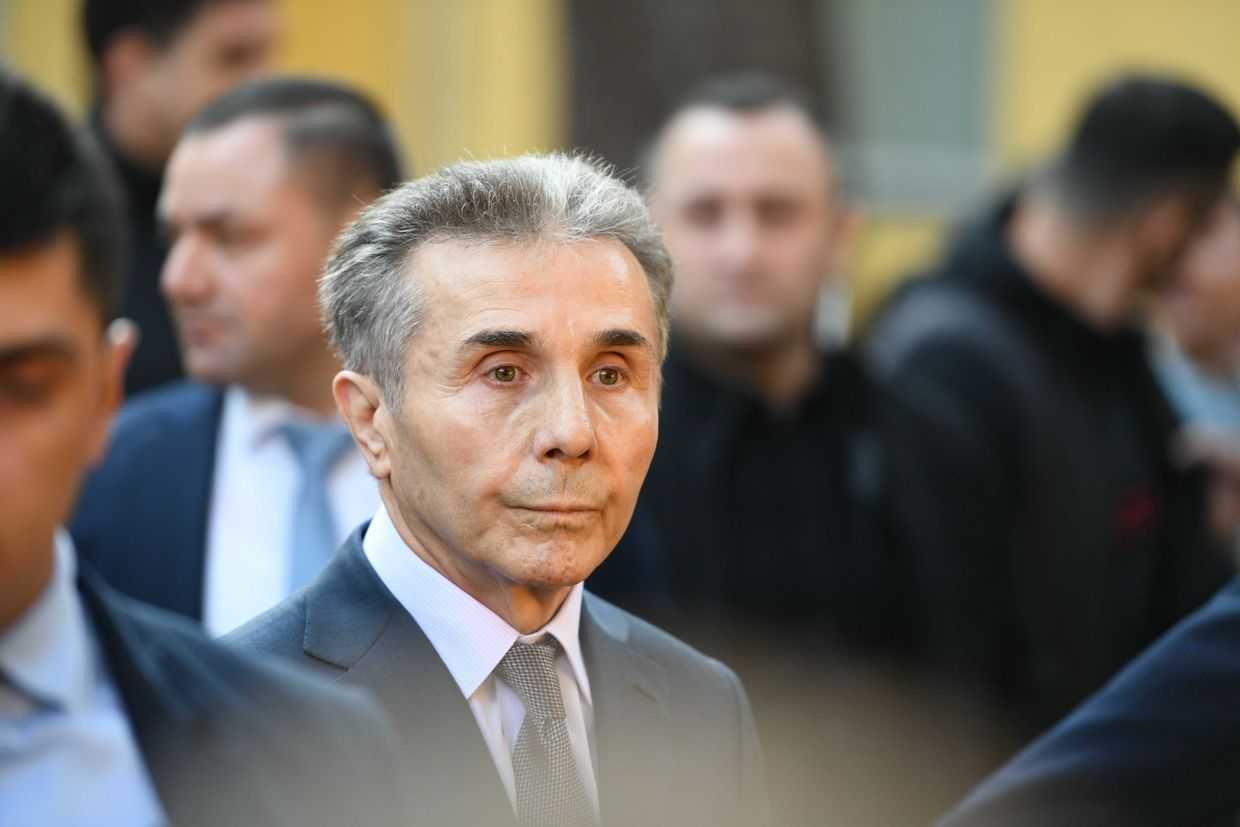
A deep dive into Georgian Dream founder Bidzina Ivanishvili — the billionaire who sees himself as ‘Georgia’s disappointed saviour’.


Sometime after the August 2008 War — during some of Georgia’s toughest years, though they were still marked by Western support — my colleague and I interviewed then-President Mikheil Saakashvili while visiting one of the funfairs found along the Black Sea coast. During our discussions, Saakashvili noted that such fun fairs had been built with the support of an eccentric billionaire living in Tbilisi: Bidzina Ivanishvili. Saakashvili’s tone was not hostile; he even joked with a smile that this man was a strange character who kept animals like zebras and even giraffes.
At the time, I paid little attention to these secondary comments about Ivanishvili and his Tbilisi residence/business centre that looked more like a villain’s lair from a superhero film, replete with the requisite shark tank to wow foreign officials.
Yet years earlier, my path had already crossed with Ivanishvili’s when close friends of mine built a series of two- or three-storey villas behind his property in Tbilisi’s historic Sololaki–Mtatsminda district. Ivanishvili took offence and went to court to have the newly built houses torn down, causing several families to lose their dream homes. He was relentless, enlisting the aid of all levels of Saakashvili’s United National Movement (UNM) government, including the land registry, the city administration, and the courts, the construction company’s lawyer Ted Jonas told me. Though Ivanishvili never appeared in the courtroom, the presence of a powerful, intimidating man — whose face, let alone persona, remained largely unknown — seemed to hang over everything.
 Helena Bedwell
Indeed, the roots of Ivanishvili’s influence must be traced back long before his shock victory in the 2012 parliamentary elections, which ended the Rose Revolution period. A quiet man, hidden away — a Count of Monte Cristo making a devastating entrance into politics — he was a figure of endless possibilities, yet everything he touched seemed to turn into a problem for both him and the country.
Ivanishvili always carried an aura of mystery. He had bankrolled much of the Soviet and post-Soviet elite since returning to Georgia — something that wasn’t considered dangerous at the time; if anything, it was welcomed. His name became tied to some of the most sensitive institutions in Georgian life — the Opera House, the Holy Trinity Cathedral — in a nation so deeply religious that its devotion often borders on the pagan.
So when he stepped into politics and the then-UNM government launched its punitive campaign against him, the public reaction was immediate. After police seized cash from an armored truck and detained several people in a money-laundering probe, thousands opened accounts at his Cartu Bank in solidarity.
‘It’s a public protest against what the government is doing’, then–bank president Nodar Javakhishvili said. Nearly 2,000 new accounts were opened.
The National Bank insisted Cartu wouldn’t be shut down. Yet pressure on Ivanishvili escalated: he was stripped of Georgian citizenship just four days after announcing plans to form an opposition party. Months earlier, he had accused Saakashvili of running a smear campaign implying he was secretly funding the government. Forbes estimated Ivanishvili’s wealth at $5.5 billion — nearly half the country’s economy. He held a third of his assets in Russia, the rest abroad, and lived largely in his native village of Chorvila.
I was in the room on 2 October 2012 at the Georgian Dream headquarters following their win in the parliamentary elections the day prior. For Saakashvili’s detractors, Ivanishvili was a unique saviour; for many foreign colleagues, he contradicted himself and seemed to invent policy on the spot.
During the claustrophobic press conference that day, Ivanishvili began individually assaulting reporters, accusing them of being bought and showing signs of his now reputational paranoia. He also lashed out at me, accusing me of asking a question someone else had planted. After that, our personal interviews always carried the sense that he knew I was not going to praise him in my reporting. Slowly, his appetite for foreign media attention diminished.
Yousef Bardouka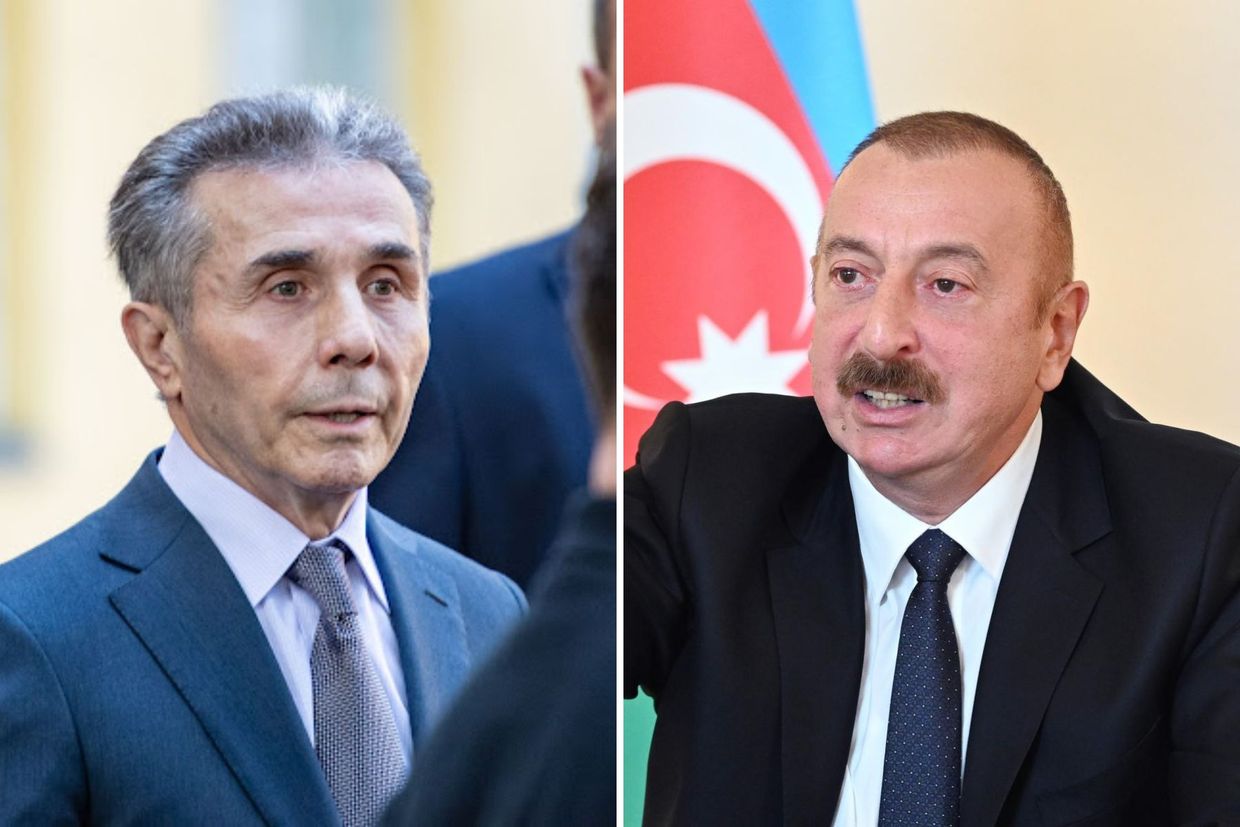
Moscow welcomed Ivanishvili’s electoral victory in 2012. Ivanishvili said at the time that he wanted to restore ‘traditional’ relations with Russia but remained committed to NATO and EU integration. Russia soon lifted bans on Georgian wine and mineral water and restored road links. Although he had promised that Washington would be his first visit as prime minister, Ivanishvili cancelled the trip and met his Russian counterpart Dmitry Medvedev at Davos instead. While Ivanishvili said he never met Russian President Vladimir Putin, his government followed a policy of ‘more tourism, more flights, more people-to-people exchanges’ with Russia.
Economically, Georgia was praised for reforms that ranked it ninth in the 2018 World Bank’s ease-of-doing-business survey. But political uncertainty after Georgian Dream’s victory and the arrests of former officials slowed investment. Growth, which had averaged more than 6% annually, risked falling to around 3%. Russian investment returned; analysts noted that Russia-related tourism and trade helped offset declining Western inflows — declines that became stark after Russia’s full-scale war against Ukraine, when the Black Sea country became a safe corridor for Russians fleeing sanctions and transferring money.
Yet throughout his time in power, Ivanishvili frequently spoke about wanting to leave politics behind. He often said he never enjoyed politics and preferred gardening. Having visited him in at least three of his locations — all glass-and-steel villas, one built on his parents’ former land with an engineered waterfall and pond — he told me he saw his role as stabilising Georgia after the August 2008 War. Because of that, he argued, he couldn’t step away.
Ivanishvili said he would leave political life only when ‘responsible’ political forces emerged to replace the opposition UNM party, which he accused of provocation and anti-Russian rhetoric. Still, no one understands why someone would enter politics so loudly, give up after a year, retreat into hiding, and create even more problems on the way out.
OC Media
‘Many people have long questioned Ivanishvili’s ascent to power — his history, his relationships with Russia, and the extraordinary way he has shifted Georgia’s geopolitical orbit’, Timothy Ash, a senior strategist at RBC BlueBay Asset Management and a fellow at Chatham House, tells me.
‘The way he manages and controls Georgian politics from the hill above Tbilisi, yet without any formal role, is remarkable. One might even compare him with [Jarosław] Kaczyński in Poland, [Thaksin] Shinawatra in Thailand, or Nawaz Sharif in Pakistan’, he adds.
Following his retreat from politics, Ivanishvili repeatedly spoke of wanting to invest heavily in Georgia — hotels, conference centres, infrastructure — promising to spend more than he earned. He said he had already spent about $3 billion on philanthropy and pledged to give away 90% of his wealth. The Paragraph Hotel near Batumi cost him $120 million; he said he was prepared to sell it for roughly half that as a seed investment to encourage tourism. His grand project, Panorama, has already taken shape despite opposition from environmental groups and parts of society.
Yet the economy remained fragile. The lari lost nearly 80% of its value against the dollar since 2012, and growth slowed compared with earlier years.
Meanwhile, Ivanishvili distanced himself from the $2.5 billion Anaklia Deep Sea Port, which remains uncertain after a Chinese company won the tender. Along with major projects, he gradually began abandoning his ‘human projects’ — former prime ministers, MPs, lawyers, and close business associates — some of whom ended up in jail. Retaliations continue even today, with no one safe from his displeasure.
The breaking point for him came when a rogue Swiss banker interfered with his investments. Ivanishvili openly connected the dots between the Swiss banking case and Russia’s full-scale invasion of Ukraine. Perhaps he expected the war to end quickly.
Instead, the war is still ongoing and while Ivanishvili has won multiple lawsuits against the Swiss bank in question, all the money remains tied up in escrow — money that neither he nor the bank can access without risking violating US sanctions. In response to these delays, Ivanishvili has responded with an array of conspiracy theories, many of which have blamed the West.
Xandie (Alexandra) Kuenning
‘Ivanishvili, in his own paranoia, believes he lost his money. He says he saved Georgia, and he also claims he lost his money because he saved Georgia. Now the question is where and how he is going to be reimbursed — from the country he says he saved from the “deep state”?’, Nodar Kharshiladze, one of the founders of the Georgian Strategic Analysis Centre, tells me.
Similarly, British journalist and historian Tom de Waal argues that Ivanishvili sees himself as ‘Georgia’s disappointed saviour’.
‘He genuinely believed he was the messiah who came to rescue the country in 2012, but events didn’t follow the script he imagined. He tried to retreat from politics several times, yet was never satisfied with the leaders he installed. Governing by remote control failed, pushing him toward increasingly authoritarian behaviour’, de Waal argues.
Today, I still look back upon the small yellow gatehouse with a clay roof that is all that remains of my friends’ now-demolished housing complex in Tbilisi, viewing it as a reminder of those early days before I truly knew who Ivanishvili was. Even years later, no one involved would elaborate on the case when asked, showing Ivanishvili’s power.
There is little doubt that Ivanishvili feels financially punished and deprived — keeping the country hostage by aligning with those who denigrate European values as decadent. The West now needs to make a decision: how to support a population deeply anxious to join Europe, as the country’s democratic image spirals downward under Ivanishvili’s Georgian Dream rule.