US Senate Majority Leader John Thune has twice blocked the MEGOBARI Act from advancing in the Senate despite bipartisan support, The Hill has reported. The bill would increase sanctions on Georgia if the country does not reverse its democratic backsliding, but also would provide incentives, including defence aid and possible visa liberalisation, if democratic reforms are undertaken.
The Hill reported on Wednesday that Thune has remained opposed to the bill despite receiving personal overtures from his Republican colleague in the House of Representatives, Speaker Mike Johnson. The specific reasons for Thune’s opposition were not detailed, with one aide who spoke to The Hill simply saying that Thune had ‘just said flat no’.
Unless Thune has a sudden change of heart, the prospects of the bill coming up for a vote in the near future seem slim, even though it would likely have a high chance of passing.
The bill — Mobilising and Enhancing Georgia’s Options for Building Accountability, Resilience, and Independence (MEGOBARI, Georgian for ‘friend’) — received overwhelming support across party lines in a vote in the House of Representatives back in May, with 349 members of the House voting in favour and 42 voting against.
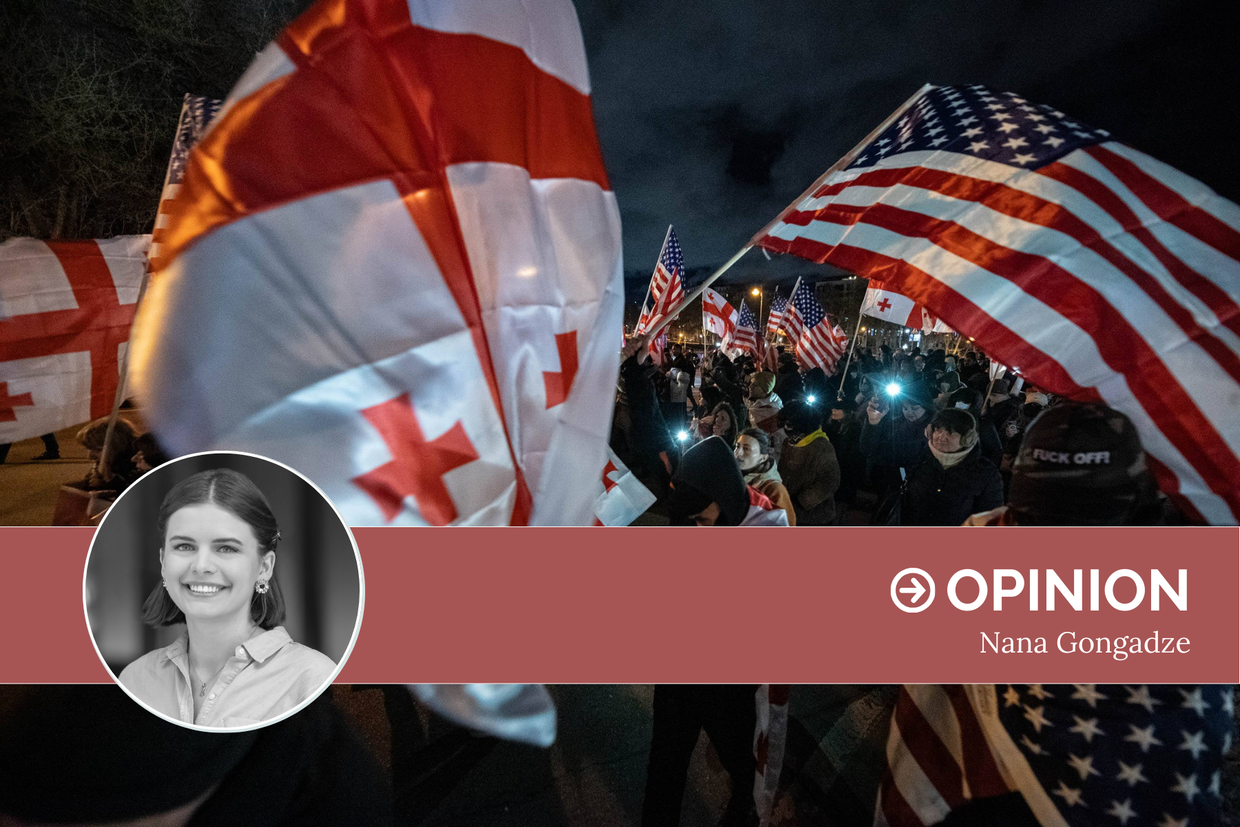
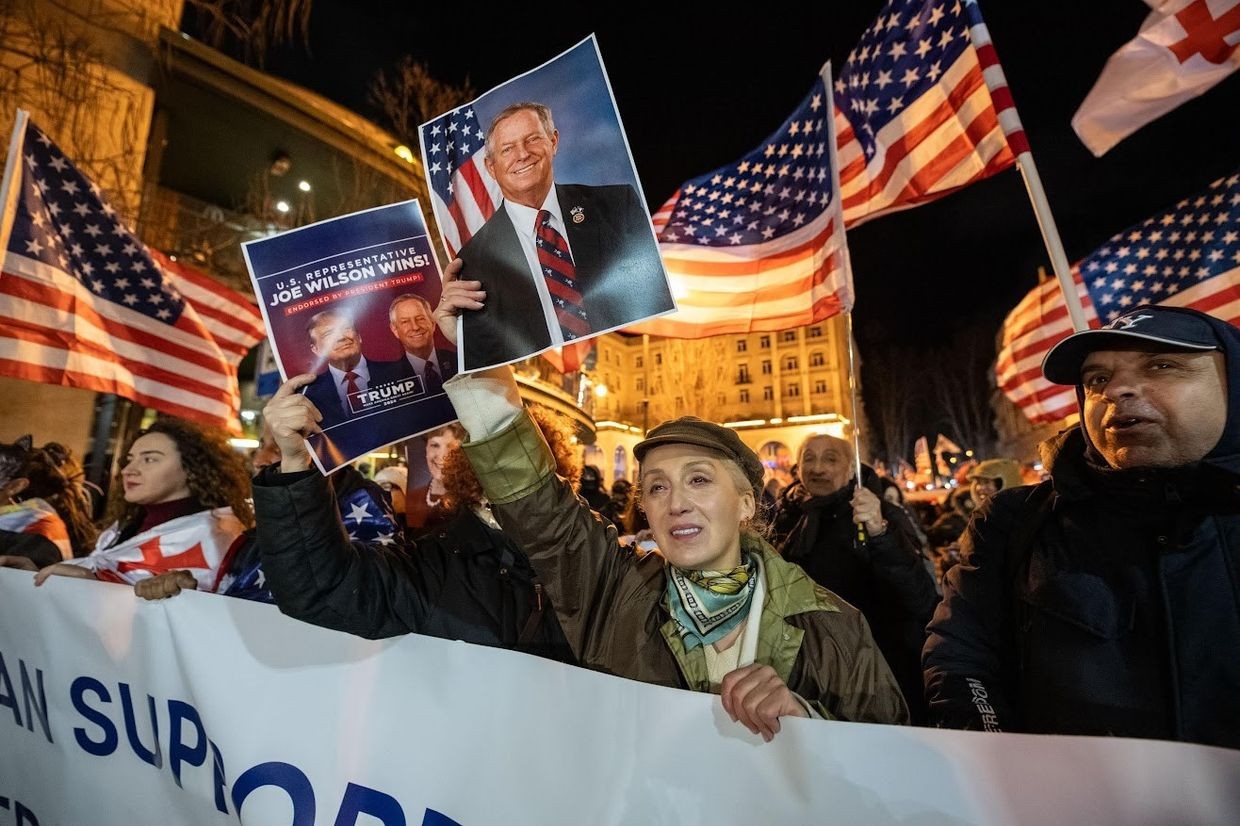
The act was first introduced by Republican Representative Joe Wilson amidst widespread protests against Georgia’s controversial foreign agent law in May 2024.
Since the vote in the House, the bill has remained stalled in the Senate, failing to even come up for a vote despite efforts from across the aisle.
In the latest push, Johnson tried to have the MEGOBARI Act included in the annual National Defence Authorisation Act (NDAA), personally appealing to Thune to drop his opposition to the bill.
‘Speaker Johnson’s lobbying was welcome but seemed to come out of nowhere’, a Congressional aide told The Hill.
‘We thought the bill was dead after Thune shot it down in September. We tried hard to get the bill into the NDAA at the last minute at the Speaker’s request but couldn’t overcome Thune’s opposition’.
Thune had previously rejected the bill’s inclusion in the NDAA following a request from fellow Republican Senator Markwayne Mullin.
Mullin himself told The Hill back in September that one of the main reasons he opposes the legislation is that there is a ‘better relationship’ with Prime Minister Irakli Kobakhidze.
‘I understand kind of where they’re [Georgian Dream] trying to get to. I also understand the direct influence that Russia is having and kind of stirring up disdain, I guess, inside the government’, Mullin said at the time.
‘And so I want to be able to work with them before we throw sanctions on them. I want to work with them to see how they can, you know, have true sovereignty, to get away from the overbearing influence of Russia’.
Mullin has a history with Georgia that predates his time in the Senate, and has previously been critical of the ruling Georgian Dream party.
While a member of Congress, Mullin penned an op-ed for The Hill in 2020 under the headline ‘The United States must stand with Georgia’s fight for freedom’.
In the article, Mullin described Georgian Dream founder Bidzina Ivanishvili as a ‘a Russian-schooled oligarch who made billions in the corrupt feeding frenzy on abandoned Russian industries after the collapse of the Soviet Union’.
Mullin also criticised the Georgian government for creating difficulties with two US companies trying to do business in Georgia — the Conti Group and Frontera Resources.
The owner of Frontera Resources donated to Mullin’s political campaigns in the following years, although the amounts appear to be relatively small.
Since then, Georgia’s relations with Frontera Resources have improved.
Nonetheless, Mullin told The Hill that his opposition to the MEGOBARI Act is unrelated to the Frontera Resources issue.
‘It doesn’t make any difference what company it is’, Mullin said, referring to his support for business.
‘If we’re going to have investments there, they need to make sure their investments, meaning US investments, that investments need to be protected and have confidence that they’re going to be able to see the project through without being threatened to be taken over. I think we’re there. But some of the intergovernment [sic] politics is dicey. I mean, it’s a tough area’.
Attempting to explain his reasoning, Mullin claimed that some of his colleagues appeared to be misinformed about the situation in Georgia.
‘What I’m saying is, just, let’s make sure we have the ties’, he said. ‘When’s the last time we went there and visited them? When’s the last time you talked to them? When had we actually had diplomatic visitations [sic] from them, understanding where they’re moving, for the people that’s wanting [sic] the [MEGOBARI Act] put in place’, Mullin told The Hill at the time.
 Nana Gongadze