Azerbaijan’s attempts to project power abroad places critics under psychological and legal pressure
Since late November, the Azerbaijani authorities have targeted at least seven Azerbaijani activists and media representatives based abroad.
On 9 December, a trial began at the Baku Court of Grave Crimes centred around Ganimat Zahid, the editor-in-chief of the the now-defunct newspaper Azadliq and YouTube channel Azerbaycan Saati (‘Azerbaijan’s hour’). Though he lives in France, Zahid has become the latest public figure living abroad to have criminal proceedings initiated against him in the last month.
Since mid-2023, at least 24 bloggers, journalists, political analysts, and socio-political activists living outside Azerbaijan have had criminal cases opened against them.
The process is all the same. First, they are summoned to the Prosecutor General’s Office. Then, a court issues an arrest order in absentia. After that, their cases are referred to trial. The charges tend to be for making public calls directed against the state and committing such acts repeatedly or with a group. All learned about their arrest warrants and trials through news broadcasts on the country’s public broadcaster.
In the last two months, along with Zahid, the Azerbaijani authorities have targeted political analyst Arastun Orujlu, historian Altay Goyushov, journalists Sevinj Osmangizi and Beydulla Manafov, and bloggers Abid Gafarov, Manaf Jalilzade, and Vagif Allahverdiyev.
‘We can find you no matter where in the world you are’
Speaking to OC Media, Zahid — like the others accused — says he does not accept the charges. He believes the Azerbaijani government is trying to silence critical voices, noting that such tactics have been widely used in other authoritarian countries.
‘Criminal cases and court decisions against me and others living in exile are not an invention of the Aliyev regime. Similar decisions have recently been issued by other dictators — including Lukashenko, Putin, and some Central Asian autocrats’, he says.
‘Above all, such decisions are a show of force to local societies and an attempt to deepen submission: “No matter where in the world you are, we can track you down and punish you” ’.
Zahid believes the government is looking for a ‘weak link’ among the accused — someone they can bring back to the country in order to demonstrate that this threat is not only theoretical but practical. He says he does not take these attempts against him seriously.
‘The regime’s need to resort to this method can be seen as a sign that its local repressive fantasies and targets are running dry — or simply as another whim typical of dictators’.
Former diplomat and political commentator Nahid Jafarov holds similar beliefs, arguing that the government wants to pressure critics in hopes of compromising them.
According to him, people like Goyushov — who have careers in Europe, strong networks, and access to resources — genuinely worry the government:
‘They are independent and difficult for the government to control. But those with fewer resources are easier to pressure’, he tells OC Media.
Jafarov believes that another aim of the government is to instill fear among critics while also creating a legal basis for future action, especially amid global political shifts.
‘Azerbaijan’s position is strengthening. Europe’s energy needs are increasing due to problems with Russia. Azerbaijan thinks: let’s build a legal base now so that later we can use political bargaining — “return these people to us, and we’ll supply you the oil and gas”. For that, a legal foundation is needed — and that’s what they’re creating’, he says.
 OC Media
Arastun Orujlu, a security expert now based in the US, likewise argues that the contradictory and mutually inconsistent steps taken by the authorities indicate a serious internal crisis, compounded by governance, socio-economic, and legal problems. Orujlu is one of the government’s sharpest critics to have been charged in absentia.
‘This situation has created a reality in which the government feels threatened and tries to remove from the public sphere those who are influential and enjoy public trust. The charges against me are part of this — the accusations are completely fabricated’, he tells OC Media.
According to him, the government understands that an uncontrolled situation could rapidly lead to an explosion. Therefore, it seeks to empty the entire political arena:
‘The authorities are trying to completely clear the political field. They target people who could earn sympathy, be supported by parts of society, and who people might follow in critical moments. They are isolating this group from society — by opening criminal cases, issuing baseless verdicts, restricting their return’, he says.
‘When someone is sentenced to eight or 10 years, or even one year, naturally most people will not risk returning to the country’.
At the same time, recalling previous physical attacks abroad, Zahid does not rule out that the Azerbaijani government may be using these ‘semi-legal’ prosecutions to cover up potential future physical attacks.
‘The authorities are trying to create the appearance that “we only pursue people legally; physical attacks or acts of terror are not our doing” ’, he says.
Azerbaijani bloggers living abroad — such as Mahammad Mirzali in France and Tural Sadigli in Germany — have repeatedly faced physical attacks.
In September 2024, blogger Vidadi Isgandarli was stabbed by unknown individuals at his home in France — he died two days later in hospital.
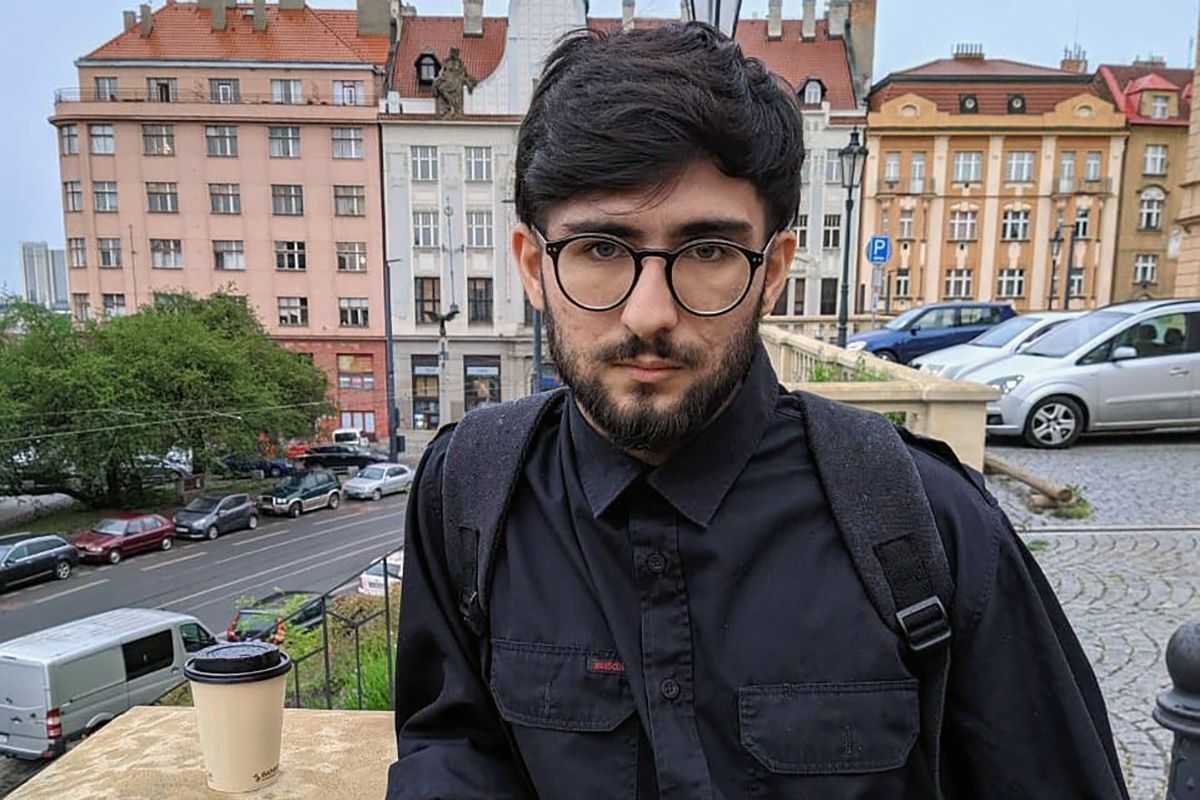
Aytan Farhadova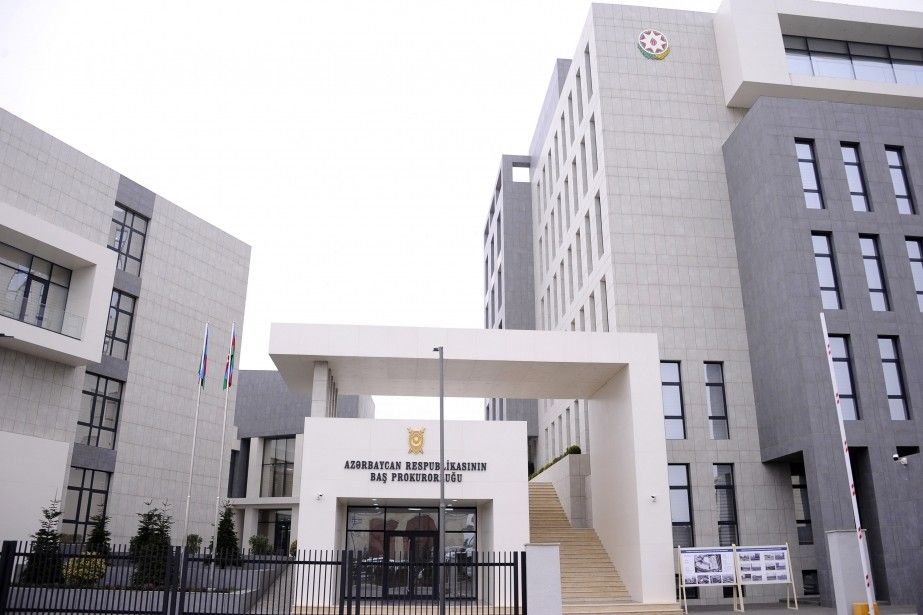
Even so, some, like Orujlu, find safety in the fact they live abroad, arguing that the Azerbaijani authorities cannot actually take any actions against him. Still, he admits to having some concerns:
‘I don’t think they can formally appeal to the US based on such charges. I live here legally; I have permanent residence obtained through a green card. So what they claim is, in practice, impossible. But given the recent unpredictability of immigration issues in the US, unexpected steps are always possible. So I remain cautious’.
A new legal weapon?
Lawyer Yalchin Imanov tells OC Media that it is amendments made to the Criminal Procedure Code in December 2023 that have enabled in-absentia proceedings against individuals living abroad.
‘If an accused person living outside Azerbaijan hides from investigation or court, or deliberately avoids responding to a summons, and it is impossible to ensure their personal participation, a court may order in-absentia proceedings. The decision is made by a court based on a motion from investigators or a submission from the prosecutor. After an accused is declared wanted, an in-absentia decision may be issued after three months’, Imanov says.
According to him, this mechanism serves to place persecution of critics within a legal framework.
Regarding extradition, Imanov believes that although verdicts issued in absentia may create formal grounds for international searches, extradition for political activities is unlikely.
However, these verdicts can still create complications for these individuals — questioning, temporary detentions, travel restrictions — all of which can disrupt their work.
‘In my view, extradition is unlikely. The main aim of in-absentia proceedings is not physically bringing critics back, but keeping them under constant psychological pressure: “You are under threat; you can be detained anytime; an extradition request may be issued anytime” ’, he says.
Indeed, the Swiss Justice Ministry has already rejected Azerbaijan’s request to extradite blogger Manaf Jalilzade, stating that he would be at risk of torture and would not receive a fair trial if returned.
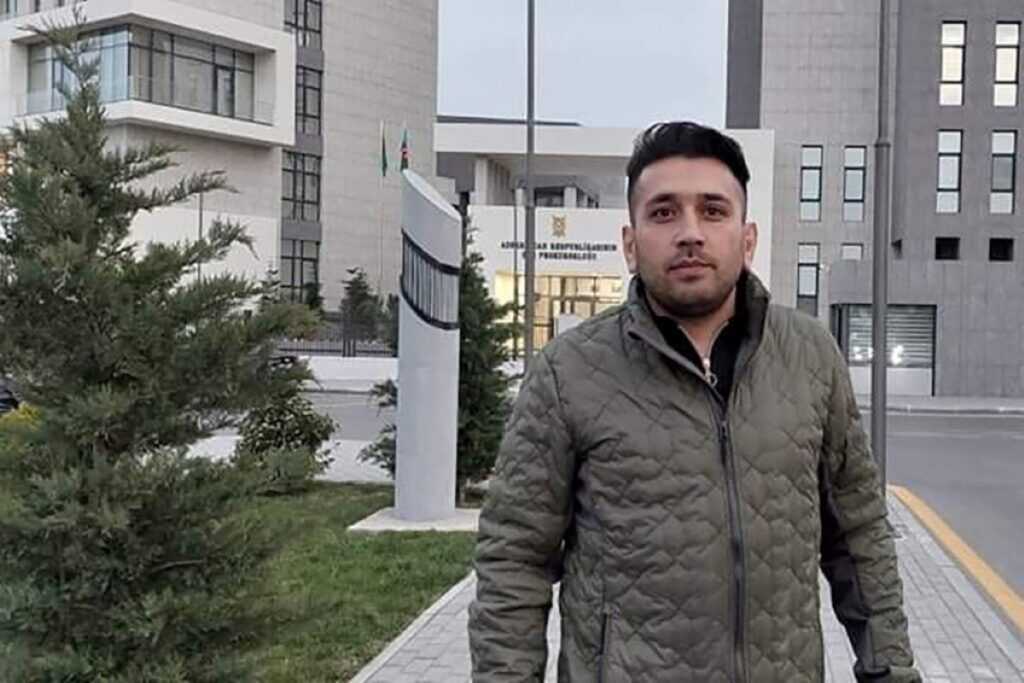
Ismi Aghayev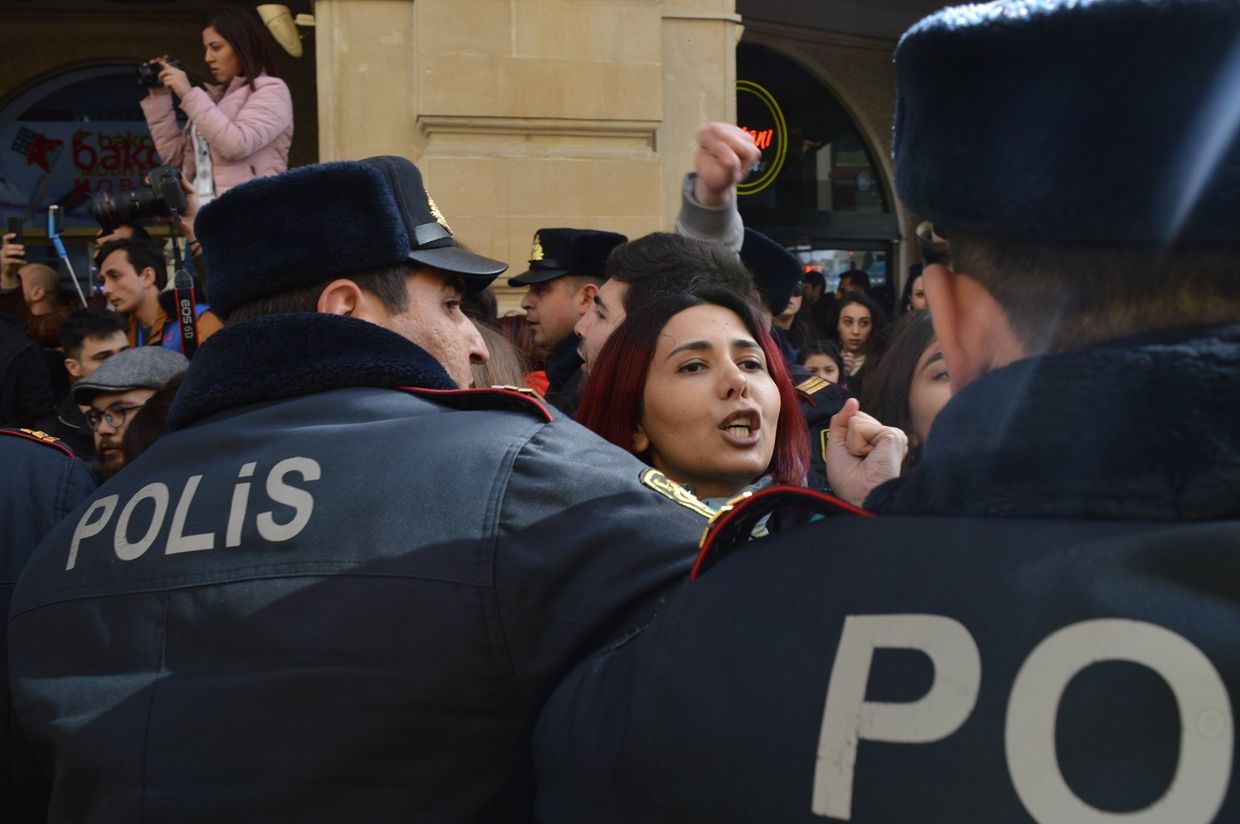
Like all those accused, Jalilzade says the charges are baseless. After reading the indictment, he learned that Azerbaijan’s Prosecutor General’s Office considers even his protest in front of the UN office in Geneva a criminal act.
US-based journalist Sevinj Osmangizi also rejects the accusations:
‘If you run a YouTube channel, go live every day, and challenge the regime’s interests, you are automatically a potential target’, he says.
Similarly, blogger Abid Gafarov wrote on Facebook that he never called for unrest, adding:
‘But the destruction of all political and social institutions by the government is what leads us to civil confrontation — justice in the country will come either like in Armenia or like in Syria’.
Yet the pressure still continues. Historian Altay Goyushov, who lives and works in France, says the Azerbaijani authorities have refused to renew his passport after it expired in September:
‘You summon me, but you won’t even issue a passport’, he says, addressing law-enforcement agencies.