First Georgian protester criminally charged with ‘blocking road’ on hunger strike for over two months

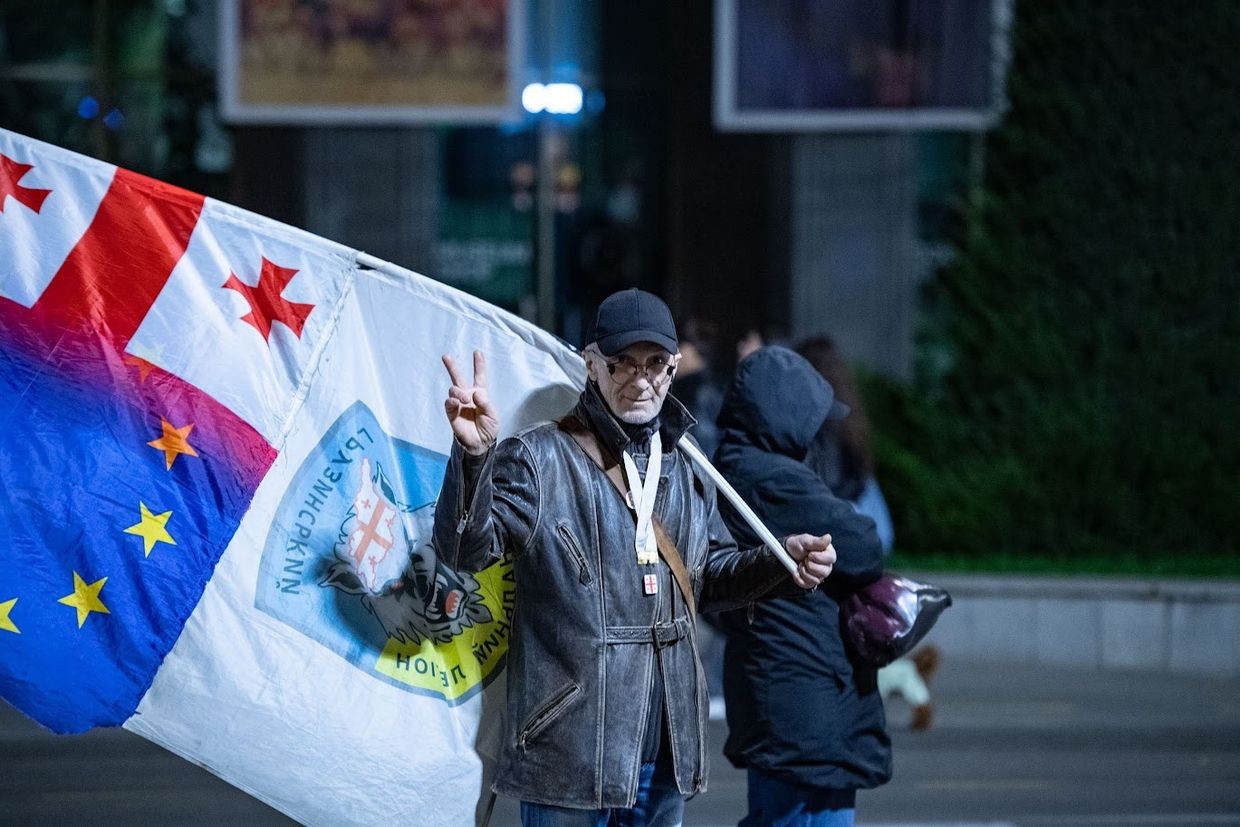
Zurab Menteshashvili, the first Georgian protester to be criminally charged with blocking a road during a protest, has been on hunger strike in detention for over 60 days. If found guilty, he could face up to a year in prison.
Menteshashvili, 61, was an active participant in the daily anti-government protests. He was detained by police on the evening of 31 October on Tbilisi’s central Rustaveli Avenue, the traditional site of the demonstrations. A few days later, reports emerged that he had begun a hunger strike in protest.
Menteshashvili is being tried by the Tbilisi City Court under legislative amendments adopted in October, which replaced administrative fines for blocking roads with administrative detention for a first offence and criminal charges for repeated offences.
After the adoption of the amendments, dozens of demonstrators were sentenced to days-long administrative detentions. However, Menteshashvili is the only individual who, after serving a five-day detention on 24 October, was rearrested under criminal charges.
 Mikheil Gvadzabia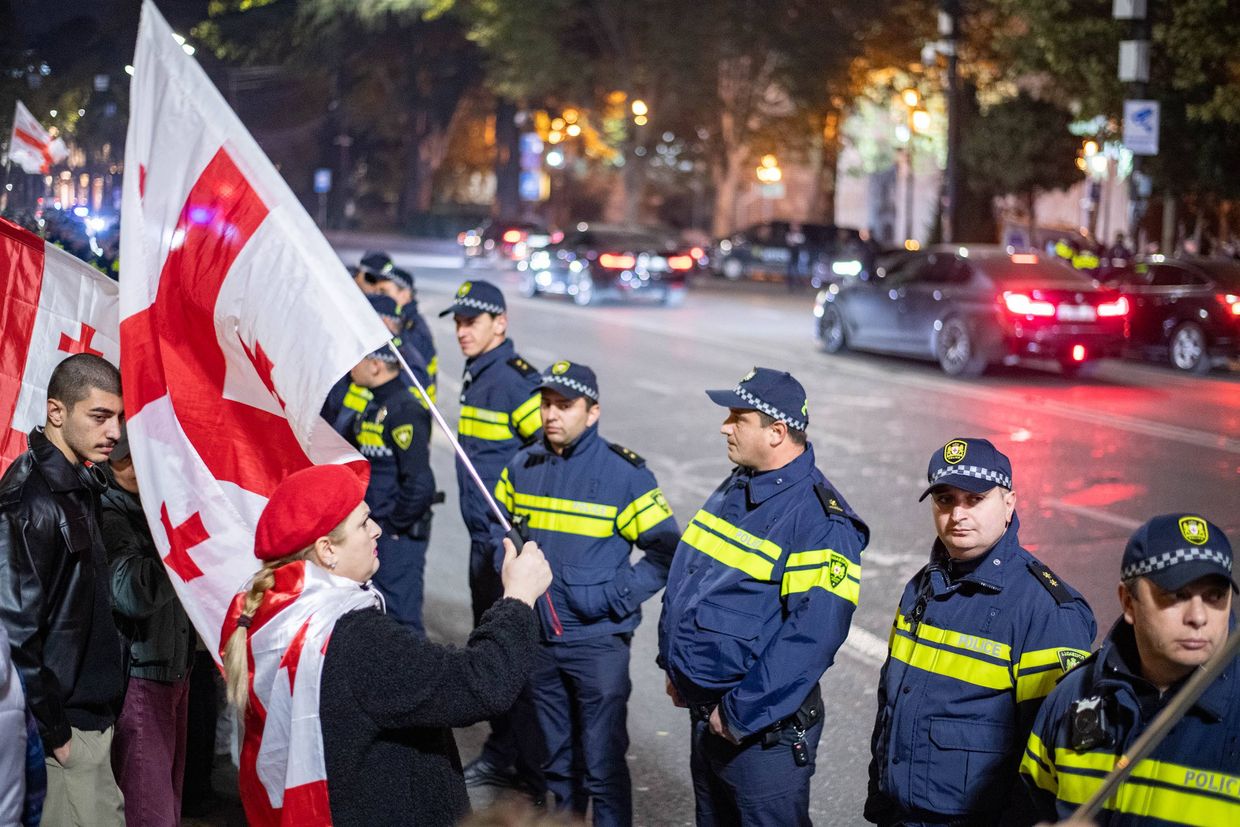
At the latest court hearing on 24 December, Tbilisi City Court judge Valerian Bugianishvili ordered that Menteshashvili remain in pre-trial custody, granting the prosecution’s motion, which argued that there was a risk of him committing a new offence.
According to IPN, Menteshashvili told the court that he had participated in a peaceful protest and that he was glad to stand alongside other demonstrators on Rustaveli Avenue.
‘Please explain to me what you see in this that is so terrible that I am apparently considered a criminal’, he said to the Bugianishvili.
In an audio recording released by independent news outlet Netgazeti on Monday, Menteshashvili said he had been experiencing dizziness and had fallen several times, adding that symptoms related to a coma he had suffered in the past had also resurfaced during his hunger strike.
Speaking about the reasons behind his hunger strike, Menteshashvili said he wanted to reach citizens who remained at home and did join the anti-government protests.
‘Till the very end, only till the end. I was born this way and I will die this way,’ he added, saying that his goal was to ‘free the country from tyranny’.
According to Menteshashvili, while in prison he received around 300 letters, most of which contained requests for him to end his hunger strike.
Daily anti-government protests have been taking place in Tbilisi and other cities almost continuously since 28 November 2024, when the authorities halted Georgia’s EU membership bid.
In parallel, several restrictive legislations passed by Georgian Dream have directly or indirectly targeted street protests — from harsher penalties for blocking roads to bans on face coverings and other actions.
One of the latest legislative changes targeted protests on pavements, introducing a requirement for demonstrators to notify the Interior Ministry in advance, while granting police the authority to alter the time or location of a demonstration. Failure to comply with the new regulations is punishable with imprisonment.
Mikheil Gvadzabia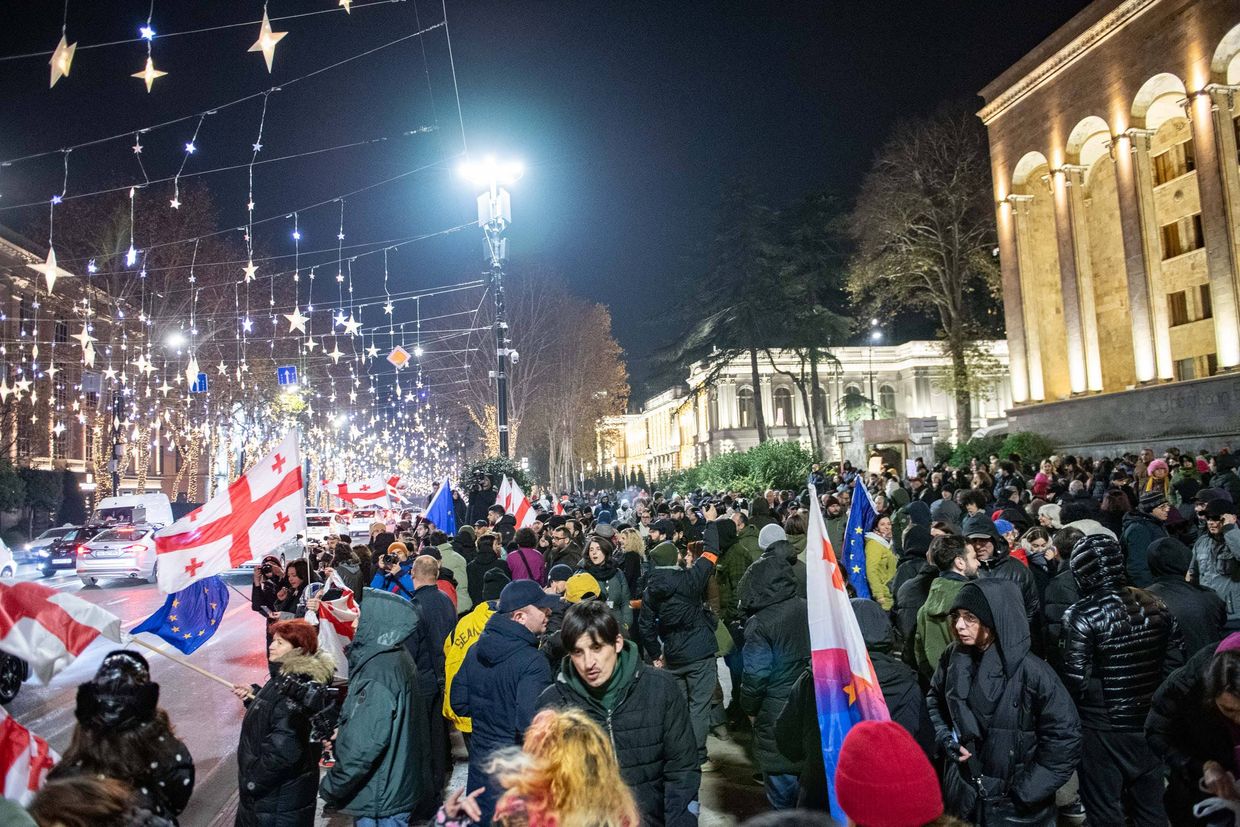
This article was translated into Armenian and republished by our partner CivilNet.
This article was translated into Russian and republished by our partner SOVA.