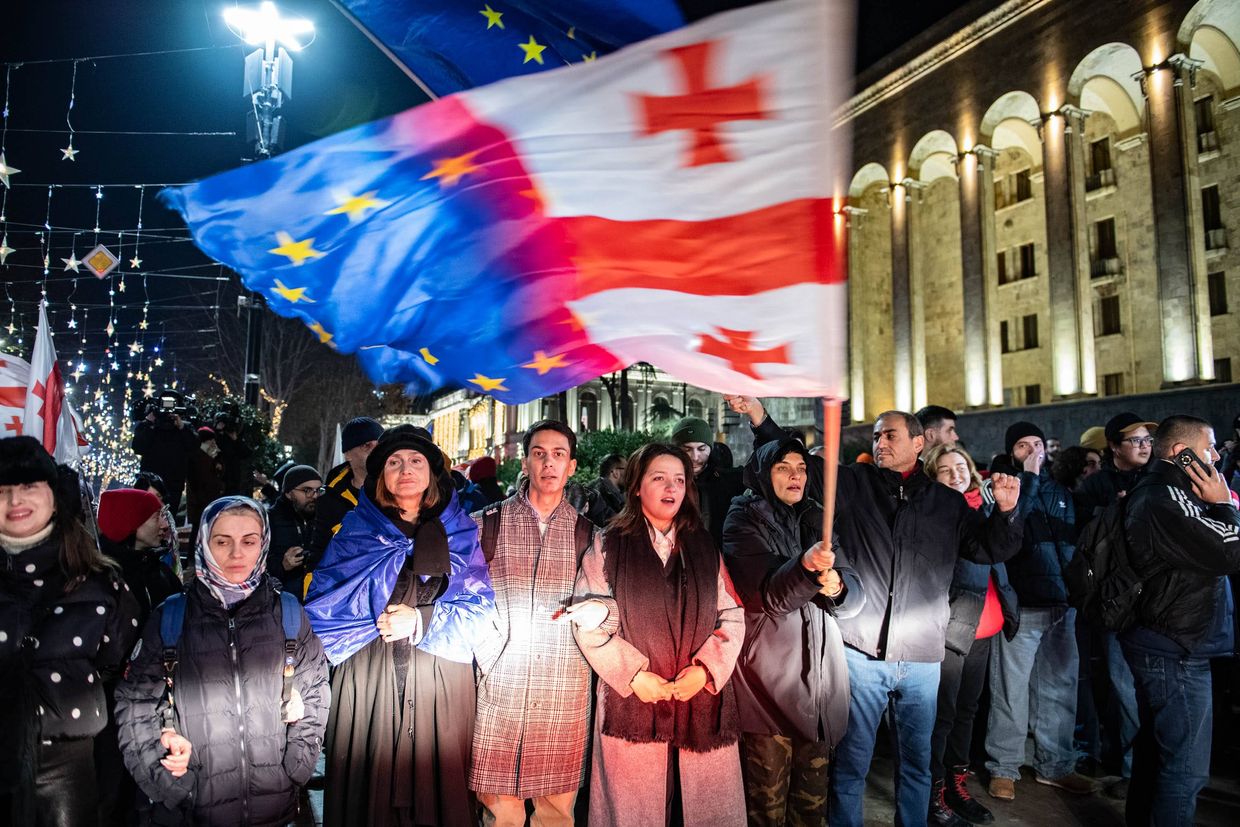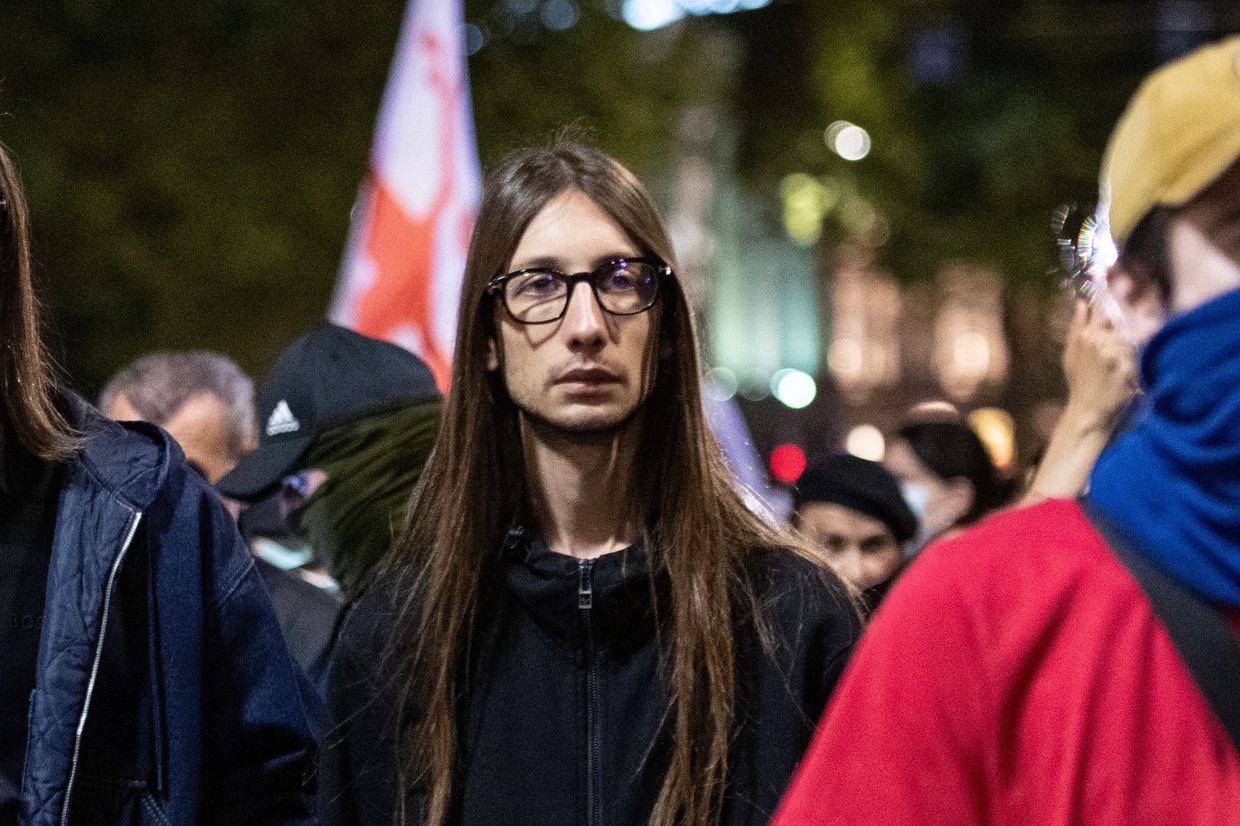
Tbilisi City Court has sentenced two protesters — Zura Manchkhashvili and Tornike Jandieri — to five days in prison on charges of ‘intentionally’ obstructing pedestrians on the pavement.
On Tuesday, the same day as the ruling, the court found two other demonstrators guilty of the same charges, but only issued them a verbal warning.
The rulings are related to December 2025 amendments to the law on demonstrations and the administrative offences code, which introduced an obligation to notify the police before holding a protest in ‘people’s movement’ zones, including on the pavement.
The police have the authority to change both the location and timing of a protest. Failure to comply with the law could result in imprisonment on the first offence. Protest participants now face up to 15 days in jail, while the ‘organiser’ faces up to 20 days.
Manchkashvili’s verdict was delivered in what was essentially an empty courtroom — the defendant, the prosecution, and the defence were not present.
Manchkhashvili told journalists on Tuesday that he found out about the ruling by phone. After that, while attending an anti-government protest near parliament on the same day, he himself approached police officers standing there and informed them of the verdict and that he was supposed to be detained. The officers took him into custody shortly afterward.
In contrast, Jandieri was present when the ruling was announced, after which he stated that he had been protesting on the pavement ‘because we no longer have a country’.
‘We have some kind of grey zone where there are so many political prisoners that we can’t even list all their names and surnames. That’s why I was standing there and why I was protesting peacefully’, Jandieri said.
‘As for the Interior Ministry’s accusation that I obstructed someone there, that was not my intention, and even in the video footage they themselves presented, you can see people moving freely through that space’, he added, as quoted by Publika.
The Tbilisi court had already sentenced five protesters under the new legislation earlier in January. All of them have already been released from prison.
A new reality
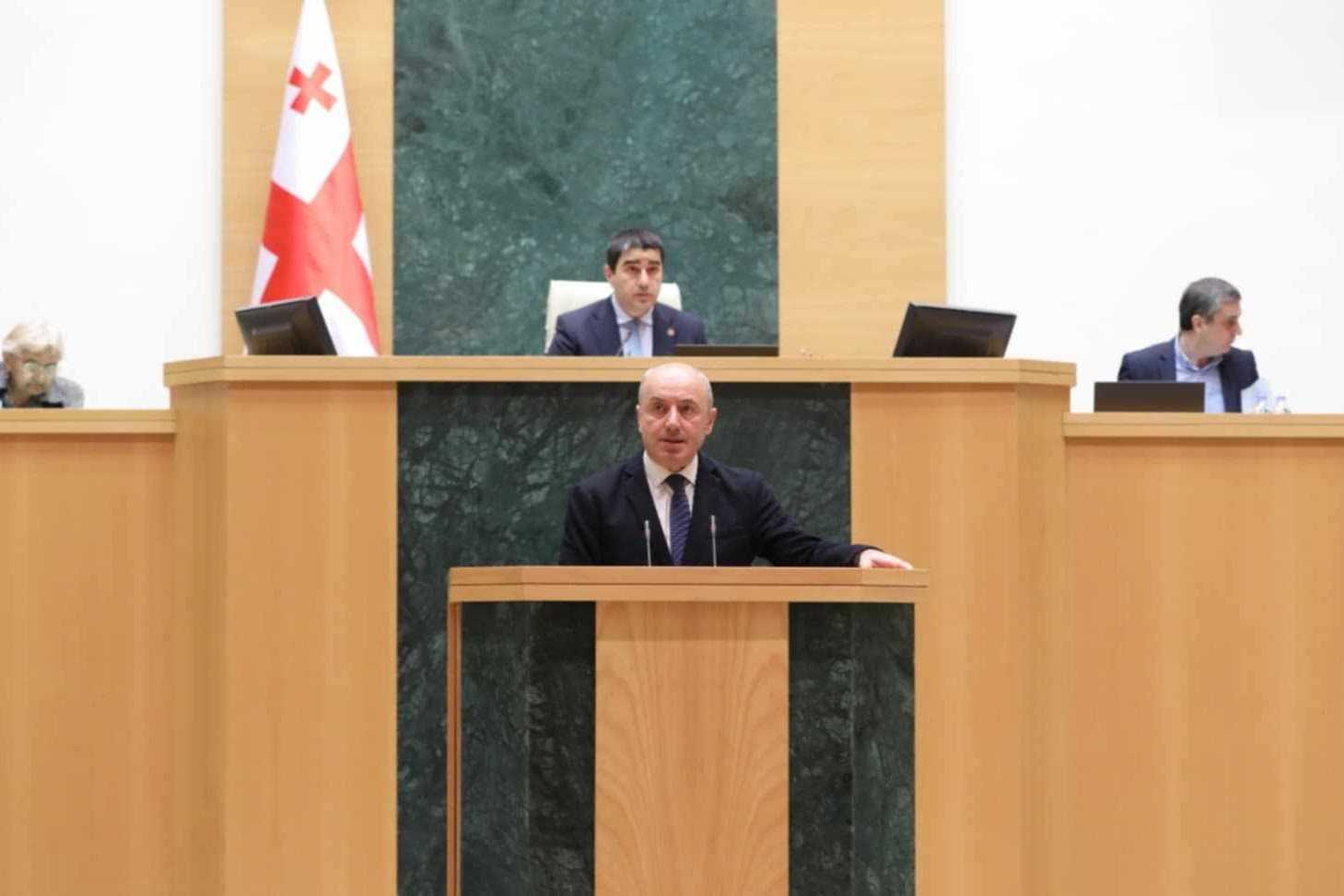
The new legislation was rushed through by the ruling Georgian Dream party and its allies, passing in a final hearing on 10 December. It created a new legal reality for anti-government protesters, who have been holding daily demonstrations in central Tbilisi since November 2024.
After the police succeeded in preventing them from blocking the roads, the main focus of the protests shifted to pedestrian areas — primarily the pavement around parliament and the surrounding streets.
Although it was sharply criticised as yet another attempt to further restrict protest rights, some anti-government personalities decided to engage with the authorities through the new legislation and filed notifications with the Interior Ministry.
The ministry later responded to the notifications and began publishing information about planned protests on its website, along with the ‘mandatory instructions’ for protesters. However, any protests in mid-December for which the ministry did not publish information were considered illegal and participants began receiving administrative offence reports.
Condemning the legislation, critics emphasised that what ruling party MPs called a ‘notification’ in fact served to bring protests under a permit system in the country.
In parallel, several restrictive legislations passed by Georgian Dream have directly or indirectly targeted street protests — from harsher penalties for blocking roads to bans on face coverings and other actions. The ruling party has also targeted civil society, independent media, and the political opposition through laws adopted alongside those focused on curtailing demonstrations.
 Mikheil Gvadzabia