Over the past week, Iran has criticised the Trump Route (TRIPP), while Russia cited ‘sufficient grounds’ for its potential involvement in the project. Armenian officials, however, rejected Iran’s criticism and stated that no discussions regarding Russian participation have taken place.
On Monday, Ali Akbar Velayati, a senior adviser to Supreme Leader Ayatollah Khamenei, criticised the Trump Route during a meeting with Armenia’s Ambassador to Iran, Grigor Hakobyan.
Comparing the Trump Route to Azerbaijani demands for what appears to be an extraterritorial corridor dubbed the ‘Zangezur corridor’, connecting Azerbaijan to its Nakhchivan exclave through Armenia, Velayati, according to Iranian state news agency IRNA, said that Tehran ‘is firmly opposed to it’.
He added that Tehran sees the Trump Route as ‘effectively the same as the Zangezur corridor’.
Velayati additionally argued that the route could enable ‘a NATO presence north of Iran, posing serious security risks to northern Iran and southern Russia’.
After the agreement on the Trump Route in August 2025 at the Washington summit, Iranian officials made several apparently contradictory statements regarding the country’s stance on the Trump Route.
 Nate Ostiller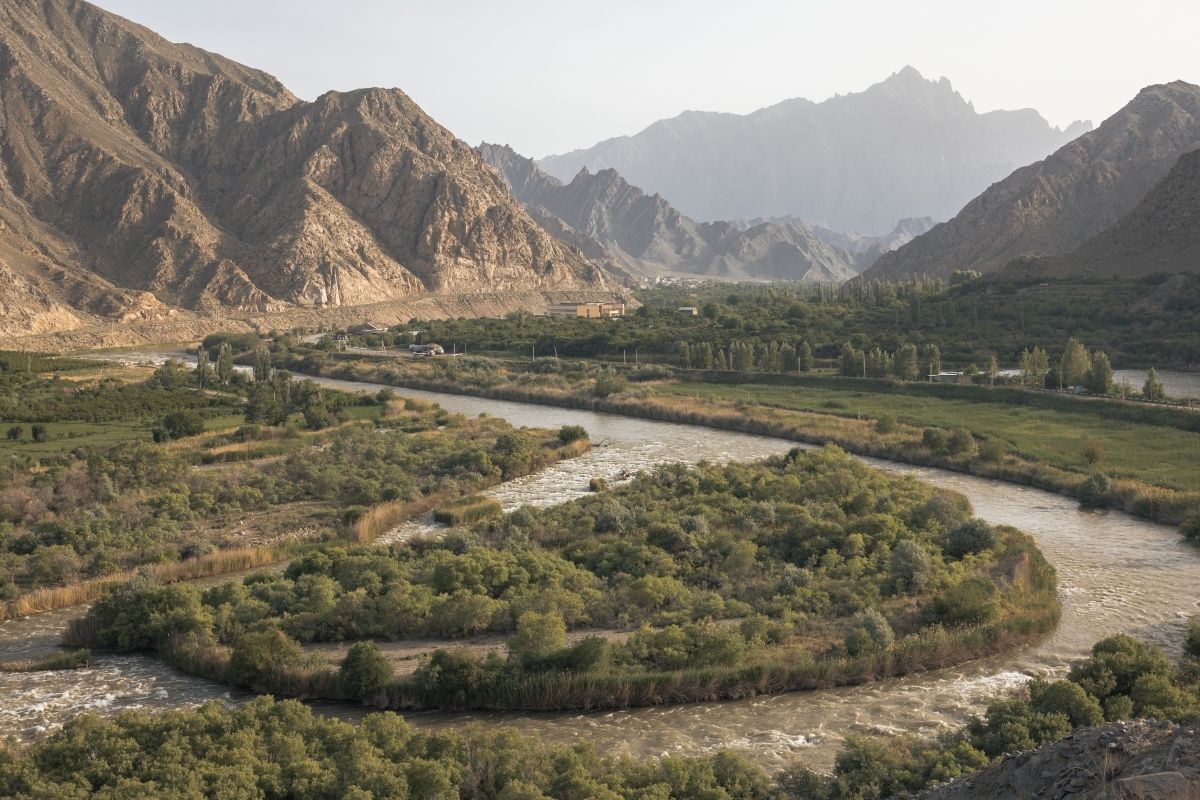
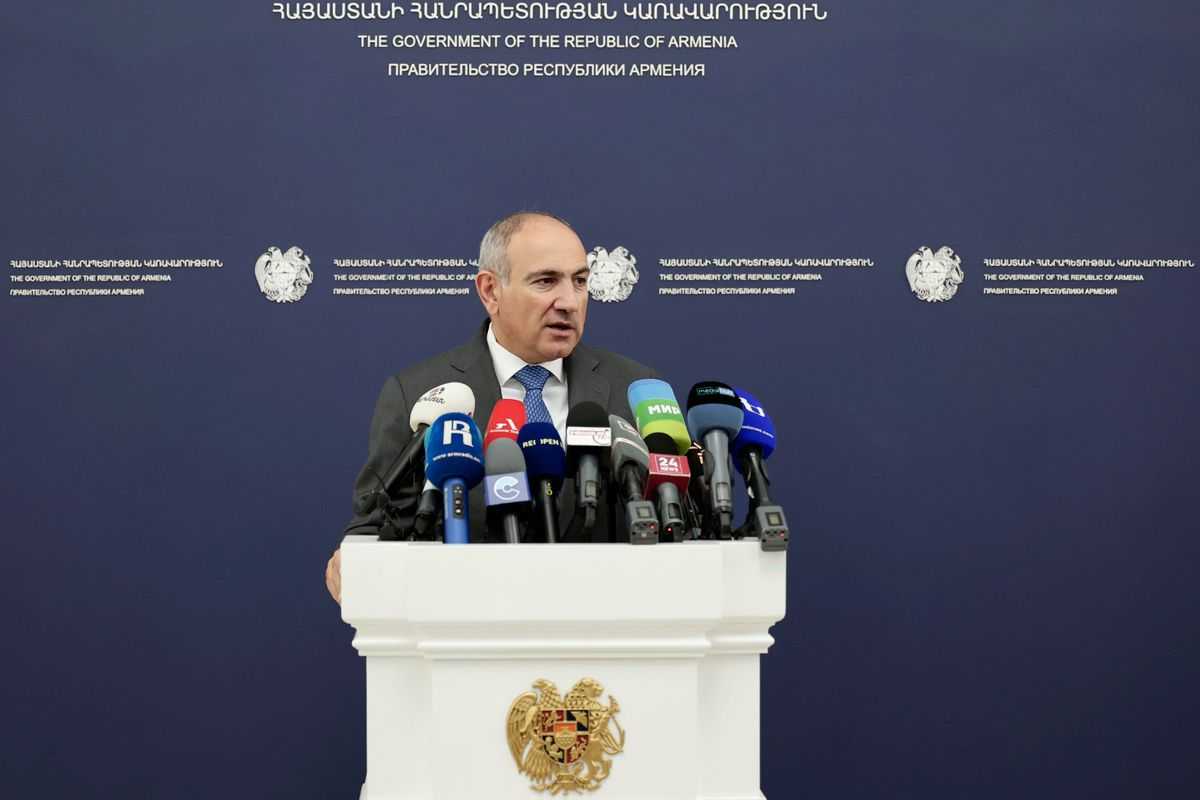
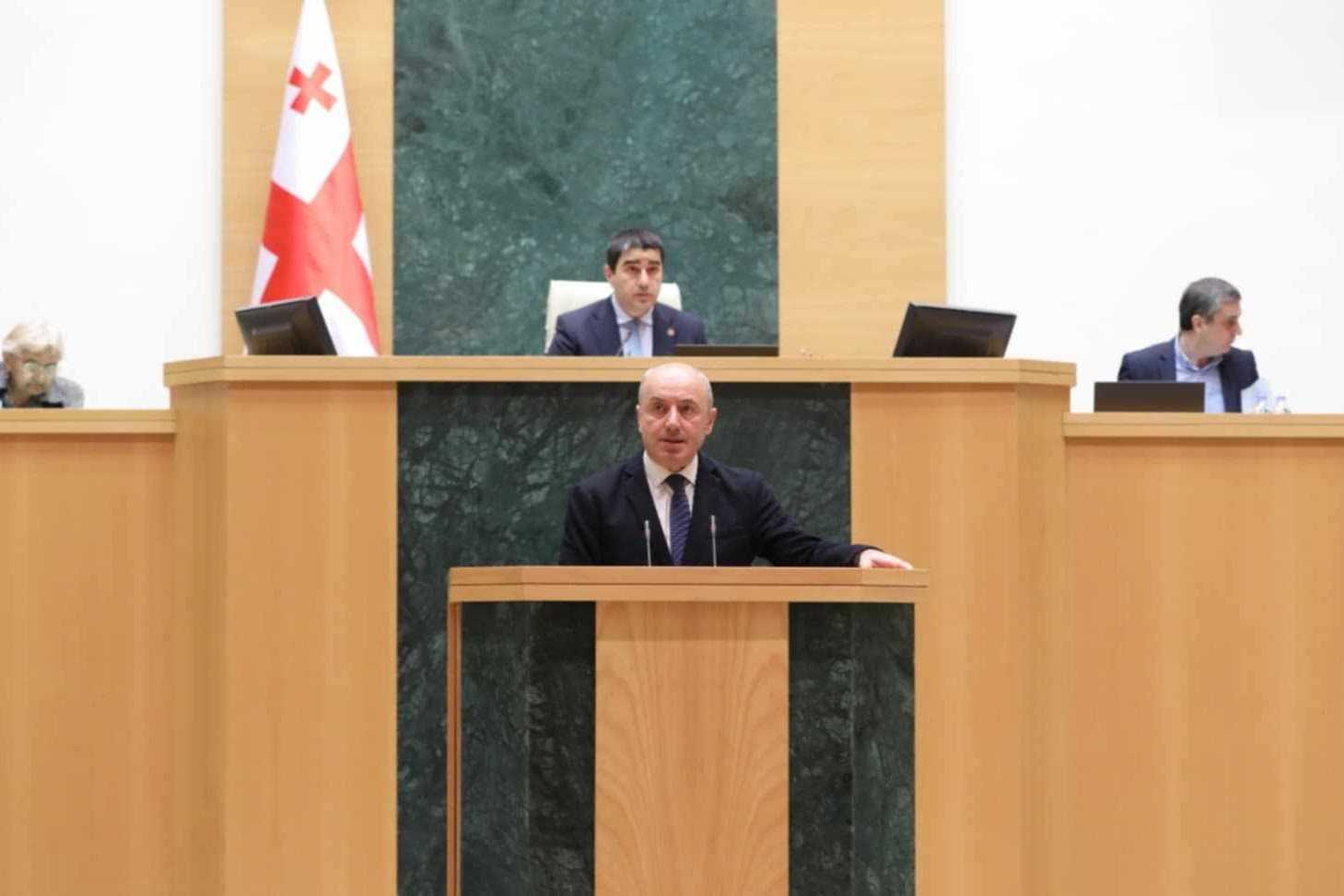
Although the Armenian Foreign Ministry refrained from commenting on Iran’s stance in response to inquiries, instead only offering to take a look at Armenia’s readout of Velayati and Hakobyan’s meeting, Armenian Deputy Parliamentary Speaker Ruben Rubinyan responded to Tehran’s concerns saying that Yerevan ‘take[s] [Iranian] sensitivities into account, and their interests are duly considered’.
‘We are also encouraged by the fact that Iran’s Foreign Ministry has repeatedly stated that there is genuinely no corridor issue in this matter and that Iran’s red lines are being taken into account as well’, Rubinyan said, adding that, above all, the extraterritorial corridor through Armenia is Yerevan’s red line.
‘Ample grounds’ for Russia’s involvement in the Trump route
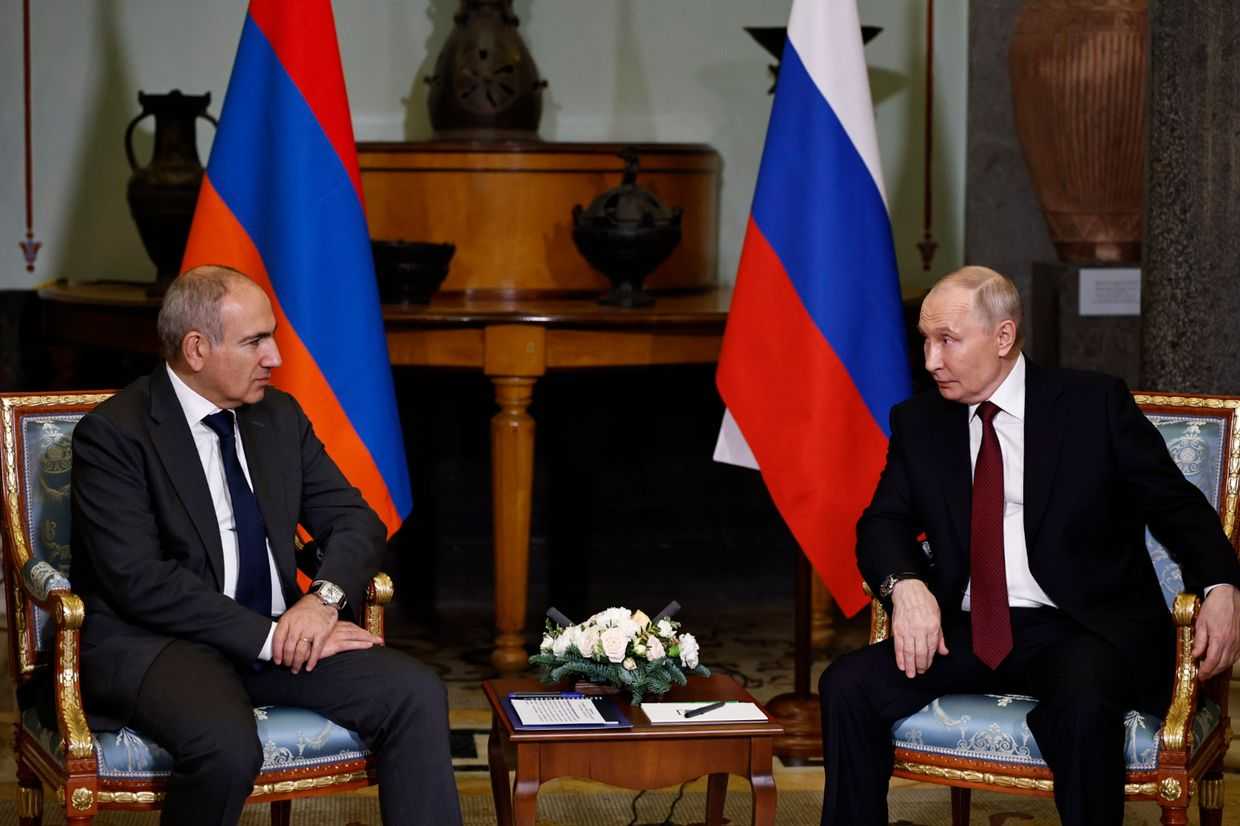
As discussions were being made over Iran’s reiterated concerns, Russia, which was cut out of the Washington summit and associated agreements, also joined in.
Mikhail Kalugin, director of the 4th Department at the Russian Foreign Ministry for countries of the Commonwealth of Independent States (CIS), expressed Moscow’s readiness to discuss possible participation in the Trump Route with Armenia.
Kalugin argued that ‘there are ample grounds for this’, saying that Russian South Caucasus Railways, a subsidiary of Russian Railways, ‘holds a concession to manage Armenia’s railway network’.
Nate Ostiller
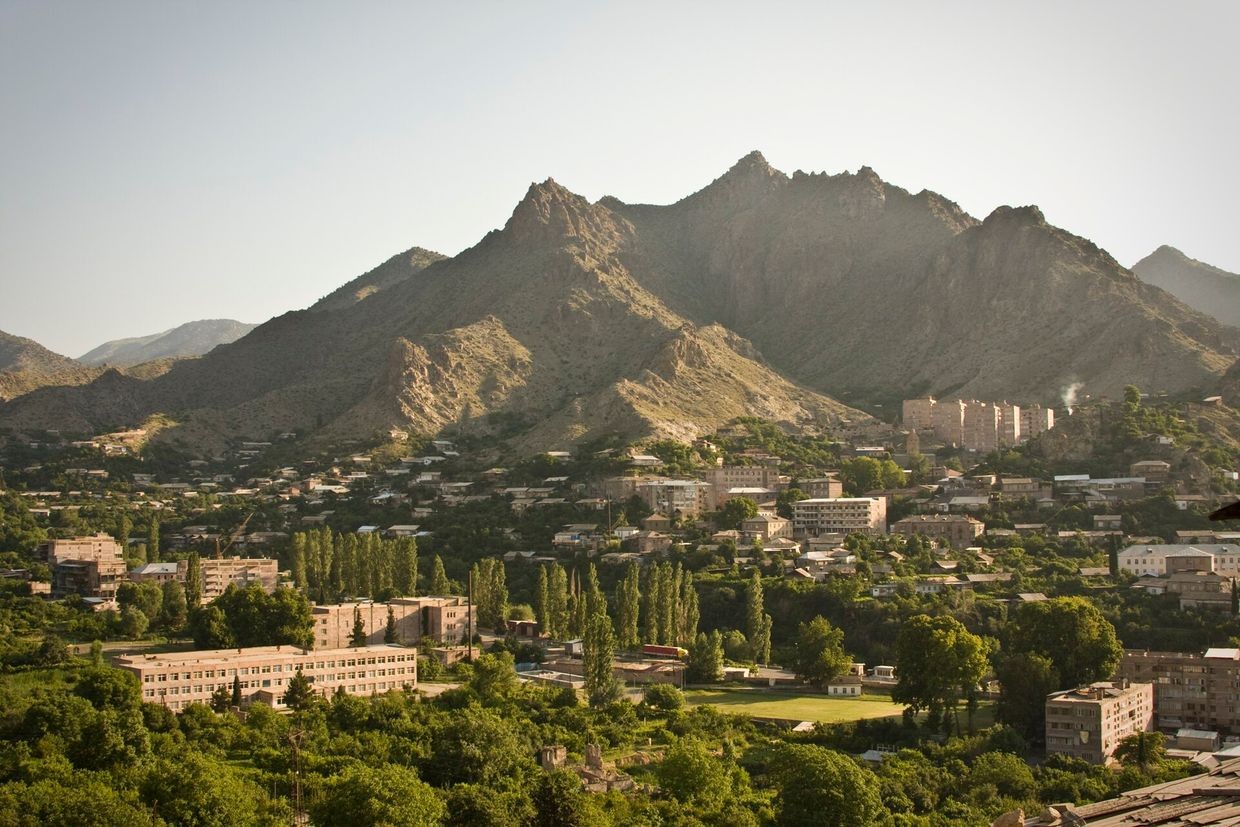
He also added that the Trump Route will pass through southern Armenia, where Russian border guards are stationed to guard the border between Armenia and Iran.
‘Armenia’s membership in the [Eurasian Economic Union] must also be taken into account. Clearly, our partners cannot do without Russia’, Kalugin argued.
‘There are no such discussions’, Rubinyan said at Tuesday’s press briefing after being asked about Moscow’s suggestion Russia wants to be involved.
Talk of involvement in the route in Tehran and Moscow comes as Armenia and Azerbaijan seemingly move closer towards signing a peace agreement.
While there appears to be no indication as to when the Trump Route would begin operations, or how it would be developed, in early December, Prime Minister Nikol Pashinyan said that the TRIPP Company, which will be registered in Armenia, will be ‘granted a right to develop the necessary infrastructure of railway, road, oil and gas pipelines, and fiber optics’.
He also added that ‘intensive negotiations’ were underway on the general terms of implementation of TRIPP, and that the implementation and construction phase would start ‘as early as next year’.