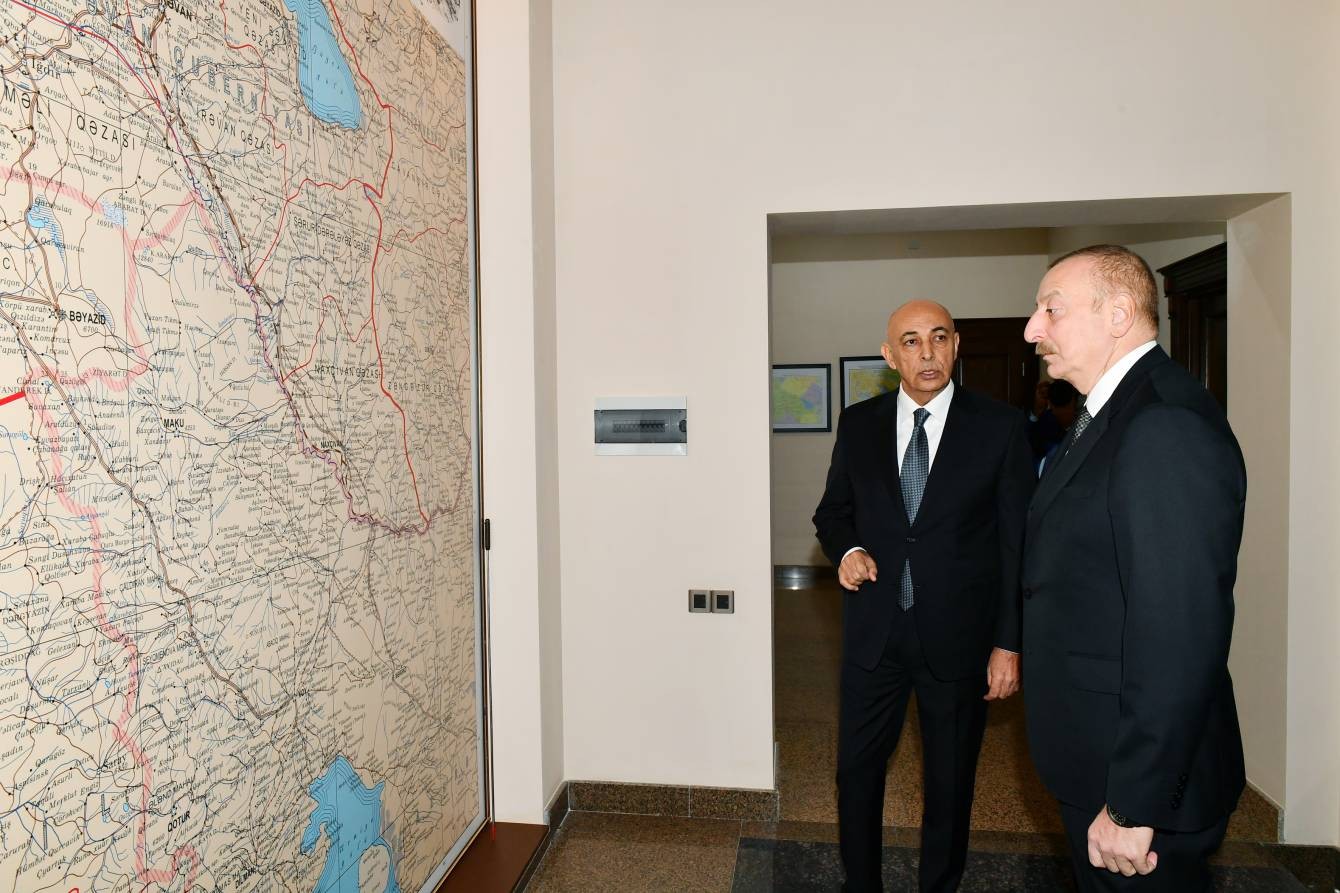
A group of Azerbaijani pro-government civil society members have appealed to US Vice President JD Vance to support the ‘right of return’ for Azerbaijanis expelled from the Republic of Armenia in early 1990s. The public letter was issued on Monday, the day before Vance arrived in Azerbaijan for a historic visit.
The sentiment references the Western Azerbaijan concept, which argues that Azerbaijanis displaced from Armenia in the prelude to the First Nagorno-Karabakh War should be allowed to return. The concept does not contain a similar provision for Armenians displaced from Azerbaijan, and is widely seen as containing irredentist claims on Armenian territory.
The letter began by highlighting how ‘Azerbaijan has historically invested in the protection of diverse religious heritage’, citing cooperation with the Vatican, the growth of Catholicism, and the recent consecration of the first Mormon church in Baku.
Omitted in the letter was the widely-documented destruction and desecration of Armenian Apostolic Church sites at the hands of Azerbaijani forces in Baku and other cities, which continued following the Second Nagorno-Karabakh War and final 2023 offensive. Conversely, the letter detailed the destruction of Azerbaijani religious sites amidst the widespread displacement of Azerbaijanis by Armenian forces.
The letter largely focused on this latter part, arguing that Vance’s ‘support for the peaceful return of Western Azerbaijanis to their historical homelands and restoration of destroyed religious and cultural heritage sites of Azerbaijani people in Armenia can be a significant step forward in the right direction’.
‘While the Western Azerbaijan Community seeks a constructive dialogue regarding a peaceful return, these efforts have yet to be reciprocated. Ultimately, a just and lasting peace must include the reconciliation and safe return of these individuals to their original homes’, the letter concluded, again declining to mention the Nagorno-Karabakh Armenians and other Armenians who had also been forced from their homes.
 Rasmus Canbäck
This article was translated into Russian and republished by our partner SOVA.