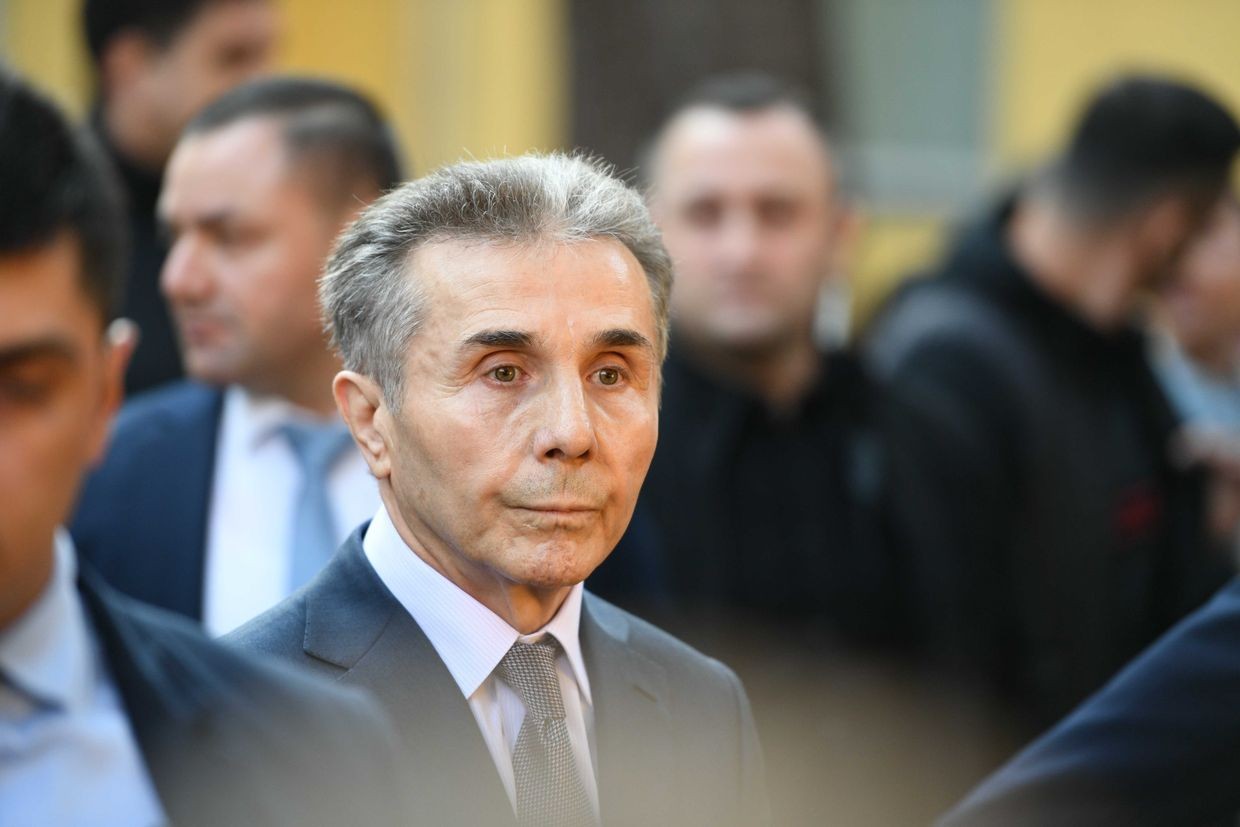
Georgian Dream founder Bidzina Ivanishvili’s lawyer, Temo Tsikvadze, has reiterated claims that foreign intelligence services, which he also referred to as the ‘deep state’, were behind Ivanishvili’s conflict with the Swiss bank Credit Suisse. Tsikvadze also claimed that Ivanishvili does not expect to ever see his funds restored, despite expecting to win the latest case in a hearing scheduled for 24 November.
The ‘deep state’, as well as ‘global war party’, are two nebulous terms that regularly fit into Georgian Dream’s conspiracy theories, and refer to shadowy forces that are trying to overthrow the Georgian government and push it into war with Russia. The ruling party’s use of the term intensified amidst a sharp deterioration in relations with Western allies, following its adoption of several pieces of repressive legislation, as well as the widespread violations documented during the October 2024 parliamentary elections.
 OC Media
According to Tskivadze, Ivanishvili’s ‘political persecution’ by foreign intelligence services, or the ‘deep state’, began in 2008, the same time the formerly ruling United Nation Movement (UNM) ‘rigged the elections and seized power, which led to Bidzina Ivanishvili completely distancing himself from this political force’. This decision, Tskivadze continued, was ‘categorically unacceptable’ to the UNM’s ‘external patrons’, which is why, he claims, they began to ‘deliberately destroy’ Ivanishvili’s accounts in Switzerland.
To do so, Tskivadze wrote, they recruited former Credit Suisse banker Patrice Lescaudron, who, in 2018, was convicted of fraudulently taking money from several high-profile clients, including Ivanishvili, who subsequently sued Credit Suisse to recover the funds.
‘The special services brought the matter to the point that in the process of political persecution of Bidzina Ivanishvili, they completely destroyed the prestige of the Swiss banking system, and at one time they brought the world’s number one bank, Credit Suisse, to bankruptcy’, Tskivadze claimed.
On 7 May 2024, Bloomberg reported that Ivanishvili had launched a new lawsuit against the troubled bank for $220 million. According to the article, Ivanishvili has already been awarded $1.34 billion by courts in Bermuda and Singapore over the affair, although Credit Suisse had vowed to appeal these decisions. The final court hearing in the Bermuda dispute is scheduled for 24 November in London.
According to Tskivadze, in parallel with these court cases, ‘the political persecution of Bidzina Ivanishvili over time reached new heights of absurdity’, foremost of which he claimed was the introduction of US sanctions.
In December 2024, the Biden Administration sanctioned Ivanishvili for ‘undermining the democratic and Euro-Atlantic future of Georgia for the benefit of the Russian Federation’.
The sanctions against Ivanishvili froze his US assets, if any, and prohibited US citizens and entities from conducting business with him without specific authorisation from the US Treasury Department’s Office of Foreign Assets Control (OFAC).
The Treasury Department has also barred Ivanishvili from receiving $461 million in damages from the UBS Group AG, a multinational investment bank and financial services company, over a long-running legal battle with Credit Suisse — a bank the UBS acquired in March 2023.
Yousef Bardouka
‘It is clear that the informal rulers, the so-called “Deep State”, clearly have difficulty controlling the judicial system and processes, especially when there is not even the slightest question mark in the case, but they have a number of other levers at their disposal, including the sanctions I mentioned’, Tskivadze wrote.
‘Imposing sanctions on the amount that my attorney has not yet finally returned through legal means was a simple message to us — “You may win the court, but we will still decide on the issue of returning the asset!” ’.
Tskivadze also claimed that there was ‘another, more cynical and white-threaded case in Switzerland, controlled by special services’, referring to the Julius Baer bank. According to Tskivadze, the bank had ‘hooliganly’ frozen not only Ivanishvili’s assets, but also restricted his wife and children from accessing the account.
‘The special services under the previous [US] administration could not sanction Mr Ivanishvili’s wife and children for “pursuing Russian interests”, because that would be an overreach even for the “deep state”, but where they have difficulty finding formal reasons, they resort to crude, thuggish methods’, Tskivadze wrote.
He went on to claim these incidents as an ‘unprecedented example of persecution, robbery, and blackmail of a person simply because he put Georgia’s national interests above everything else and did not become a follower of the instructions of the special services, the so-called “Deep State” ’.
Despite accusing foreign states, including the US, of being behind Ivanishvili’s financial woes, Tskivadze still followed the Georgian Dream line of praising US President Donald Trump and his alleged attempts to fight this ‘deep state’.
Mikheil Gvadzabia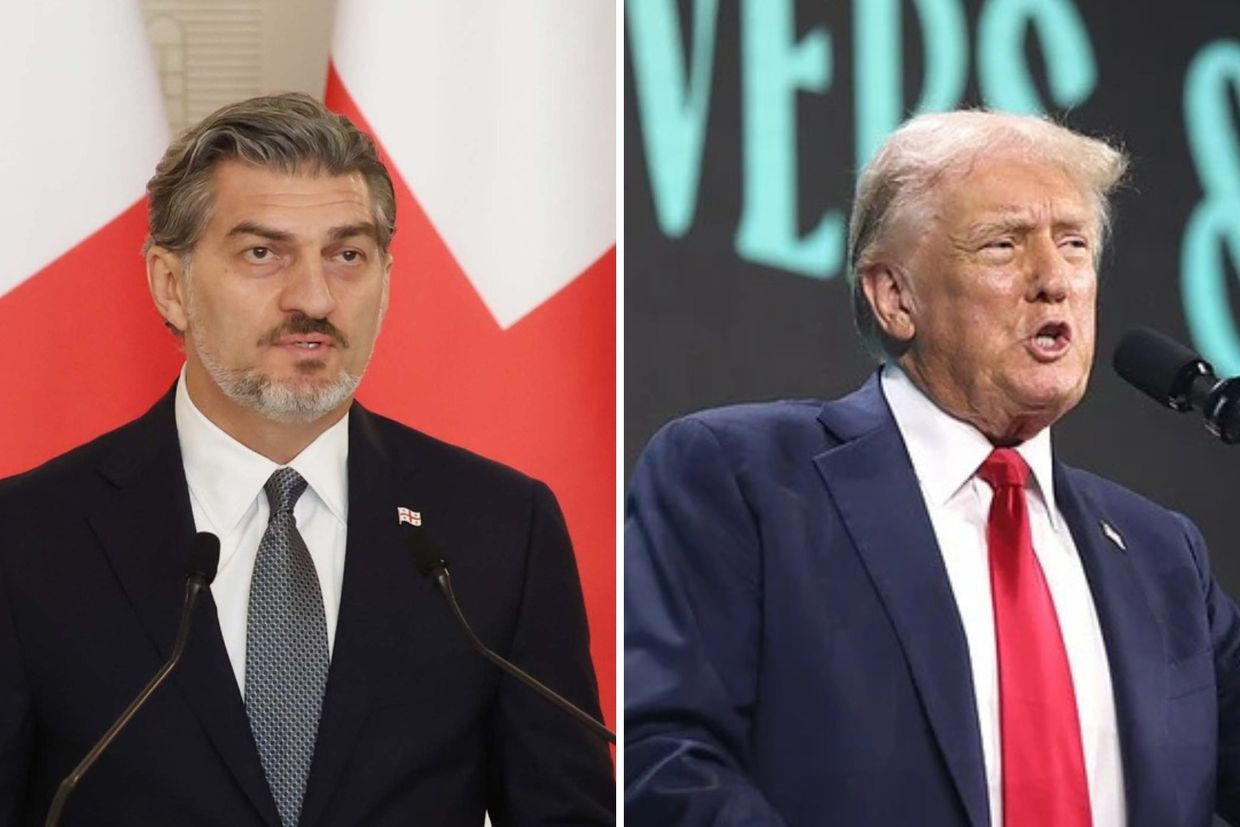
‘Leaving aside other examples, the current US President, Donald Trump, directly admits that the previous administration was completely ruled by individuals with informal influence, and he himself is fighting against these forces with a sword’, Tskivadze wrote.
‘The sanctions imposed on Bidzina Ivanishvili were also imposed by these informal rulers, and in this regard, Trump’s decision will actually be one of the indicators for us of whether the president’s fight against the “Deep State” is real or not’, Tskivadze continued, referring to previous claims by Georgian Dream officials that Trump would remove Ivanishvili’s sanctions once elected.
Tskivadze wrapped up his post by emphasising that despite an expected win at the 24 November hearing, Ivanishvili ‘knows exactly’ that the funds will not be returned.
‘Ivanishvili is absolutely accustomed to the fact that neither the funds related to the Credit Suisse case nor the funds accumulated in Julius Baer (Mr Ivanishvili no longer even corresponds with the aforementioned bank regarding their illegal actions) will be forfeited to him and his family members’.
‘Even without these funds, Mr Ivanishvili and his family continue to protect the peace and economic stability of our country on the one hand, and to engage in charitable activities on the other’, Tskivadze concluded.
Tskivadze’s comments follow a long history of blaming Ivanishvili’s financial troubles on foreign actors.
In 2022, prior to the government’s use of the term ‘deep state’, then-Georgian Dream chair Irakli Kobakhidze speculated that a delay in the transfer of back funds from a Credit Suisse account to Ivanishvili could have been the result of ‘coordinated actions’ aimed at involving Georgia in the war in Ukraine.
Tata Shoshiashvili
Two years later, in 2024, then-Georgian Dream parliamentary leader Mamuka Mdinaradze suggested that the West deliberately bankrupted Credit Suisse in order to apply pressure on Ivanishvili.
‘As for the Global War Party, these are specific, unfortunately, very influential forces that manage, for example, to organise an attempt to blackmail Bidzina Ivanishvili at the expense and cost of the bankruptcy of a Swiss bank and to stop billions’, he said.
Mdinaradze said he was ‘talking about specific forces that control the situation and influence such structures that are capable of making decisions all over the world’.
OC Media
Georgian Dream officials have increasingly referred to the global war party and deep state conspiracies as Ivanishvili’s legal troubles with Credit Suisse have dragged on, using it to justify their increasingly authoritarian and anti-Western policies.