Editor’s note: the material was updated to include additional information after the publication of the draft law.
Georgian authorities have announced new sweeping legislative amendments, targeting civil society, independent media, and political parties. The changes would significantly extend the government’s control mechanisms over international funding, while introducing lengthy prison sentences and heavy fines for violations.
As in the past, the ruling Georgian Dream party justified the latest changes as an effort to prevent the ‘revolutionary processes’ in Georgia — something the authorities claimed foreign donors, including US-run organisations such as USAID and NED, were seeking to promote.
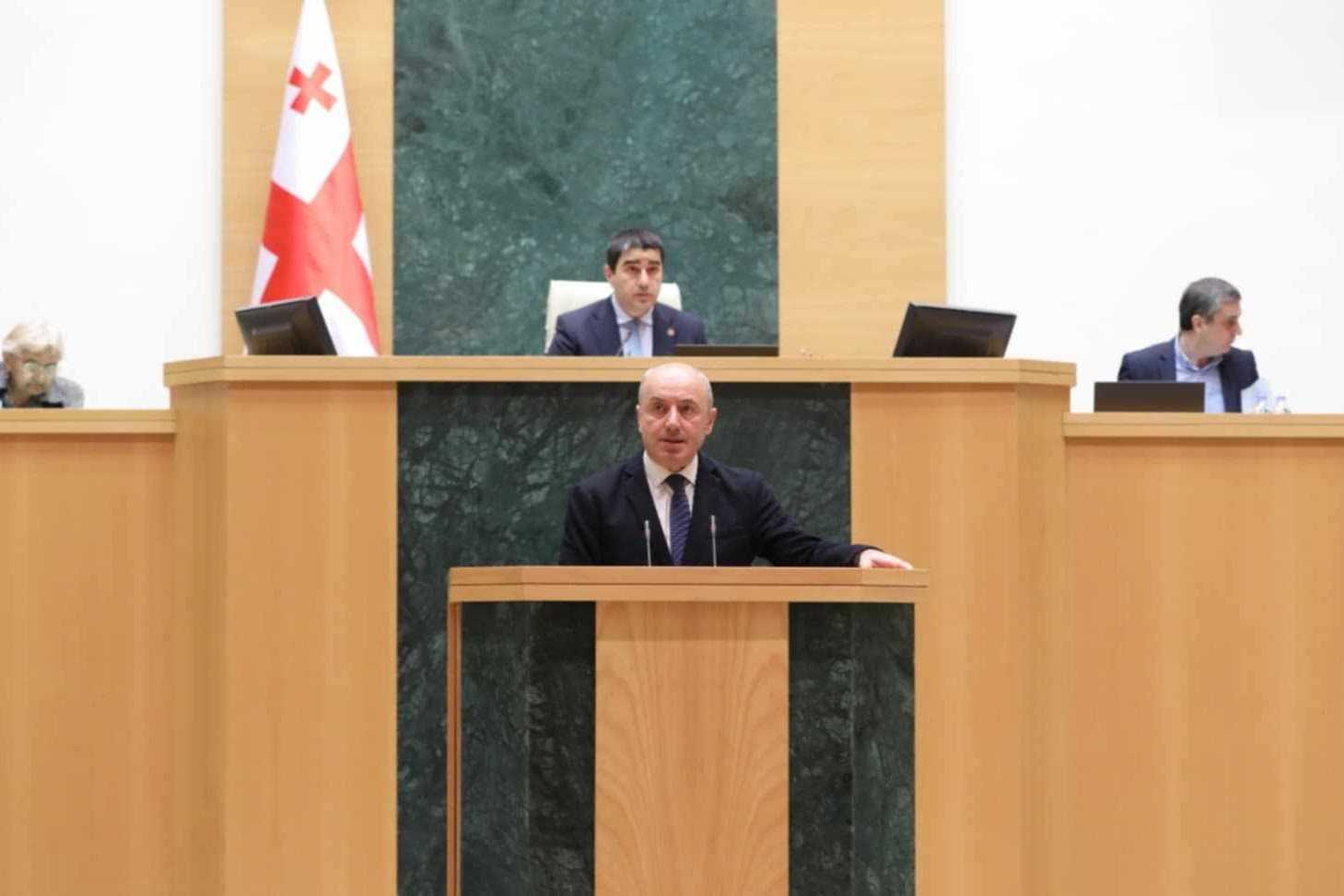
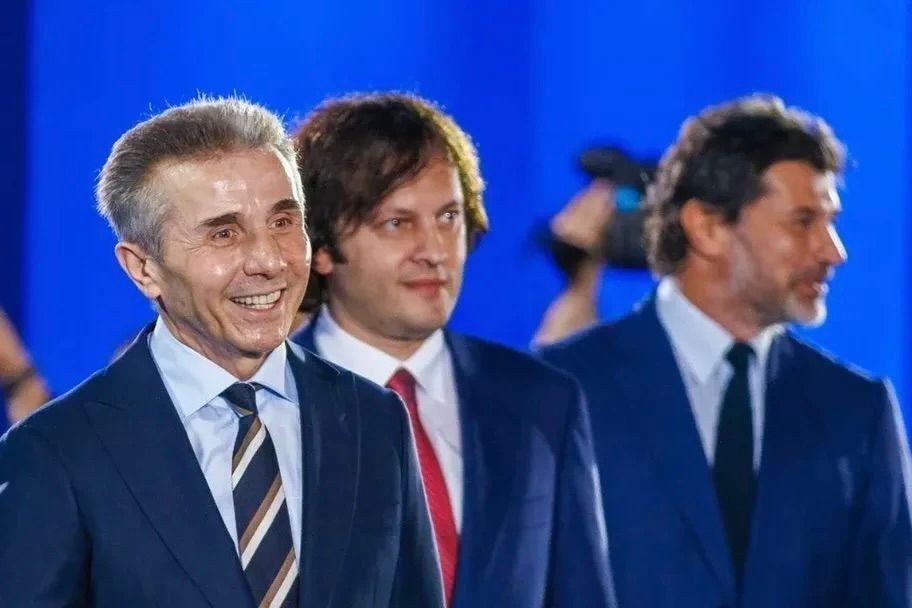
Irakli Kirtskhalia, chair of Georgian Dream’s parliamentary faction, said at Wednesday’s briefing that financing ‘revolutionary processes’ has become more difficult thanks to legislations passed before, though mechanisms for ‘circumventing the law’ still remain.
‘We are introducing legislative changes to ensure that in the future no one can find alternative ways to finance unrest and violence in Georgia from outside the country’, he added.
A day after Kirtskhalia’s briefing, parliament published a draft legislative package proposing amendments to the law on grants, the criminal code, and five other laws.
The new amendments build on restrictive legislation passed over the past two years, which has already limited access to vital international funding for government-critical actors, many of whom relied heavily on such grants.
As a result, several civil society organisations have already suspended their activities and the others are facing the increasing risk of closure. Independent media outlets also found themselves under increasing dangers, while struggling to find alternative sources of funding.
In 2025, organisations from both sectors became targets of various state probes.
 Mikheil Gvadzabia
Expanded definition of grants with increased government control
As part of the changes, the ruling party has once again sought to amend the law on grants, which was already revised in spring 2025. As a result, receipt of foreign grants — with limited exceptions — is now subject to government approval.
However, under the latest amendments, the definition of a grant itself is dramatically expanded, giving the government greater control over the funding of non-state actors.
In addition to the existing definition, a grant would also include ‘funds provided in monetary or in-kind form’ by another state, a foreign citizen, or a foreign legal entity to a Georgian citizen, a person with the right of residence in Georgia, or a legal entity registered in Georgia, that are used, or could be used, for:
- ‘Activities carried out or intended to be carried out with the belief or intention of influencing the Georgian government, state institutions, or any part of society, in ways aimed at shaping, implementing, or changing Georgia’s domestic or foreign policy’;
- And ‘activities that derive from the political or public interests, approaches, or relations of a foreign government or foreign political party’.
Under the amendments, a grant would also be defined as funds or in-kind contributions provided in exchange for technical assistance — including the sharing of technology, specialised knowledge, skills, or expertise, as well as the provision of services or ‘other forms of support’ — if the state determines that those funds or contributions are intended for the activities described above.
If the state reaches such a conclusion, technical assistance provided free of charge would also be considered a grant.
All such funding will require prior approval from the Georgian government.
The amendments would further define the term, ‘other state legal entities whose activities substantially involve matters related to Georgia’. In one specific example, Kirtskhalia mentioned organisations that are registered abroad but whose activities are ‘substantially carried out in Georgia’.
Such an entity would be able to receive a grant only with prior consent from the Georgian government.
Under the amendments introduced in spring 2025, receiving foreign grants without government approval is punishable by a fine.
However, the latest changes would bring in prison sentences, allowing for violations of the grant law to be punished by imprisonment for up to six years — as well as options for fines or community service. The corresponding amendments would be incorporated into the criminal code.
In addition, Georgian Dream intends to add an aggravating circumstance to the criminal code article on money laundering — ‘money laundering for the purpose of engaging in political activities related to Georgia’ — which would carry a prison sentence of nine to 12 years.
Furthermore, any representative office, branch, or division of a ‘non-resident legal entity’ would need government approval to receive a grant from the legal entity it represents. According to Kirtskhalia, violation of this provision would result in administrative liability in the form of a fine.
Mikheil Gvadzabia
New restrictions for political parties and entrepreneurs
Kirtskhalia highlighted several changes directly affecting political parties.
Under the proposed law, the head of any political party that violates the law on political associations by receiving foreign funding will be held criminally liable after passing the legislation.
‘This violation will be punishable by a fine, community service ranging from 300 to 500 hours, or imprisonment for up to six years’, he added.
The same penalties would apply to what Georgian Dream calls ‘foreign lobbying’, which refers to the ‘direct or indirect transfer of money, securities, other property, financial benefit, or any other advantage to a foreign citizen or legal entity in exchange for engaging in political activities related to Georgia’.
The amendments to the law on political associations would also establish grounds for prohibiting party membership.
Specifically, anyone employed under a labor contract by an organisation that receives more than 20% of its annual income from a ‘foreign power’ will be barred from party membership for eight years. This effectively excludes a significant portion of individuals with backgrounds in civil society or the media from the right to engage in party politics.
Georgian Dream-era legislation defines the term ‘entity pursuing the interests of a foreign power’ broadly, extending it to include any media and civil society organisation that receives more than 20% of its income from a ‘foreign power’.
In turn, the term ‘foreign power’ is also defined broadly and includes:
- a subject within the system of government of a foreign state;
- an individual who is not a Georgian citizen;
- a legal entity not established under Georgian law;
- any organisational formation (including a foundation, association, corporation, union, or other type of organisation) or other association of persons established under the law of a foreign state and/or under international law.
According to the draft, the eight-year period would be counted from the time the individual last received an income from those ‘pursuing the interests of a foreign power’.
Georgian Dream also appears keen on expanding what — or whom — is considered to be a political actor. Under the current law, a person or organisation must have a ‘declared electoral goal’ to be subject to certain finance restrictions, whereas the proposed legislation would allow the laws to cover anything or anyone who has a ‘political goal’ or wants to form a political party. Accordingly, the circle of individuals and organisations who are or will be subject to funding restrictions under the law of political associations is expected to expand.
The amendments would also affect entrepreneurs — an entrepreneurial legal entity engaging in ‘public political activities’ unrelated to its core business would be fined ₾20,000 ($7,400), and ₾40,000 ($14,800) for repeat offenses. According to the ruling party, individual entrepreneurs won’t be affected by the law.
The law will have retroactive effect
According to the draft law published on the parliament’s website, some amendments will have retroactive effect once adopted.
Specifically, if those covered by the law received a grant that did not require government approval at the time but does require approval under the new legislation, they must apply for approval within one month of the law’s entry into force.
Until a decision is issued, use of the grant is prohibited and may result in liability under Georgian law.
‘This is killing the future’
The ruling party’s announcement was soon followed by condemnation by its critics.
Tamta Mikeladze, head of the Tbilisi-based civil rights group Social Justice Center (SJC), stated that the ruling party does not only aim to gain full control over population and restrict political freedoms, but also to trigger ‘the migration of the critical mass of society’ from the country.
‘If this process doesn’t stop, we won’t be able to recognise our country in five years, believe me!’ she wrote on Facebook.
Students, academics, human rights defenders, and professionals from different fields, who are involved in foreign-funded projects and seek to influence the public, ‘will have to either submit to full government control or face prison’, Mikeladze said.
‘[The government] has already destroyed institutional actors, and now they have begun purging the political body of the critical masses in order to establish complete hegemony over society’, she added, calling the amendments ‘killing of the future’.
Giorgi Mshvenieradze, founder of the Guardians of Democracy movement, offered hypothetical examples to illustrate, in simple terms, the consequences the amendments will bring.
‘Imagine a family member living abroad (and one in four Georgians is) sends you $100. Since this money could potentially be used by you […] to buy a European flag and hang it from your window as a symbol of a union of states — where you see the future of your people — you could face up to six years in prison for it’, he wrote on Facebook.
Tina Khidasheli, former defence minister under Georgian Dream, also joined the criticism, calling the amendments ‘legislation of dictatorship’, while also seeing them as evidence that previous laws had failed to silence critics.
‘For three years they have been passing laws to neutralise and destroy free thought and free individuals. For three years they have been chasing us with laws, and here 2026 begins with the fact that they still couldn’t erase us, couldn’t wipe us out’, she added.
The legislative amendments were also commented on in Brussels, ahead of the EU Foreign Affairs Council, in response to journalists’ questions. The top EU’s diplomat Kaja Kalas said she expects that an EU foreign minister will raise the issue for discussion during the council:
‘We are supporters of human rights and fundamental freedoms and press freedom is one of those. We definitely expect that we will make steps towards those who are conducting this’.
The issue was also addressed by Estonia’s Foreign Minister, Margus Tsahkna, who spoke about the need for increased pressure on Georgian authorities.
Georgian Dream has significantly accelerated the adoption of restrictive legislation after the start of anti-government protests in late November 2024, which were sparked by the ruling party’s announcement that it was halting the country’s EU membership bid until 2028.
It has repeatedly claimed that the new bills are necessary to fight the ‘influence of external powers’. Nonetheless, critics of the ruling party have emphasised that these changes aim to undermine the media and civil society in an already fragile democracy.
OC Media