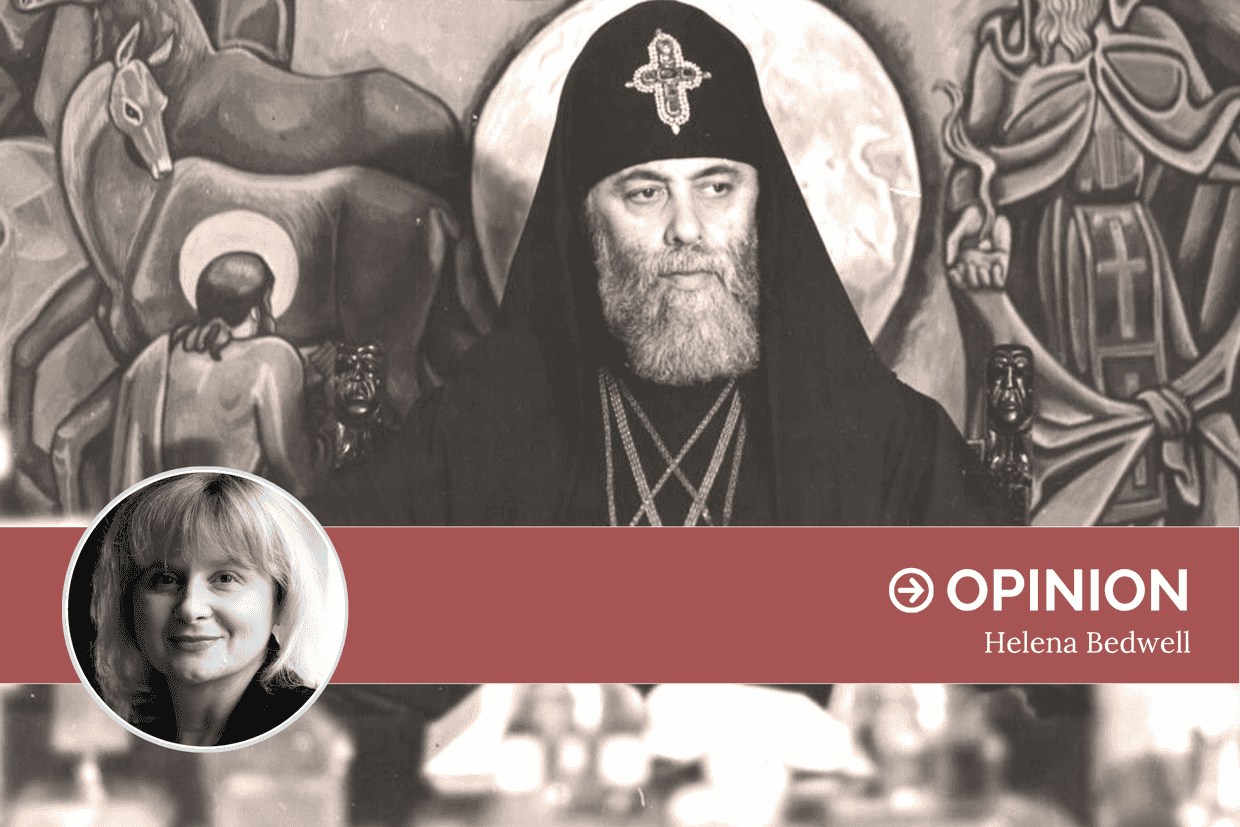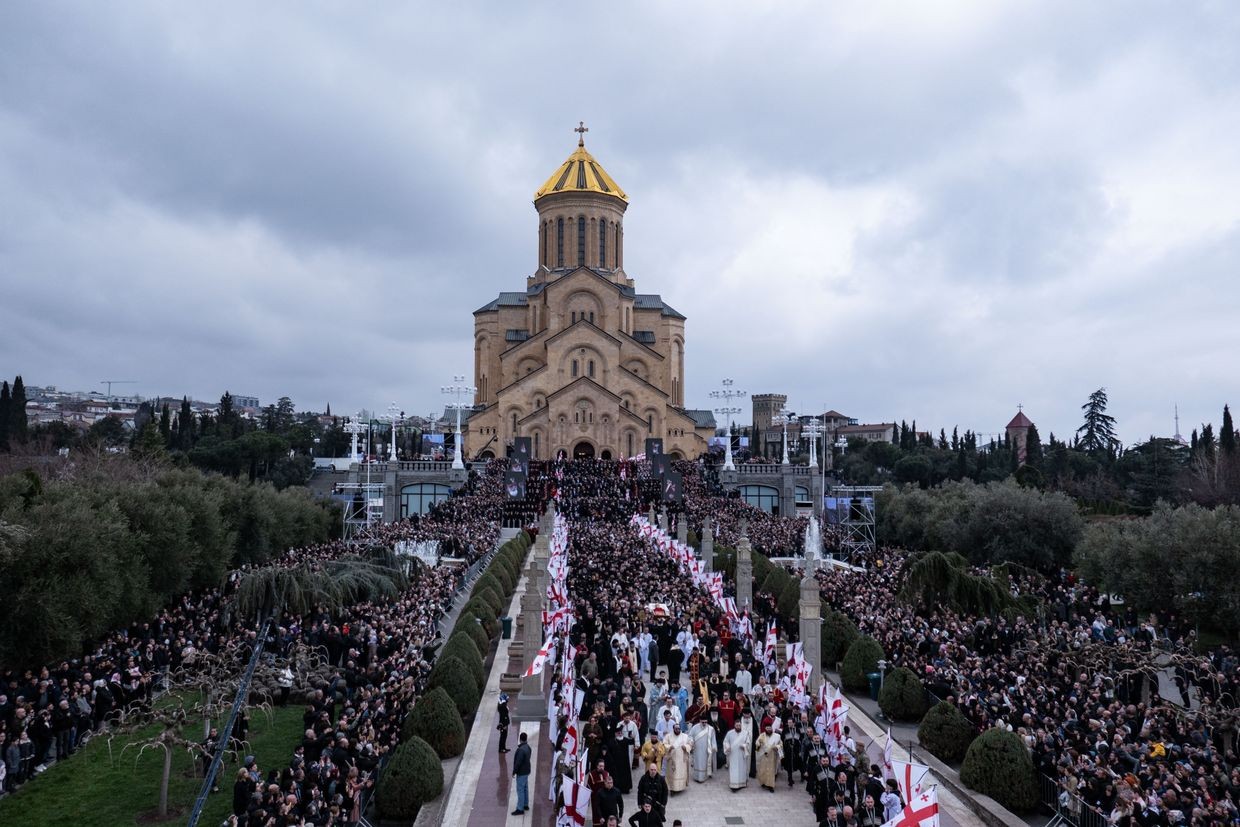
Ilia II, the Patriarch of the Georgian Orthodox Church, who led the country’s most influential religious institution for nearly half a century, was laid to rest in Tbilisi on 22 March, drawing immense public turnout.
The Patriarch, who died on 17 March at the age of 93, was buried at Sioni Cathedral in Tbilisi’s old town. He had served there from his enthronement in 1977 until 2004, when the construction of Tbilisi’s main Holy Trinity Cathedral (Sameba) was completed.
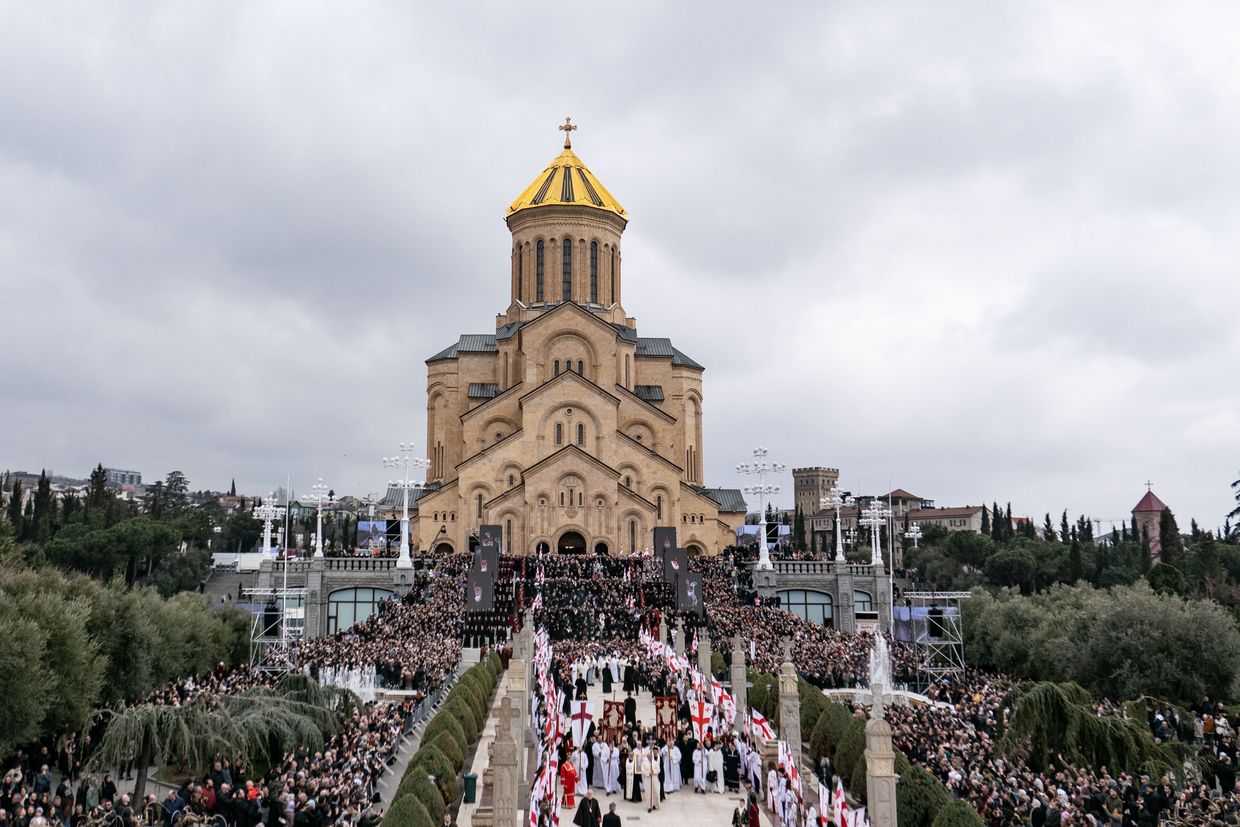
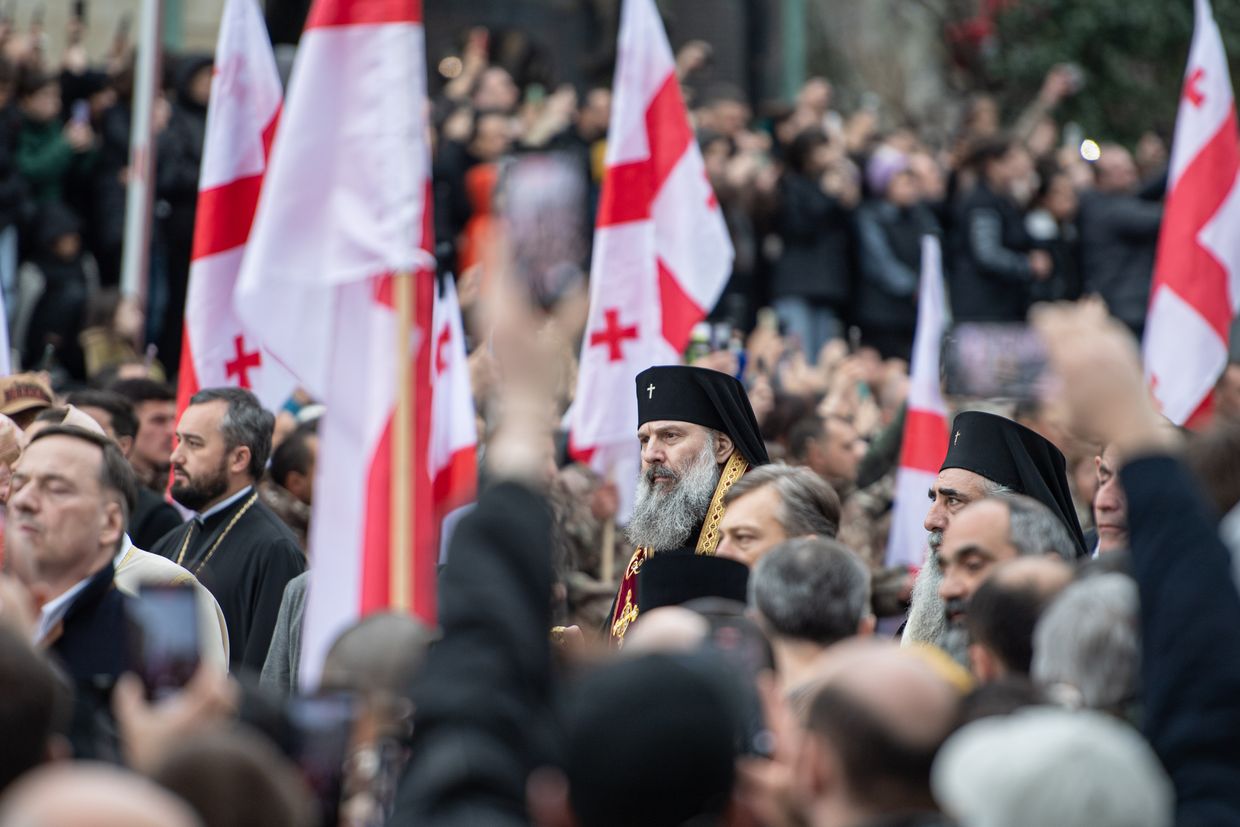
The extensive funeral ceremony began in the morning at Sameba, where Ilia II’s body had lain in repose prior to being transferred to Sioni. Senior clergy and other church representatives, as well as ruling officials and their family members, gathered there alongside delegations arriving from around the world.
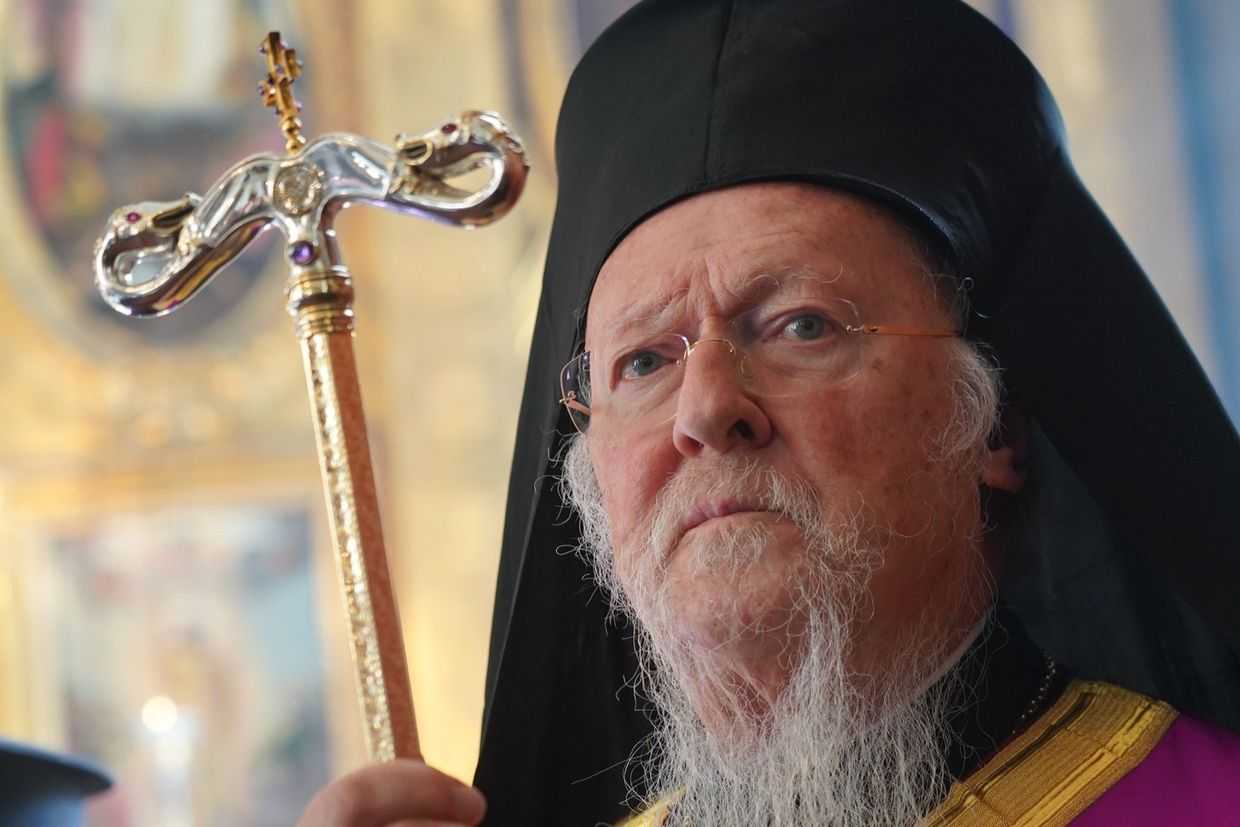
Among those who arrived in Georgia for the funeral was a delegation from the Ecumenical Patriarchate of Constantinople, led by 86-year-old Patriarch Bartholomew I. He conducted the funeral rite for Ilia II together with Georgia’s high-ranking clergy, including Metropolitan Shio Mujiri, who, as an incumbent of the patriarchal throne, is to lead the Church until a new patriarch is elected.
‘The God-fearing Georgian nation has lost a caring and loving father, who remained vigilant until his final breath for divine edification, spiritual strengthening, and the progress and well-being of society’, Bartholomew I said while speaking about Ilia II.
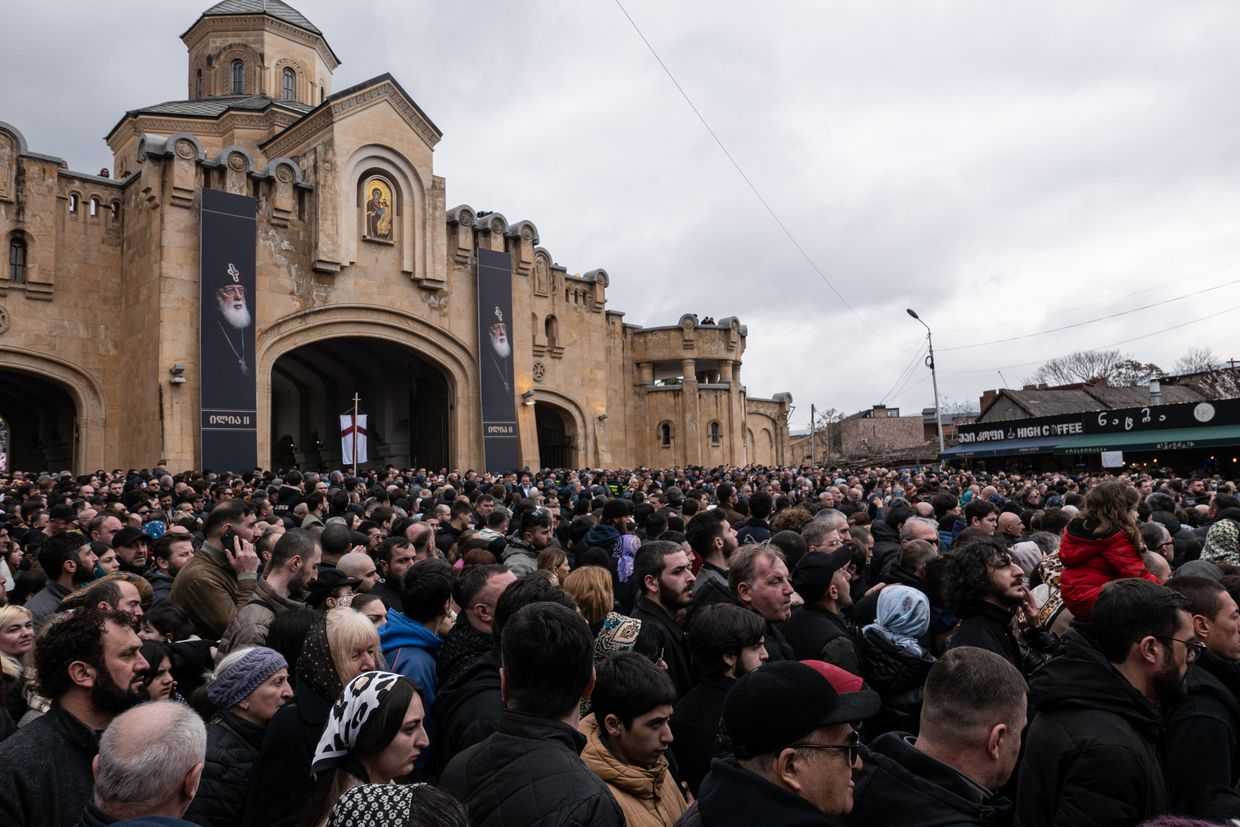
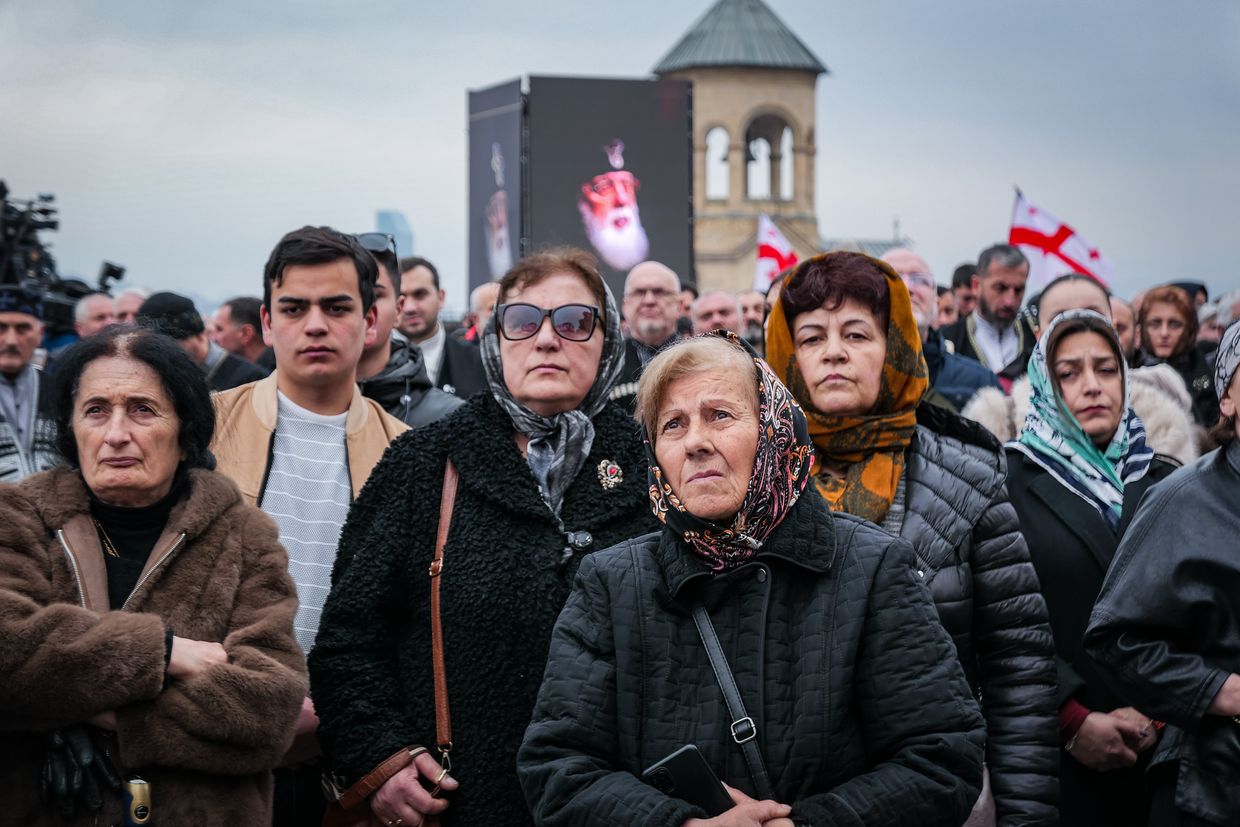
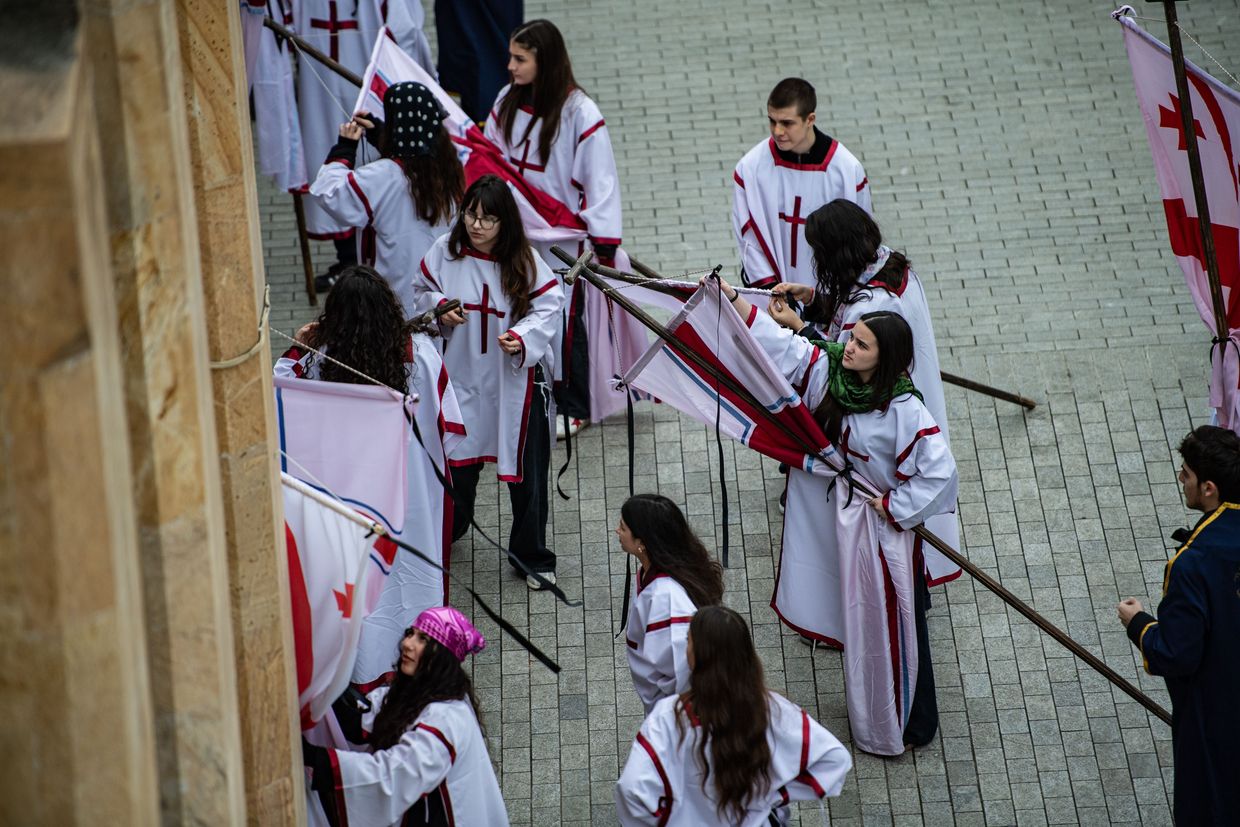
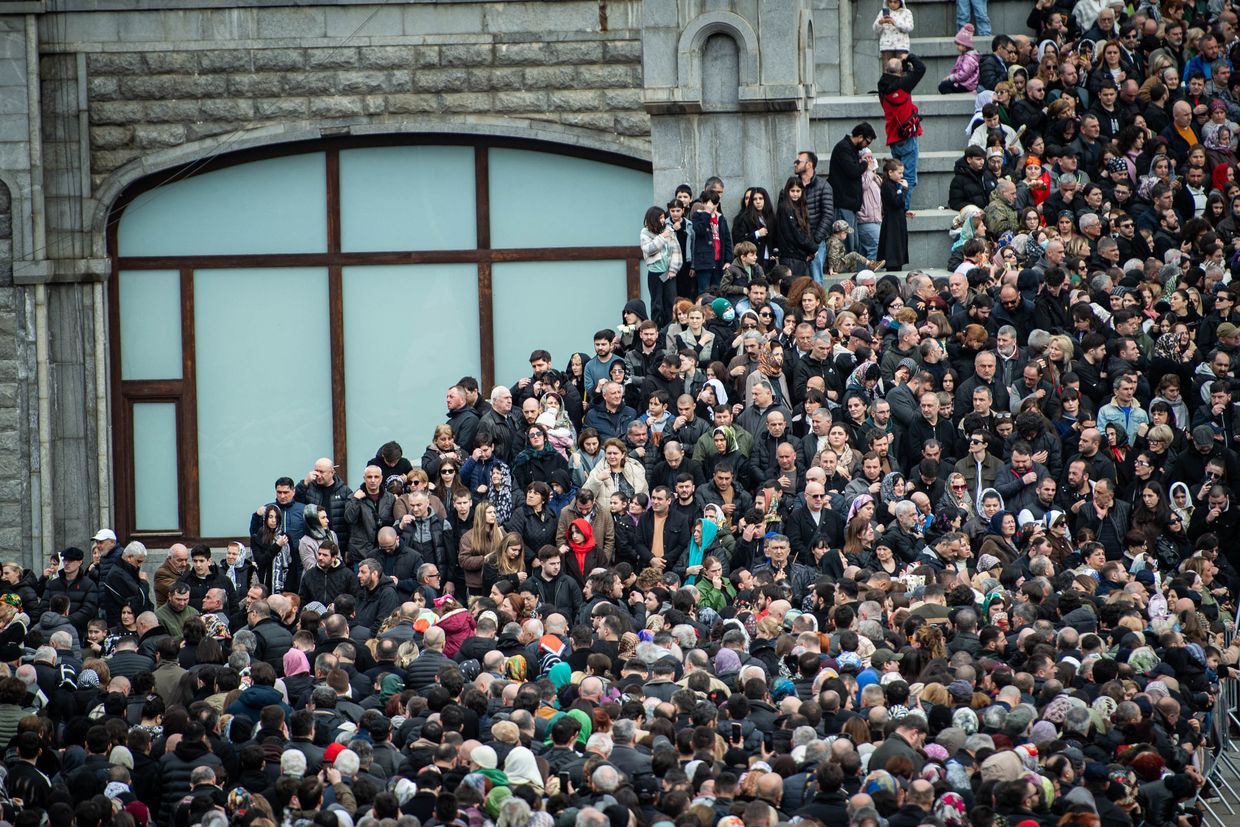
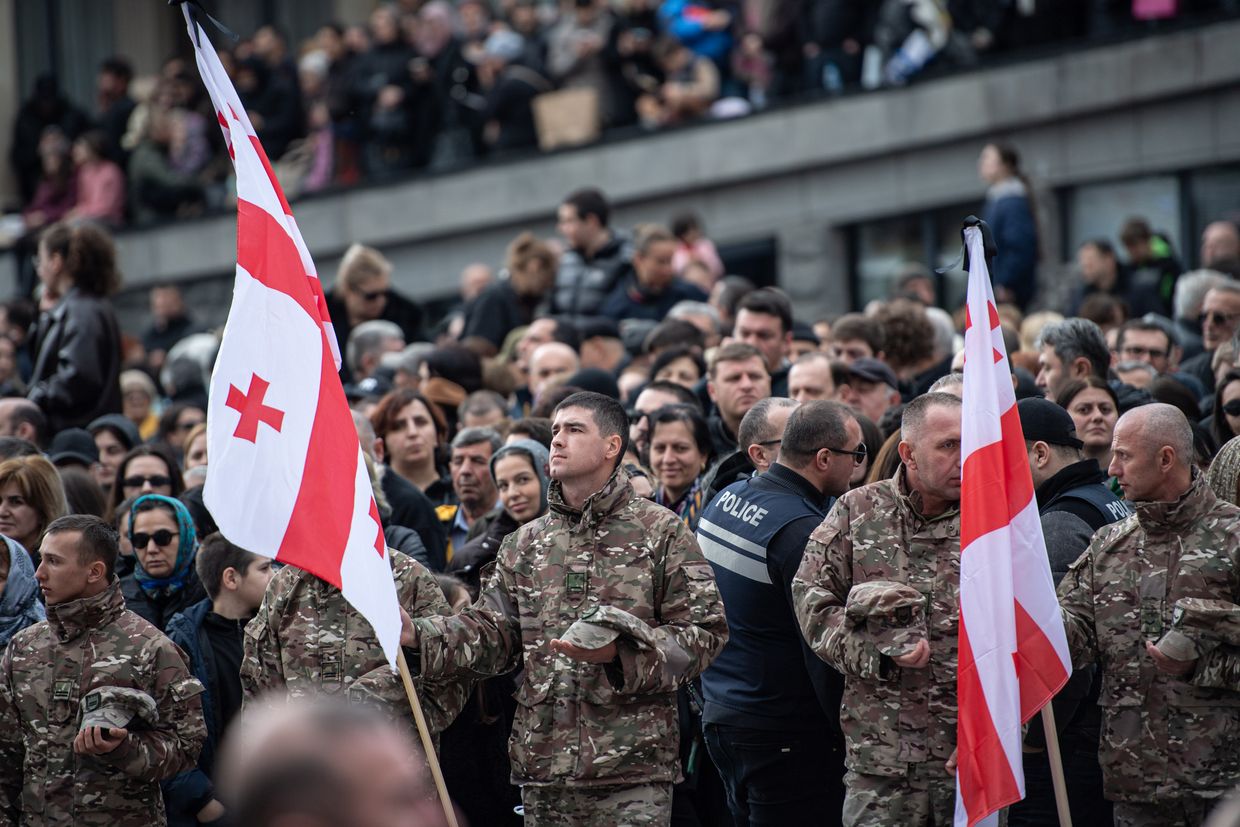
From the morning, people began mobilising to bid farewell to the Patriarch, both in the courtyard of Sameba and along the streets and roads leading to Sioni. By midday, at least tens of thousands had gathered, many holding candles and flowers. Soldiers lined the route, holding Georgian flags and forming a corridor along the path that Ilia II’s procession would later follow.
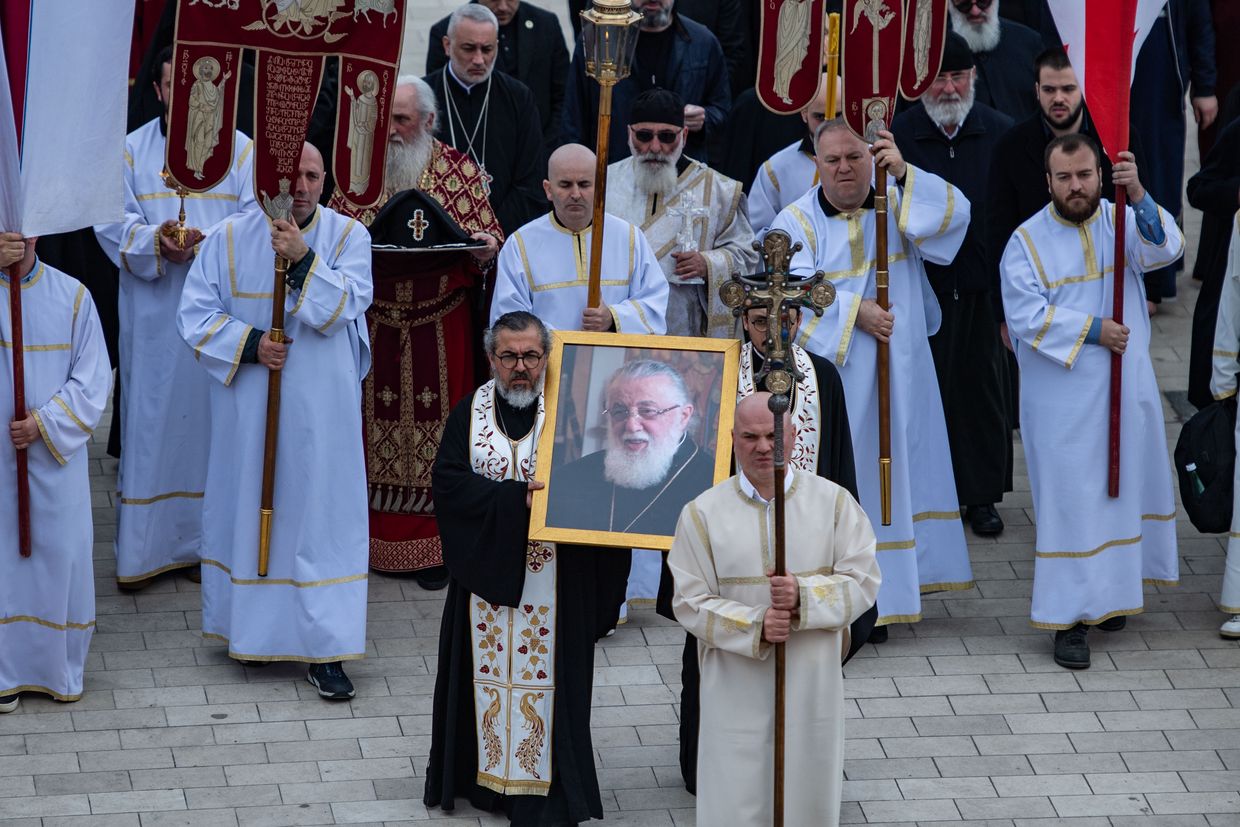
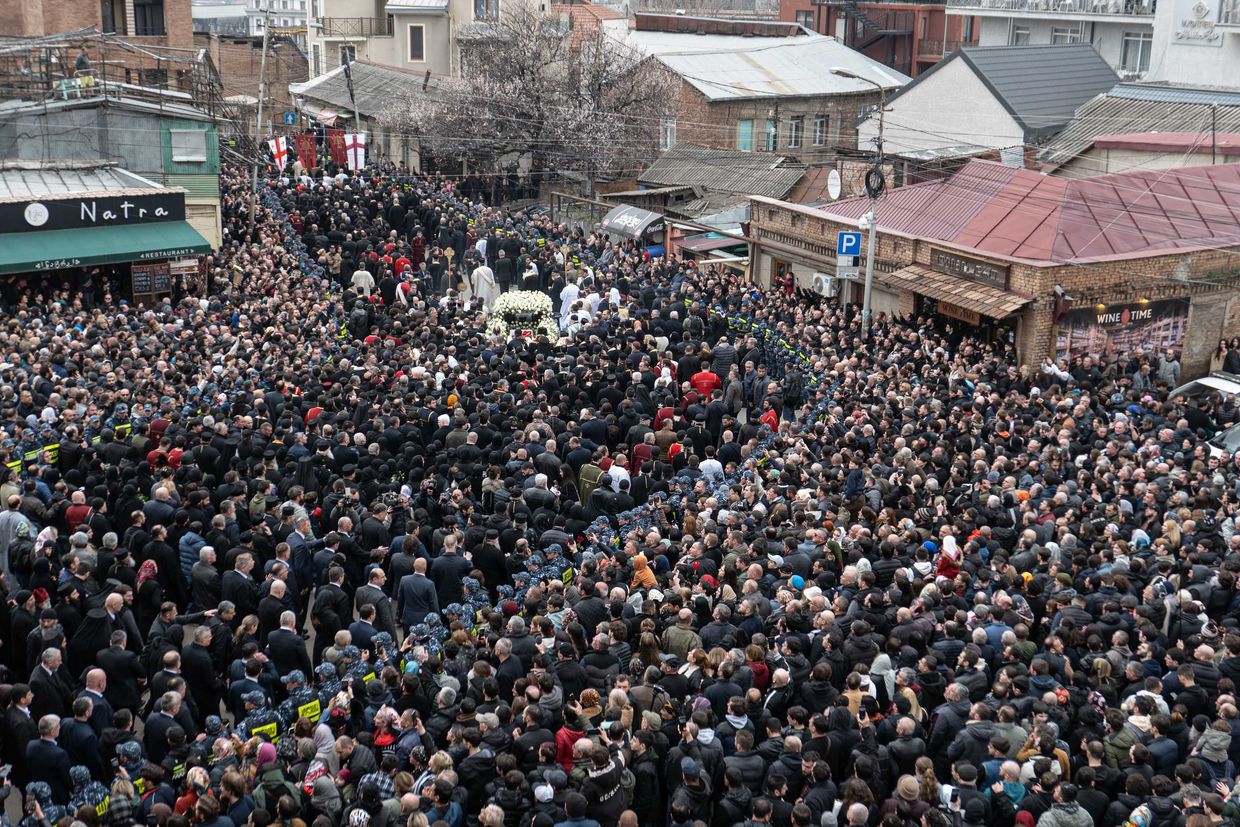
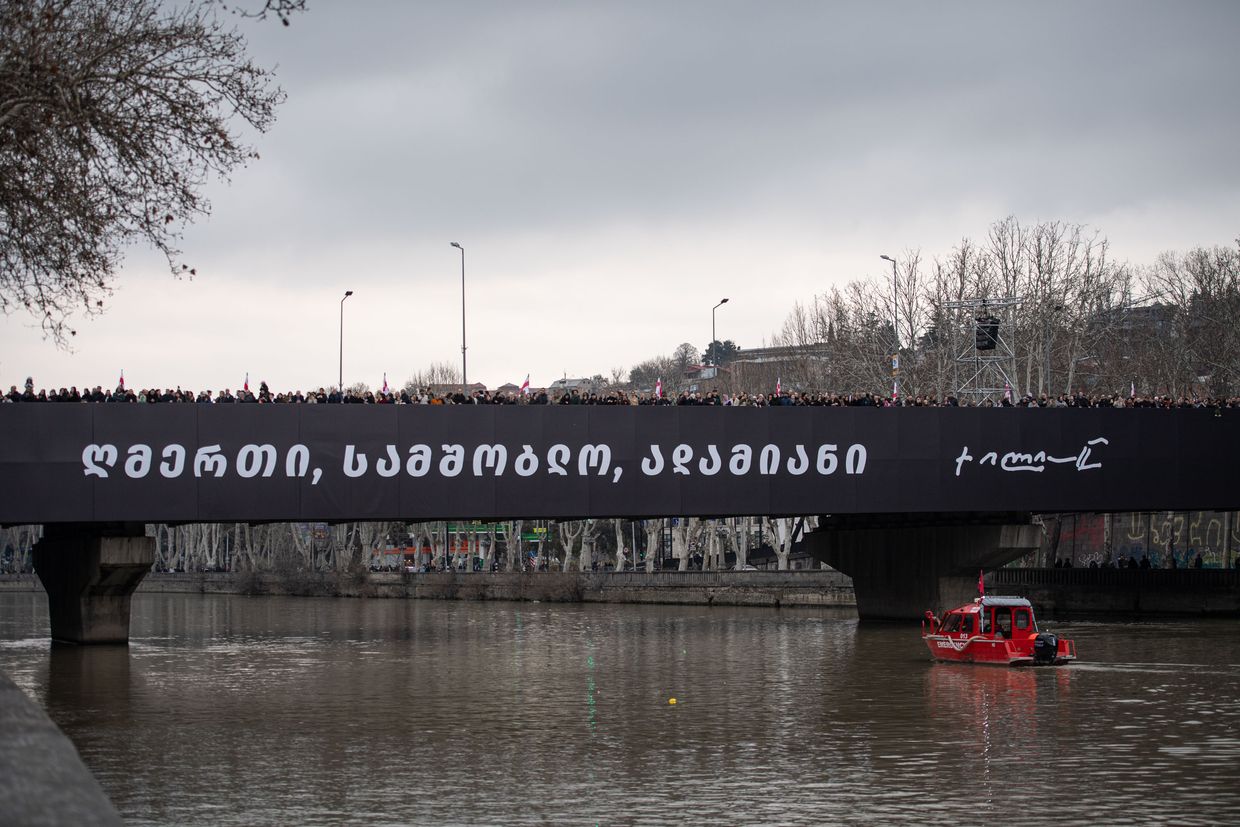
As the Patriarch was being carried in an open casket, people along the route applauded. At the Patriarchate residence, located on the right bank of the Mtkvari River along the road leading to Sioni, those gathered — likely staff of the Patriarchate — held white roses and candles in their hands.
As the eldest member of the Holy Synod — the Church’s governing body — Metropolitan Anania Japaridze delivered the farewell address. He called Ilia II ‘a rock, the firmest support upon which he built the contemporary Georgian Church’.
‘It’s very difficult day for me’
The government announced before the funeral that railway services and Tbilisi municipal transport would be free over the weekend. In addition, free transport was arranged for those wishing to travel to the capital from the regions.
Starting from Tuesday, a national mourning was declared, state flags were lowered, and farewell clips played continuously on electronic billboards.
Until Saturday, anyone could pay their respects to the Patriarch lying in repose at Sameba around the clock, which resulted in constant queues stretching from Avlabari, the closet metro station to the cathedral.
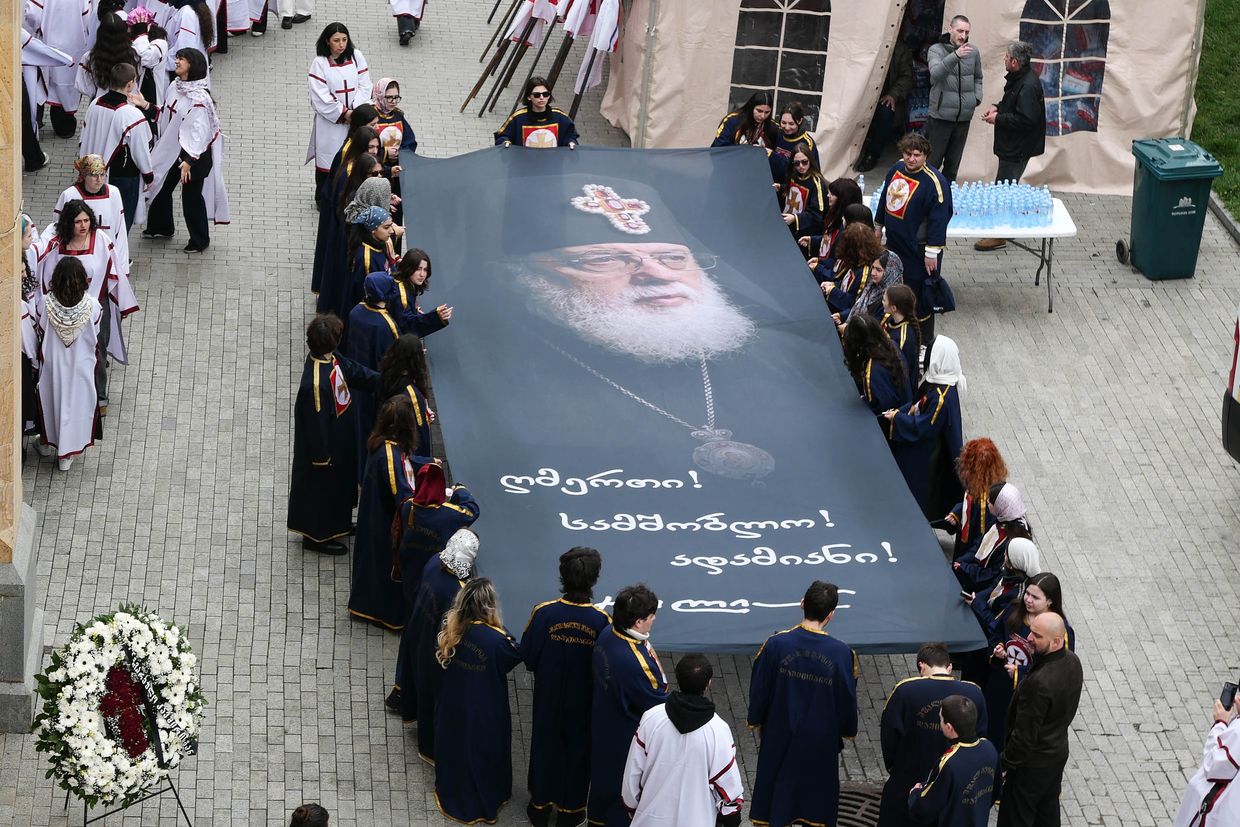
However, on Sunday, entry to Sameba was allowed with limited passes, which were primarily distributed to clergy, government officials and their families, international delegations and diplomats. By a last-minute decision, access was also allowed for general public through one entrance.
For those without passes — that is, the overwhelming majority of the funeral attendees — and others who could not enter by other means, monitors had been installed both in the cathedral courtyard and along the streets and roads leading to Sioni to live broadcast proceedings.
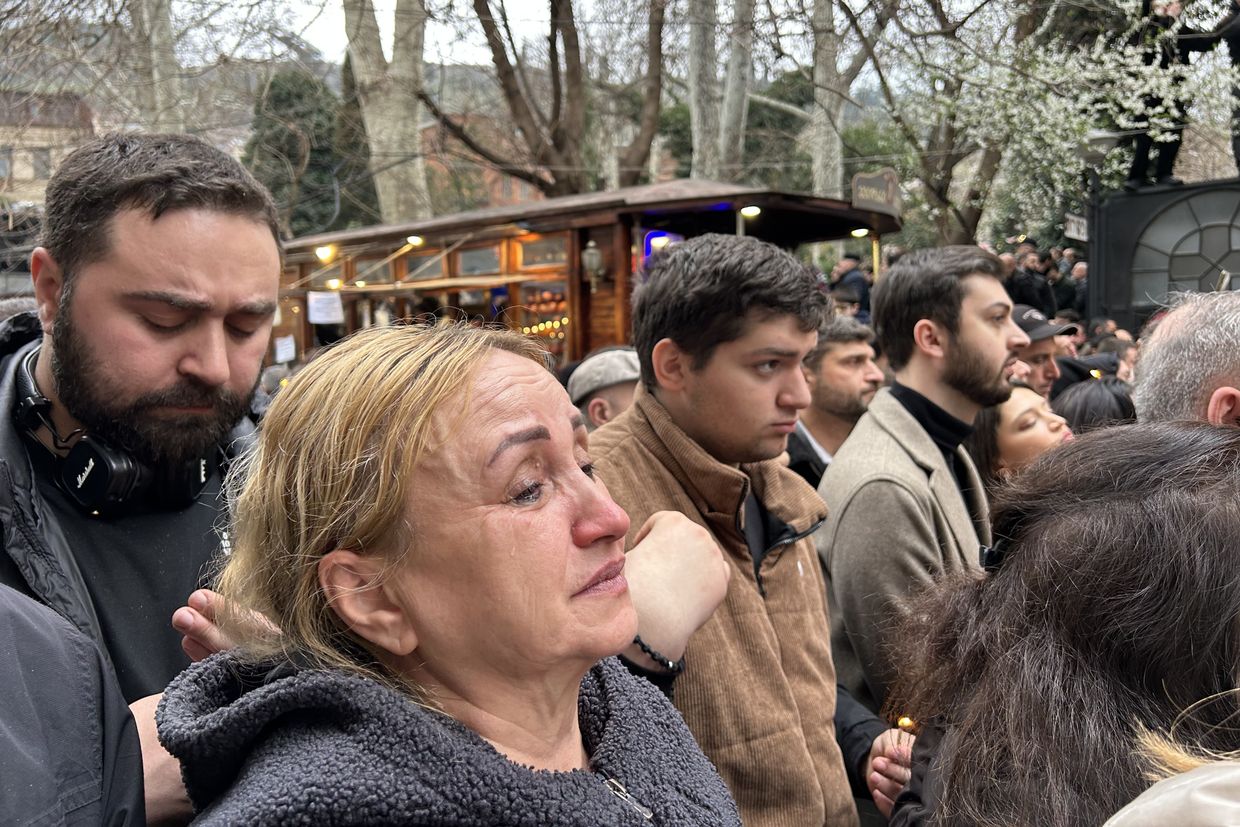
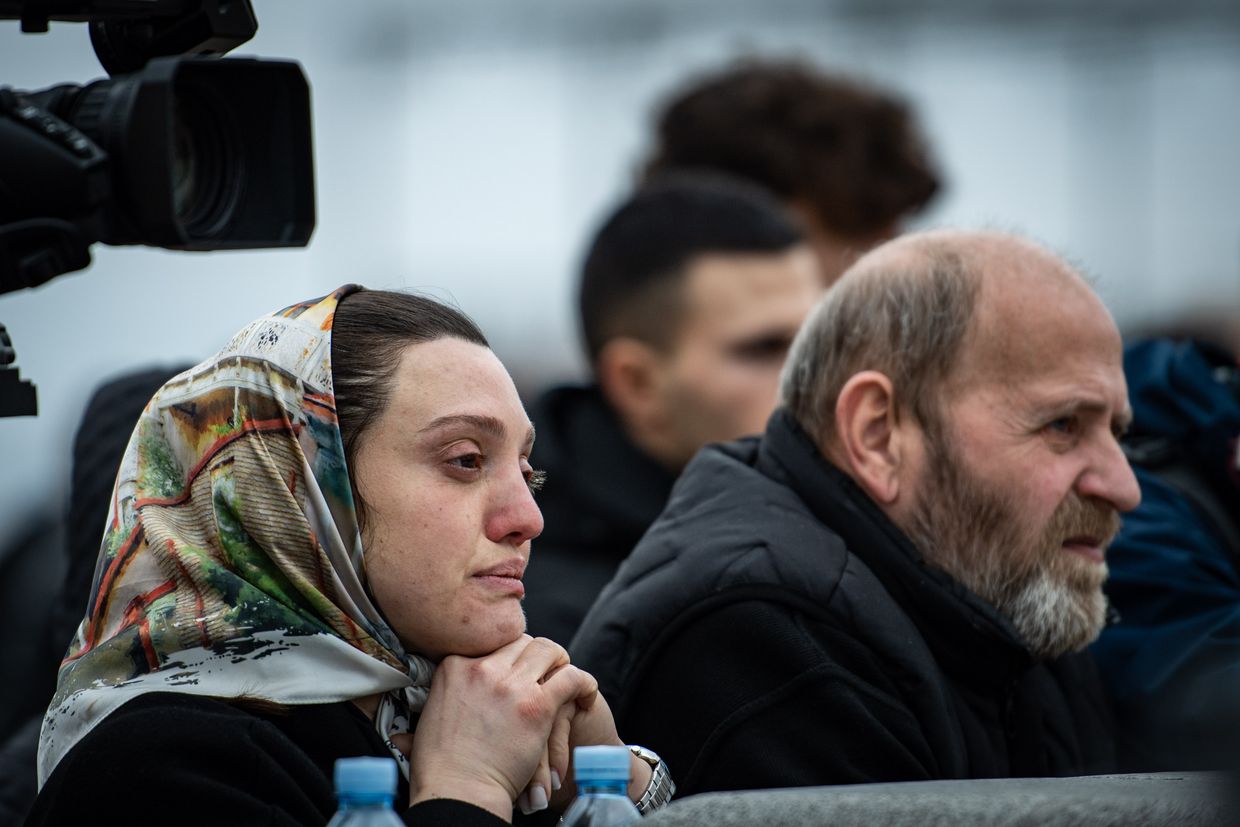
‘Today is a very difficult day for me’, 54-year-old Tamar Bobokhidze told OC Media. She had arrived early in the morning from the Bolnisi municipality in the south to secure a place among those attending the funeral.
‘I couldn’t allow myself not to be here […] The Patriarch was an example for me; I always [listened] to his calls, his letters and took them into consideration’, she noted, adding that Ilia II would always ‘stay alive’ in her heart.
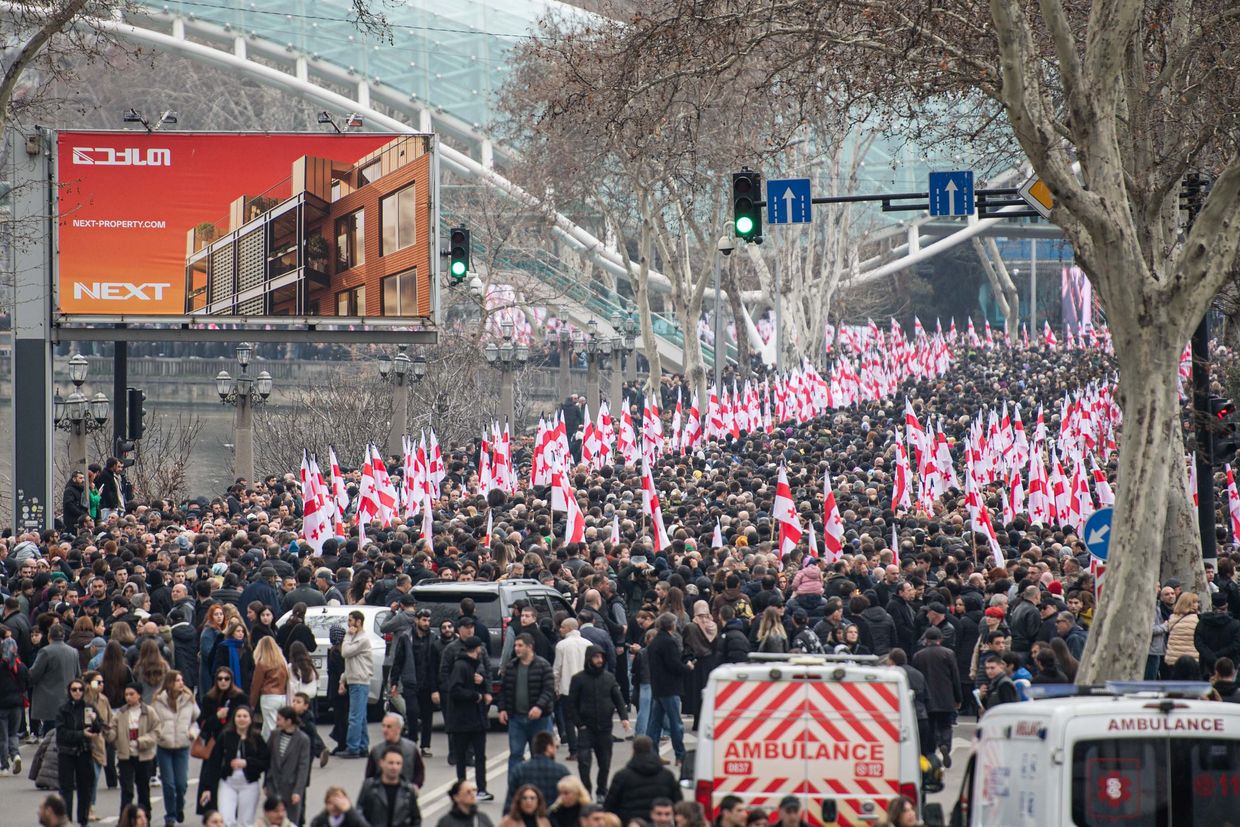
News of the Patriarch’s death temporarily overshadowed everything else in the country, which in recent years has been living under growing political disorder, as the government tightens its policies toward dissent and anti-government protests have continued daily for more than a year.
For years, Ilia II consistently ranked as the most trusted public figure in opinion polls, far outpacing politicians from both the ruling and opposition parties.
In recent days, as people reflected on his life and work, both sympathisers and some critics emphasised that support, with many seeing his presence as a symbol of stability amid political and social turmoil. His contribution to the expansion of Church infrastructure, its congregation and influence in both Soviet and independent Georgia was also a subject of discussion.
‘We grew up in a time when we didn’t even know how to make the sign of the cross properly’, 51-year-old Tamuna Kasradze told OC Media, referring to the restrictions on religion during the Soviet era. In her view, the Patriarch ‘opened another world.’
‘I no longer [care] who is aligned with whom. At this moment, we are all serving our country and what the Patriarch wanted’, she added, noting that Ilia II strove for ‘great reconciliation’ among Georgians.
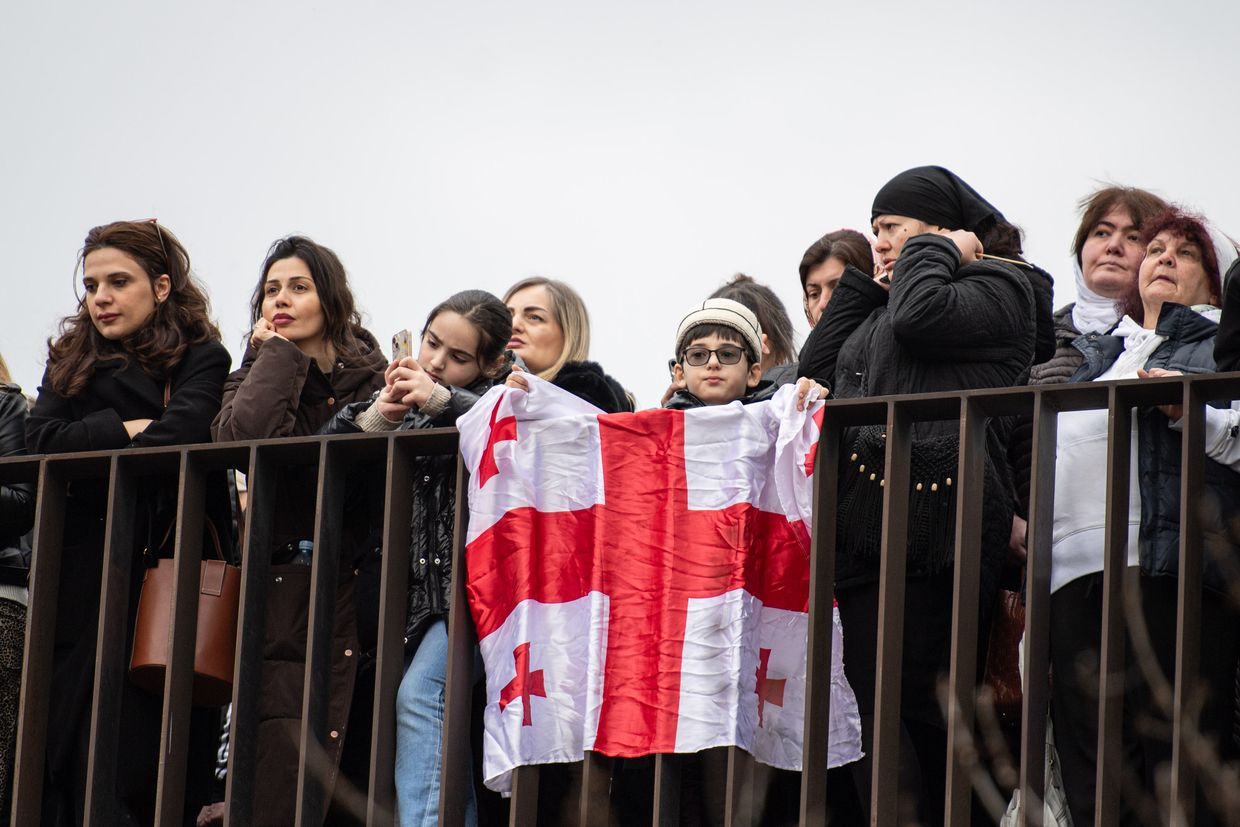
Ioseb Demetrashvili, a 36-year-old who was watching the funeral ceremony on a screen near the courtyard of Sioni, echoed the sentiment, saying that the head of the Church wanted to see ‘united Georgia’.
‘I’m not an active member of the congregation and I certainly don’t go to church every day, but each of us has faith individually, and when something like this happens, when your Patriarch is no longer with us, at that moment, perhaps 100% of one’s faith comes alive’, he said.
Demetrashvili also noted that Ilia II’s death made him ‘lose hope’.
‘There is great turmoil in our country, we see it every day. But I was still calm because we had the Patriarch by our side, and he more or less settled matters that didn’t reach the public. Now we have no one’.
Uncertainty about succession
Despite his broad public support, Ilia II’s tenure — particularly its later years — was not without controversy.
Whether it was the Georgian Church’s staunchly conservative positions on a range of social issues, its long-standing involvement in anti-queer campaigns, the wealth of senior clergy, or the scandals linked to the Patriarchate in recent years — including accusations directed at Ilia II himself — the Church faced growing dissatisfaction, accompanied by increasingly critical media coverage.
Although Ilia II’s personal ratings remained high even as trust in the Patriarchate itself wavered, the taboo against criticising him began to ease in later years, with some in social media continuing to scrutinise his tenure after his death as well.
Two issues among the controversies surrounding the Church — the relationship between the local ruling authorities and the Patriarchate, and the Georgian Church’s ties with the Russian Orthodox Church — also came to the fore on the day of the funeral.
Some observers noted the strong presence of the ruling Georgian Dream party and figures affiliated with it at Sameba, including the party’s founder, billionaire Bidzina Ivanishvili. During the ceremony, Archpriest Giorgi Zviadadze singled him out, praising him as a ktetor (builder) of Sameba and giving him the floor to speak.
‘Many of the Patriarch’s true mourners were not given the opportunity to enter Sameba and bid farewell to Ilia II. It wasn’t that they couldn’t get in — no, they were simply not allowed. Sameba Cathedral was occupied by Bidzina and his inner circle’, the opposition Ahali party founder Nika Gavaramia wrote on Facebook.
Attention was also drawn to the presence of a Russian delegation at Sameba, reportedly consisting of around 80 people. According to Tabula, among them was Metropolitan Hilarion Alfeyev, the former head of the Moscow Patriarchate’s Department for External Church Relations, who was demoted in 2024 following allegations of sexual misconduct against his assistant.
According to the statute governing the Georgian Church, an expanded Church Council must elect a new Patriarch within a period of 40 days to two months. Only bishops from the Holy Synod have the right to vote, while others may participate in discussions but do not have voting rights.
Until a new Patriarch is elected, the Church will be led by Metropolitan Mujiri, whom Ilia II appointed as his locum tenens back in 2017. He is responsible for preparing the Church for the election.
Although some in the congregation interpreted Mujiri’s appointment as locum tenens by the late Patriarch as Ilia II’s endorsement, his position does not guarantee election.
Kasradze is among those who hold this interpretation, though she emphasised that it is only her opinion.
‘The rest is God’s will,’ she added, before indirectly touching on a question often raised in discussions about the future Patriarch: whether he will enjoy the same level of public trust as Ilia II.
‘When the [late] Patriarch spoke, we didn’t view him critically; we tended to accept almost everything he said positively. Now, we will scrutinise his [Shio’s] words more carefully — how wisely he speaks, how [Ilia II] would have said it. It’s a huge responsibility’.