Opinion | Vance’s visit shows the US wants to stay engaged — on the region’s terms
JD Vance’s visit to the South Caucasus was not about taking over the region — it was about partnership and, paradoxically, independence.

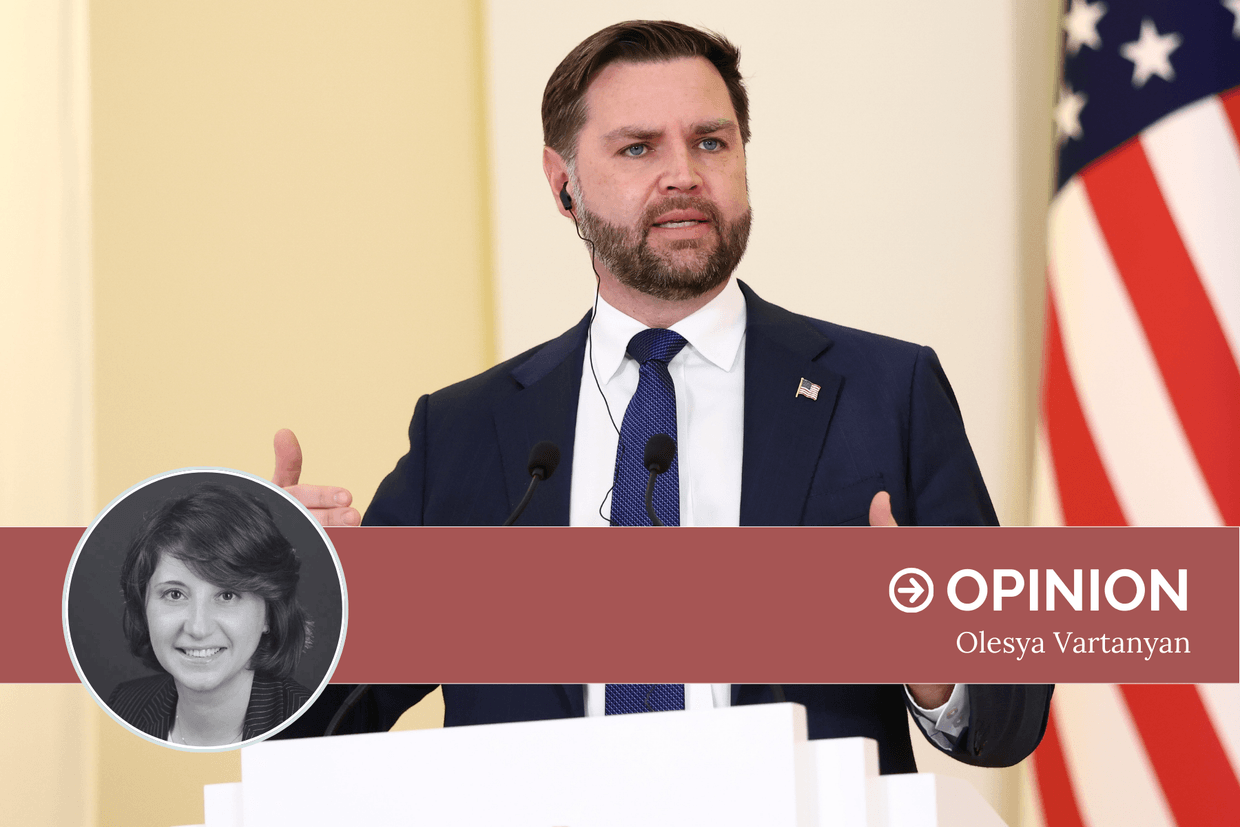
Caucasian hospitality was on full display in Yerevan and Baku during JD Vance’s recent visit. He and his family were warmly welcomed at the highest level, with words of praise for US President Donald Trump and his administration, and reportedly fine dinners in both capitals. Yet this hospitality came with a clear understanding: these were very welcome guests, but guests who would soon depart.
Vance became the first senior US official to visit both countries in a single trip, justifying the label ‘historic’ that accompanied the visit. Yet those who rushed to frame it as the end of Russia in the South Caucasus or as the opening of a new foothold against Iran are overstating the case, perhaps dramatically so. The region is pleased to host a high-profile visitor from across the Atlantic — it is not looking to appoint a new external patron.
 Nate Ostiller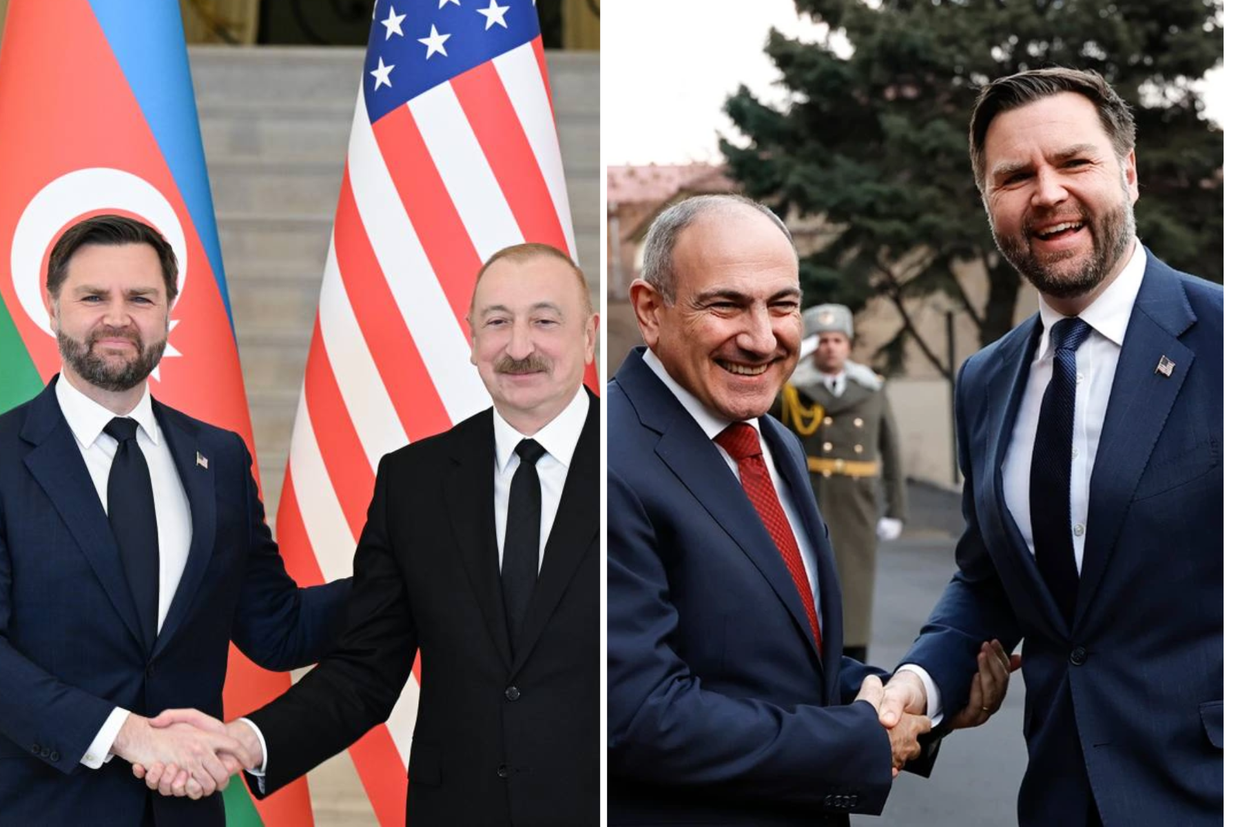
The era of sovereignty
Thirty-five years after independence, the South Caucasus appears to have learned how to live on its own terms. Over the past decade in particular, ruling elites in both Armenia and Azerbaijan have placed a growing emphasis on defending what they call their sovereignty, diversifying foreign alliances and economic partnerships alike.
This diversification is not about searching for a new patron. Rather, it reflects an effort to increase their leverage in regional relations and to broaden the economic base of their development. In principle, it could facilitate formal re-alignments, but in today’s turbulent world, the goals remain modest, focused on development and strengthening these small states’ own position.
The effort to reinforce sovereignty has become especially visible over the past four years, as Russia has sunk deeper into its full-scale war in Ukraine. That conflict unexpectedly created political space across the post-Soviet world, including in the South Caucasus, allowing regional actors to strengthen their positions through broader external partnerships.
In this context, Trump’s administration proved an unexpectedly convenient partner. By sidelining normative concerns over human rights and democratic shortcomings, Washington reset relations with countries such as Azerbaijan and Turkey. Even more, Trump was willing to assume political risk in tackling complex, layered issues like the Armenian–Azerbaijani conflict, which has challenged many other foreign leaders.
Six months after the initialling of the peace treaty at the White House, both Armenian and Azerbaijani officials continue to praise the administration’s assertiveness, especially when contrasting it with its predecessors.
Becoming a showcase
For Washington, the South Caucasus story has shown surprising staying power. Many thought that Trump would forget about Armenia and Azerbaijan the day after the White House ceremony. At the time, even members of his circle did little to hide that his main motivation was to add a concrete achievement to bolster his Nobel Peace Prize prospects. The ceremony itself was reportedly hurried for early August to strengthen that narrative.
Yet six months later, Armenia and Azerbaijan remain very much present in Washington’s political discourse. For Trump’s team, the breakthrough has become a convenient reference point, particularly when facing criticism over tightened immigration checks, ongoing controversies surrounding the Epstein files, or strains in relations with European allies.
The president himself has not only mastered saying both countries’ names correctly but appears genuinely invested in the success of this project. Unlike other conflicts he has claimed to have resolved, where fighting has resumed or problems remain, the Armenian–Azerbaijani track continues to generate tangible milestones. Almost every month, Baku and Yerevan announce another development: a first flight, a transit launch, or the start of direct trade. All that becomes talking points for Trump officials.
Why Vance matters
Sending Vance to the South Caucasus carried symbolism of its own, especially given that the vice president rarely travels abroad. At 41, the former marine is widely seen as one possible successor to Trump, although the next presidential election remains three years away, which is a long time for this administration that produces major news almost every week.
Within the Trump administration, Vance oversees ideological matters, promoting MAGA principles against liberal agendas, supporting tough immigration policies, and cultivating a reputation as a sharp critic of Europe.
It was reportedly through the theme of protecting Christian rights that Vance first engaged with the South Caucasus. A year ago, this channel helped secure Armenian Prime Minister Nikol Pashinyan a meeting with Vance at the White House, an encounter Pashinyan now describes as pivotal.
According to Pashinyan’s recollection, the new administration had barely finished rearranging the paintings on the walls of the White House at the time. In his telling, that meeting helped shape Washington’s subsequent involvement in the Armenian–Azerbaijani conflict — a view shared by some others familiar with the topic.
Because of Vance’s engagement on Christian issues, many in the Armenian diaspora hoped he might persuade Azerbaijani President Ilham Aliyev to release at least some of the 19 detainees in Baku linked to Nagorno-Karabakh. So far there have been no public signs of progress, however.
Nate Ostiller
Warm ties — separate stakes
Both Armenia and Azerbaijan have capitalised skillfully on Trump’s personal investment in their story. They appear regularly at his events and continue praising him and the administration for support.
Still, there is no sign they are ready to walk blind in any possible US adventures against either Russia or Iran. Instead, they have been making use of this new partnership to reinforce themselves and get what they failed to receive from Trump’s predecessor.
Baku has effectively reset its relationship with Washington and is actively exploring new economic openings. Previous tensions and threats have faded. Calls in the US to prioritise issues such as the rights of ethnic Armenians from Nagorno-Karabakh no longer carry the same weight.
Yerevan, meanwhile, may have gained even more. For Armenia, Trump’s engagement has not only helped preserve border stability, at least for as long as he remains in office, but also opened the prospect of fully leveraging the lifting of embargoes and launching direct trade with Turkey and Azerbaijan.
Moreover, Armenia’s current leadership has accomplished something very rare. Many of the contracts and development plans highlighted during Vance’s visit, such as a major cooperation on nuclear energy, were initially designed under the previous US administration. Yerevan managed not only to preserve institutional American support for these initiatives, but also to secure broad approval from the new administration to implement them.
As one foreign diplomat joked over a glass of wine, Armenians should consider offering training courses on how to sell the same product to very different administrations and not only succeed, but earn gratitude for allowing others to help.
In today’s Washington, he added, that product would find no shortage of customers.