3.5/5★
The quiet and compassionate documentary Hotel Metalurg is less about losing a home than about learning, painfully, how to live without one.
The first time I watched George Varsimashvili and Jeanne Nouchi’s documentary Hotel Metalurg was in London, as part of the Sheffield DocFest Spotlight programme. I remember crying throughout the film, though at the time, I dismissed this as homesickness. A second viewing in Tbilisi, however, was just as emotional.
This reaction was not because the film is overly sentimental or manipulative towards the viewer. In fact, it is quite the opposite — Hotel Metalurg is quiet and ordinary, yet truly painful in its depictions of the fate of IDPs from the War in Abkhazia (1992–1993). The documentary speaks not only to individual experiences, but to an entire generation forced to abandon homes, communities, and futures and left to seek refuge elsewhere. Yet did they ever truly find it?
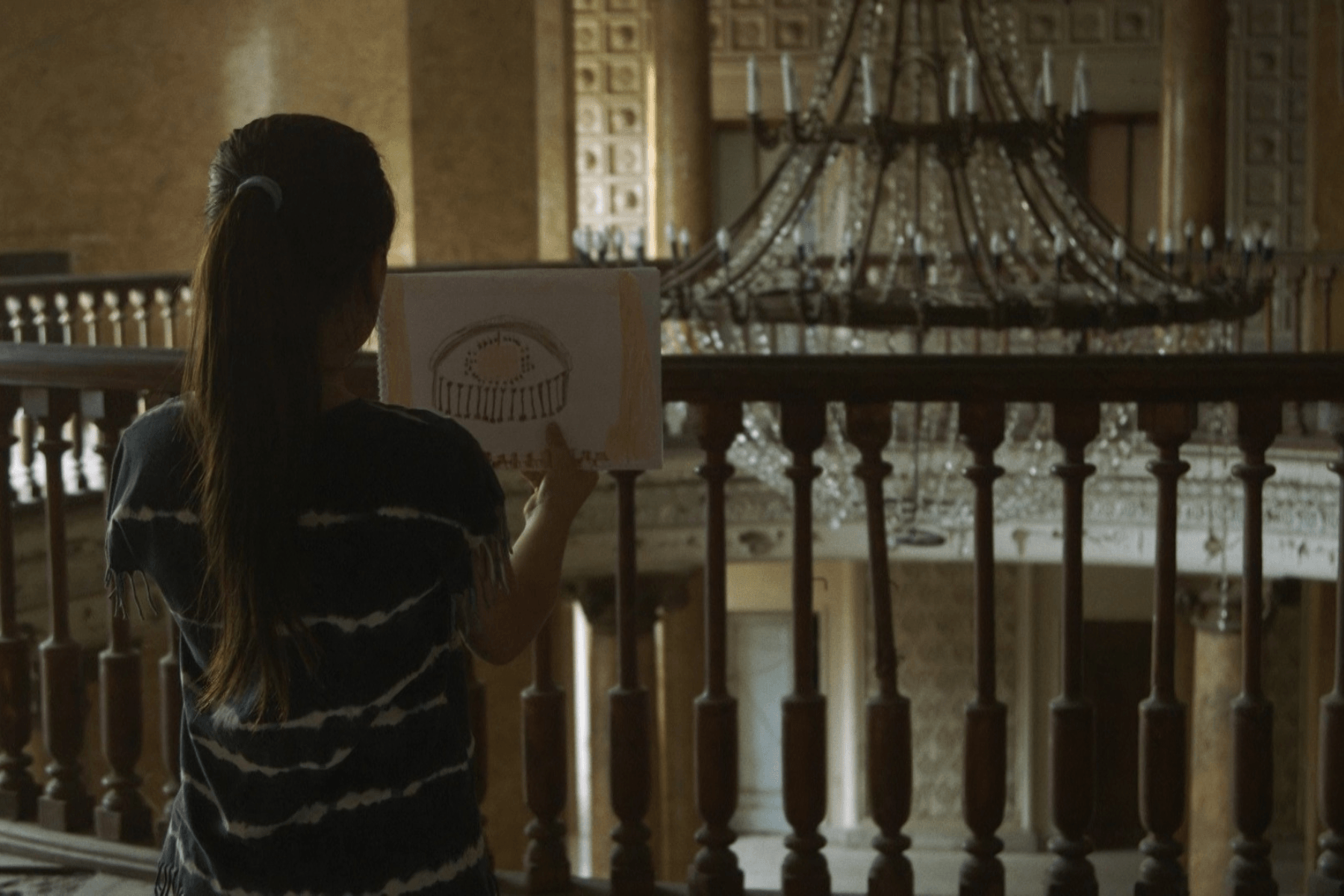
Hotel Metalurg itself — a once-lavish Soviet sanatorium in the fading spa town of Tskaltubo — becomes the film’s central character. This was a place where party elites once came to ‘take the waters’, as Georgians like to say. In the film, the building stands in ruins, sheltering several remaining families from Abkhazia who are slowly leaving, as the property has been purchased by an investor with residents being offered apartments nearby.
Varsimashvili’s camera observes this process and the everyday life of the film’s protagonists inside a building that was supposed to be a temporary shelter, yet stretched into a lifetime. The children, playing ball in cavernous halls designed for holidaymakers, know no other home.
The captured footage highlights countless small details: women hanging laundry across ornate staircases, sharing coffee and reminiscing about their lives in Abkhazia, answering video calls from friends still living there, longing for glimpses of their old houses; an elderly woman with dementia who barely knows where she is now but vividly remembers the family piano from her youth; people moving their furniture to new apartments, which, although meant to be a joyous occasion, slightly resembles a funeral procession.

Subscribe to the Culture Dispatch
A bi-weekly newsletter featuring film, book, and music recommendations from the Caucasus, handpicked by our team.
During filming, Varsimashvili practically lived in Tskaltubo. It took time for the Metalurg residents to welcome him, but that trust pays off: the film is deeply nuanced and rooted in real life experience. Not surprisingly, the building is populated largely by women, children, and the elderly — many of the men left years ago in search of work elsewhere, leaving their families behind.
It is striking to hear the voices of the residents and realise that many now speak with the western Georgian accent common among Tskaltubo locals. A survival mechanism? Adaptation? A way to resemble the new community? Or simply the passage of time?
One of the most memorable episodes occurs when newlyweds from surrounding cities arrive to take wedding photographs amidst the decaying beauty of the former sanatorium, its dramatic chandeliers serving as a backdrop. Residents watch them with little visible emotion, casually discussing which couple is the most attractive.
Throughout the film, which was shot over six months, background audio of a radio or TV presenter broadcasting news from Russia’s full-scale invasion of Ukraine can be heard. This quiet reminder of war unfolding alongside lives already shaped by conflict stays in the mind, long after the film finishes.
Varsimashvili and Nouchi have created their film in the finest observational tradition of Eastern European documentary cinema: no external narrators, no experts, no explanatory commentary, just women and their quiet lives, lingering gazes, children, memories, laughter, labour, hopes, and fears. Even the final move from the Hotel Metalurg into new apartments does not feel triumphant, but rather like another uprooting into the unknown.
Hotel Metalurg offers a deeply human portrayal of what life for internally displaced people looks like when it is no longer in the headlines. Most importantly, it leaves the viewer with a question: what will these lives look like once the camera is gone?
Film details: Hotel Metalurg (2023), directed by Giorgi Varsimashvili and Jeanne Nouchi. It is available to watch on Cavea+.