Six key challenges in Georgia’s management system

Citing ‘backsliding’ on key commitments, the European Commission warned in its eighth visa-free suspension report last week that it may take responsive measures against Georgia, — beginning with a smaller group of government officials, and potentially extending to cancelling visa-free travel for the entire population.
Since 2024, Brussels has repeatedly described Georgia’s democratic backsliding as ‘unprecedented’, and has warned of ‘consequences’. Yet for Georgia’s governance experts, this warning — which has sent shockwaves to Georgian travellers who have enjoyed visa-free travel since 2017 — did not come as a surprise.
The erosion of democratic standards was not triggered by recent ‘draconian’ laws or political crisis, but was instead locked in years earlier, through subtle changes to how the state governing system is managed.
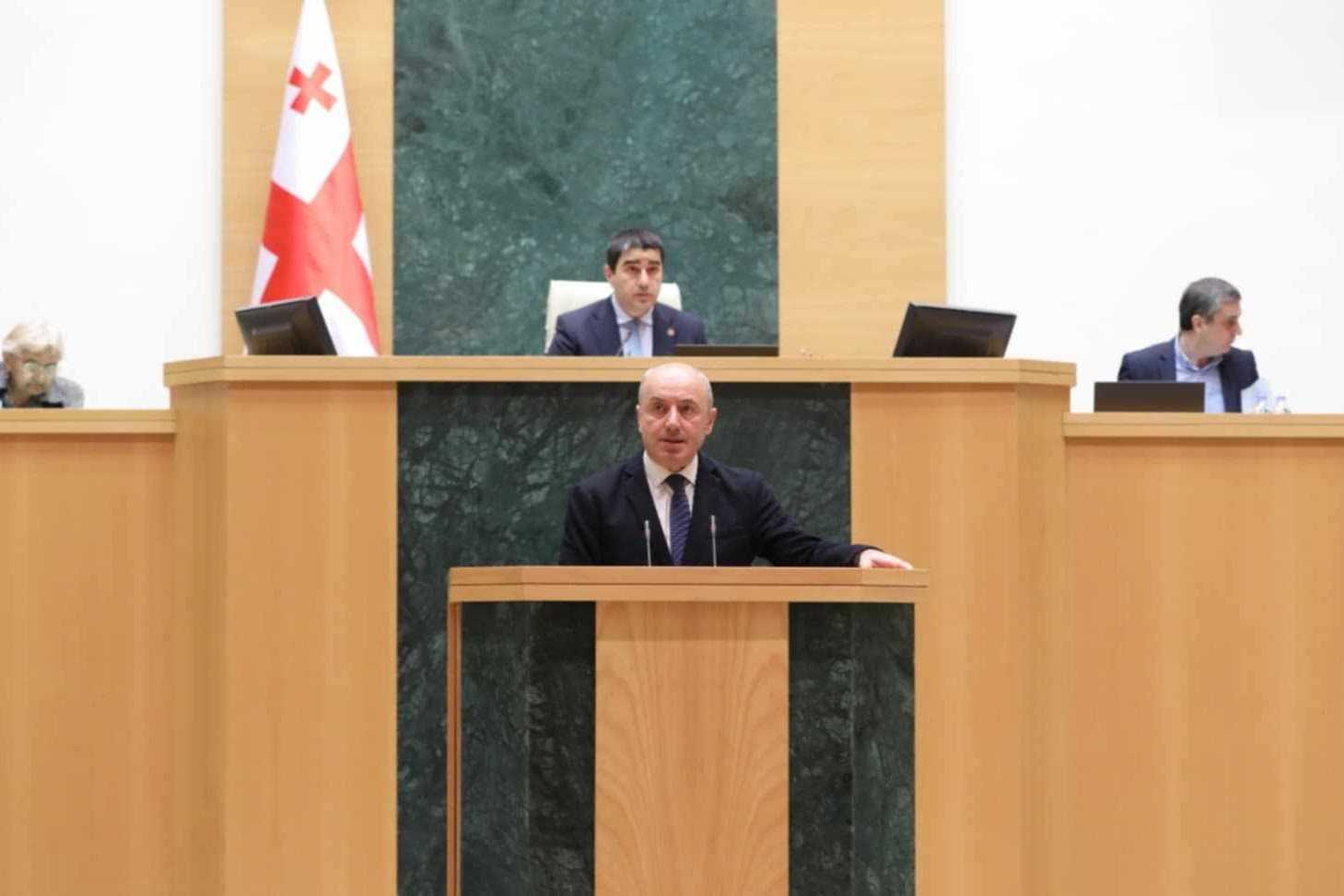
Few observers are better positioned to trace that trajectory than Papuna Toliashvili, the CEO of Synergy Group, a Georgian consultancy group that worked closely with the Georgian government for years, advising on institutional design, administrative reform, and management structures.
Synergy’s engagement with the state started back in 2006 and continued actively up until 2016, a period when reforms — in consultation with non-state actors — were still debated in terms of efficiency, accountability, and alignment with EU association agreements.
But today, watching the system from the outside, Toliashvili argues that the priorities of those currently in power have fundamentally shifted, a conclusion he draws from observing changes in institutional structure of the government and budget allocations. Management systems should, he notes, reflect what a government truly values and what it seeks to protect.
Based on this structural lens, we have identified six core problems in Georgia’s current government management system — problems that, taken together, help explain why dramatic democratic backsliding has become predictable, and how fluctuations in governance and changes in democracy are interconnected.
At the heart of these issues lies a reorientation of the state away from long-term development and national interest goals towards political survival and the personal interests of a specific clique of individuals. This re-orientation — itself inviting a closer scrutiny of real motivations driving those behind the faces of power — now risks not only Georgia’s European path, including the visa-free regime, but its functioning capacity entirely.
1. A fundamental shift in priorities
The state’s real priorities have shifted and the focus, instead of being on state-building and development, is now on the preservation of power, personal security — protection of private assets and the maintenance of influence — and the well-being of certain individuals, Toliashvili argues.
This is visible not only in rhetoric, but in structural changes and the redistribution of resources, such as the strengthening of security agencies tasked with domestic political control and the weakening of social sectors.
This diagnosis aligns directly with the broader pattern identified in a September 2025 report, ‘Democracy Under Siege: Georgia’s Autocratic Takeover’, published by the Rule of Law Lab at the NYU School of Law, and Gnomon Wise, a Georgian research institute. According to the authors, under Georgian Dream founder Bidzina Ivanishvili, democratic institutions have been ‘systematically hollowed out and repurposed to entrench a personalist regime’.
Toliashvili adds that currently:
- Security agencies, special services, and the Interior Ministry are being strengthened, highlighting a pivot toward internal political control.
- Education, healthcare, defence, and foreign policy institutions are seeing their shares of financial and institutional resources being reduced.
2. Loss of institutional knowledge and brain drain
Areas that are not a priority to the government, especially foreign policy and policy planning, are being either institutionally abolished or downsized, resulting in:
- The loss of institutional knowledge accumulated over many years.
- The drain of qualified personnel from the public sector.
- State service being left by experienced, independently thinking, professionally strong individuals — sizable portions of whom have been made redundant — while the future restoration of these fields requires years and significant resources, Toliashvili argues.
According to him, this also significantly weakens the quality of the state apparatus and accelerates the degradation of the mid-level bureaucracy.
Dozens of diplomats and staffers lost their jobs as Georgia’s Ministry of Foreign Affairs underwent the process of ‘reorganisation’ in early 2025.
The Directorate General for European Integration, which previously encompassed the EU Integration Department and the EU Assistance Coordination and Sectoral Integration Department, was also abolished.
In its place, a new Political Directorate of European Affairs has been established. Under this new structure, EU integration falls under the responsibility of one of the directorate’s departments.
3. Promotion based on personal trust, not competence
Promotion in the political system and career advancement is based on personal trust, rather than knowledge and experience, Toliashvili says, leading to:
- Suboptimal decisions.
- The disappearance of grassroots and bottom-up initiatives.
- Reactive governance, based on fear of making mistakes.
This has been the problem that many observers have pointed out from the first days of Georgian Dream’s administration, with a number of Ivanishvili’s personal trustees appointed to several key positions.
The trend has reached new heights, the expert, Toliashvili argues.
This, combined with:
- Reports of widespread vote-buying during the last two elections,
- Social protection systems that, according to numerous experts, make people dependent on them and do not encourage their participation in the labour market,
contributes to the expansion of clientelist culture.
4. Changes in the values system
State-oriented values are being replaced by:
- Personal well-being and interests.
- Personal security.
- An ‘us vs. them’ logic.
‘These values spread vertically throughout the system, normalising conflicts of interest, corrupt behaviour, and conformism’, Toliashvili argues.
On corruption, Toliashvili notes that while never stated openly, it was clearly conveyed through the rhetoric of officials, everyday behaviour, and concrete actions (or the lack thereof), that such a mercantile attitude was acceptable.
‘The unspoken message was: “go ahead [with your corruption schemes], it’s fine — just don’t cross red lines”. It seems that this attitude has spread throughout the entire power vertical, all the way down’, he argues.
With Irakli Gharibashvili, former prime minister and a former close ally of Ivanishvili, charged with corruption, along with a number of former Georgian Dream cabinet members detained and their close circles under investigation, his successor, Irakli Kobakhidze, has vowed to ‘root out corruption’ entirely.
For Toliashvili, however, this does not look like a sincere effort to combat corruption, rather it sends a message to individuals outside the inner circle that they might face heightened danger if not conforming entirely to party obligations and limits; it also reveals a value system in which money is the determining factor who is considered ‘one of us’ and who is treated as an ‘outsider’.
5. U-turn from EU integration
Despite having a constitutional obligation, Georgia’s state institutions are no longer oriented toward integration with:
- the EU,
- the US,
- Or, generally, democratic governance practices.
While moving in a Western direction, Georgia received significant technical assistance and opportunities to have European experience and competence shared, which, naturally, helped the system to shape up. But since this shift in orientation, the development of these systems is likely to lag behind best practices.
Georgia’s U-turn from EU integration is also evident in the optics of official and working visits by its leaders. High-level meetings with top EU institutional leaders have been suspended, per EU decision in response to what the EU ambassador called ‘anti-Western and anti-European narrative and conspiracy theories’.
The foreign minister's engagements — increasingly isolated from Brussels and a number of member state governments — have been largely limited to meetings with counterparts from Azerbaijan, Armenia, and Hungary, while also focusing on building ties with new partners further east.
The December 2025 visit of Kobakhidze to Turkmenistan for a summit marking the 30th anniversary of the country’s permanent neutrality — where Russia’s President Vladimir Putin was also present — is yet another signal of this. ‘The prime minister was there, where the future of Georgia is being decided’, a senior Georgian Dream MP stated.
6. Narrow, centralised, and reactive vertical governance
According to Toliashvili, governance structure is concentrated around a single centre, resulting in:
- The disappearance of bottom-up initiatives.
- Short-term, tactical decision-making.
- An inability to build sustainable state institutions.
‘This system is oriented toward self-defence, not development’, he says.
This is another reason why so many layers of recent reforms under Georgian Dream leadership are most likely doomed to fail, he argues, meaning that reforms are driven by short-term tactical motives, not long-term institutional growth.
‘In both the medium and long term, this structure is not viable. It is fundamentally untenable — geopolitically, in light of global trends, and organisationally and systemically. In almost every scenario, the system may eventually have to be rebuilt’, Toliashvili argues.
Rebuilding the state
While being sure that the country will hit a ‘reset’ button towards development, Toliashvili says he’s unsure when that might happen.
But whenever it happens, rebuilding will become possible, so the expert argues that the starting points must be:
- Independent judiciary (at the individual judge level).
- Free and autonomous media.
- A real separation of powers.
- Reorientation toward defence, education, healthcare, and foreign policy.
- Significant reduction of excessive internal security control.
________________________
Paid for by: Synergy Group