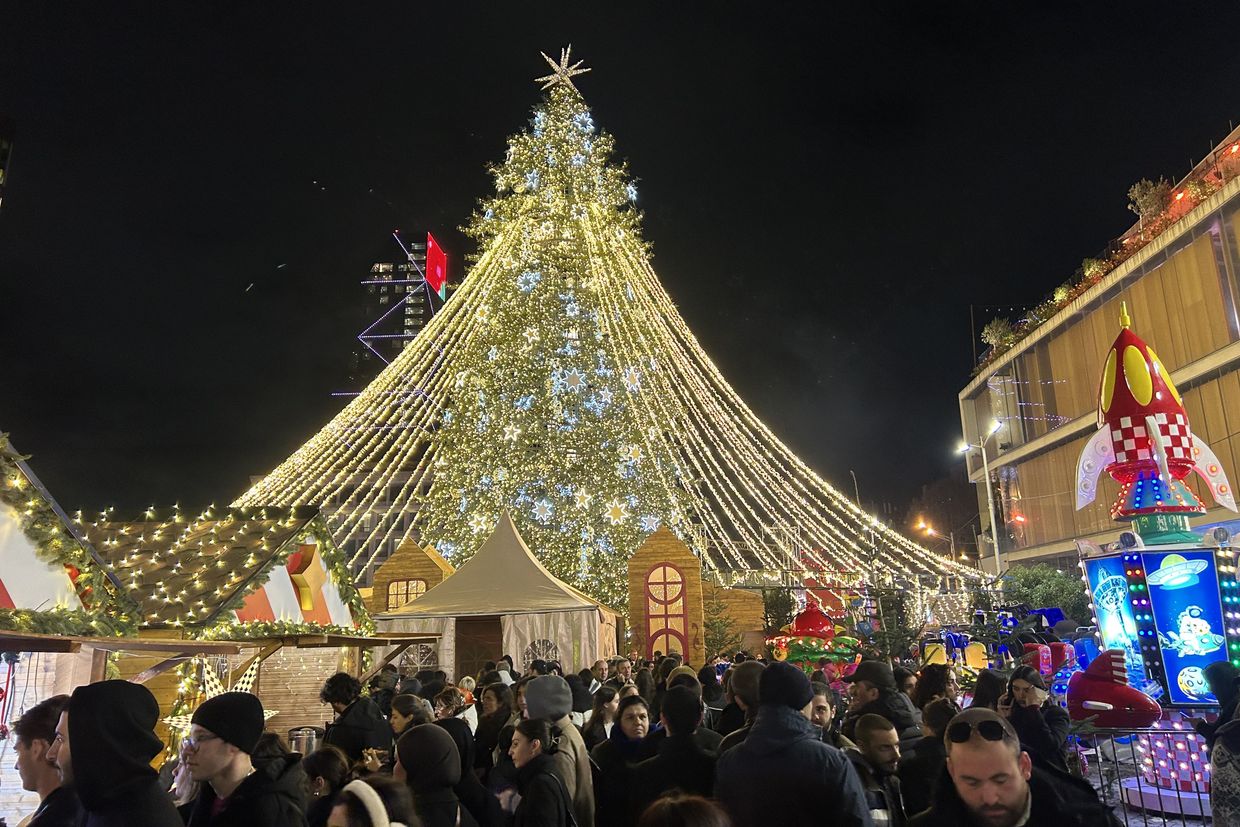
Tbilisi Mayor Kakha Kaladze has lit the city’s main Christmas tree, which this year was erected away from its traditional location at the parliament — the epicentre of ongoing daily anti-government protests. As the festive event took place on Friday night, demonstrations continued nearby against the backdrop of recent restrictive legislations and uncertainty surrounding the longevity of the protest movement.
The First Republic Square — this year’s location for the main Christmas tree and holiday village — and its surrounding area were unusually crowded during and after the event, with large numbers of people arriving and leaving, including children and teenagers.
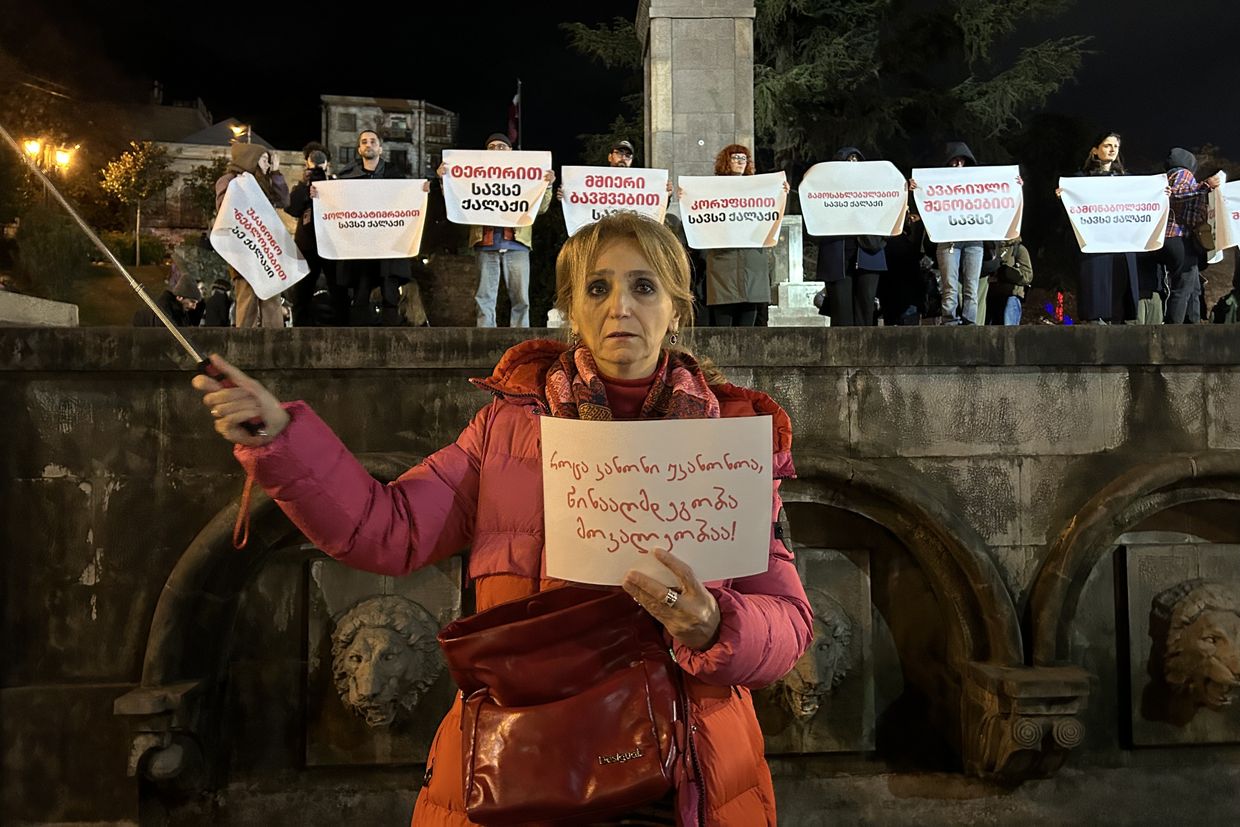
At the same time, on the other side of the street, near the monument of the medieval Georgian poet Shota Rustaveli, a small group of people had gathered with posters.
‘A city full of corruption’; ‘A city full of concrete’; ‘A city full of hungry children’, white posters with red and black letters read.
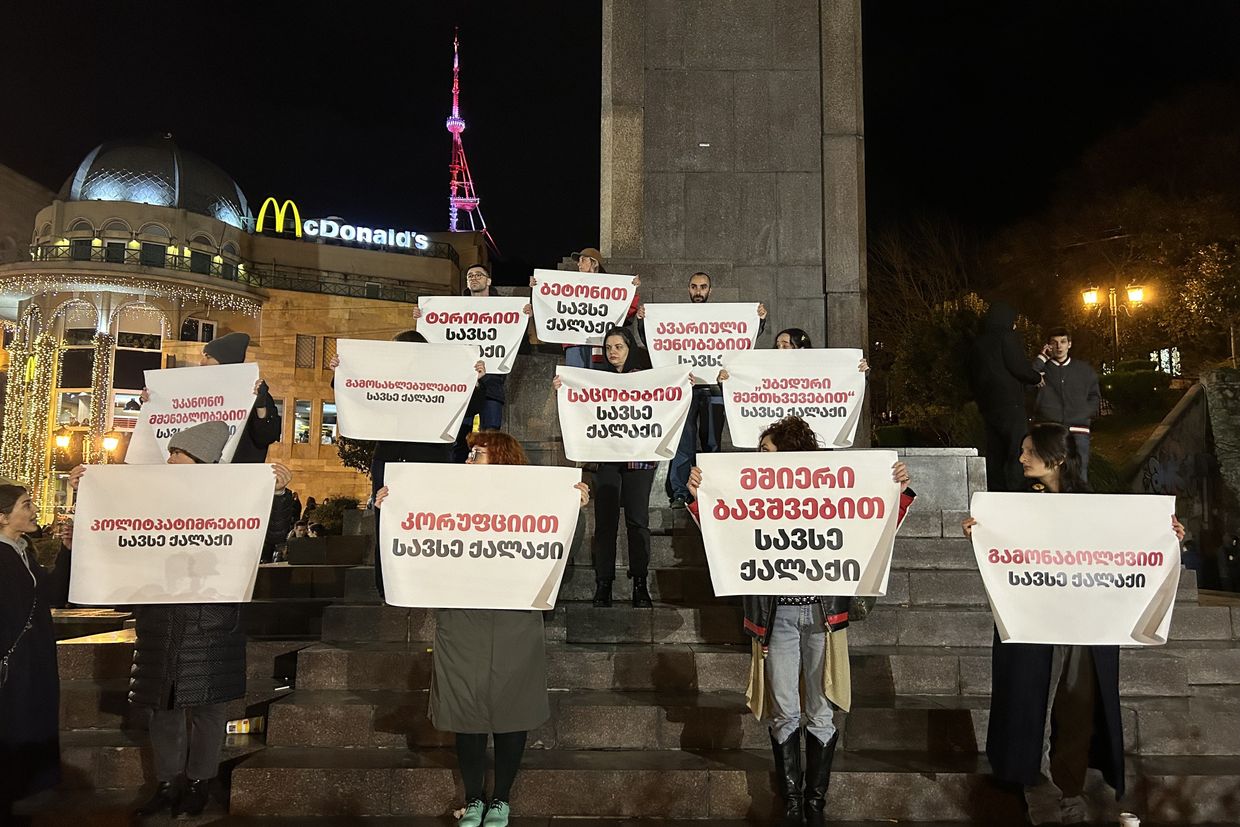
The uniform structure of the slogans is no coincidence: in recent years, the ruling party-controlled city hall has chosen a slogan before each New Year to convince Tbilisians that the capital is full of positive trends, with this year’s slogan being ‘A city full of kindness’.
‘This is simply a falsehood, propaganda, and we are trying to respond to this’, Nino Turiashvili, who joined the protest with a poster reading ‘A city full of traffic jams’, told OC Media.
According to her, the gathering was spontaneously organised by a group of friends, including herself, to show that not everything in the capital and the country is fine, despite what the ‘propaganda’ claims.
Unlike this year, the 2024 Christmas tree lighting was far more tense, taking place while daily protests against the government’s EU U-turn had been ongoing in Tbilisi and other cities for just over two weeks. That year, the city hall chose parliament — the epicentre of the protests — as the tree’s location, but was unable to hold the official event and canceled it at the last minute due to the anti-government demonstrations. Reporting at the time suggested that the ruling party had mobilised public employees to gather people for the event that ultimately did not end up taking place.
Turiashvili suspects that public employees may have been brought to this year’s Christmas tree lighting as well, but she is certain that many citizens also attended sincerely, wanting to ‘give their children at least one moment of joy and witness the tree lighting’.
‘For most residents of Tbilisi, this may be the only happy moment their child takes away’, she added, emphasising:
‘It’s not a problem if [they] stand [there] — we’ll be here too, and we’ll talk about their problems, including a city full of hungry children’.
Before the Christmas tree event, Tbilisi police detained three anti-government activists in Tbilisi, but released them shortly afterward.
‘We’re more afraid of where the country is heading’
That same evening, alongside the Christmas tree event and a small accompanying rally, participants of the daily anti-government protests once again assembled near parliament, just one kilometre away.
The protests have been ongoing there almost uninterrupted since 28 November last year, when the government announced the suspension of Georgia’s EU membership bid.
Although this time there is no Christmas tree at the parliament, the street is once again lined with Christmas decorations hanging overhead. It is just like last year, when the protest perimeter lit up with festive lights in the very place where, shortly before, masked police officers had brutally cracked down on demonstrators.
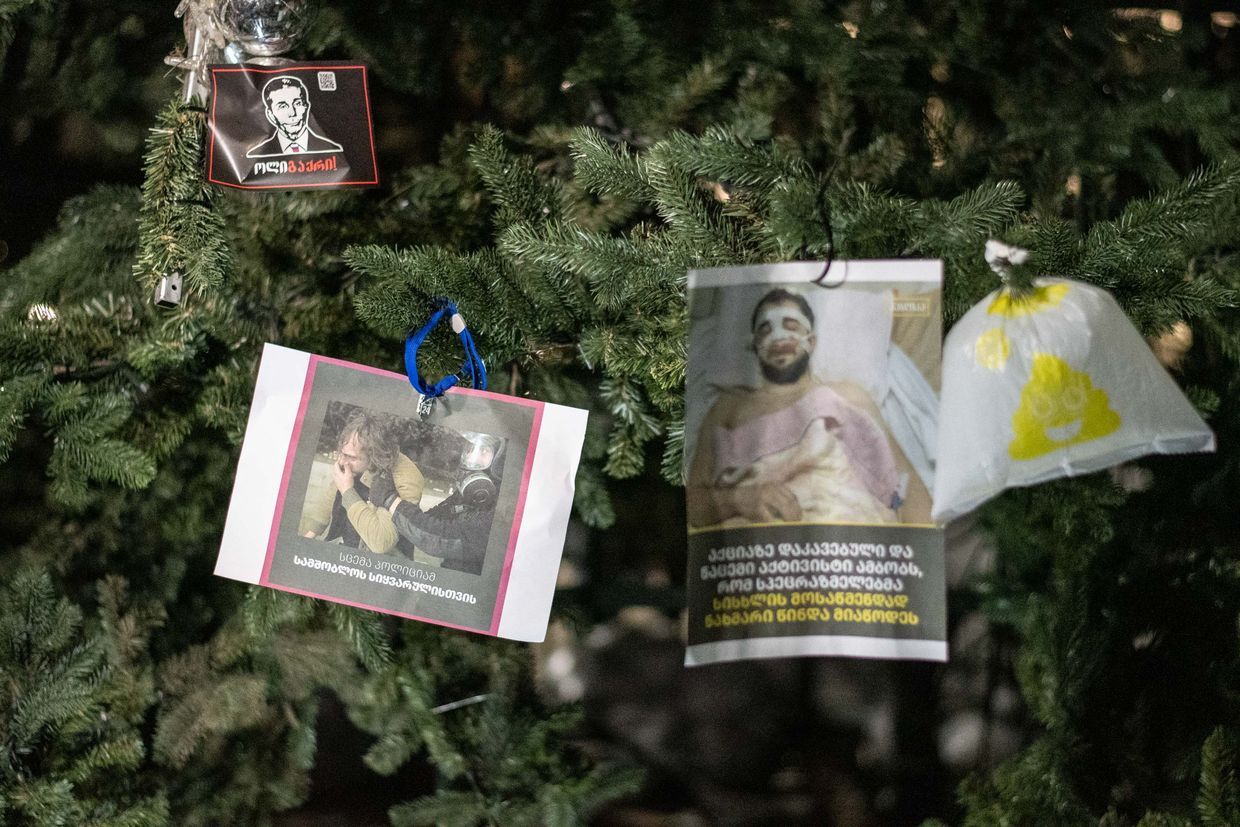
Since then, the demonstrations have withstood police violence, restrictive protest laws passed in the following period, relentless fines, and arrests. This month, the ruling party introduced yet another restrictive regulation, making it more difficult to hold protests not only on roads but also on pavements.
Under the amendments, which took effect on Friday, protesters must notify the Interior Ministry at least five days in advance before holding demonstrations in areas designated as ‘people’s movement’ zones, while the state has the authority to change both the location and timing of the protest, with imprisonment as a penalty for non-compliance.
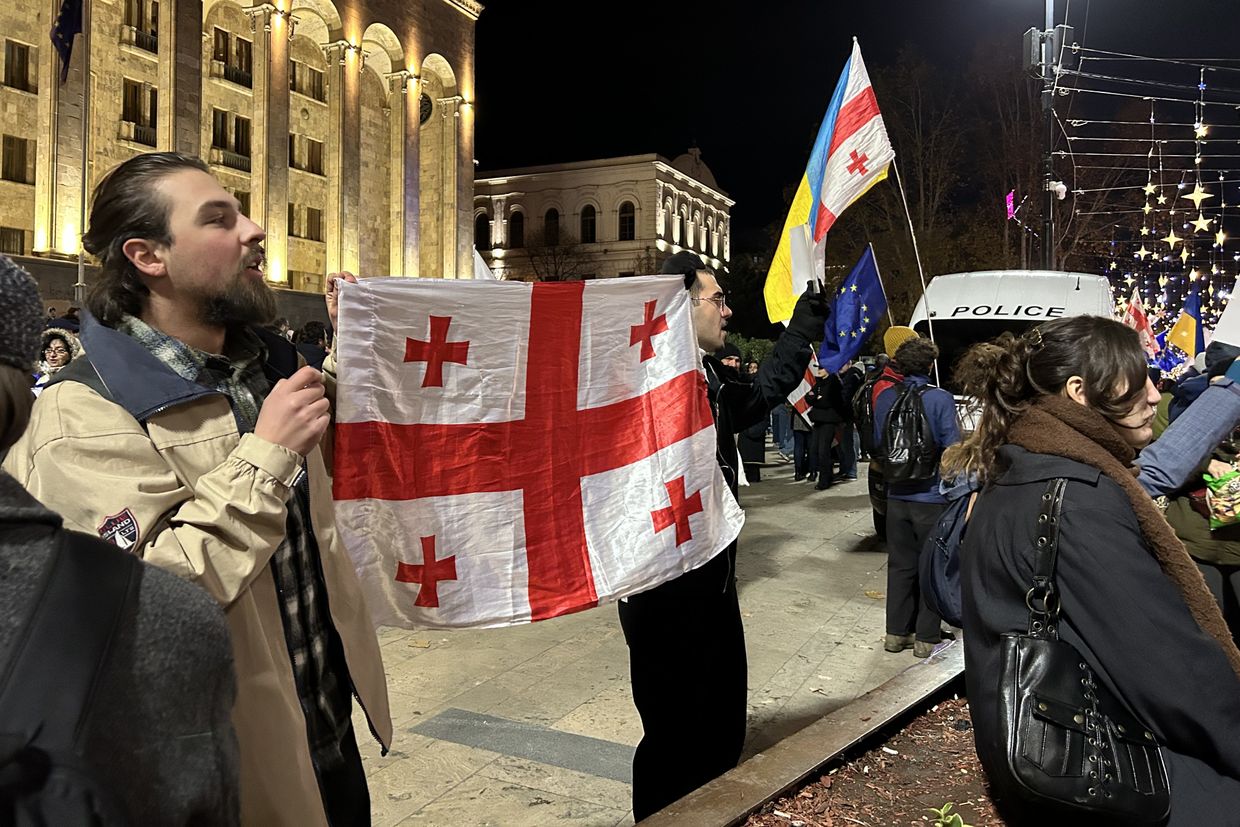
‘We will definitely come up with something together so that we aren’t harmed any more than we already are, and the [protest] can continue’, Khatia Vashakmadze, a former parliament employee who introduced herself as a ‘repressed public employee’, told OC Media in response to questions about the new restrictions.
‘Fear is generally an inherent part of this process, a human factor. To some extent, we are all afraid, but I always say that we are more afraid of what is happening [in Georgia] and where the country is heading’, she added, speaking while standing at the parliament.
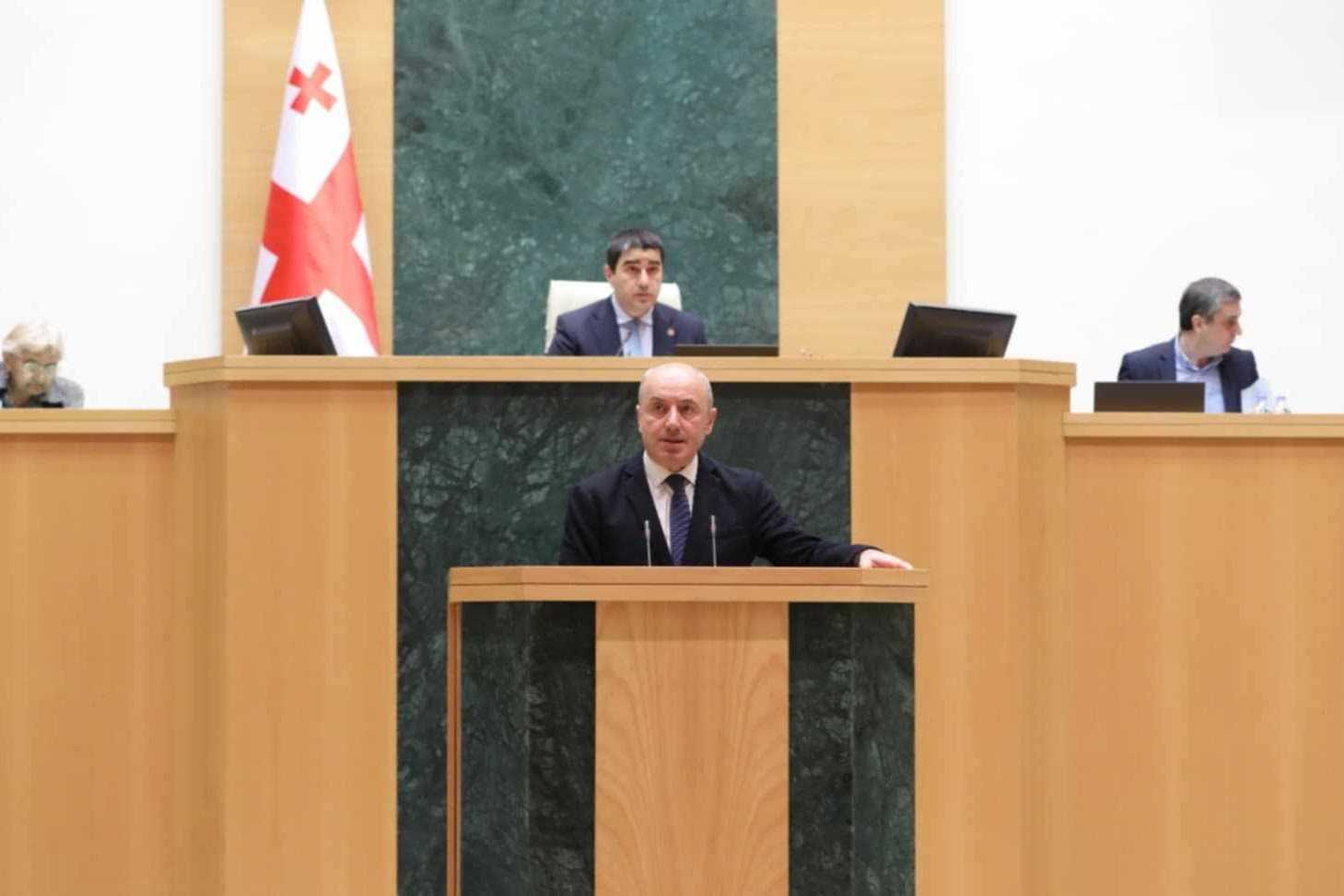
The authorities did not deny that the latest restrictions were implemented against the backdrop of ongoing anti-government protests, with ruling party MP Archil Gorduladze promising that he and his colleagues would identify and close any remaining ‘loopholes’ in the law in the future.
In response to Gorduladze’s pledge, Vashakmadze brought a poster to parliament on Friday reading: ‘If you cover wine during fermentation, it will burst the vessel!’ — referencing the pent up anger of society.
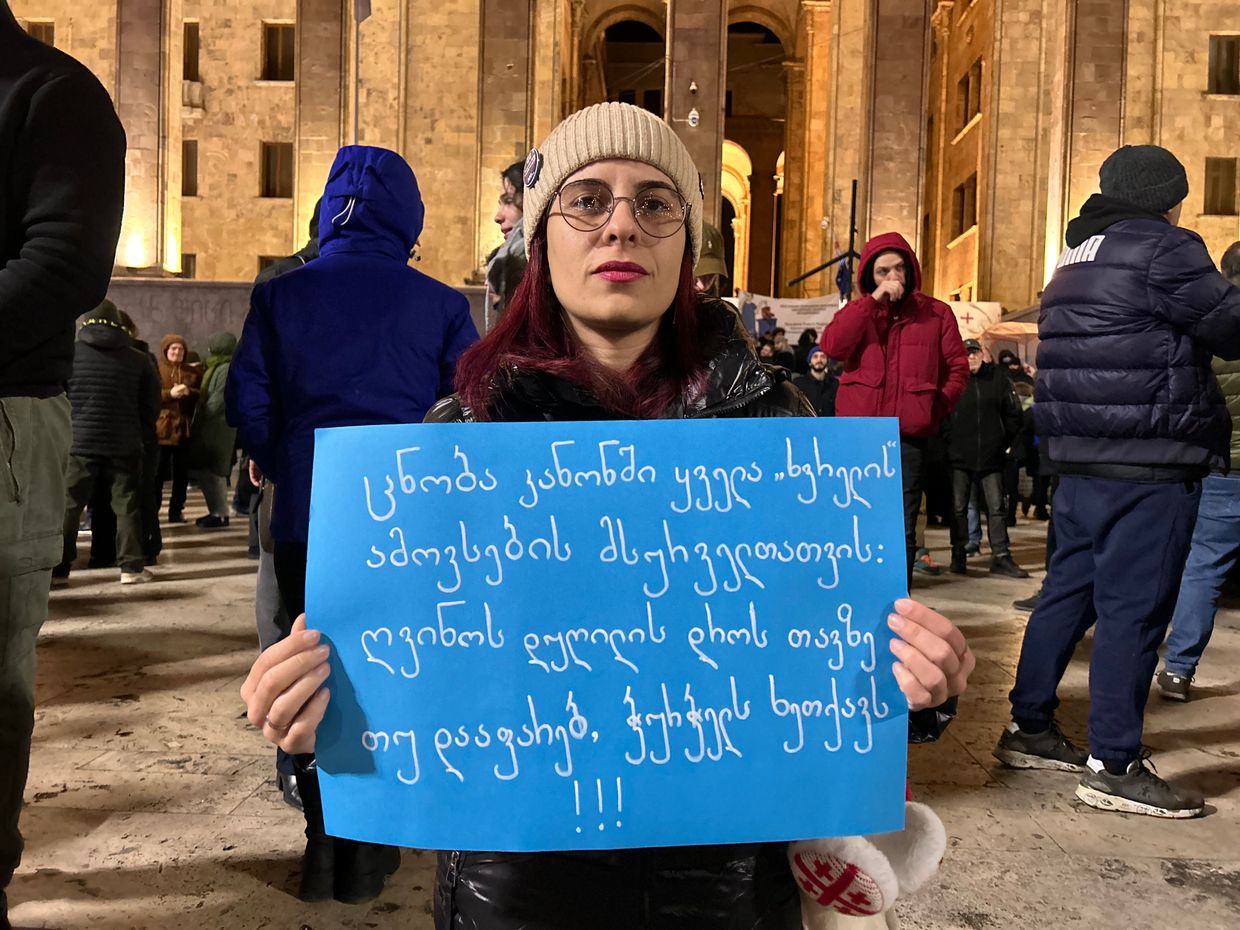
‘I believe this reaction also reflects the Georgian people, and ultimately we will definitely prevail’, she said.
Although the new amendments have not yet been officially used by the Interior Ministry against protesters, some have already begun testing the state’s capacity to enforce them. As an experiment, a lawyer Mikheil Zakareishvili submitted 46 separate notifications to the ministry, each stating that he intended to hold a demonstration on 17 December at a specific location in Tbilisi.
Zakareishvili also notified the ministry at least once about the daily protests near parliament, branding them as ‘spontaneous gathering’, a case in which the law allows for the five-day advance notification requirement to be waived.
‘I urge you, if you plan to protest anything, make sure you notify the Interior Ministry. I understand this might overload the system, but what can we do — we can’t break the law’, Zakareishvili wrote ironically on Facebook.
 Mariam Nikuradze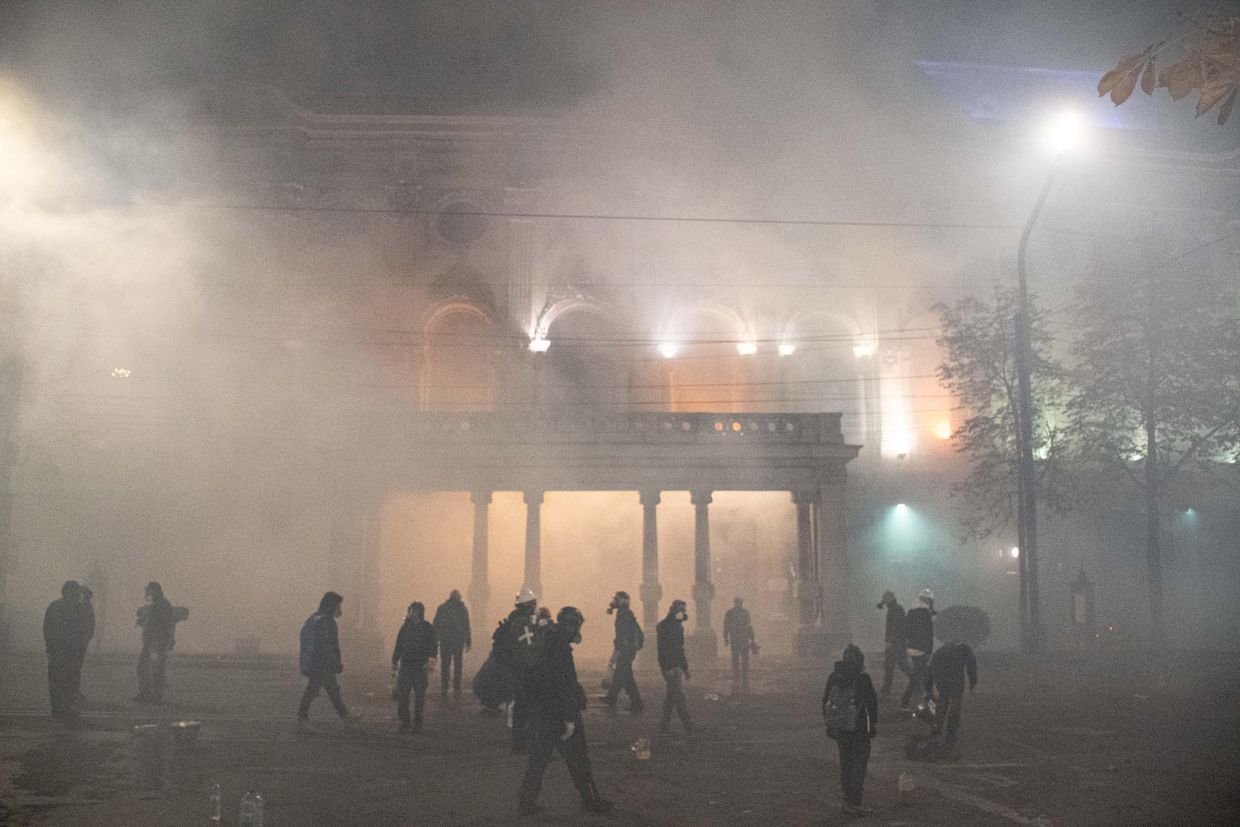
This article was translated into Russian and republished by our partner SOVA.