After presiding over Georgia’s free speech crackdown, Kobakhidze calls for ‘healthy’ public debates

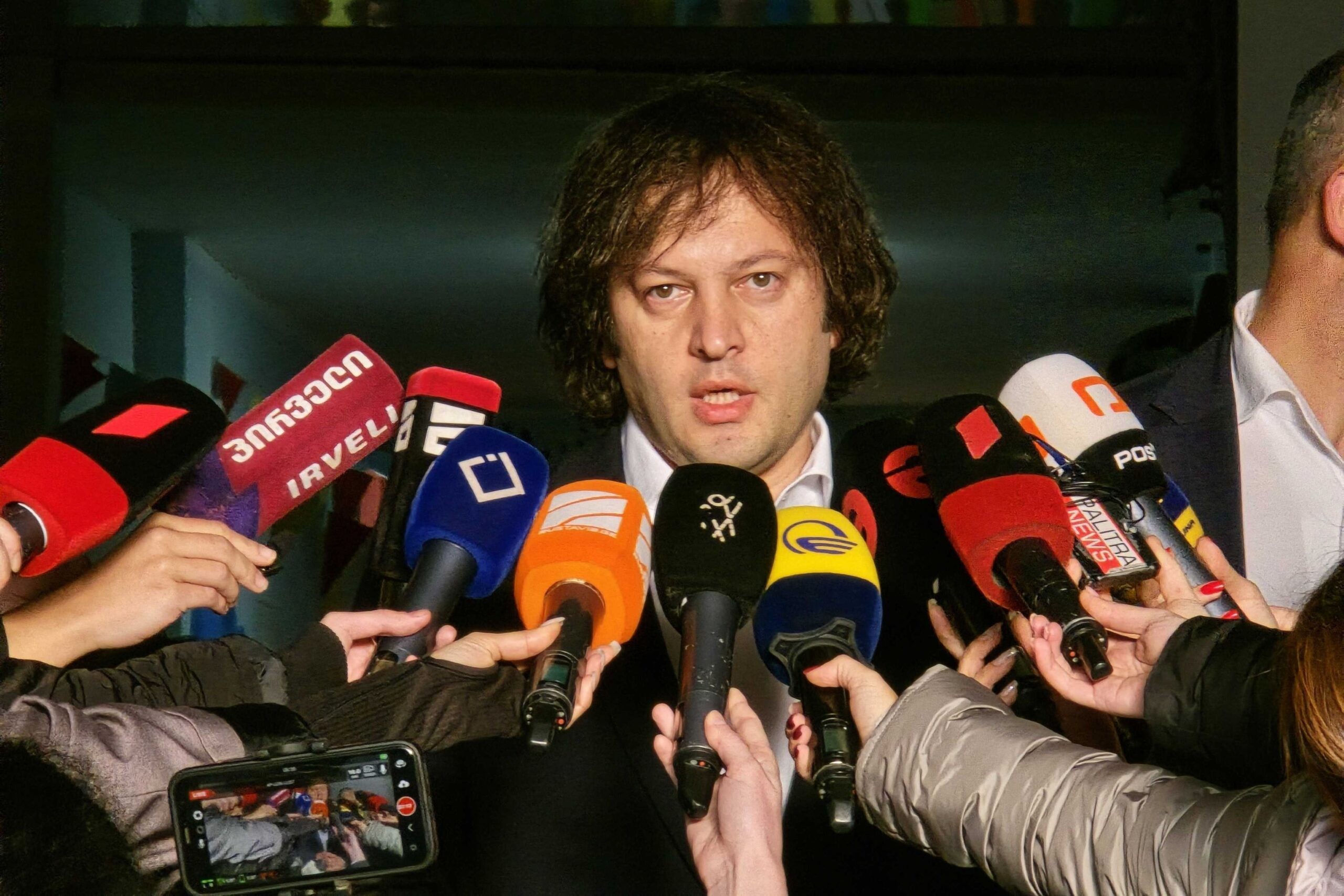
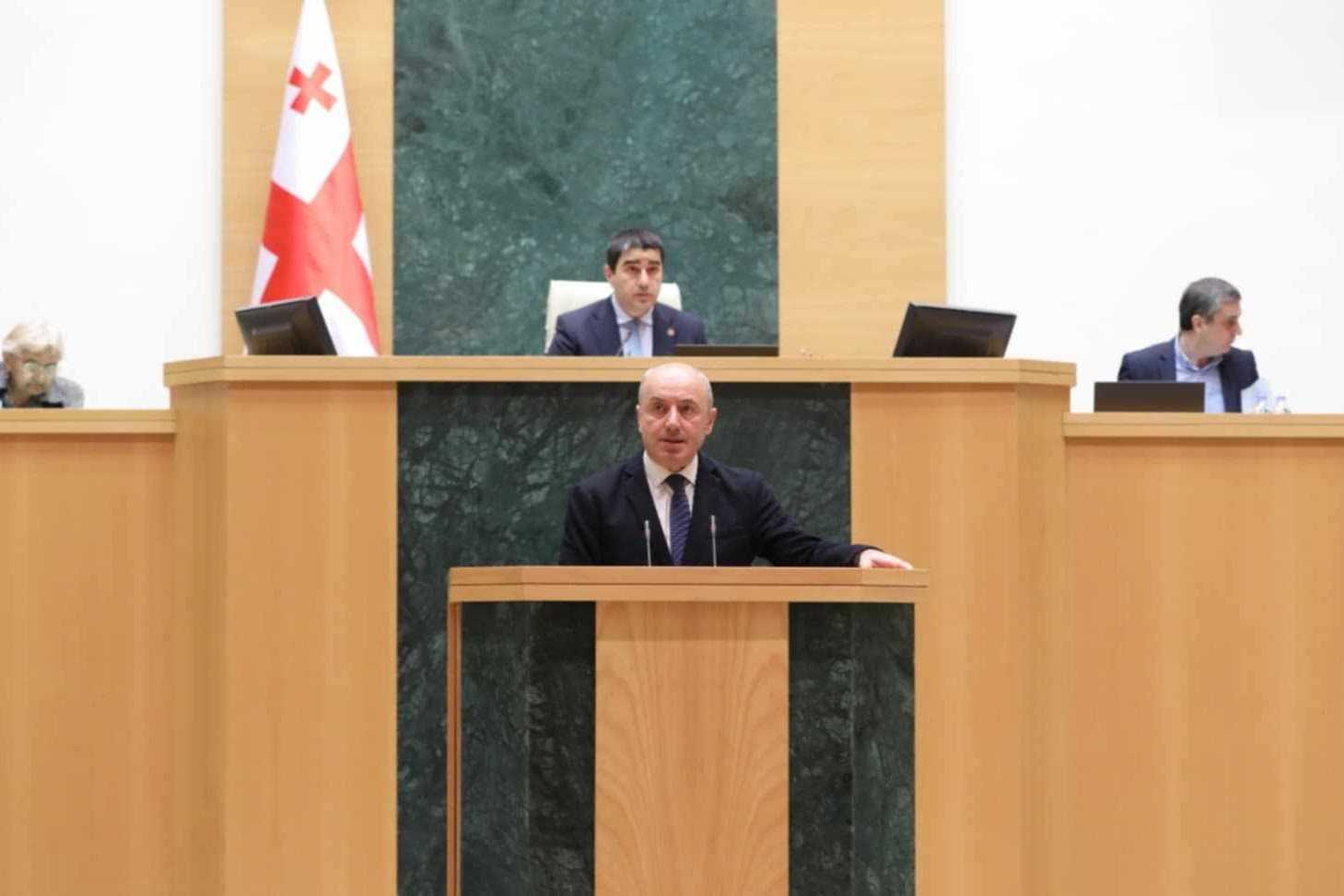
Georgian Prime Minister Irakli Kobakhidze has spoken about the need to restore ‘healthy’ public debates in the country. In a puzzling statement, he did not mention the ruling party’s responsibility for the erosion of debate culture, which critics both in Georgia and abroad have pointed out.
Kobakhidze’s remarks appeared on his social media on Thursday afternoon. Calling debate ‘one of the main pillars of democracy’, he went on to claim that in recent years, ‘informal rulers’ had spent significant resources to eradicate it in European countries.
He said this began after 2008, when what he described as ‘agent-led governance and pseudo-liberal values’ took deep root across the continent.
Kobakhidze did not specify which political powers he blamed for the erosion of public debate in Europe, but in his statement he again invoked the ‘deep state’ — a nebulous term the ruling Georgian Dream party uses to describe shadowy forces it claims are seeking to undermine Georgia’s statehood, overthrow the government, and drag the country into a war with Russia.
According to Kobakhidze, the process of ‘suppressing dissenting opinions’ has partially affected Georgia, where what he described as ‘deep state agents’ managed to shut down debate. He specifically singled out Nika Gvaramia — a Georgian opposition politician and the founder of the now-defunct opposition TV channel Mtavari, who previously also served as director of one of Georgia’s largest private broadcasters, Rustavi 2.
 Mikheil Gvadzabia
‘Gvaramia successfully carried out his assignment — he established lies, insults, profanity, slander, and hysteria as media standards, ultimately creating such a toxic media environment that normal, healthy people no longer want to take part in debates that inevitably end in abuse’, he added.
Kobakhidze noted that the government has an obligation to ‘correct this unhealthy situation’ and restore public debates for the people of Georgia.
Later the same day, during an appearance on the pro-government Imedi TV, Kobakhidze set a specific timeframe, stating that ‘this process must begin very soon, no later than within two weeks’.
‘There should be some formats, in our view, and the first debates between different sides should already take place’, he added, without providing further details.
‘It was Georgian Dream, not a deep state’
Kobakhidze’s remarks came amidst previous reports from opposition-leaning media that their programmes were being routinely boycotted by the authorities, while private pro-government channels either excluded opposition figures entirely from their shows or featured them only in separate, one-on-one interviews.
For Inga Grigolia, a veteran political talk show host who currently leads the programme Reaktsia on the opposition-leaning TV Pirveli, Kobakhidze’s explanations were ‘ridiculous’. Ruling party representatives stopped appearing on her programme, as well as on other shows on the channel, years ago, she told OC Media in a phone interview.
‘Both I and our channel’s representatives have made many attempts to somehow preserve debates in the country’, she said.
‘It wasn’t the ‘deep state’ that banned debates — it was a decision made personally by Georgian Dream’, she added.
Grigolia believes that the channel’s boycott by the ruling authorities became entrenched when TV Pirveli launched a weekly investigative journalism programme, repeatedly exposing state corruption and nepotism. The first episode aired in late May 2020.
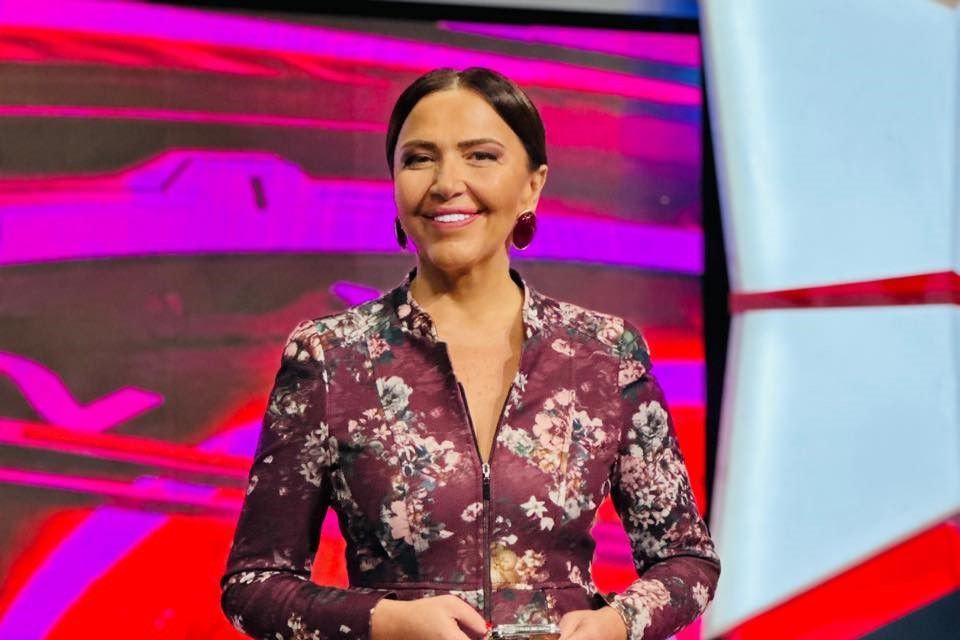
‘As soon as the investigations started, very quickly — if I’m not mistaken, immediately — a decision was made that they should no longer come to our channel, because they considered it unacceptable’, Grigolia added.
‘At first they would tell us, “No, we can’t come, no one is available, no one has time”, and later they told us they would no longer participate […] There really were countless attempts [on our part]’, she said.
Grigolia recalled that in June 2021, when Kobakhidze was already party chair, she met with him in person to request an end to the boycott. The meeting was successful, and for the following few weeks, Georgian Dream representatives resumed appearing on the channel.
However, this stopped after 5 July — when homophobic groups violently attacked journalists covering a planned Pride event in central Tbilisi, and a few days later, TV Pirveli camera operator Lekso Lashkarava, who had been beaten during the attack, died. Many critics, including journalists, held the state and then-Prime Minister Irakli Gharibashvili responsible for the violence.
‘After 5 July, the bridges were finally burned. They no longer had any desire to reconsider the boycott decision, and to be honest, I haven’t tried either’, Grigolia added.
What kind of debates and with who?
Following Kobakhidze’s statements, several opposition figures and representatives of government-critical media expressed their readiness to return to public debate formats.
‘Personally [with] you, in any format, at any time’, Zurab Japaridze, leader of the opposition party Girchi — More Freedom, wrote on Facebook, tagging Kobakhidze.
Levan Tsutskiridze, chair of the Freedom Square party, also weighed in, addressing the ruling party: ‘If you truly want debates, let’s sit down on any platform’. He then listed the issues government representatives would have to answer if the debates take place.
‘You will have to explain why chemical agents were used against dissenting citizens and why the country has so many political prisoners’, Tsutskiridze wrote on Facebook, referencing the 2024 protest dispersals in Tbilisi, as well as arrests of anti-government figures, activists, demonstrators, and journalists.
Mikheil Gvadzabia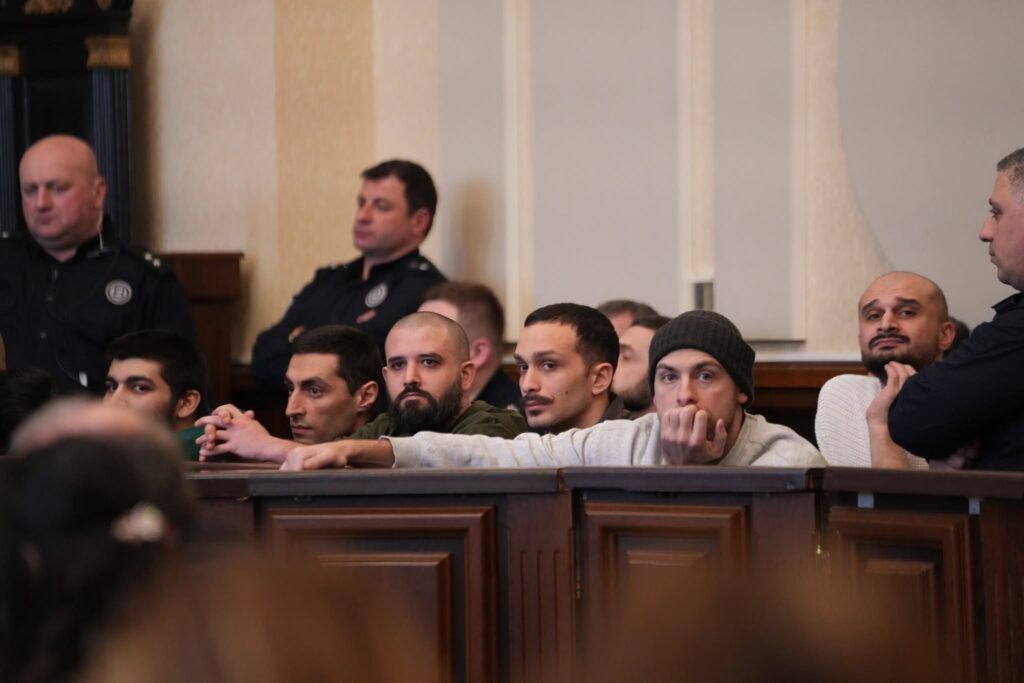
‘Want to talk about stability? You’ll have to acknowledge that your rule is built on oppression, torture, intimidation, and humiliation, and that you’ve alienated every strong partner, leaving the country isolated against Russia’, he added.
Despite Kobakhidze’s praise for debate culture, subsequent statements by ruling party representatives have raised questions about how open they really are to debate, with whom, and on which platforms.
‘Naturally, we have nothing to discuss with radicals, extremists, or political terrorists — neither with the public nor with them’, said Georgian Dream MP Levan Makhashvili, using terms the government frequently applies to its opponents.
Mariam Bogveradze
‘This initiative [about debates] concerns all committed people for whom the country’s better future is important. We are ready for this kind of discussion’, he added, though he did not specify whom Georgian Dream considers to fall into this category.
Asked by a TV Pirveli journalist how the ruling party’s statements should be understood, Georgian Dream executive secretary and Tbilisi Mayor Kakha Kaladze said the channel is ‘linked to lies and falsehood’.
‘You must correct all of this if you want to tell the public the truth’, he added.
Kaladze also said that ‘discussion and debate must follow a proper form — within civilised limits, not through cursing at mother, insults, or physical confrontations’.
Grigolia noted that she is ready to start debates on her program, but not with the topics and opponents chosen by the ruling party.
‘If they truly want debates, the main questions in this country are related to the political crisis and the unjustly detained people, and the debates should focus on these issues’, she said.
The discussion on the return of debating culture comes amid a now yearslong political crisis in Georgia that stems from the government’s anti-democratic slide and a shift toward authoritarianism.
Through numerous laws passed in 2024–2025, the ruling party has targeted the independent media and civil society organisations, as well as political opposition and street protests.
Since the government announced the halt of its EU membership bid in November 2024, dozens of anti-government protesters and several opposition figures, as well as media personality Mzia Amaghlobeli, have been arrested and prosecuted.
OC Media
This article was translated into Armenian and republished by our partner CivilNet.