The European Court of Human Rights (ECHR) has ordered the Georgian government to pay more than €640,000 ($750,000) to 26 people injured by police violence during the 2019 Tbilisi ‘Gavrilov’s night’ protests. The victims welcomed the ruling, while the authorities and the team of opposition leader Giorgi Gakharia, interior minister at the time, offered differing interpretations of the decision.
On Thursday, in its published ruling, the Grand Chamber of the ECHR found the Georgian state in violation of three separate articles of the European Convention on Human Rights in relation to different claimants:
- Both aspects of Article 3 (prohibition of inhuman or degrading treatment/lack of effective investigation) with respect to 24 applicants;
- Article 10 (freedom of expression) with respect to 14 applicants;
- Article 11 (freedom of assembly and association) with respect to 11 applicants.
The ECHR did not find a violation of Article 38, which concerns the obligation to provide all necessary facilities during the examination of the case.
Among the victims who filed complaints were both protesters and journalists working at the scene during the crackdown.
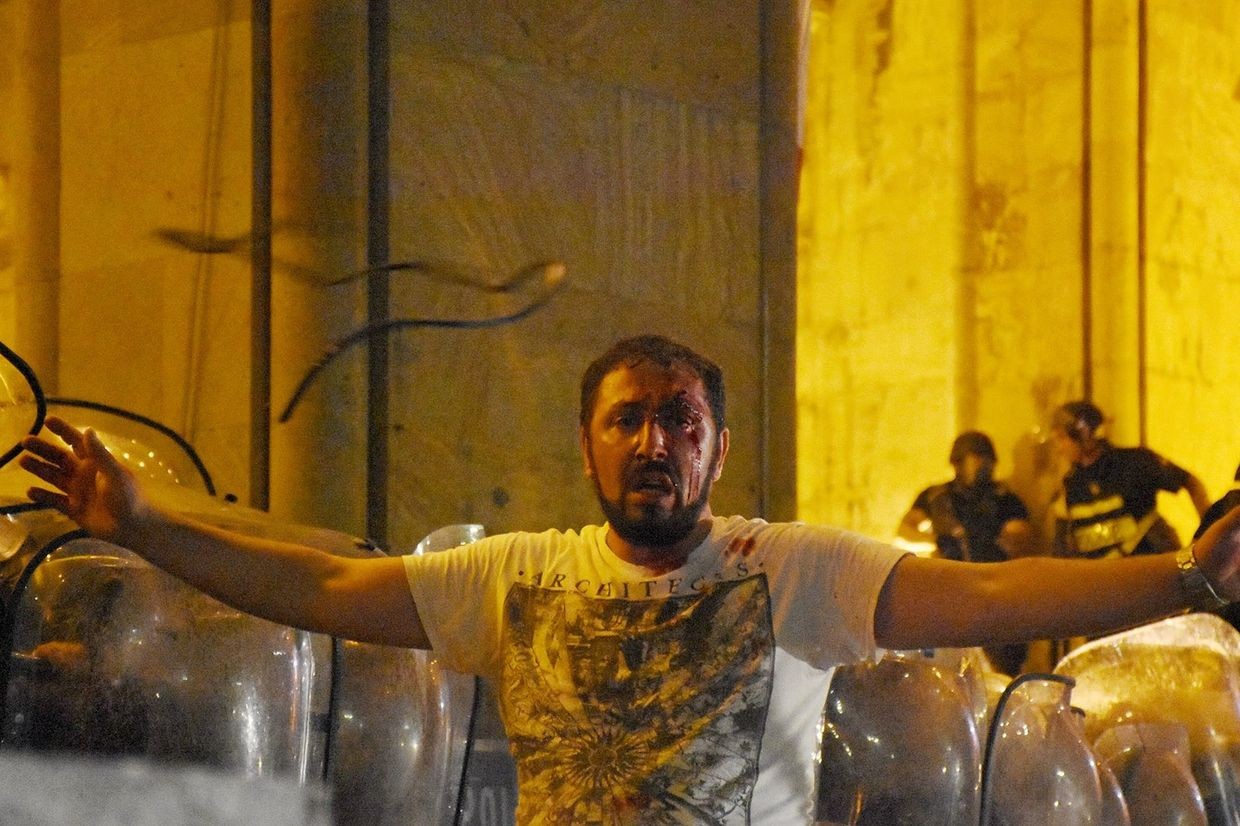
The spontaneous protests on 20 June 2019, dubbed Gavrilov’s Night, came in response to the Georgian government’s invitation to Russian Communist Party MP Sergei Gavrilov to address the Georgian Parliament from the speaker’s seat as part of the Inter-Parliamentary Assembly of Orthodoxy. After some protesters attempted to enter parliament, police began dispersing them using tear gas, water cannons, and rubber bullets.

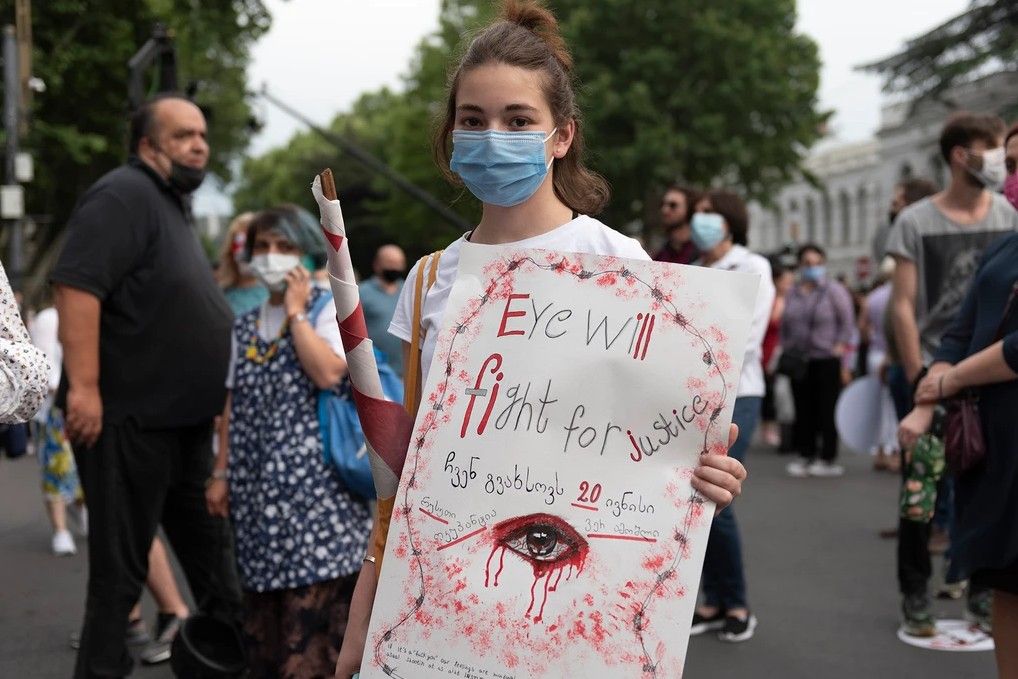
At least 240 people were injured and at least two individuals suffered traumatic and permanent eye injuries as police indiscriminately opened fire on the crowd with rubber bullets. According to the Interior Ministry, 80 police officers were injured during the clashes.
Shortly after the crackdown, the General Prosecutor’s Office launched an investigation into the possible abuse of power by police officers. However, critics have long pointed to the investigation’s ineffectiveness.
According to the ECHR, most of the applicants sustained injuries from the authorities’ use of rubber bullets — or kinetic impact projectiles. The others were allegedly assaulted by police officers.
The court found that, ‘although the ensuing investigation had already lasted for more than five and a half years, it had still not resulted in a thorough assessment of all the circumstances’.
‘Nor had it led to any findings concerning the ill-treatment of the applicants or the identities of the state agents who had used — or ordered the use of — excessive force’, the decision read.
The ECHR emphasised that the judges found no evidence that the applicants’ injuries ‘had been the inevitable consequence of their own conduct’. The court noted that police used rubber bullets broadly for crowd control and highlighted shortcomings in Georgian law regarding their use.
‘Moreover, preventing the applicant journalists from covering the events safely and freely had not been justified or proportionate’, the judges added.
The ECHR concluded that although ‘wanting’ to disperse the demonstration may have been partly justified — especially since it was near parliament and some protesters attempted to storm it — the way it was carried out was not.
‘Above all, an unjustified degree of force had been used, causing the applicants, and others, physical injury’, it said.
Gakharia and Georgian Dream’s U-turn
The ECHR issued its first ruling on the 2019 crackdown case in May 2024, finding a violation of the prohibition of torture in connection with the effectiveness of the investigation. However, the Georgian Young Lawyers’ Association (GYLA), which represented the victims, appealed to the Grand Chamber, arguing that several other articles had also been violated.
The victims of the crackdown welcomed the Grand Chamber’s Thursday ruling. Mako Gomuri, who lost an eye during a crackdown at age 18, told RFE/RL that she had always hoped ‘this day would come, if not in Georgia’s courts, then at least in the European Court’.
‘Justice moves slowly, and we can consider this a small victory. But it’s very sad that it took so many years and Strasbourg to establish an elementary truth that we all saw with our own eyes and some of us experienced on our own bodies’, another victim, Vakhtang Berikashvili, told Formula TV.
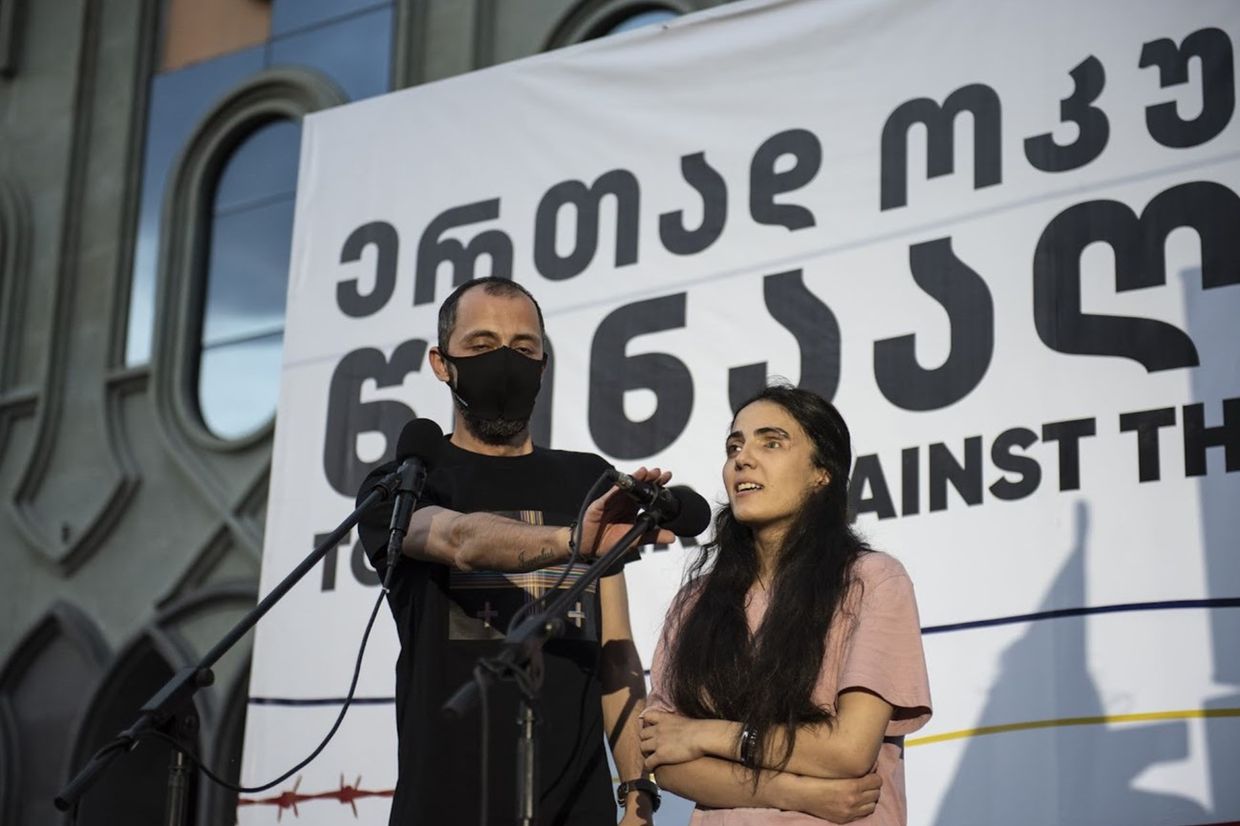
Assessing the ruling, GYLA Chair Nona Kurdovanidze said it not only restores the confidence of the victims in the success of the fight for their rights, but also ‘opens new opportunities for protecting the rights of peaceful assembly in the future’.
‘This case is particularly relevant today, as the right to peaceful assembly has been among the most restricted rights in recent years, and the violent dispersal of protests, torture, and the use of special measures against peaceful demonstrators remain pressing issues’, she added.
After the 2019 crackdown, the ruling Georgian Dream party, while acknowledging some cases of excessive force, defended then-Interior Minister Gakharia and not only ignored critics’ calls for his resignation, but promoted him to Prime Minister a few months later.

The situation changed in February 2021, when Gakharia resigned and later founded an opposition party. Georgian Dream branded him a traitor who abandoned his team, and gradually shifted its rhetoric on 20 June, blaming Gakharia for mishandling the dispersal of the protest.
Eventually, in the summer of 2025, the Prosecutor General’s Office revived the crackdown investigation — long criticised as drawn-out and ineffective — and in November charged Gakharia, who is currently in exile, reportedly in the EU.
The office said the revived investigation was a response to the ECHR’s call for an effective inquiry, while critics suggested it was part of a political vendetta rather than a genuine state interest in examining its own actions from six years ago.
 Mikheil Gvadzabia
Former teammates in a circular firing squad
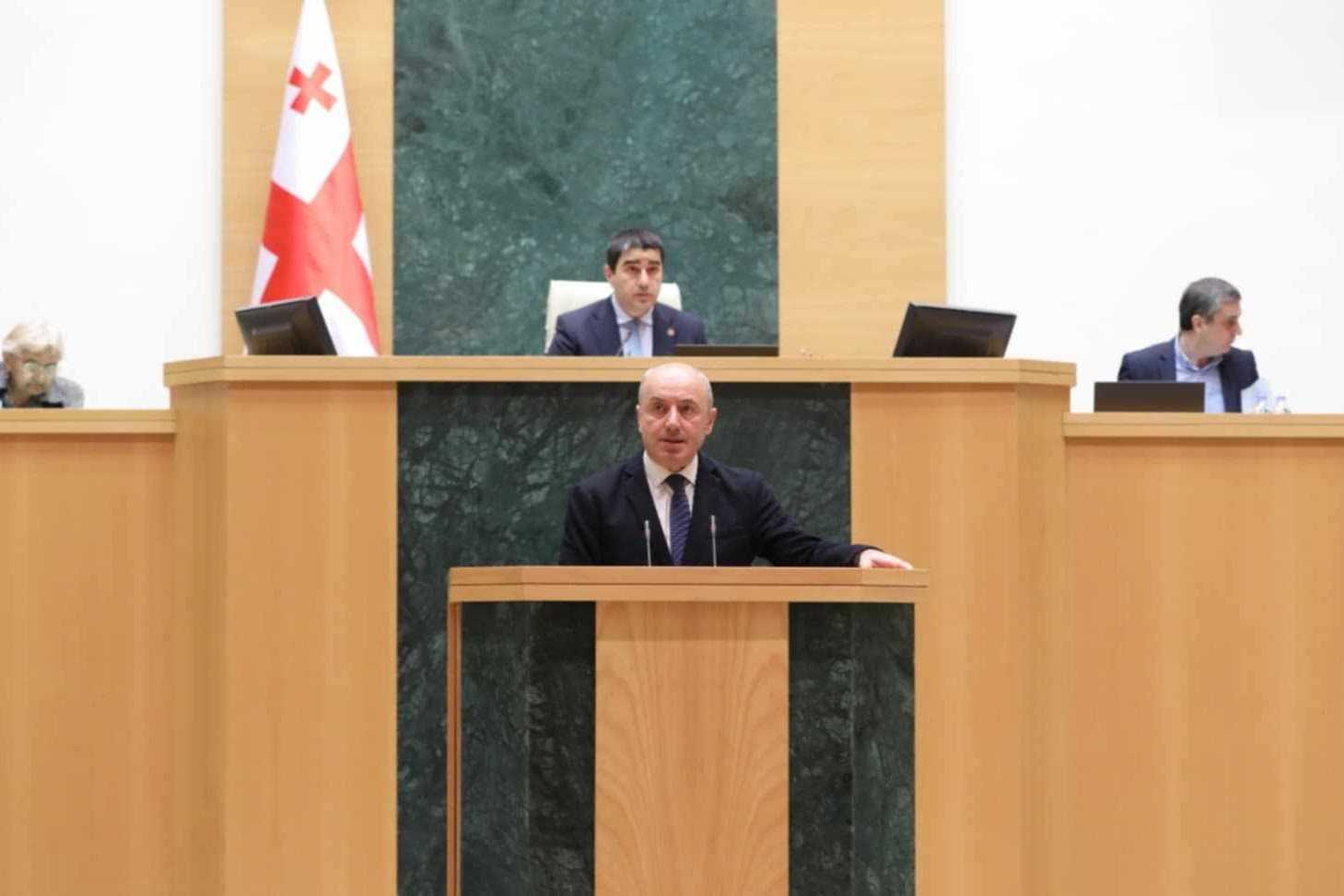
The Grand Chamber’s ruling was interpreted differently by representatives of the current authorities and Gakharia’s team.
Both sides agreed with part of the decision noting that there was some justification for dispersing the protest, given that some demonstrators attempted to storm parliament.
‘[The ECHR] has once again confirmed that the state has a legitimate right to use special measures when law enforcement and state institutions are under attack or stormed’, the Georgian Justice Ministry said in a Thursday statement.
The statement placed responsibility for the violations on Gakharia and his team, noting that ‘the then-leadership of the Interior Ministry failed to ensure compliance with this standard and the proportionate use of force against the protesters’.
The ruling party further claimed that Gakharia was charged by the Prosecutor General’s Office based on investigative actions launched in response to last year’s ECHR ruling.
‘He [Gakharia] is now taking refuge on EU territory. The questions are now directed at the EU, and in this case Germany, where he is located’, Parliamentary Speaker Shalva Papuashvili said on Friday.

For their part, Gakharia’s For Georgia party ‘welcomed’ the ECHR’s findings, arguing that the ruling absolved the former interior minister of personal responsibility.
One of the party’s leaders, Berdia Sichinava, acknowledged the ‘individual cases’ of excessive force, focusing on the part of the ruling that highlighted the inadequate legal regulation of rubber bullet use.
‘This Grand Chamber ruling further confirms that the charges against Gakharia are fabricated. His defence team will present this decision as exonerating evidence in court’, Sichinava added.
Party representatives repeatedly stressed that, according to the court’s ruling, Gakharia did not give an order to use rubber bullets. In this context, the party highlighted a quote from the court’s decision stating:
‘According to the case material, the high-level officials of the Ministry (the Minister and his deputies) did not order the use of [kinetic impact projectiles]. It is clear from the recordings from the hand-held radios of the Minister and his deputies [...] that they categorically ruled out the use of [kinetic impact projectiles]’.
As seen by OC Media, this quote is not a part of the assessment, but is rather cited by the ECHR from the Georgian Public Defender’s 2020 interim report on the 20 June events, in the section ‘Reports about the demonstration of 20–21 June 2019’. The report examined the testimonies of the then-senior officials of the Interior Ministry given as part of the Prosecutor General’s investigation, as well as radio communications records.

When asked why and how this excerpt was presented as the court’s position by For Georgia, party member Ana Buchukuri responded that it is a factual circumstance mentioned by the court and was not disputed by it or any other party of the case.
‘Any ruling you look at, the Strasbourg court presents the factual circumstances first and then makes its assessment’.
‘This factual circumstance in [the ruling] is not disputed. Therefore, when Strasbourg cites something as an indisputable fact, the subsequent assessment relies on it’.
In addition to the Prosecutor General’s office, Gakharia’s actions during the 20 June protest were also examined by the anti-opposition parliamentary commission, which the ruling party established in February to ‘investigate’ its opponents.
Gakharia told the commission that he had only authorised the use of water cannons and tear gas — not rubber bullets. However, in response to further questions from commission members, Gakharia added that officers could also decide to use rubber bullets on their own, for ‘self-defence’.
Mikheil Gvadzabia