Georgia’s Education Ministry sparked immediate backlash on Thursday after announcing which faculties state universities would retain under its controversial higher education reform.
The Georgian government first announced its intention to redistribute faculties among state universities back in autumn 2025. Under the plan, higher state education institutions would follow a ‘one city — one faculty’ principle, aimed at eliminating what officials described as ‘duplicated faculties’ across different public universities within the same city.
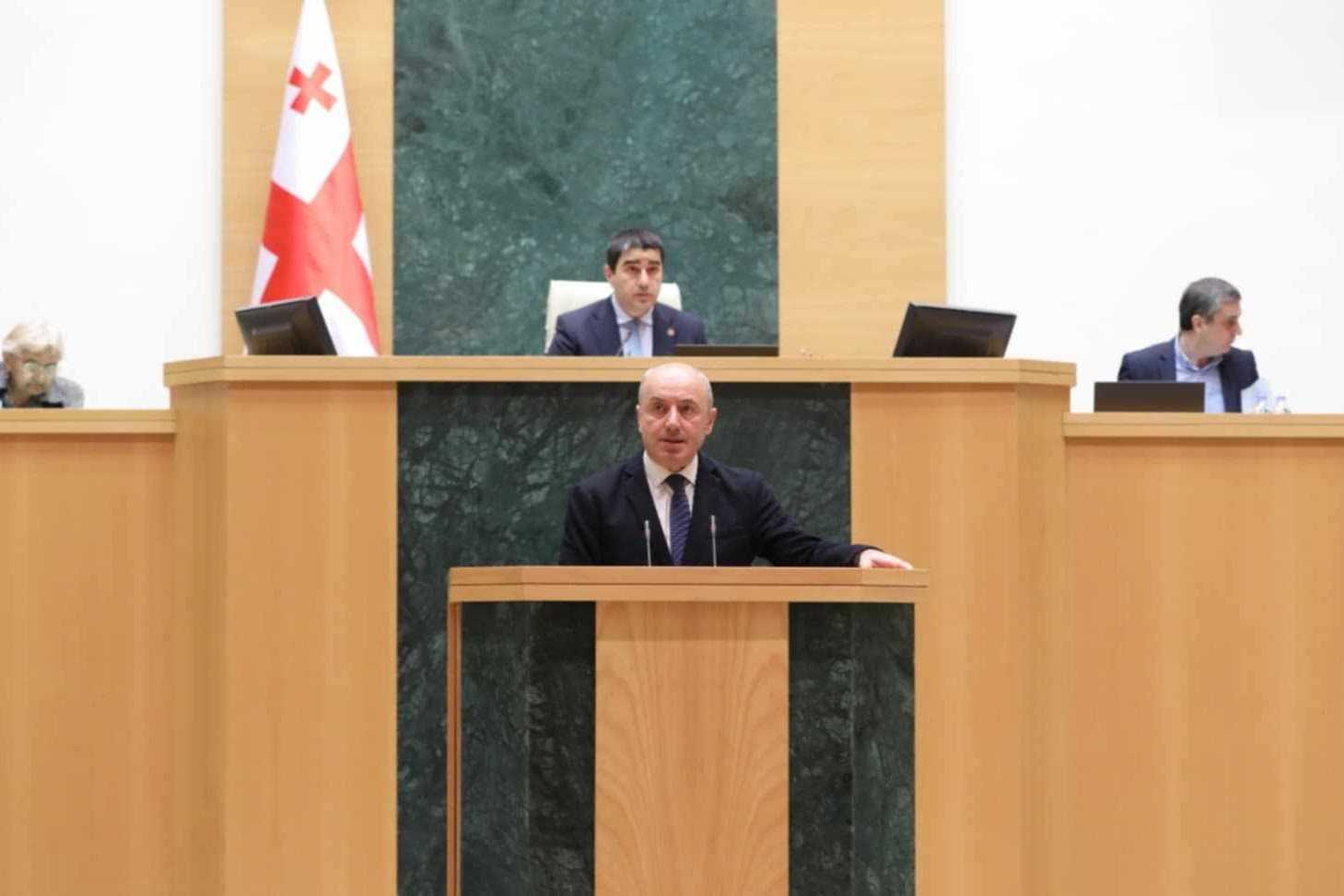
On Thursday, Education Minister Givi Mikanadze notified universities via a live-broadcasted briefing which faculties each institution would retain.
According to the minister, Tbilisi State University (TSU), the oldest and one of the most prominent state universities in Georgia, will retain quantitative and natural sciences, the humanities (excluding pedagogy), law, economics and business administration, and social and political sciences.
Under the same decision, Ilia State University (ISU), another of Georgia’s leading public universities, will be eligible to teach pedagogy programmes and internationally accredited STEM fields.
Georgian Technical University will be left with only engineering and technical disciplines, losing its humanities programmes, while Tbilisi State Medical University will retain only medical fields. Sokhumi State University, another Tbilisi-based state institution, will be assigned to offer programmes in agricultural studies, Georgian–Abkhazian languages and literature, and pedagogy.
Universities in Batumi and Kutaisi will keep multi-disciplinary profiles, while institutions in Zugdidi, Gori, Akhaltsikhe, and Telavi will focus on agricultural fields, tourism, and pedagogy.
Under the changes, the current programmes that are not included in the government-approved list will not be terminated immediately, but will instead be phased out over time.
 Mikheil Gvadzabia
‘This is tantamount to the destruction of ISU’
Mikanadze’s announcement was quickly followed by reactions on social media, with many focusing in particular on ISU’s uncertain future.
The ministry’s decision has been seen by critics as an attempt to strip key faculties from a university regarded as a hub of liberal thought and one of the more outspoken centres of dissenting views among higher education institutions. In addition to students, the university administration also expressed critical views toward government policies.
At present, the university comprises four faculties — the Faculty of Arts and Sciences, the Faculty of Natural Sciences and Medicine, the Faculty of Business, Technology and Education, and a School of Law. Among them, the Faculty of Arts and Sciences is one of the largest, encompassing a wide range of disciplines, including politics, history, sociology, as well as art studies, languages, and psychology.
The redistribution presented by Mikanadze on Thursday would significantly alter the current structure of ISU, leaving only pedagogy and ABET-accredited STEM programmes — reviewed and approved by the international accrediting organisation that ensures they meet high standards for technical education. Such accreditation is awarded to educational programs in applied sciences, computing, engineering, and engineering technology.
The rector of ISU, Nino Doboriginidze, who was recently re-elected for a second term, responded on social media to the minister’s briefing, noting that those making the decision ‘will inevitably have to answer to the university community — not just now!’.
‘Destroying higher education, eliminating the most successful fields according to international rankings, replacing the knowledge economy with business supplied by low-cost service staff, and selling off vacated buildings — all this was decided without involving education experts in the process; they just agreed among themselves’, she added, referring to the government.
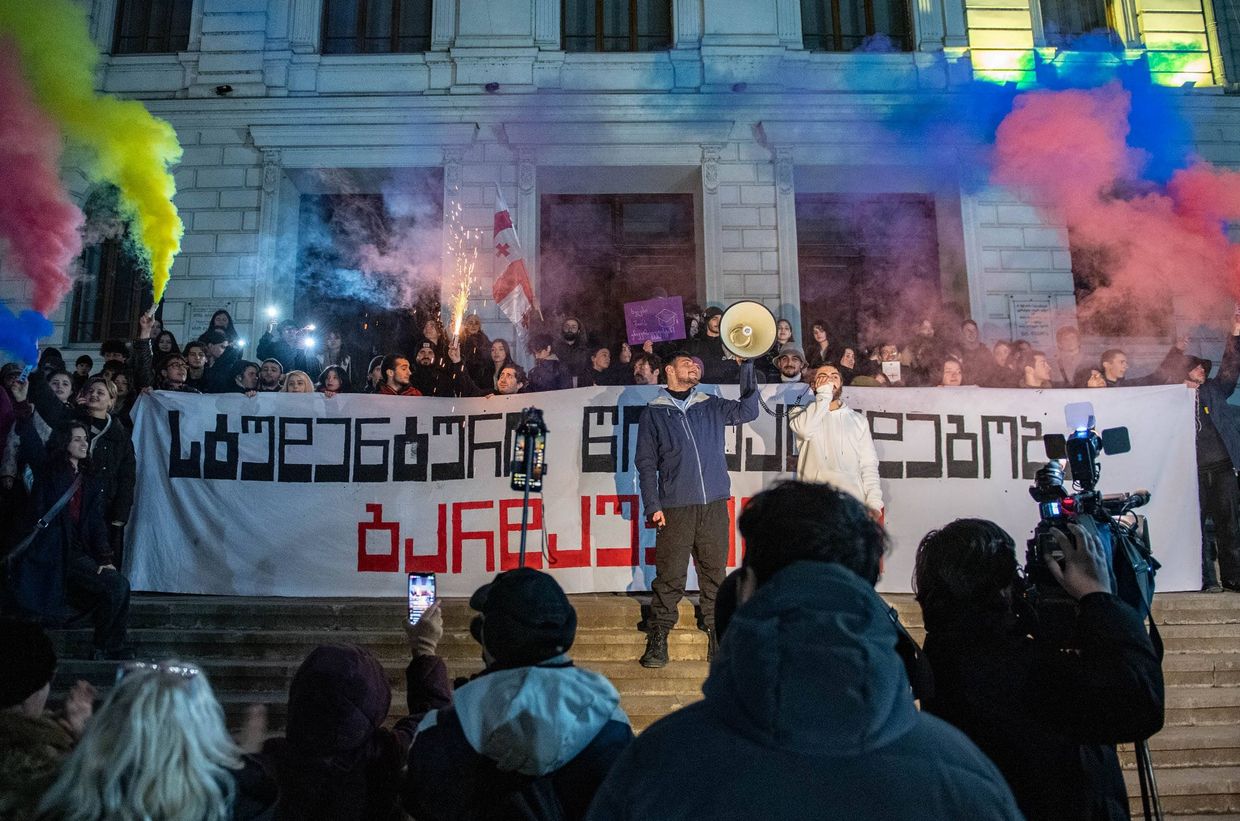
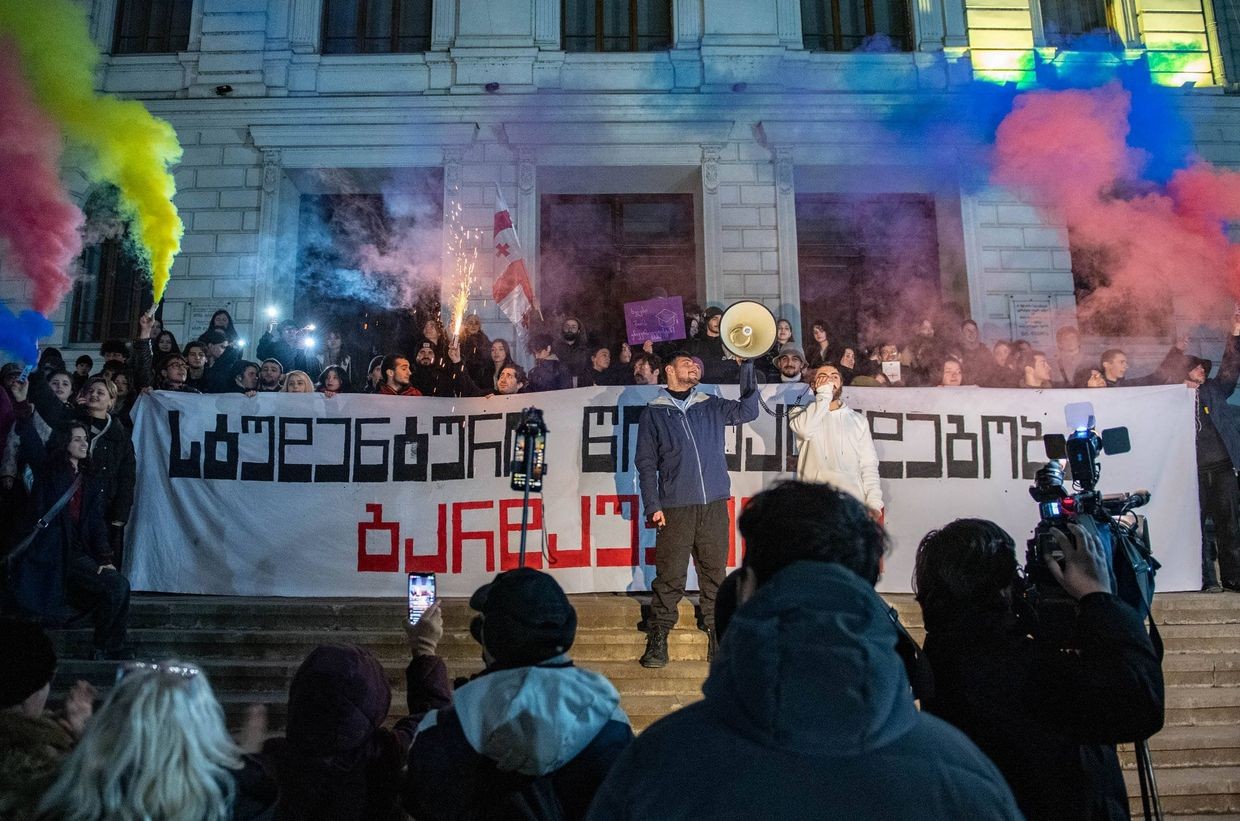
The student movement at ISU, which is actively involved in anti-government protests, immediately announced a protest outside the university’s main building on Thursday evening. According to the movement, the government’s decision amounts to ‘the destruction of a leading university’.
‘We do not have the right to give up our long-standing history, values, and achievements earned through years of hard work’, the statement read.
The Freedom Square opposition party also called on people to join a protest at ISU, with party member Simon Janashia, an education specialist, describing the move as a first step toward ‘destroying’ the education system.
‘[Universities] will no longer be able to develop the programmes they have spent 35 years building’, he said, noting that for some universities this ‘practically amounts to their abolition’.
The government had rejected the criticism, arguing that the redistribution of faculties preserves disciplines at specific state universities ‘taking into account their traditional profiles and historical experience’.
Another controversial initiative under the reform was the planned merger of TSU with GTU, announced at the end of January. Amidst protests from professors and students, who questioned the justification for the decision, the government ultimately withdrew it.
Mikheil Gvadzabia