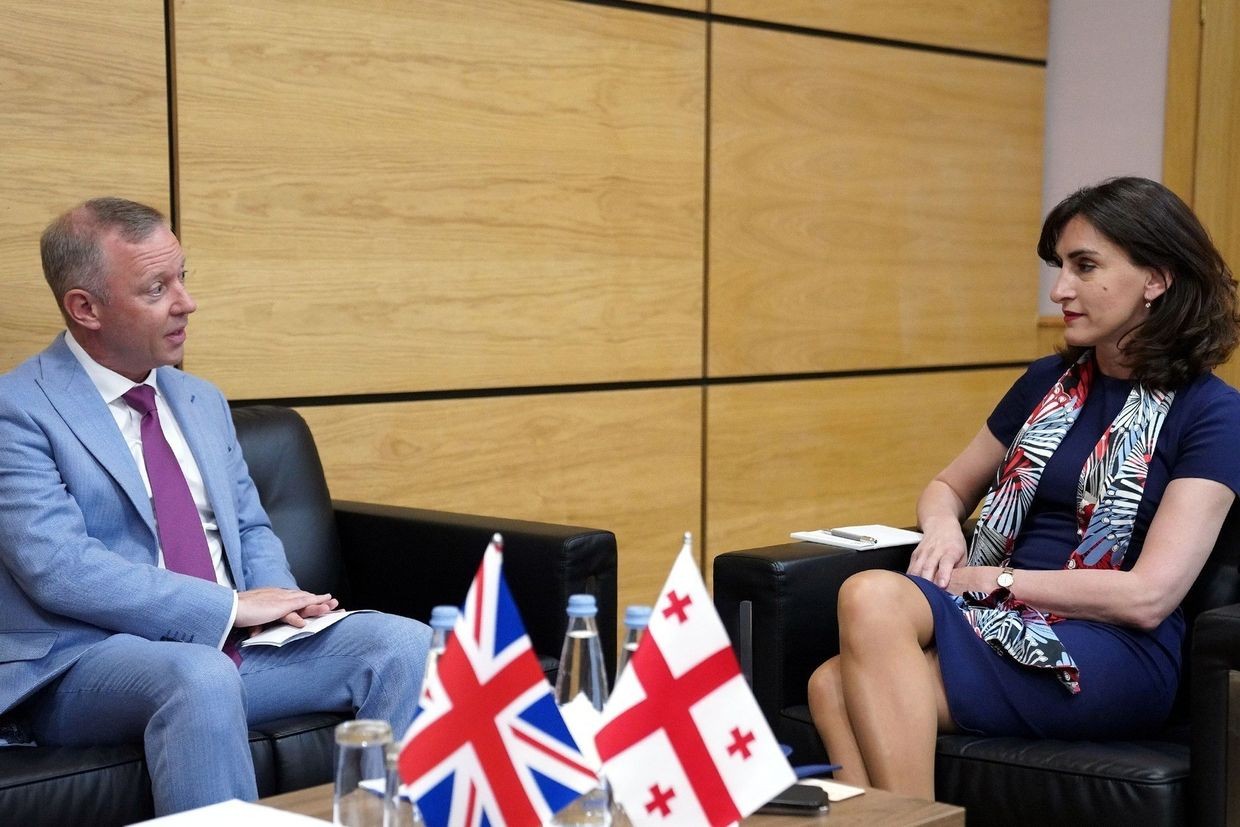
Georgia’s Foreign Ministry has summoned UK Ambassador Gareth Ward in connection with the sanctions imposed by the British authorities on two pro-government TV channels. Meanwhile, discussions continue over the possible effects of the sanctions and how Georgian banks will respond to them.
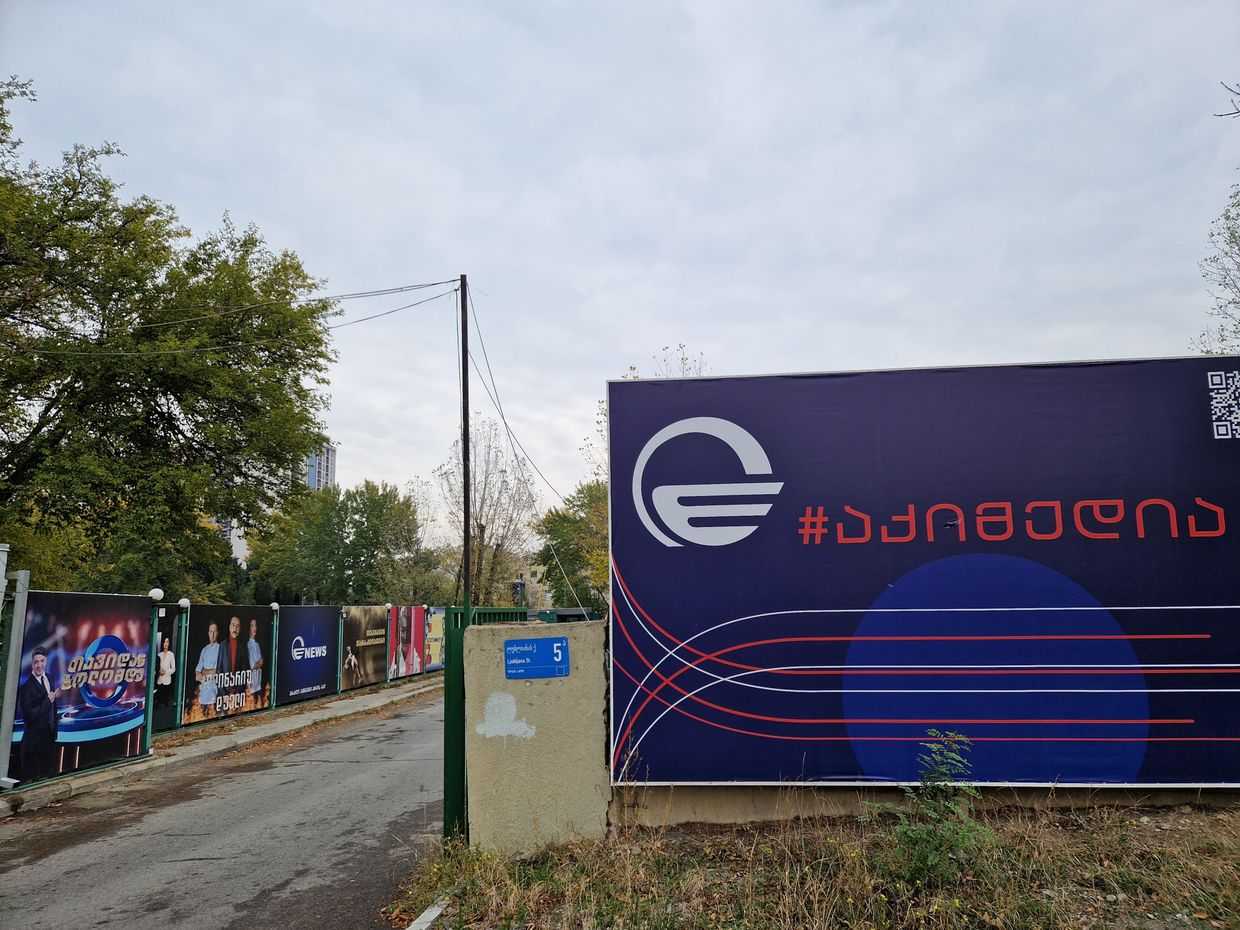
Georgia’s Foreign Minister Maka Botchorishvili announced the summoning of Ward on Wednesday evening, to demand an explanation regarding the sanctions that targeted the major pro-government TV Imedi, alongside the smaller POSTV.
‘Beyond the fact that we are speaking about freedom of expression and standards of free speech, and that this concerns the media, when we are talking about sanctions, this requires very solid legal grounds’, Botchorishvili said in an interview with another pro-government TV channel, Rustavi 2.
‘Our understanding is that sanctions are imposed to make it easier for Ukraine to fight Russia and to ensure Russia’s defeat’, she added, further noting that ‘it’s cynical that the West — in this case, the UK — sees sanctioning two Georgian TV channels as a way to achieve victory over Russia’.
After the meeting, Ward left the ministry without comment, while Botchorishvili said that during the 40-minute session she had not heard ‘a single argument’ justifying London’s decision.
The UK issued sanctions against Imedi and POSTV on Tuesday, listing both media outlets as ‘entities involved in Russian disinformation’ and accusing them of spreading ‘deliberately misleading information’ concerning Russia’s full-scale invasion of Ukraine to its audiences.
Imedi and POSTV were apparently the only media outlets to be included in the newly expanded sanctions list, published on the fourth anniversary of the invasion.
Criticism of the sanctions was voiced by both TV channels, with Imedi stating that ‘British sanctions have no value’, and ‘the only valuable assessment for Imedi TV is the trust of the Georgian people’. In its evening news broadcast, the channel further described the reasoning of the sanctions as ‘slander’ and ‘disinformation’.
Shortly afterward, representatives of the Georgian government also condemned the UK over the sanctions.
Georgia’s Ministry of Foreign Affairs had previously summoned the UK Ambassador over the issue of sanctions. This occurred in December 2024, after London imposed sanctions on then-Minister of Internal Affairs Vakhtang Gomelauri and his deputy, as well as senior police officials, due to violence against anti-government protesters.
 Mikheil Gvadzabia
The National Bank President comments
The UK imposed the same three set of sanctions on both entities — ‘asset freeze, trust services sanctions, director disqualification sanction’ — meaning that all assets or properties held by the companies in the UK will be frozen, it will become illegal for UK citizens to help create or manage trusts for the companies, and the individuals running the companies will be barred from running any other UK-based company.
It is not yet clear how the sanctions might affect the two broadcasters or what the policy of the Georgian state or commercial banks will be in terms of their enforcement. However, two of the country’s largest banks, TBC and Bank of Georgia, are listed on the London Stock Exchange.
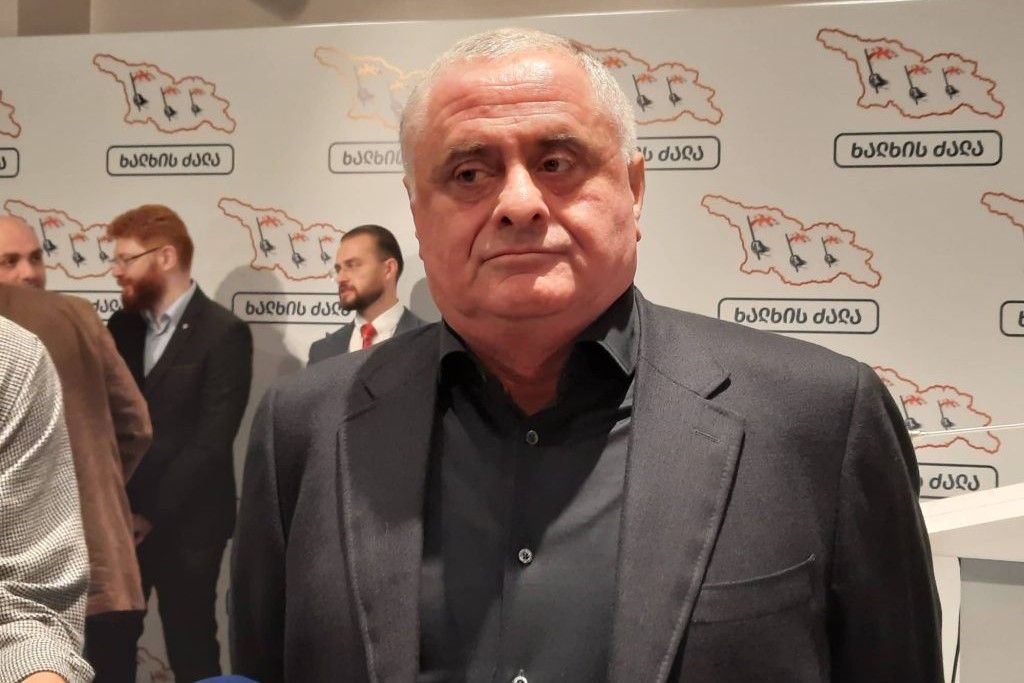
On Wednesday, the President of the National Bank of Georgia and former Minister of Economy, Natia Turnava, commented on the issue for the first time in a statement given to Imedi, which the channel published on its website overnight.
In Turnava’s words, ‘commercial banks operating in the country are legal entities established under Georgian legislation, whose activities are subject to the Constitution of Georgia and national laws’.
‘In the event of a clash between a normative act adopted in another jurisdiction and the constitution and laws of Georgia, operating commercial banks are obliged to act in accordance with the norms established by the constitution and legislation’, she added, leaving the prospects for enforcing the latest British sanctions unclear.
The National Bank had previously stated on multiple occasions that Georgia was in full compliance with sanctions imposed by the US, the UK, and the EU against Russia.
However, in 2023, when the UK sanctioned Georgia’s former Prosecutor General Otar Partskhaladze, the National Bank amended the rule on the enforcement of sanctions and instructed commercial banks that, in the case of a Georgian citizen being sanctioned, they should enforce the sanctions only if there is a final, legally binding conviction issued by a Georgian court.
Imedi’s supervisory board members resign
On the same day, four members of Imedi’s Supervisory Board submitted requests to the Public Registry to resign from the board.
Among them was the UK-based Georgian businessperson with the US citizenship Irakli Rukhadze, the chair and former owner of Imedi, who had announced the sale of the TV channel several weeks before the company was sanctioned.
Alongside Rukhadze, the requests to resign were submitted to the registry by the vice-chair Giorgi Kalandadze, and members Giorgi Bakhtadze and Davit Shonia.
In their letters, all of them cited the change of ownership as the reason for their decision and noted that the management had been informed of their intention to leave the board as early as 6 February — the very day the sale of Imedi became public.
In the applications submitted to the registry, all four requested that their resignations be expedited, for which a fee of ₾414 ($155) was paid. The registry approved the requests on the same day.
On Wednesday, Imedi’s websites were down for several hours, sparking speculation about a possible link between the outage and the sanctions. The co-owner of the channel, Ilia Mikelashvili, told RFE/RL that the outage was due to a technical glitch and was not related to the sanctions.
The channel’s Georgian-language websites resumed operation later. However, Imedi’s English-language news website remains inaccessible as of publication.
Mikheil Gvadzabia