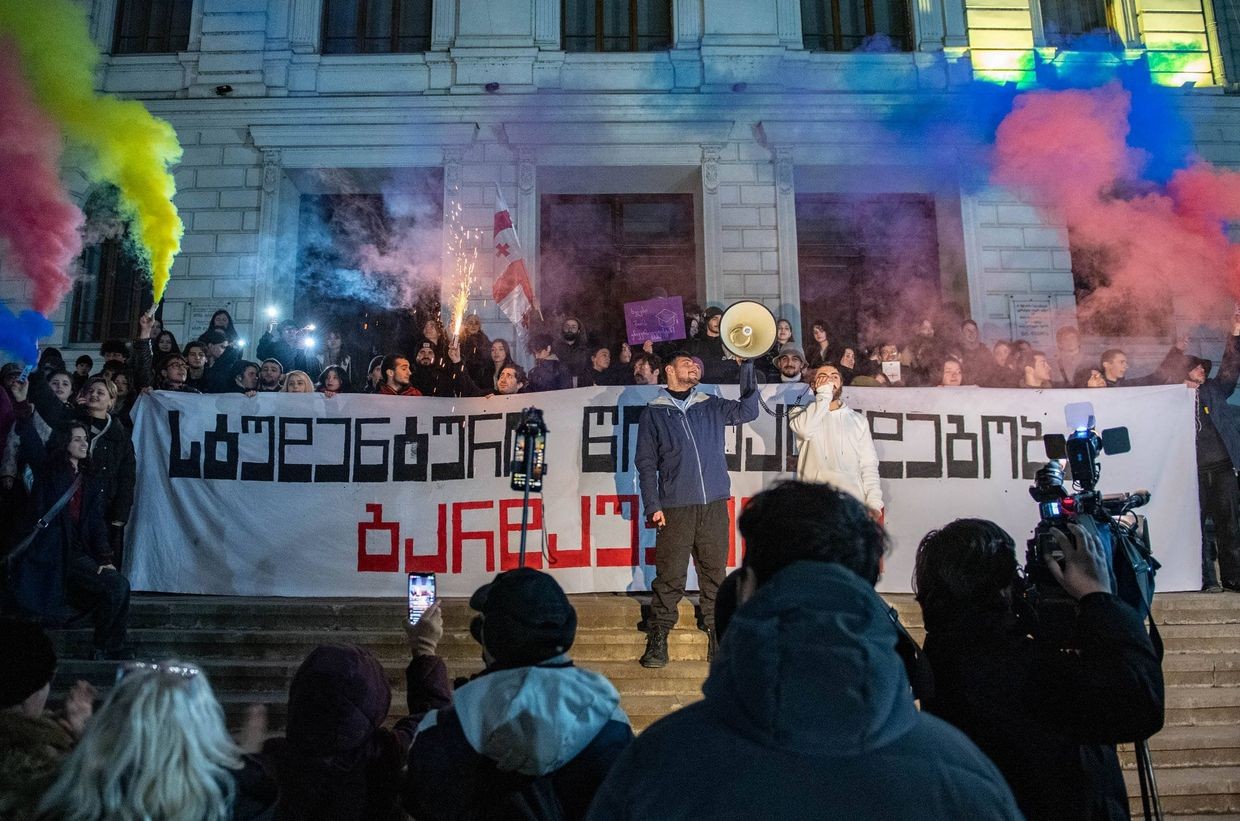
After a broad public backlash, the Georgian government has reversed its decision to merge two of the country’s most prominent universities — Tbilisi State University (TSU) and Georgian Technical University (GTU) — as part of a controversial education reform. The swift about-face was the first time that the ruling Georgian Dream party has backed down in recent years.
Georgian Prime Minister Irakli Kobakhidze briefed the public of the decision on Monday evening. However, he added that under the reform, GTU would instead be transformed into a purely technical institution and would gradually phase out admissions to its humanity programmes.
Education Minister Givi Mikanadze first announced the intended merger of TSU and GTU at the end of January. The unexpected statement was soon followed by discontent among students and professors at both universities, who emphasised that the government had not presented proper justification, including research, that would support the rationale behind the merger.
Among the opponents’ concerns were what they deemed the infringement of academic autonomy through the ministry’s unilateral decision, the future of two universities — including the level of compatibility of two academically and administratively distinct structures — and the potential layoffs of academic staff.
In recent days, protests against the decision were held with the participation of students and academic staff from both TSU and GTU, along with meetings with government representatives. At the same time, TSU’s Senate and GTU’s Academic Council formally expressed their opposition to the merger through resolutions adopted by majority vote.
 Mikheil Gvadzabia
Controversial reform
Like the university merger itself, the broader higher education reform — under which the unification was supposed to take place — has also become a subject of controversy.
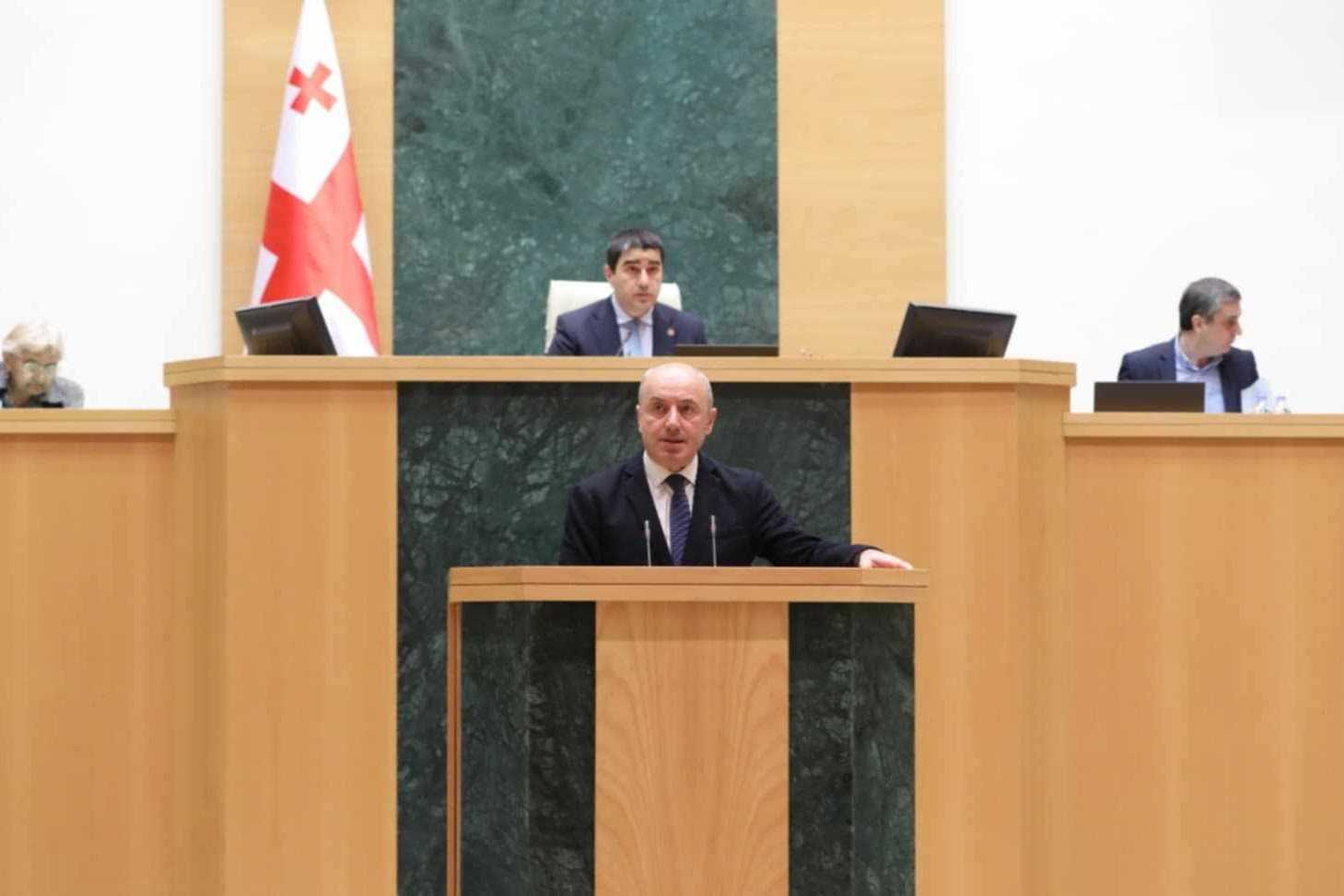
The relevant legislative amendments intended to create a legal framework for the reform have already been passed by parliament, including the latest package of changes adopted the first week of February.
Among other measures, the reform included a complete revision of the current grant-based university funding system, instead replacing it with a state-order model.
At the same time, the government aimed to introduce a ‘one city — one faculty’ model, which would involve redistributing faculties among universities to deter what the authorities call ‘duplicated faculties’ across different state universities in the same city.
In addition, the amendments stipulated that the state will annually determine the number of students state universities are allowed to admit, as well as the list of academic programmes they will be authorised to offer. Under the changes, the current programmes that are not included in the government-approved list will be phased out over time.
Under the amendments, if a state university is reorganised, the government will be authorised to set the objectives, form, and timeline of the process, as well as establish temporary mechanisms to manage it. During the reorganisation period, the state may suspend or alter the way university governing bodies exercise their powers.
The government claimed the reforms aim to improve the higher education system, including by optimising resources, refining personnel policy, and promoting the geographic decentralisation of higher education.
Critics, however, skeptical of the state’s declared intentions and promises, have argued that the reform would worsen the situation by increasing state control, breaching university autonomy, reducing the number of professors critical of the government, and cutting the number of spots for incoming students.
The Georgian Dream-led government is implementing changes in higher education against a backdrop of intensified pressure on critics.
Shortly before the announcement of the university merger, the ruling party introduced a new legislative package, one that again targets civil society, independent media, and political parties. The changes would greatly expand the government’s control over international funding and impose lengthy prison sentences and heavy fines for violations.
Mikheil Gvadzabia