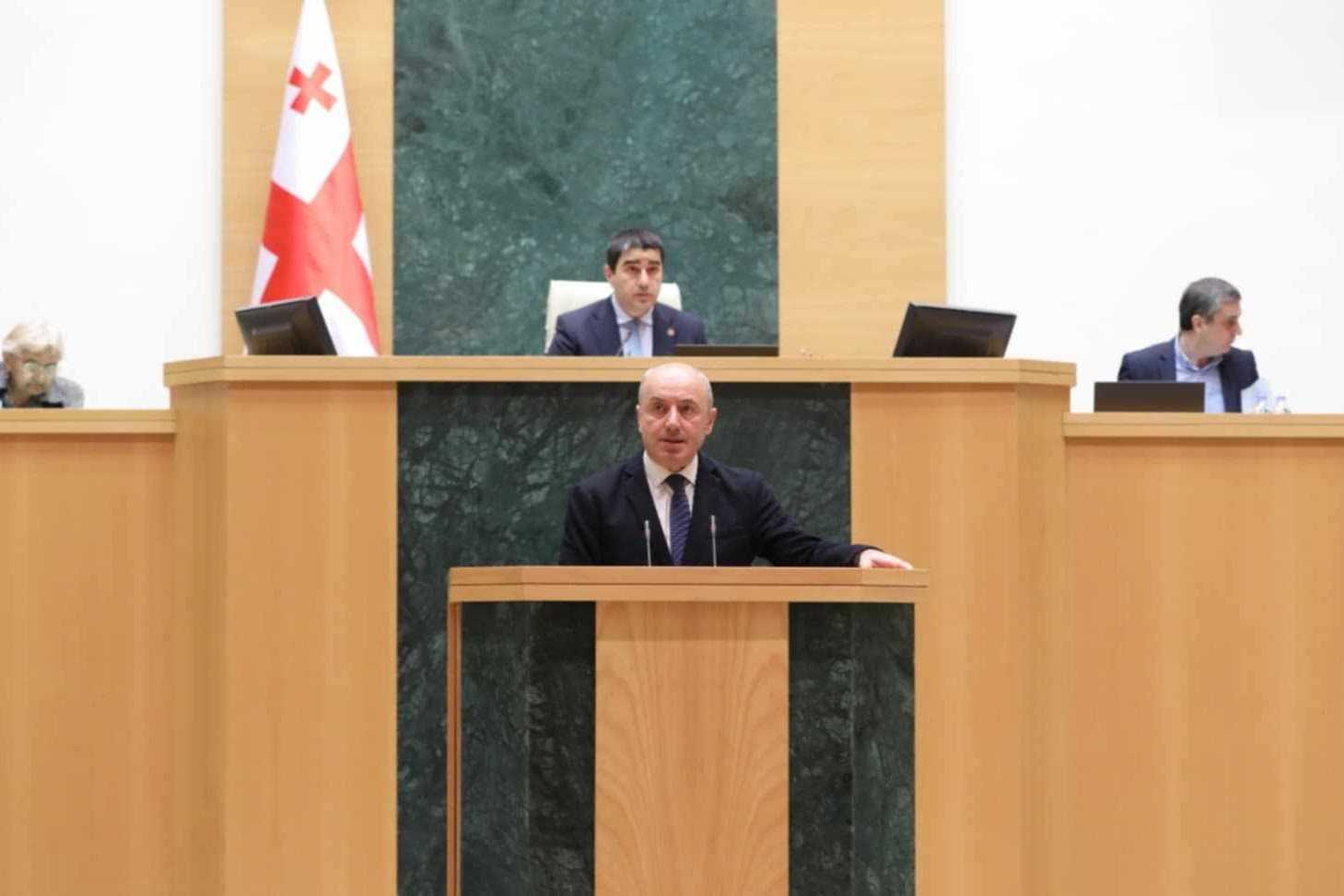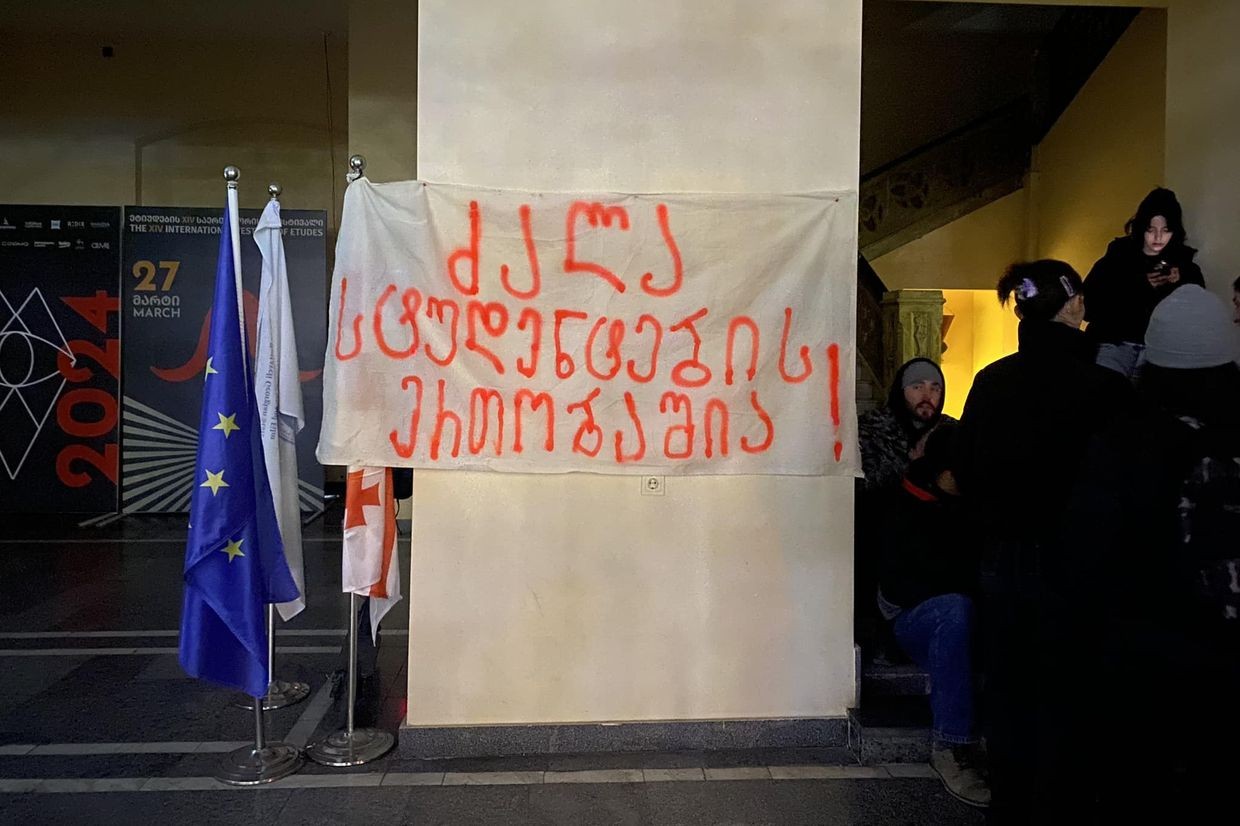
The Georgian Parliament has adopted amendments to the laws on primary and secondary school, as well as higher education, in their final hearings on Wednesday. In both cases, the changes were passed under an expedited procedure amid public debate.
The legislative changes are part of a controversial education reform that the ruling Georgian Dream party presented to the public in 2025. Since then, Parliament has amended several laws to provide the government with a legal framework to implement the reform.
The amendment to the law on primary and secondary education will abolish the existing procedure for the preparation and approval of school textbooks.
Under the current system, various groups of authors worked with different publishers, submitted their textbooks to the ministry, and specialist review panels evaluated them before they received ministry approval. Schools then were able to choose between several ministry-approved textbooks for each subject and year.
In the new model, the ministry itself will produce the textbooks through ‘experts’ it selects, following a ‘one book for all schools’ principle. The Education Ministry explained this as a move to streamline the school education, but critics have raised concerns about the state’s alleged intent to control textbook content.
Other changes will establish six as the minimum age for starting school, while 12th grade, the final year of secondary school, will become optional. Primary school students will be required to wear a ministry-approved uniform, and the use of electronic devices in schools, including mobile phones, will be restricted.
As for the package of legislative amendments concerning higher education, one of the key changes concerned the reorganisation of higher education institutions founded by the state, with a number of new provisions added to the law in this regard.
Under the amendments, if a state university is reorganised, the government will be authorised to set the objectives, form, and timeline of the process, as well as establish temporary mechanisms to manage it.
During the reorganisation period, the government may suspend or alter the way university governing bodies exercise their powers. The minister will also be able to appoint acting rectors and other members of the university’s leadership, as well as establish a temporary council that would assume the functions of the academic and representative councils.
The changes were introduced against the backdrop of a government plan to shift Georgia’s higher education system to a ‘one city — one faculty’ model. It involves redistributing faculties among universities in order to eliminate what the authorities describe as ‘duplicated faculties’ across different state universities in the same city.
The government claimed this initiative as an effort to concentrate resources on the strongest disciplines within each university.
 Mikheil Gvadzabia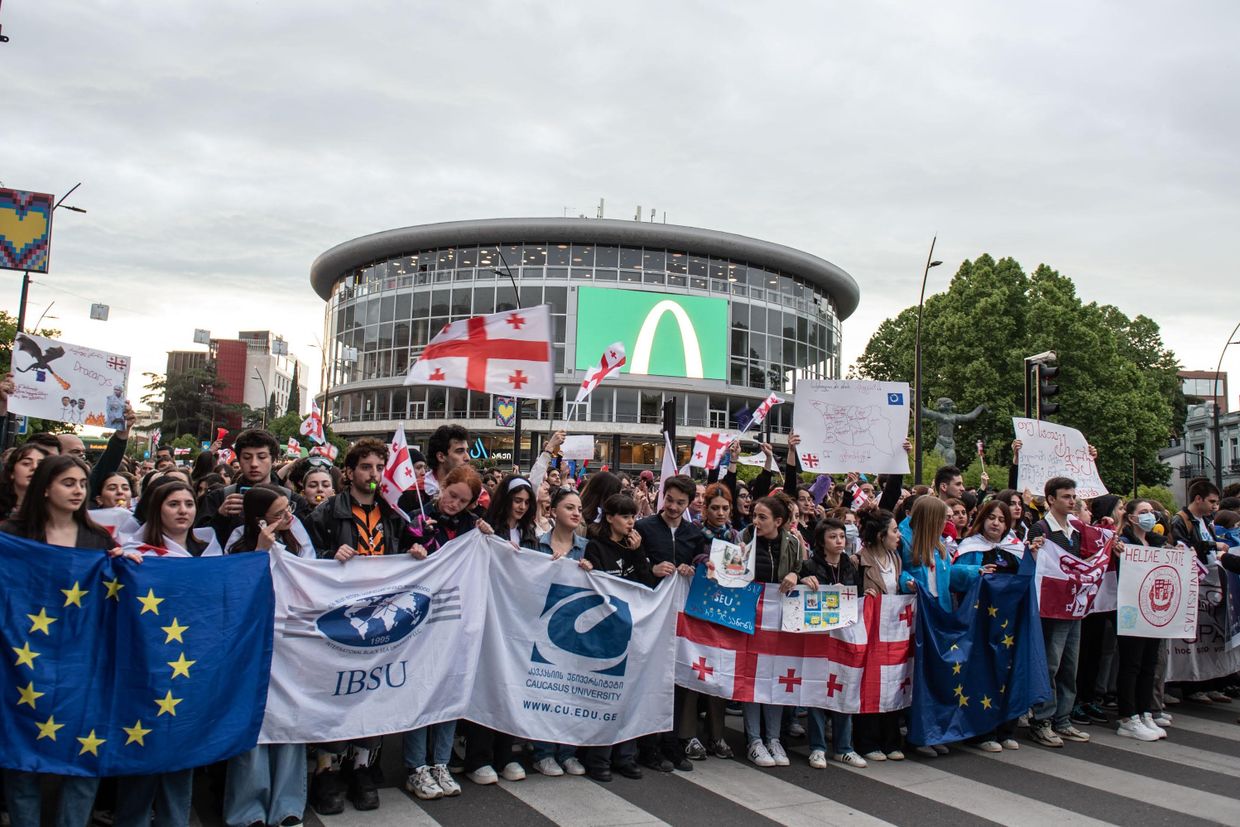
Two universities to merge as controversy continues
The Georgian Dream party had already amended the law on higher education once in connection with the reform, in December 2025. Those changes abolished the existing grant-based funding system for universities, following the government’s stated intention to replace it with a ‘state-order model’.
As a result of the amendments, the system under which the state fully or partially funded the studies of high-scoring applicants at both private and state universities was scrapped. Instead, the state will fully fund tuition for all students at the bachelor’s and master’s levels at state universities, but not at private institutions.
In addition, the amendments stipulated that the state will annually determine the number of students state universities are allowed to admit, as well as the list of academic programmes (curricula) they will be authorised to offer. Under the changes, the current programmes that are not included in the government-approved list will not be terminated immediately, but will instead be phased out over time.
The amendments also include shortening the duration of bachelor’s programmes from four to three years and master’s programmes from two years to one year.
Despite the authorities’ insistence that the reform serves to improve the education system, the process has quickly become the subject of prolonged controversy.
Concerns were raised about the state’s attempt to expand its influence over universities, disregard for the principle of university autonomy, and the possible dismissal of professors deemed undesirable by the government. There have also been suspicions that, amid changes to the funding system, admission quotas at state universities could be reduced in the future, potentially affecting access to higher education.
The debate intensified at the end of January when Education Minister Givi Mikanadze unexpectedly announced the decision to merge two prominent Georgian universities, Tbilisi State University (TSU) and the Georgian Technical University (GTU).
The authorities said the merger will strengthen both universities and make them more competitive. However, critics, including representatives of the academic community, emphasised that the government has so far presented no research or analysis to justify merging universities with differing academic profiles.
Despite the government’s claims that layoffs and reductions in student admissions are not planned, some have argued that the merger of the two universities will ultimately lead both to the dismissal of certain staff and fewer spots for incoming students.
Mikheil Gvadzabia