Georgia’s price wars: what’s really behind increasing costs
Economists and government officials have differing opinions over why domestic inflation is increasing in Georgia.

On 6 February, egg producers Savaneti, Dila, Koda, and Kumisi announced a joint decision to reduce prices by 5% in response to a public appeal from Prime Minister Irakli Kobakhidze. The move was framed as an act of social responsibility.
‘I hope other companies will follow’, Kobakhidze said before calling on other businesses and authorities to act together with ‘high social responsibility’ to lower prices and ease the burden on consumers. At the same time, a parliamentary commission was created to examine price formation across sectors, promising open meetings with industry representatives and public transparency.
For years, the lack of economic prosperity in Georgia — a small, emerging economy used to volatility — rarely translated into public outrage. Since the turmoil of the 1990s, economic hardship has been a constant backdrop, yet mass mobilisation has always focused more on political or national identity and geopolitical direction than on living standards. Economic pain was hidden behind political symbolism.
Yet now, the public is feeling the pinch.
 Mikheil Gvadzabia
For hundreds of days, protest movements have filled Georgian streets with grievances that blend politics and economics. Among the concerns raised is the visible expansion of Russia’s economic footprint in Georgia following the start of the war in Ukraine. The influx triggered a surge in company registrations, property transactions, and residency applications. At the same time, the government opened the door widely to foreign capital flows, including large-scale Arab real estate investment.
These developments reshaped sectors of the economy almost overnight. They injected liquidity, accelerated construction, and boosted short-term growth — but also intensified fears that Georgia’s recent economic performance is tied less to structural reform and more to geopolitical accident. The war created a corridor economy. The question lingering beneath inflation debates is whether that corridor is temporary.
In January, annual inflation rose to 4.8%. By origin of goods, Geostat data cited by the National Bank of Georgia shows that inflation on imported goods was -0.1%, inflation on domestically produced goods reached 7%, and inflation on mixed-origin products stood at 5.5%.
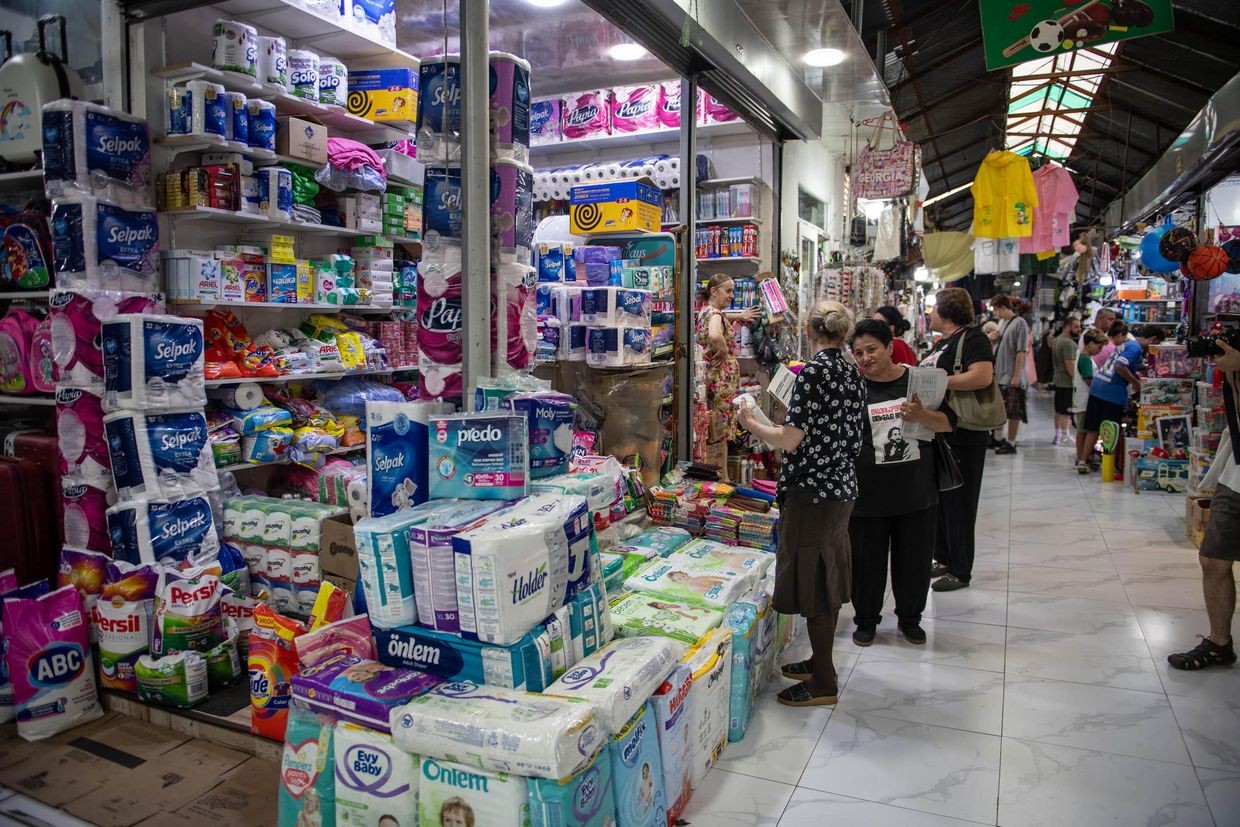
Almost every business has their own excuses regarding why things have gotten more expensive. Developers say construction materials, raw materials, and public services are getting expensive. Shops say there is competition in the market, but when a country heavily depends on imports for almost everything, controlling prices becomes very difficult. If imported goods become more expensive, prices in the local market automatically increase as well.
The National Bank of Georgia in turn says the recent increase in domestic inflation is driven primarily by rising prices of bread, beef, and cheese.
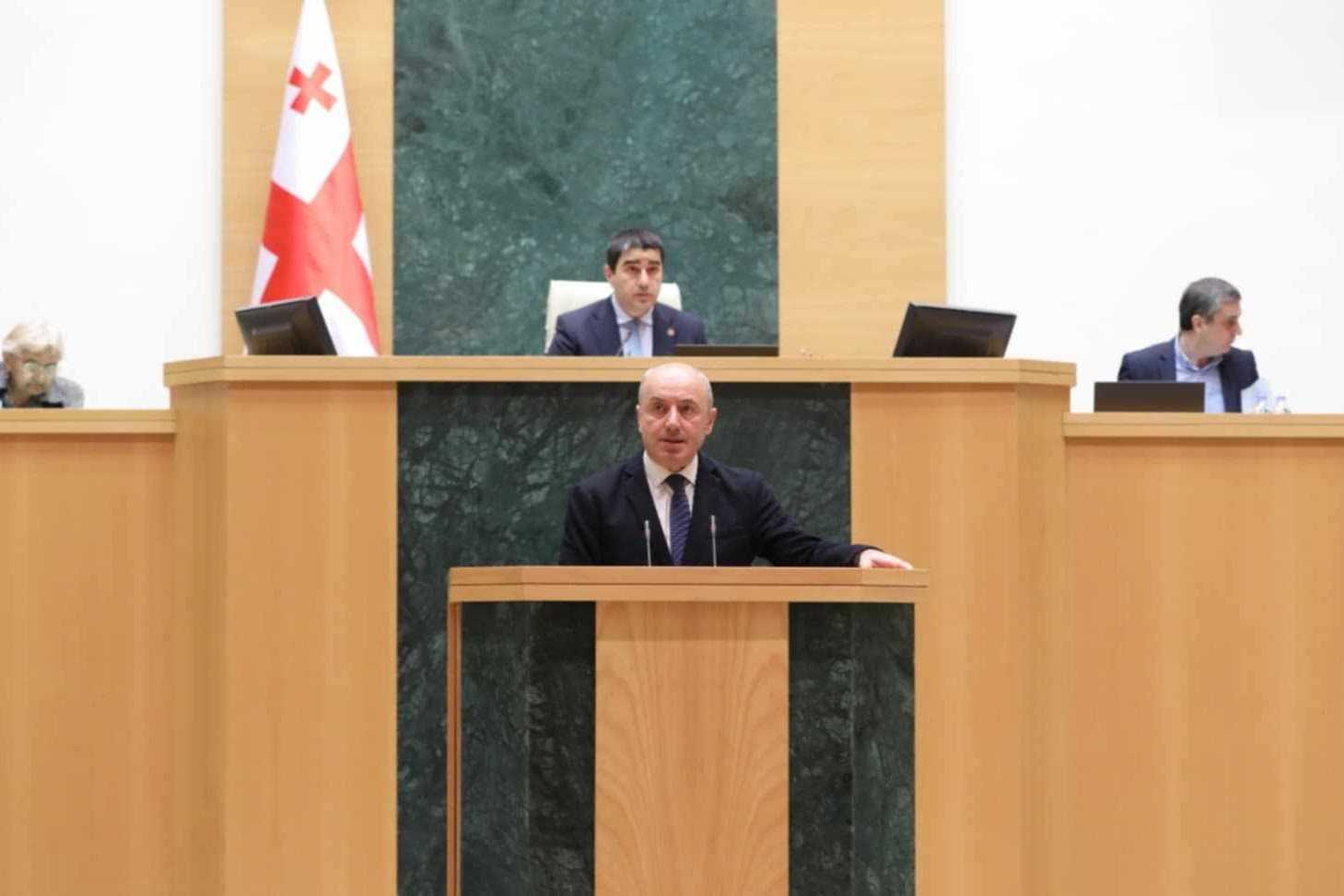
Finance Minister Lasha Khutsishvili has argued that the root of the problem is excessive margins rather than taxation.
‘An 18% VAT cannot explain an 86% markup that exists on certain products’, Khutsishvili said on 2 February during a televised address. ‘This must be studied in relation to market principles — how correctly business operators are functioning. Importers, distributors, and retailers are all involved’.
According to Khutsishvili, margins at that level are abnormal by international standards. A joint government–parliament commission is investigating three areas: flawed business models, abuse of market dominance, and possible cartel agreements. Administrative and legislative measures are on the table. He maintains that the process is not anti-business but designed to protect competition.
‘Business freedom is under no threat’, Khutsishvili said. ‘We are talking about principles consistent with market rules’.
Tamuna Chkareuli
Unlike the government, analysts have a more skeptical diagnosis.
Economic analyst Nikoloz Shurghaia argues that price escalation is rooted in the broader economic climate rather than isolated markups. According to him, rising state service fees, weakened competition, expansion of the money supply, and regulatory uncertainty have created an environment where businesses price in risk.
Competition lowers prices, Shurghaia tells OC Media — but only when businesses feel secure enough to plan long term. In a volatile regulatory environment, companies seek rapid profit recovery. Prices become a hedge against unpredictability.
Former Central Bank governor Roman Gotsiridze describes the situation as fundamentally fiscal. Increased demand, he argues, must be matched by expanded supply, and that requires genuine free competition, not administrative nudging. Without structural changes, commissions risk treating symptoms rather than causes.
Another former National Bank governor, Giorgi Kadagidze, tells OC Media that Georgia benefited economically Russia’s full-scale invasion of Ukraine as trade routes shifted and capital sought alternative entry points into the region. If sanctions are lifted and logistics normalise, that temporary advantage could vanish. An economy inflated by exceptional circumstances may face a painful correction.
Meanwhile, everyday costs continue to climb in quieter ways. Public service fees — from identification documents to civil registration and business procedures — have increased, adding incremental pressure on households and entrepreneurs. These changes rarely dominate headlines, yet they shape the lived experience of inflation more directly than macroeconomic statistics.
The egg price reduction is small in financial terms — its significance lies in what it reveals: a growing tension between market ideology and political management of prices. For example, if a producer’s transportation costs, raw material prices, and labour costs increase, they have no choice but to raise the final price of the product. Otherwise, the business cannot survive. This creates a domino effect: shops cannot lower prices, higher salaries are demanded just to keep up with living costs, financial pressure increases, and mental stress in society rises as well.