Husband of Georgia’s US Ambassador linked to Moscow firm aiding sanctioned Russian businesses

Corporate documents and archived records have revealed that Davit Kukhalashvili, the husband of Georgia’s ambassador to the US, is the founder and managing director of a Moscow law firm that has advised clients seeking to navigate asset freezes and sanctions imposed by the EU and US after Russia’s full-scale invasion of Ukraine.
For more than a decade, a new branch of legal practice has taken shape in Russia: sanctions law. As Western governments imposed sweeping restrictions on Moscow following the annexation of Crimea and later the full-scale invasion of Ukraine, Russian law firms adapted. A few of them now specialise in helping companies recover frozen assets, navigate European and US sanctions regimes, and restructure operations to avoid further restrictions.
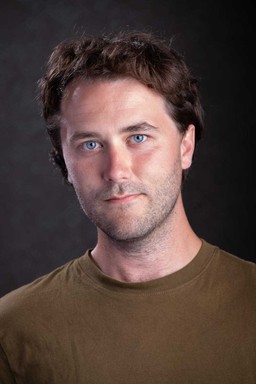
One of these firms is DTK Partners, a Moscow-based law firm founded in 2014 and owned by Russian–Georgian citizen Davit Kukhalashvili. He is also known in Georgia as the spouse of newly appointed Georgian Ambassador to the US Tamar Taliashvili.
 OC Media
Initial allegations about Kukhalashvili’s Russian business activities were circulated by Tbilisi-based researcher Lika Basilaia-Shavgulidze. Further review by OC Media confirms and expands on these findings.
According to Russian corporate records, Kukhalashvili founded DTK Partners and remained its owner in 2025, though his profile was removed from the firm’s website earlier this year. Archived versions of the site, however, listed him as managing director until 17 July — a week after Taliashvili’s installment as ambassador.
Representing the Russian government in legal cases
DTK Partners openly advertises expertise in unblocking frozen assets in Western jurisdictions. Archived versions of their website stated that Kukhalashvili himself prepared submissions to EU and US authorities on behalf of clients including the SPB Bank and the National Settlement Depository (NSD) — the central securities depository of the Moscow Exchange, itself under EU and US sanctions.
The firm’s publications describe specific legal pathways for regaining access to frozen assets, including procedures through the Belgian Treasury. DTK Partners claims to provide full support in drafting petitions and contesting refusals.
The business itself is not illegal. In fact, firms like DTK Partners can be seen as helping clients comply with sanctions by guiding them through the rules on frozen assets and cross-border transactions. Yet DTK Partners has also represented Russian state interests in several major cases. Kukhalashvili is frequently cited in Russian state media as an expert on aviation incidents and has repeatedly worked in cases involving Russian government bodies or state-affiliated institutions.
His profile’s removal from the firm’s website around the time of his wife’s appointment as ambassador raises additional questions about the sensitivity surrounding his work in Moscow. OC Media has found no evidence of legal wrongdoing, but the timing of the disappearance — together with his record of representing state-linked clients — invites scrutiny over whether his public connection to DTK Partners had become politically inconvenient.

‘Limited independence’
‘The fact that this firm operates in sectors that have special interest to the Kremlin means its independence is even more limited than most’, Robert Hamilton, a leading US-based analyst on Eurasia and President of the Delphi Global Research Centre, told OC Media.
‘In Putin’s Russia, every major private organisation — from law firms to corporations to media outlets — needs top cover from the Kremlin to operate effectively’.
Other clients named by the firm include the Kazakh operations of McDonald’s and Lukoil, the Russian oil company now under sanctions by the US government. One DTK Partners article notes that the legal space for recovering frozen assets has narrowed sharply following the EU’s 17th sanctions package but assures readers that opportunities still exist.
Yousef Bardouka
To verify that DTK Partners remains active in this field, OC Media contacted the firm using an AI-generated British corporate identity, requesting guidance on restructuring business holdings in Russia.
In a written response, Mikhail Zagaynov, the firm’s current managing partner and long-time associate of Kukhalashvili, stated that DTK Partners ‘has extensive experience advising clients affected by cross-border compliance measures, asset restrictions, and sanctions regimes’.
He added that the firm ‘regularly advises foreign shareholders and investors on the full procedure, including the preparation of applications to the [Russian State] Subcommittee, coordination of valuation reports, drafting and negotiating sale agreements, and ensuring compliance with international sanctions and Russian domestic regulations’.
A message to Moscow
‘[The Russian ties] send the same message the Georgian government has been sending in various ways for several years: Georgia is uninterested in cooperation with the West, much less integration into Western structures’, Hamilton argued, adding that the appointment of the ambassador is a clear signal to Moscow.
‘By appointing to the US an ambassador whose spouse has clear Russian ties, the Georgian government is reassuring the Kremlin that Georgia will remain a de facto Russian client state’.
Yousef Bardouka
Earlier this autumn, after high-level negotiations between Washington and Moscow over Ukraine collapsed, the US introduced another round of sanctions against Russia.
Furthermore, public asset declarations filed by Ambassador Taliashvili show that the couple maintains substantial deposits in Russian banks and owns an apartment in Moscow. In Georgia, Kukhalashvili is recorded as holding a Tbilisi apartment and a garage. What the declaration does not mention, however, is that his parents own about ten additional properties in Georgia, according to publicly available land registry records. An additional Tbilisi apartment is registered in the name of the couple’s underage son.
The Georgian Embassy in the US did not respond to OC Media’s requests for comment.
This article was translated into Russian and republished by our partner SOVA.
This article was translated into Georgian and republished by our partner On.ge.