‘I want to know what happened’ — Georgian protesters on the lingering effects of chemical exposure
Testimonies by Georgian protesters highlight their ongoing health impacts, as well as contradictions in the official account of the events.
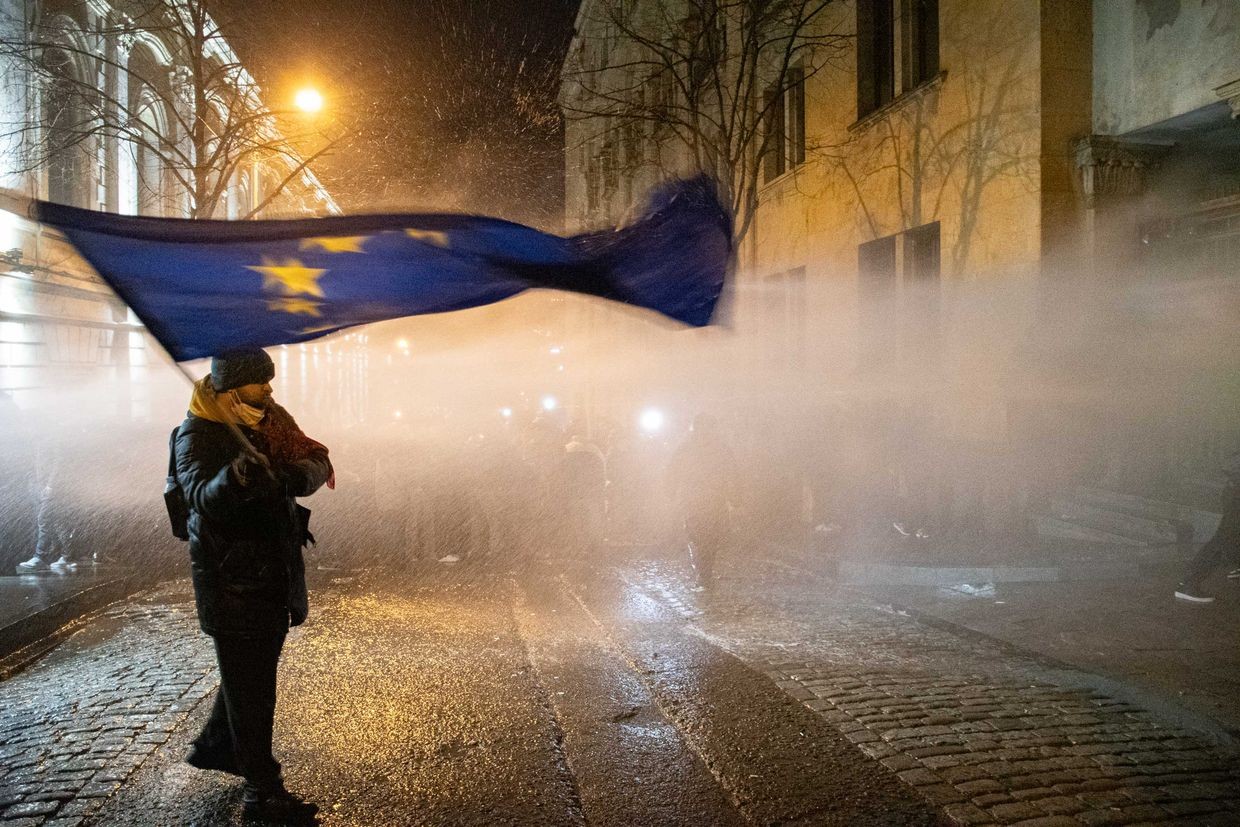
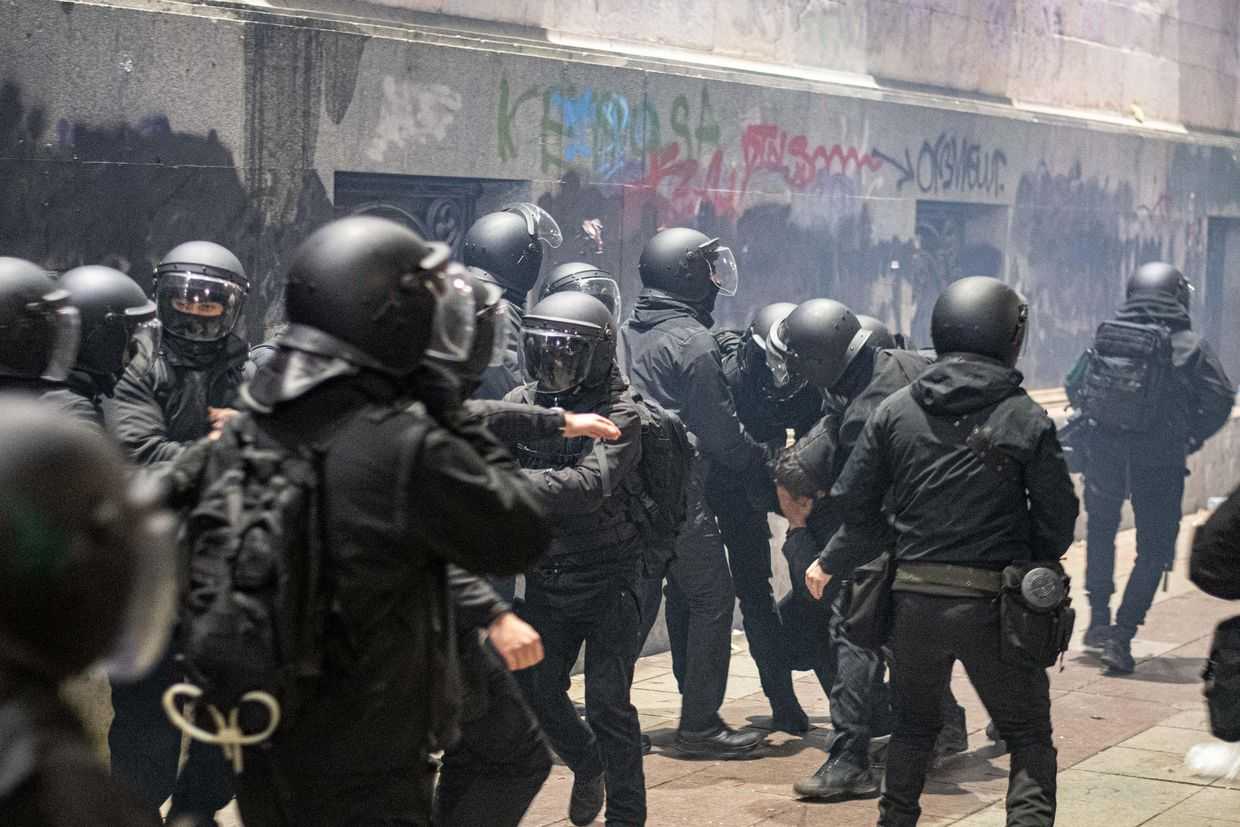
A veteran activist, Mariam Kvaratskhelia has participated in many protests and has been water cannoned on more than one occasion, but the burning from the water she felt on the night of 28-29 November 2024 was something she had never experienced before.
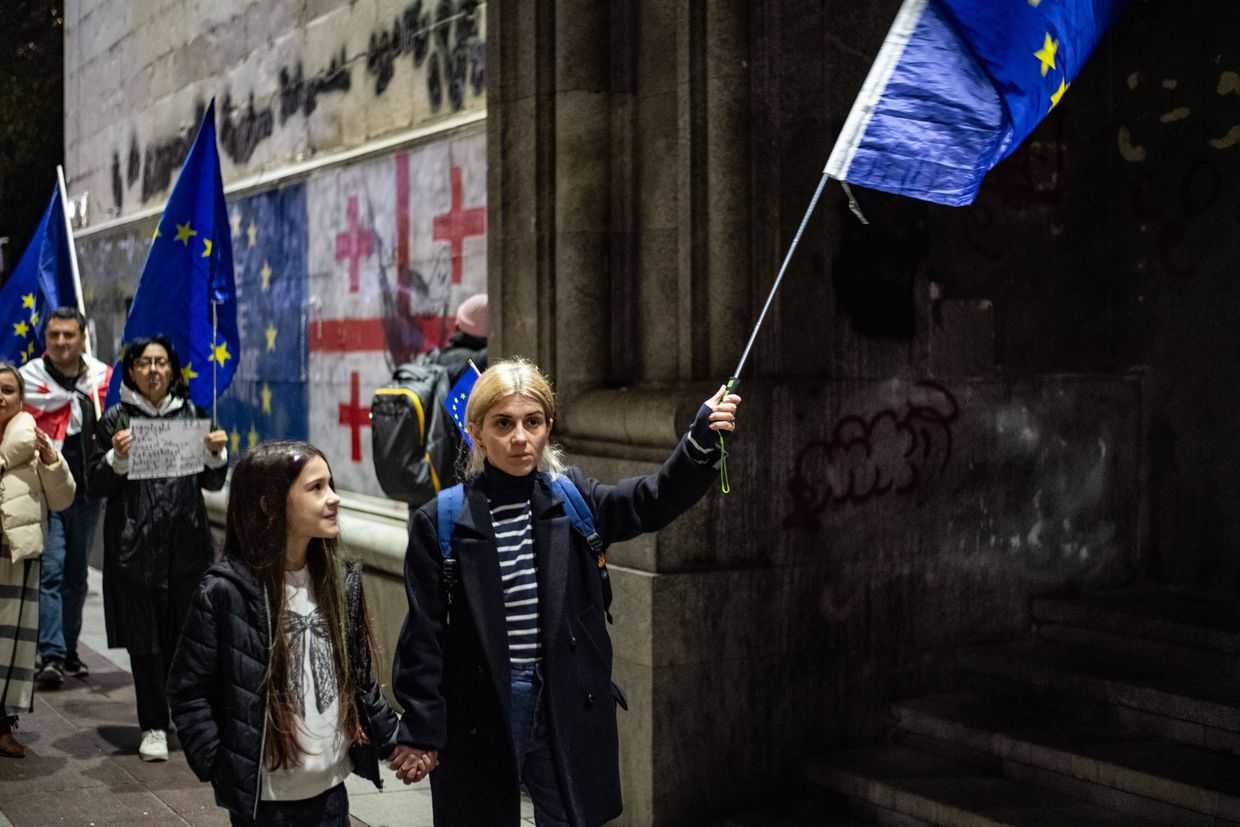
The demonstration had begun following a massive outpouring of public anger triggered by the government’s announcement they were freezing the country’s EU membership bid.
That night, the water cannons started simultaneously from two directions — Chichinadze Street and Rustaveli Avenue — so those at the intersection of the two inevitably got wet. Expecting plain water, Mariam did not take any special precautions beyond a medical face mask. She recalls that her hands and face burned the most, she couldn’t catch a breath, and her eyes kept watering; symptoms seen in the video she took of herself immediately after.
Like thousands of others, Mariam continued going to the protests in the following days, but noticed something that hadn’t happened before.
‘Whenever I wanted to chant, I was out of breath’, she tells OC Media.
The shortness of breath, which she had never experienced before, carried on all the way through the following spring, and in May, having heard similar stories from protesters around her, she finally went to the doctor.
After undergoing a spirometry, a test that assesses lung function, the doctor informed her she had ‘the results of an asthmatic’.
So when on 1 December the BBC released an investigation suggesting a World War I-era chemical weapon, ‘camite’, may have been mixed into the water that evening, Mariam vowed to look further into her own condition.
‘I want to know what happened, and there are people who have far worse consequences’, she says. ‘I will continue to go to medical screenings.’

Less than a week after the BBC’s investigation was published, the government claimed to have conducted their own investigation, releasing photos of barrels of chlorobenznyl malonitrite, a tear gas commonly known as CS gas, allegedly bought under the previous United National Movement (UNM) government’s rule. They claimed this substance was mixed into the water on a single night, 4-5 December 2024 however, despite protesters reporting having burns from water on several occasions.
While mixing irritants in water used for crowd control is not explicitly banned by any international agreements, the Organisation for the Prohibition of Chemical Weapons (OPCW) — a convention that Georgia has committed to — defines Riot Control Agents by the ‘effects which disappear within a short time following termination of exposure’.
For Mariam, like many others who were exposed to water from water cannons during the protests, treatment did not help; Mariam says she still experiences symptoms of that night’s exposure over a year later.

‘I used to be a straight-A student; now I find it hard to concentrate’
A student in Kutaisi, 22-year-old Anano Sanikidze joined the protest in Tbilisi on the night of 29-30 November dressed according to her previous protest experiences: one raincoat on, one tied around her waist, and multiple layers of clothing, as well as a facemask. The water still got through jeans, yoga pants, and shoes. She went to change in the bathroom of a nearby hotel; that’s when she felt the burning.
At first, she assumed it was a reaction to pepper spray. However, the burning persisted for several days and especially bothered her at night — Anano says she would wake up with scratch marks all over her body.
‘When I came back from the protest every morning, I’d stand under a cold or scolding hot shower just to distract myself’, she tells OC Media.
Other symptoms appeared too: coughing, fatigue, and strong, daily acid reflux.

Anano has allergies, anemia, and was prone to bronchitis from childhood, but after her symptoms persisted for a month, she got worried. Her menstrual cycles became irregular and excruciatingly painful, which her doctor connected to stress and spending cold nights on the streets. That seemed to be a common issue for the women around her.
‘I’m not ashamed to talk about this because I believe it’s important to underline what female bodies went through in this protest’, she says.
Now, a year later, Anano is a master’s student in Salzburg. She still carries the marks on her body, and her menstrual cycles are still a problem, as well as constant fatigue.
‘I used to be a straight-A student; now I find it hard to concentrate’, she says.
Unlike Mariam and Anano, who appear to have been exposed on the first night of the protests, Lela Gogoladze, 34, recalls the night of 1 December as a ‘near-death experience’. Together with a friend, she was caught by the water cannon near the corner of the Marriott Hotel.
‘I remember the water creating a sort of fog, and I immediately felt the burning in my entire body. It was as if we were insects who got sprayed by poison’, she tells OC Media.
Despite wearing a mask and a helmet, Lela’s face felt like it was burning while she tried to drag her half-fainted companion to safety, all while police began to fire teargas into the crowd. Once they found refuge and could breathe again, the two women took a photo as evidence.

But Lela’s symptoms were not limited to that night — she recalls vomiting at least twice over the next couple of days, as well as a rash developing on her body. Then the headaches started.
‘The excruciating pain that no painkillers help’, Lela describes.
She also started to experience chest pain, seemingly at random. Since her symptoms lasted for over a month, Partnership for Human Rights, the local human rights organisation where Lela works, began to look into her case along with others. Those cases were later transferred, with permission, to a group of doctors led by Dr Konstantine Chakhunashvili, who were conducting a study. Lela was invited for a medical screening, where her electrocardiography (ECG) test, which checks the heart’s electric activity, showed a deviation from norm — this was later confirmed by the study to be the main symptom associated with exposure at the protest.

Six months later, another ECG showed no change, and the chest pains still remain a concern for Lela. However, she stresses that taking care of her health was not a priority in the following months; events in Georgia deeply affected her, as well as the arrest of her sister at one of the Rustaveli protests. The only treatment she sought was from a psychiatrist, who prescribed antidepressants and counseling. Her situation is not unique, she says, as many around her were too overwhelmed to study their symptoms carefully.
‘Sometimes I think that the damage we took on Rustaveli is still preferable to being stuck in the situation that you cannot change’, she says. ‘I think that getting justice will be the biggest remedy for us’.
A scientific study into lingering symptoms
Fatigue, headaches, psychological effects, as well as coughs and heart palpitations were among the most reported effects after suspected exposure to chemical compounds during the protests, according to a peer reviewed study conducted by Chakhunashvili et al and published in Toxicology Reports. Chakhunashvili, who attended the protests himself, began the study after observing frequent nose bleeding among protesters.

The study relied on a questionnaire filled out by 347 people between 9 January and 1 March, as well as the screening results of 69 people who came into the clinic, comparing them to a control group of 31 unexposed individuals. Although the study did not focus on the chemicals themselves, these results, together with other evidence, were later taken into account by the experts who consulted the BBC’s investigation.
The main conclusion of the study itself, however, was the strong association between exposure and heart function, revealed through ECG changes.

‘This was expected given that tear gas affects the respiratory system, and the types of changes observed indicate disruptions in oxygen exchange’, Chakhunashvili tells OC Media.
According to Chakhunashvili, this means that proper oxygen saturation in the blood did not occur, which affects the right side of the heart.
At the time of the study, the team did not know the exact composition of the water, operating under the working hypothesis that it contained pepper spray. Even if if the government’s own claim that it was CS gas in the water were true, Chakhunashvili says that this exposure was even more concerning:
‘In general, CS gas or any other such agents must not be mixed into water. In a canister, you more or less know what dose you are delivering, but in water the dosage is difficult to control. CS gas is non-lethal only at a specific dose; beyond that, it becomes lethal or causes significant harm to health’, he emphasises.

He adds that establishing causative connection between the long-term effects and the intensity of exposure of chemicals would require a ‘higher quality’ study which would be difficult to conduct retrospectively. One of the keys to such a study would be obtaining official statistics — something he believes the National Centre for Disease Control and Public Health should be preoccupied with. The official statement published by the Defence Ministry mentioned ‘five cases of light intoxication’, but this data comes from hospitalisation reports, which, in Chakhunashvili’s opinion, is not enough.
‘What we’d need would be the electronic health records [the outpatient medical history and diagnoses] that are uploaded and monitored by the system’.
In response to the BBC documentary, the State Security Service has stated that it has ‘exhausted’ the investigative actions related to the alleged use of camite, but is continuing the investigation under charges of assisting a foreign organisation in hostile activity.
Chakhunashvili says he tries not to think about the implications of such charges for him personally, and hopes that Georgia’s case helps to study the effects of chemical use during crowd control on human health worldwide.
‘Hopefully in democratic countries, this study will serve as a basis for more thorough investigation of the issue’.