Is Tbilisi’s stubborn support of Imedi and POSTV a sign of more sanctions to come?
Georgia’s government has openly sided with media sanctioned by the UK over Russian disinformation. Could this be a sign of more sanctions to come?

The path to sanctions is risky, often ultimately ending in isolation. One can look to the examples of Iran or Russia to see the fate that awaits. Yet today, Georgia is closer than ever in the country’s long history of economic and political struggle to being sanctioned.
The shock of the UK sanctioning the prominent pro-government Georgian media outlets Imedi and PostTV, for no less than ‘involvement in Russian disinformation’, was intense — celebrated by its opponents, while mourned by pro-government forces amidst government backlash. The Foreign Ministry even summoned the British Ambassador over the news. The recent departures and the handover of shares for symbolic fees by both TV companies was also a significant red flag.
It is common knowledge that Georgia’s political future is at stake because of the government’s distancing itself from EU and US values, led by billionaire Bidzina Ivanishvili’s tantrum-type rule. This time, the blowback could hit the country’s long-fought financial position.
This is not the first time the banking system has been put to the test. After former Economy Minister Natia Turnava became the Central Bank’s First Vice Governor in 2023, she assumed leadership of the bank in an acting capacity. The International Monetary Fund (IMF) programme then encountered further difficulties after Turnava made use of a loophole to unfreeze the local assets of Otar Partskhaladze, a former prosecutor general sanctioned by the US. She defended the decision on the grounds that a Georgian citizen could not be subject to international sanctions without a Georgian court conviction, but the move triggered resignations by three deputy central bank heads. Turnava managed to maintain her strong stance, and the banking system dodged a bullet.
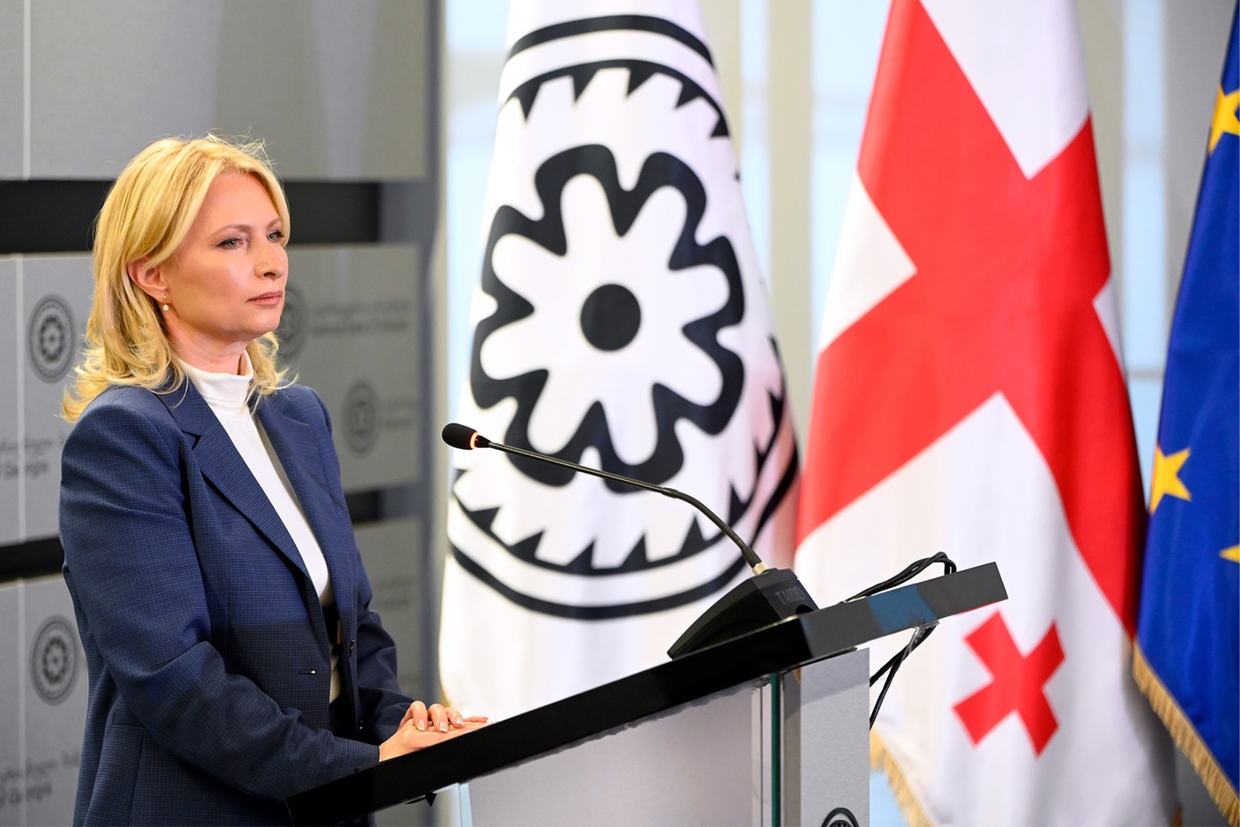
Today, the Georgian government continues to aggressively defend the sanctioned television stations, insisting that no sanctions are being violated and framing any critics as enemies of the state.
‘For four years you have shamefully speculated that the sanctions regime is being violated in Georgia. When you spend years trying to damage your own country’s national interests’, Prime Minister Irakli Kobakhidze told reporters on Wednesday. Yet he then called for all government and non-governmental bodies to continue doing ‘business as usual’ with the sanctioned companies.
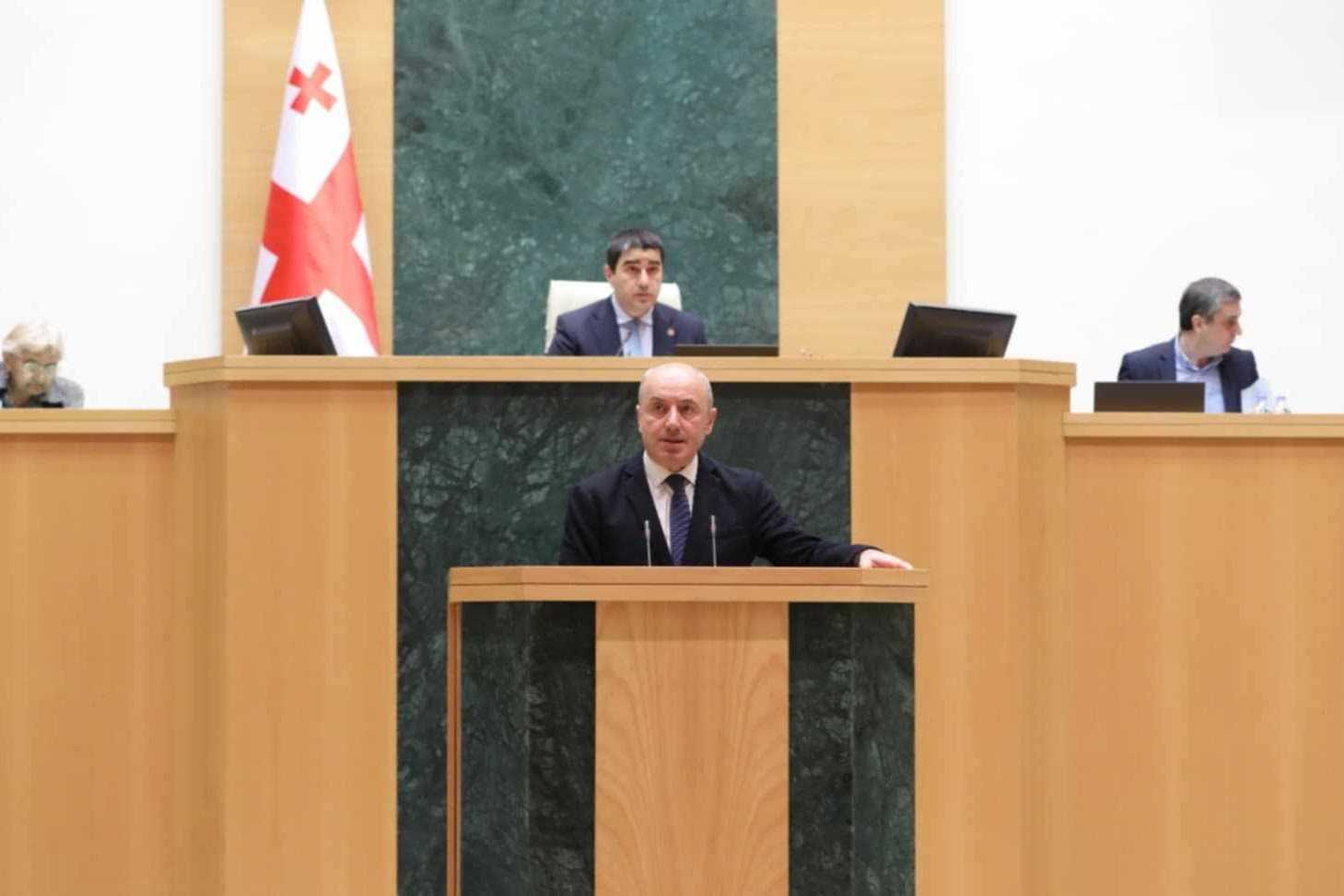
On Wednesday, Turnava stated that banks should execute local legislation, noting that this did not mean ignoring sanctions. She confirmed that local entities such as the Bank of Georgia and TBC Bank had already stopped servicing the sanctioned companies, while adding that other banks should review their contractual obligations with respect to UK sanctions, including whether they have UK citizens on their boards, assess the risks, and act accordingly. None of the banks were available to comment when contacted by OC Media.
Experts, however, warn that the country is gradually being perceived as a ‘leprosy zone’, and that further isolation may soon follow. They have also suggested that, while her comments were not taken lightly, Turnava had to say something for the sake of saying it.
Since Russia’s full-scale invasion of Ukraine, Georgia’s government has accused the EU, UK, and US of undermining the country’s position in the conflict, emphasising Georgia’s distance. They have frequently criticised sanctions, specifically those targeting media, while also stating that Georgia was not violating the sanctions regime, specifically in regards to the Kulevi oil terminal on Georgia’s Black Sea Coast.
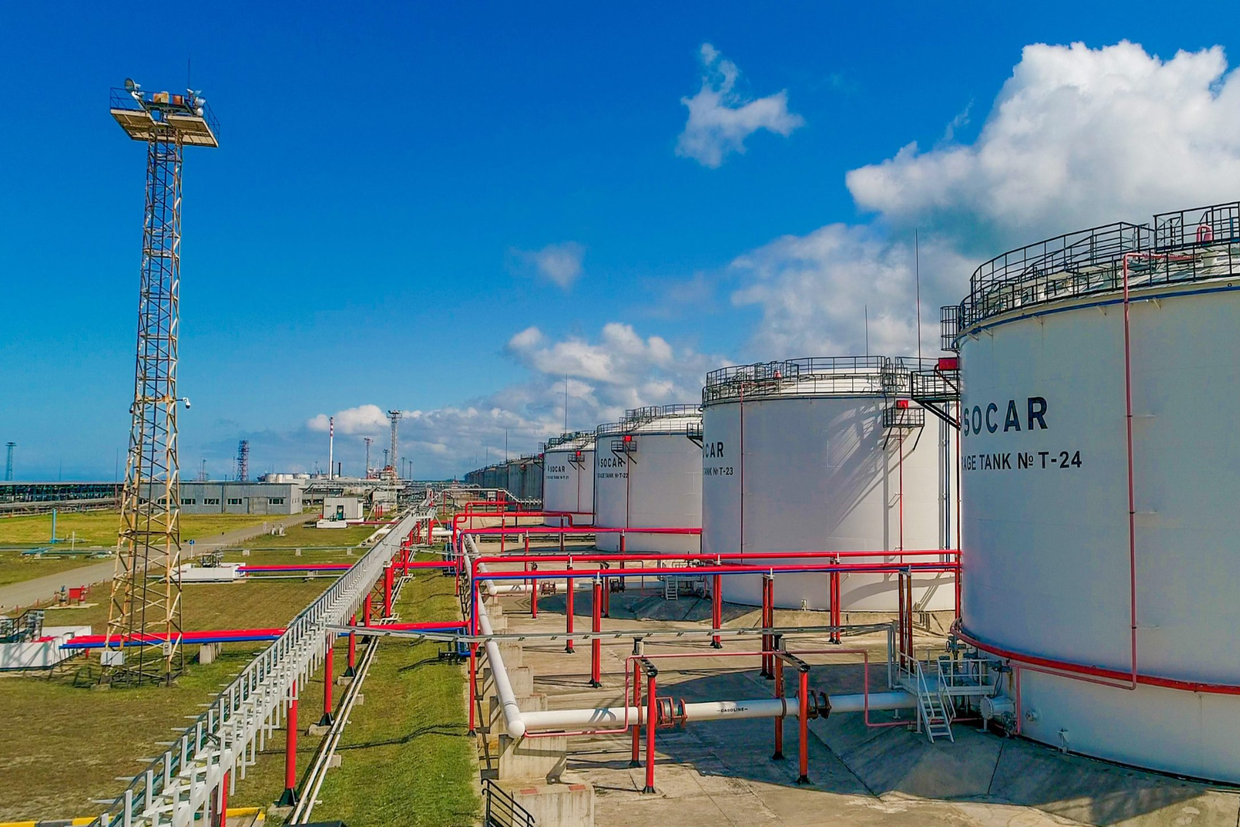
In late 2025, Reuters reported that Russia’s Russneft had delivered its first oil cargo to the Kulevi terminal. The shipment coincided with reports that Black Sea Petroleum — a relatively small Tbilisi-based company — had launched plans to expand the terminal’s capacity.
The terminal is owned by Azerbaijan’s state-run oil company SOCAR. Over the past year, the EU has added a number of entities linked to Azerbaijan’s role in facilitating sanctions circumvention — a new proposal to include Kulevi among this list would mark a further step in that direction, this time including Georgian ties.
 Rasmus Canbäck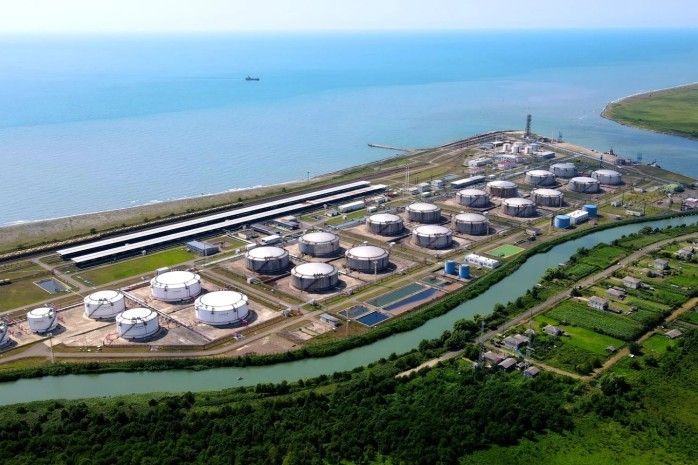
Despite these claims, former MP and former President of the National Bank of Georgia, Roman Gotsiridze, has told OC Media that it’s a fact the sanctioned television channels are spreading false information.
‘There is no Georgian bank — neither Cartu nor Liberty — that would risk assisting these TV companies with foreign settlements. Not in pounds or dollars, nor even in euros’.
Cartu Bank is owned by Cartu Group, which was founded by Ivanishvili. In October 2025, Transparency International — Georgia reported that Ivanishvili has been the primary benefactor of Imedi since 2018, through companies linked to him, including Cartu Group.
According to Business Media, the former owners of Imedi, Irakli Rukhadze and his business partners, Benjamin Marson and Igor Alekseev, own Liberty Bank, Georgia’s third-largest bank.
Giorgi Kadagidze, Georgia’s former central bank governor from 2009-2016, likewise told OC Media that while there might not be an ‘immediate threat’ right now, ‘there will definitely be reputational damage for the banks, for their position [on the London Stock Exchange], and reputational damage for the country in the future’.
According to Giorgi Kepuladze, the chair of the Board of Directors of the local civil society organisation Society and Banks, following the British sanctions, the share prices of Georgian companies listed on the London Stock Exchange increased.
‘Apparently, investors clearly understand that no one intends to violate sanctions and see not even minimal risk in holding shares of Georgian banks and Georgian capital’, he told OC Media.
‘There is no point in painting apocalyptic scenarios or giving false hope to those under sanctions. They will probably attempt to devise schemes to circumvent sanctions and establish new LLCs, but this too is risky and ultimately increases the cost of maintaining the regime’s propaganda machine’, he added.
A source at Imedi TV, dismissed the concerns, telling OC Media: ‘We will live, no one has died, I do not worry’. The person also confirmed that salaries were mostly paid through Liberty Bank.
Mikheil Gvadzabia
On Friday, Imedi TV announced they would create their own bank, ostensibly to avoid sanctions. However, Gotsiridze warns that by law, it cannot be called a bank without National Bank approval, and any recognition would mean the government was directly aiding in sanctions avoidance.
While the two media outlets seem likely to survive, at least for now, there is now increased speculation that Georgia’s Kulevi oil terminal could be next — particularly if there is any attempt to sell sanctioned oil by changing the declared country of origin.
‘For a country which doesn’t produce any oil, the stats speak for themselves’, Gotsiridze has highlighted, citing data that oil exports have risen 401% compared to the same period in 2025 — ‘Suddenly we become exporters of oil’.