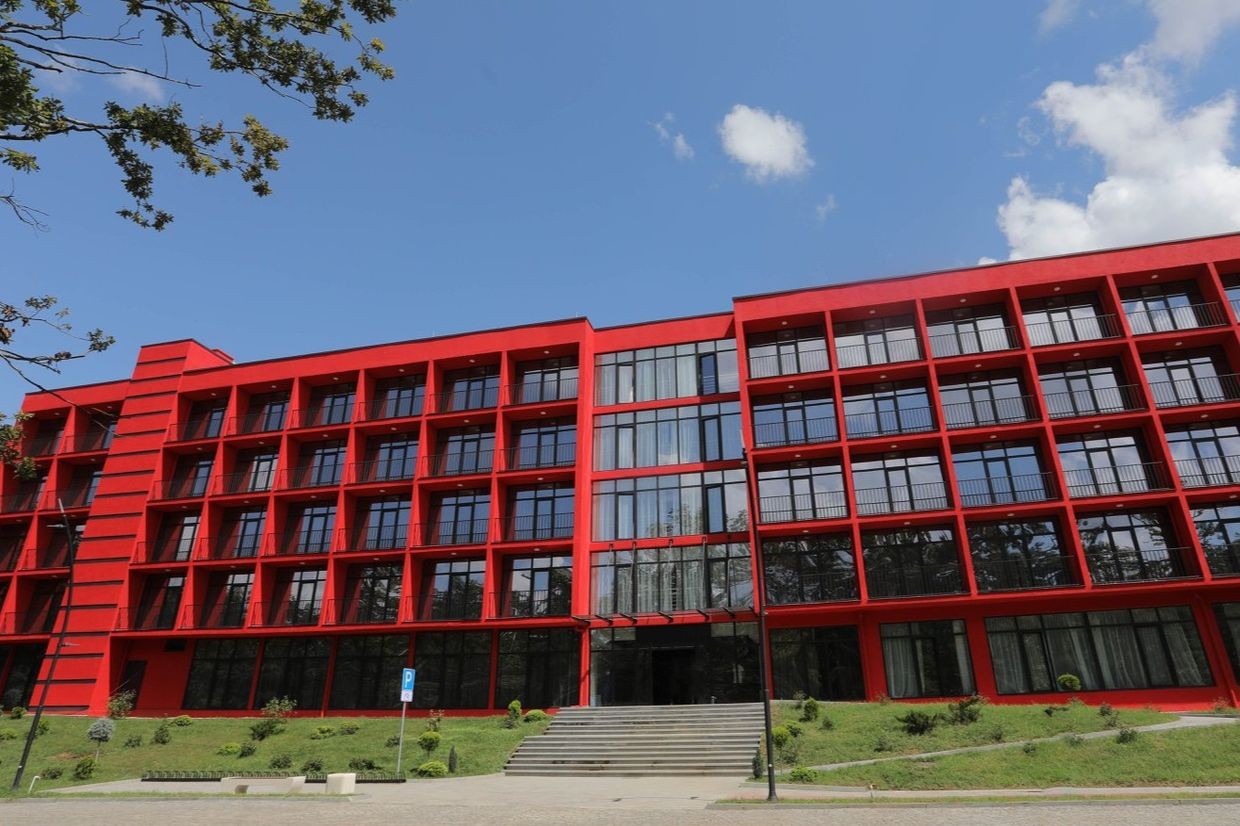
The Kutaisi International University, founded and funded by the billionaire Georgian Dream founder Bidzina Ivanishvili, is offering astroscience and astroarchaeology programmes — disciplines widely recognised as pseudoscientific — provided by a gematria specialist who claims to receive knowledge in his dreams.
The programmes, offered by the Iberian Cultural Heritage Research Centre at the university, entered the spotlight amidst an ongoing government campaign to ‘reform’ the country’s education system.
The centre was founded by Aleko (Aliko) Tsintsadze, an Iberian gematria specialist, according to an article by Konstantine Kintsurashvili on Ganatleba, a substack focused on Georgia’s education sector. Gematria is a Jewish numerological system that assigns numerical value to letters and words to uncover hidden or esoteric knowledge in sacred texts.
The Iberian Cultural Heritage Research Centre claims that Tsintsadze, ‘through advanced mathematical linguistics and cryptographic analysis’, uncovered ‘sophisticated encoding systems’ within ancient Georgian texts and scripts, including a hymn by Ioane Zosime, a prominent 10th century monk, and Shota Rustaveli’s 12th century epic Knight in Panther’s Skin.
Through this work, Tsintsadze claims to have uncovered a ‘hidden history of the Iberians’ — ancient Georgians — in the texts, Kintsurashvili wrote.
Kintsurashvili linked Tsintsadze’s ‘urge to “uncover” sacred meaning in Georgia’s past’ to ‘pseudo-scholarly fantasies, often laced with ethno-chauvinism, theosophy, and outright conspiracy’.
On Tuesday, Tabula published an article quoting Tsintsadze as saying that he ‘receives information’ in his sleep.
‘Scientific information is written like this: a person sits at their desk and derives some formula. The information that we are talking about is provided to me at dawn’, Tsintsadze was quoted by Tabula as saying.
‘All this is provided to me at dawn, from 04:00–05:00 to 07:00 in the morning when my eyes are closed, still in a state of sleep. That is when this information comes’, he said.
He further claimed he, at some point, believed he was the only one privy to this ‘knowledge’, but he later discovered that David the Builder, an 11th century Georgian monarch, and his adviser, Giorgi Chkondideli, also ‘tried to use this knowledge’.
Kutaisi International University was founded by Ivanishvili and funded by his Cartu Group in 2020. According to Business Media, in late 2025, the Georgian government proposed a package offering full state funding for its students.
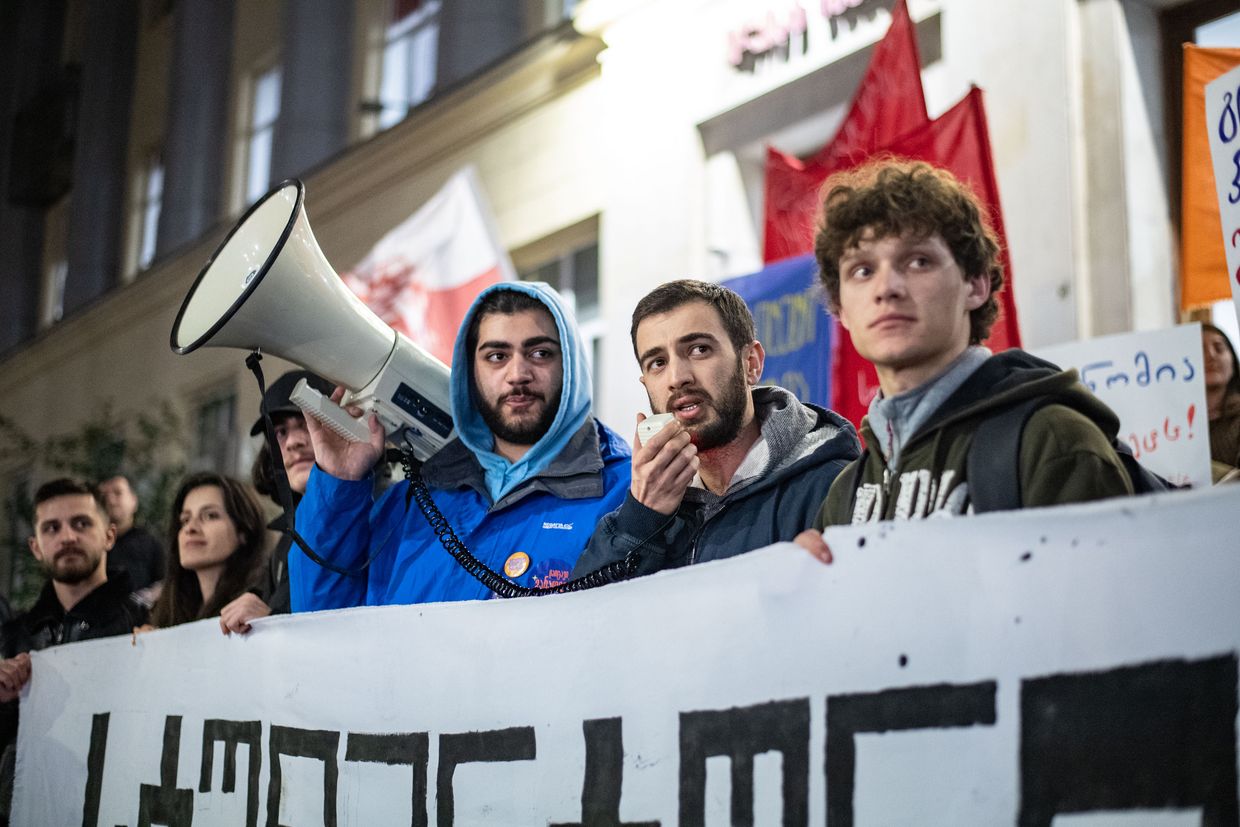
The university’s astroscience and astroarchaeology programmes entered the spotlight amidst ongoing controversial education reforms that saw the government cut 92% of admissions at the government-critical Ilia State University.
The Georgian government first announced its intention to redistribute faculties among state universities back in autumn 2025.
Under the plan, higher state education institutions would follow a ‘one city — one faculty’ principle, aimed at eliminating what officials described as ‘duplicated faculties’ across different public universities within the same city.
The government argued that the redistribution preserves disciplines at specific state universities ‘taking into account their traditional profiles and historical experience’. They also claimed that both the programmes and the number of admissions were determined based on a labour market study.
In a debate with Prime Minister Irakli Kobakhidze on Saturday, Ilia State University’s rector, Nino Doborjginidze, criticised the ‘market study’ based on which the quotas were distributed among universities.
‘When you conducted a labour market study, it showed that the country needs five communication, language, and speech therapists, and 20 astrolinguists’, Doborjginidze said, referring to a decision to allocate 20 fully funded seats to Kutaisi International University students studying astrolinguistics.
In response, Kobakhidze argued that the research referred not only to current demand, but also to potential demand.
On Tuesday, Tsintsadze, a staunch advocate of the reforms, argued that the conflict over the government’s plans boiled down to an ‘ideological confrontation with ultraliberalism’.
‘We are taking back education, and soon we will take back the country in full. This is an irreversible process, they should have expected this’, he said.
 Mikheil Gvadzabia