Monstrous costumes and cracking whips — the Georgian village preserving the spirit of Berikaoba
The centuries-old tradition of Berikaoba, a special masquerade to invoke spring, is now only found in a few villages in western Kakheti.
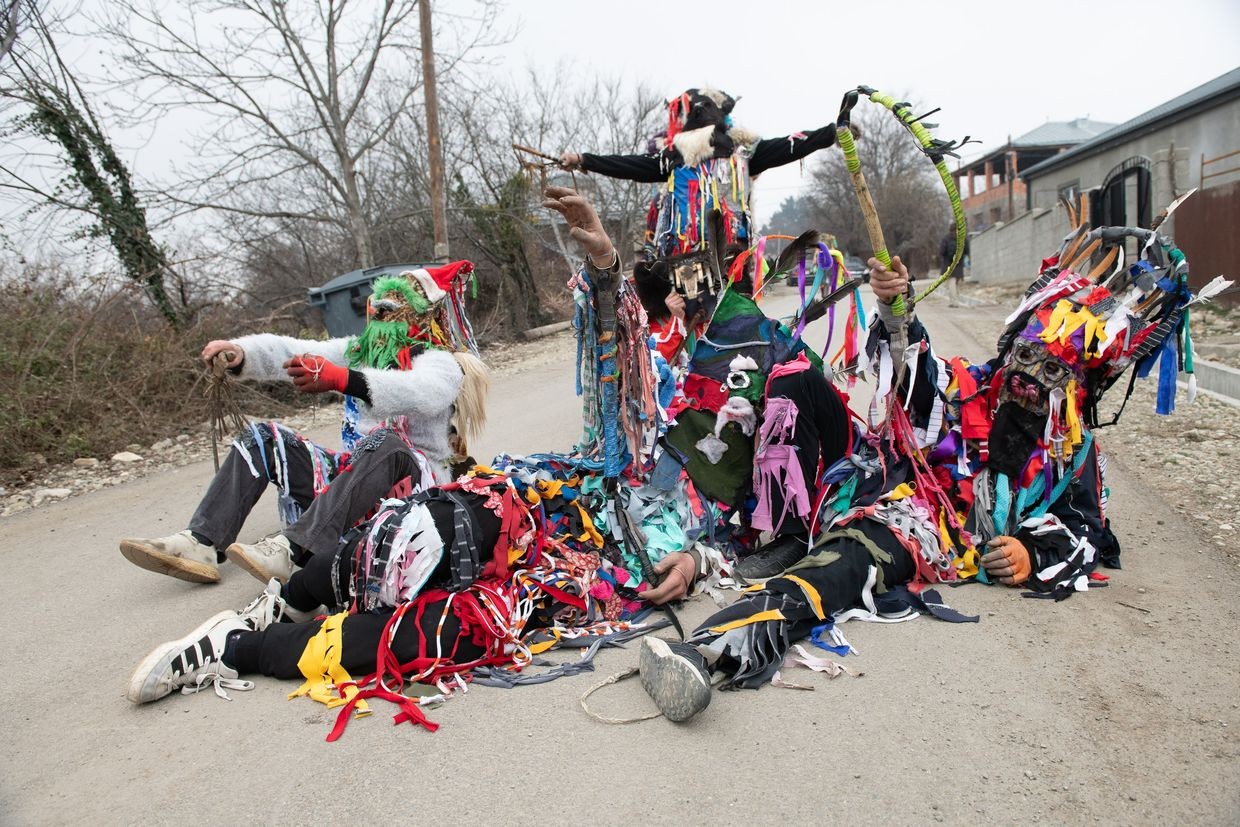
Imagine that at the end of every winter, colourful beings appear out of nowhere, chasing away the cold and bleak weather, bringing spring and joy back to the land. There will be some screaming, whipping, and debauchery — and there will be a price to pay, in wine and food, but also money.
At least that’s the way it is in the small village of Didi Chailuri, which still preserves the centuries-old tradition of Berikaoba, a special masquerade, celebrated on the last Sunday of Kvelieri, the last week before the Great Lent in Orthodox Christian tradition. Once widespread, Berikaoba is now only preserved in a handful of villages in the eastern Kakheti Region.
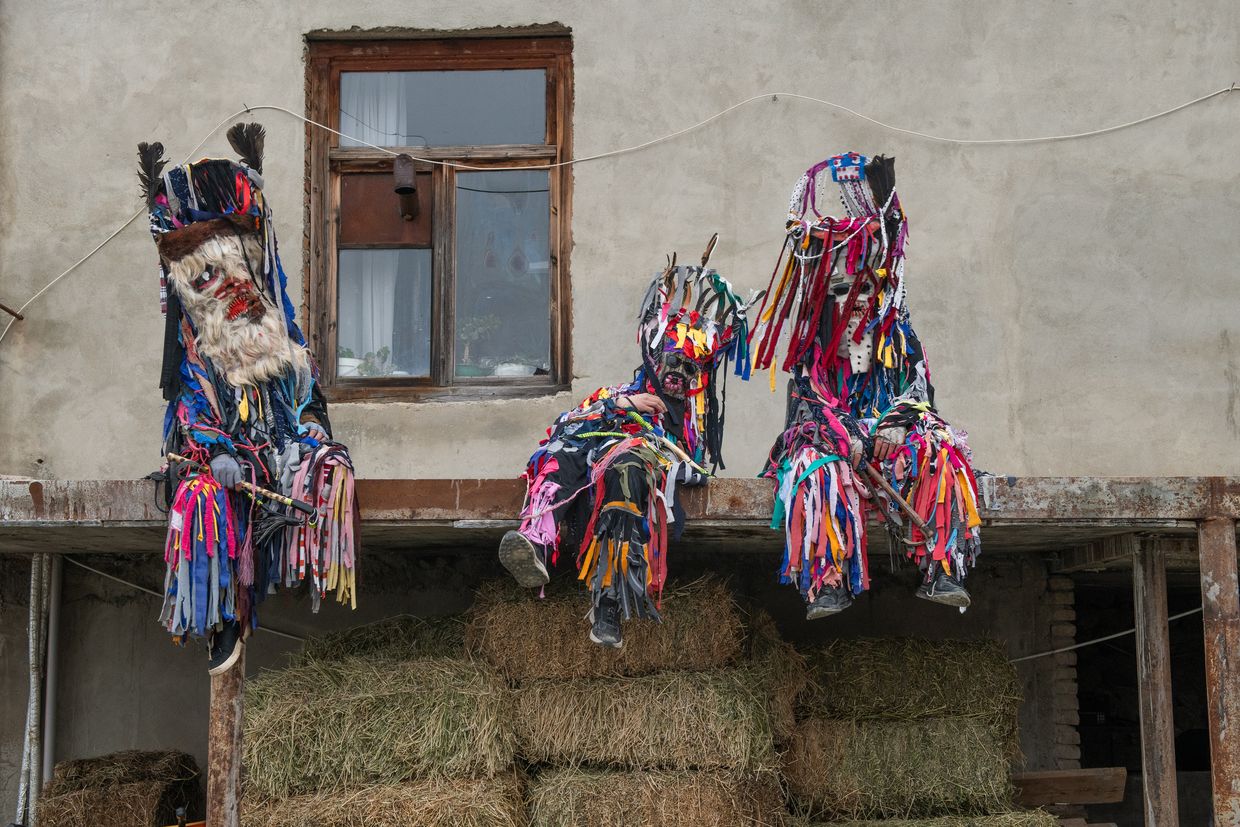
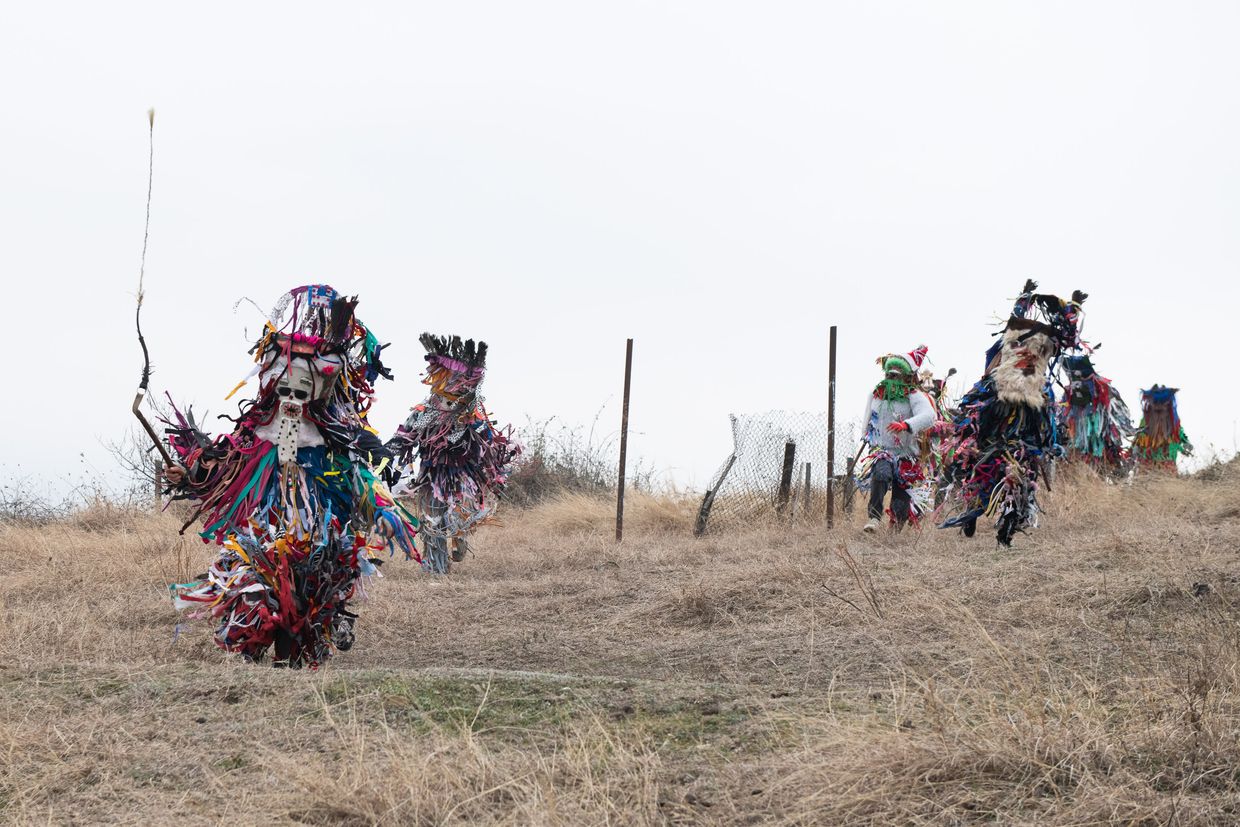
Historians find it hard to define the exact moment when Berikaoba and similar theatrical performances began, but according to ‘The History of Georgian Theatre’ by David Janelidze, one of the more complete studies in the field, there were more than a hundred variations of Berikaoba and its sister tradition, Keenoba.
‘For me, these festivals reflect the events of Georgian history,’ Didi Chailuri resident and history teacher Eka Chikadze, who helped to popularise the village’s festival, tells OC Media.
‘For example, in Soviet times, the festival made fun of the priest character, and in Keenoba, they threw the Keeni character, a conqueror, in water to signify the liberation of Georgia’.
In Didi Chailuri, Berikas attack a boar-headed beast and sacrifice it for the winter to end. In other years, they have had a ‘Bride’ and a ‘Groom’, as well as the antagonist ‘Arab’ who separates the couple but ultimately dies in combat.
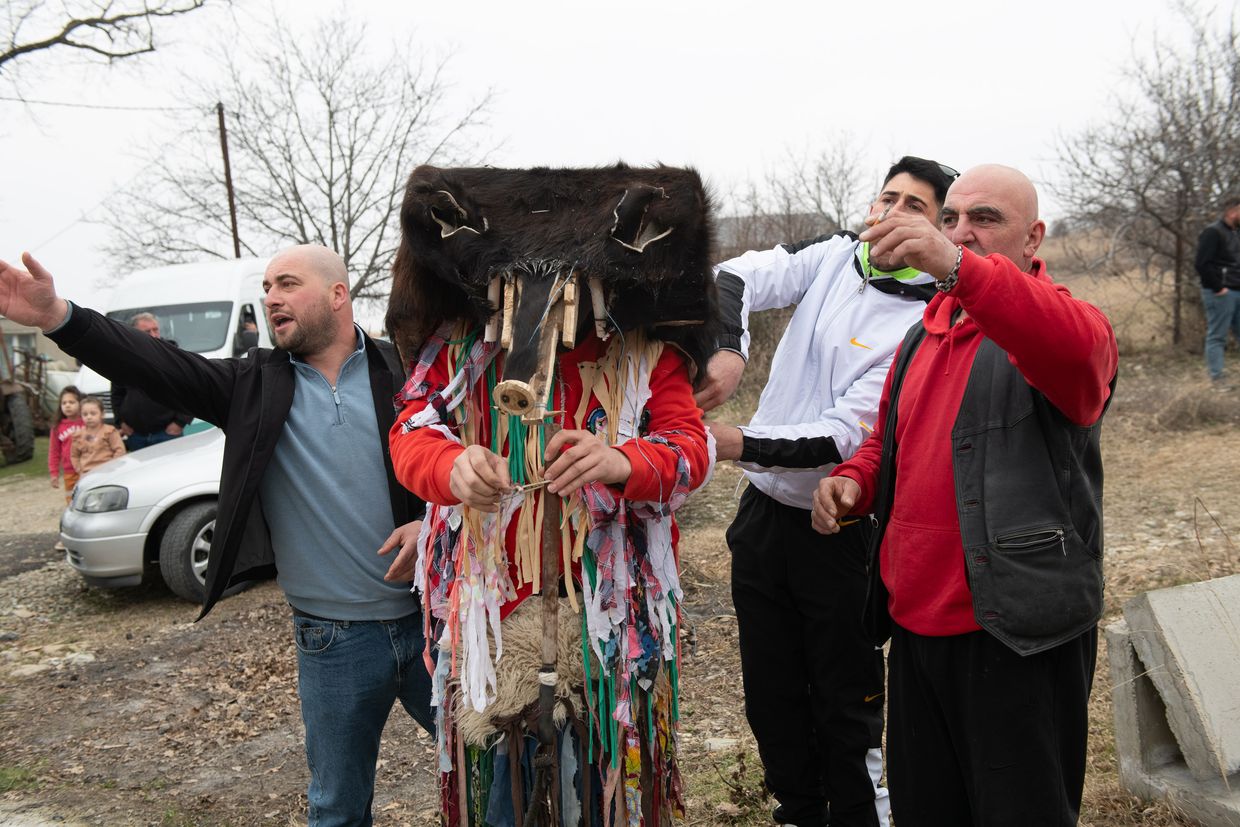
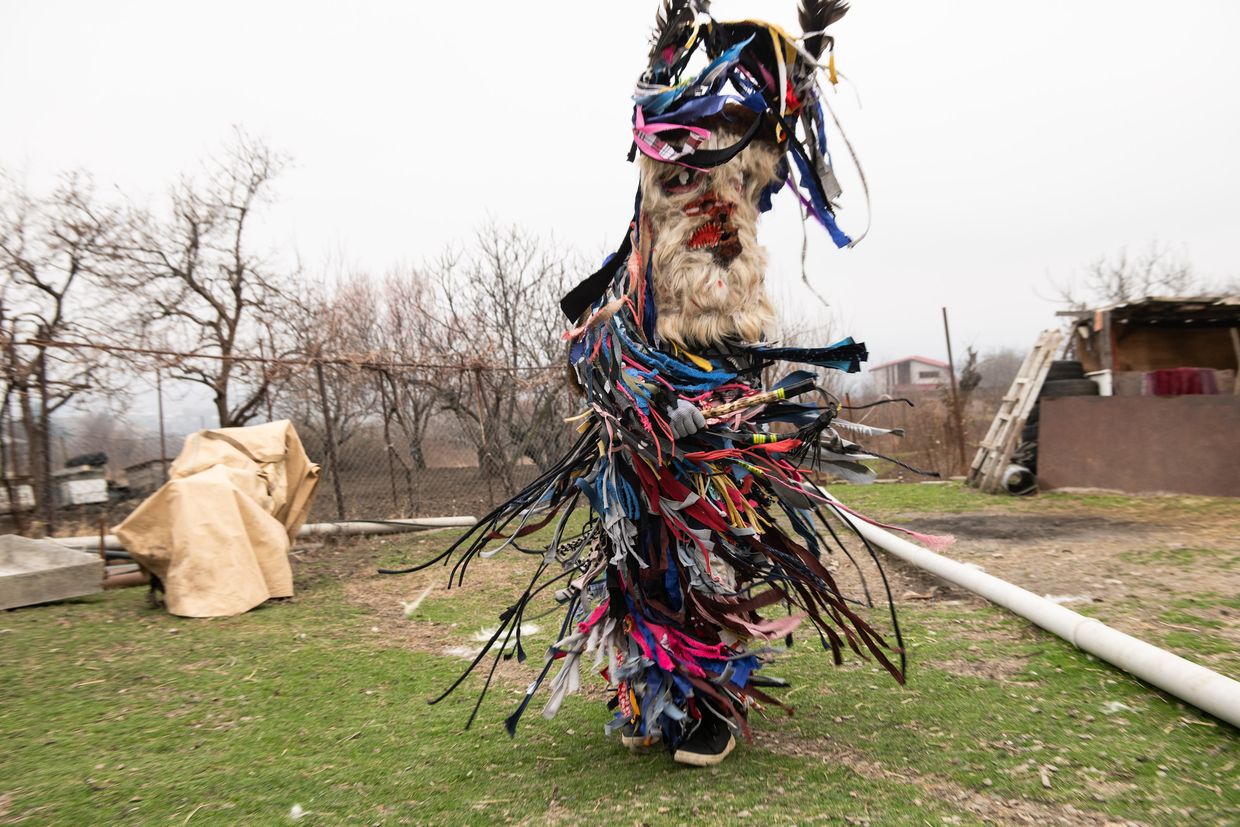
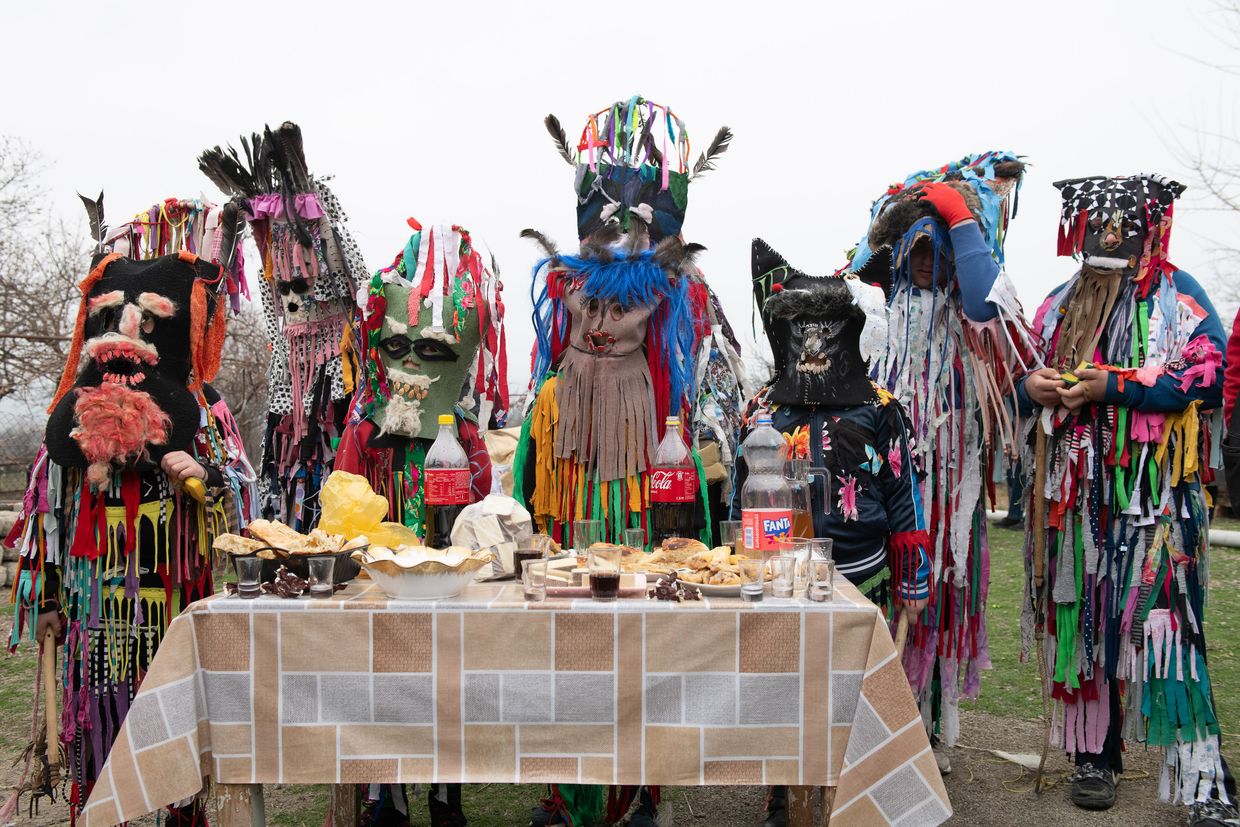
In the 19th century, the costumes were made from animal skins, feathers, and cloth. The designs also sometimes involved erotic elements, as the celebration was associated with the fertile period of spring. Nowadays, in a village like Didi Chailuri, the outfits are mostly made of colourful rags, sometimes with seeds around the mouth or sunglasses attached to the mask.
‘To be honest, I am quite scared of them, even though I know that every single one of them is my student and made these costumes themselves,’ Eka says.
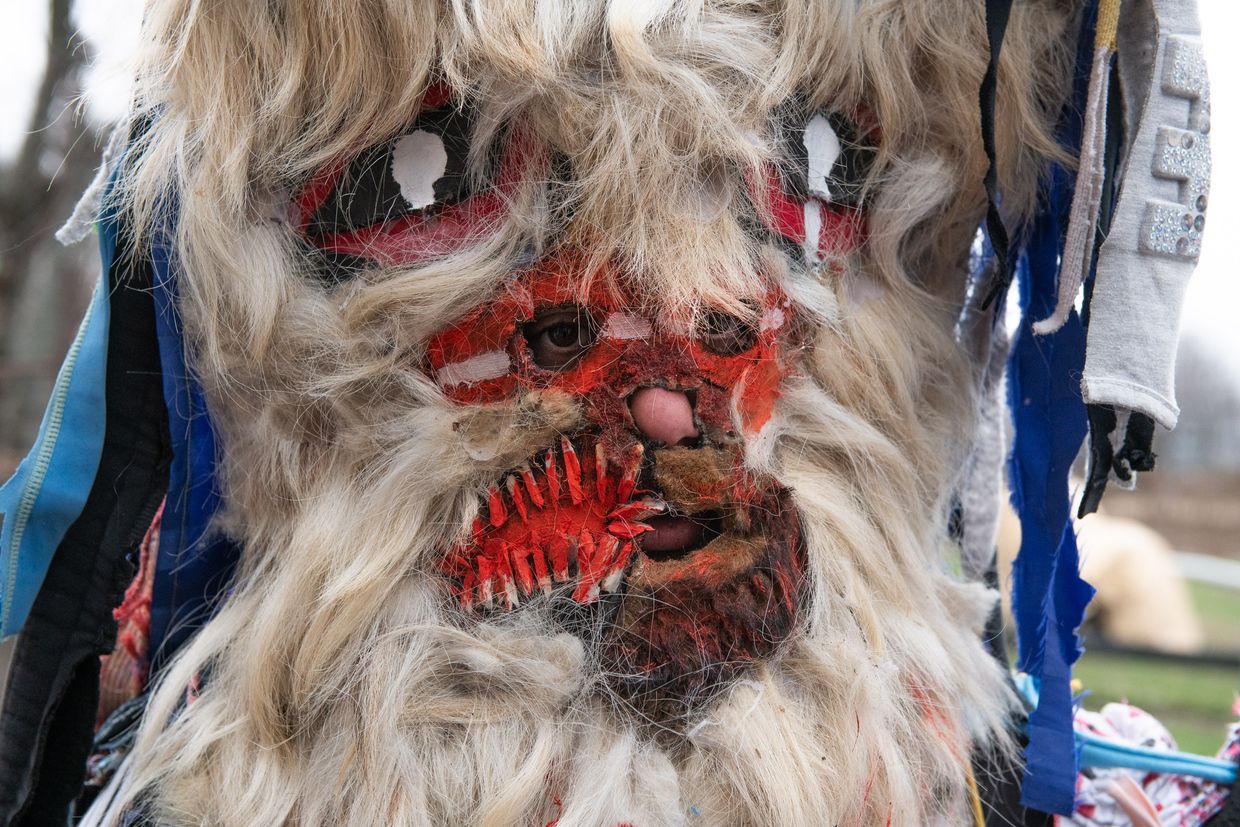
Berikaoba became an item on UNESCO’s list of intangible cultural heritage in 2013 and attracts people from other villages, as well as foreigners.
The festivities begin in the last house of the village, belonging to Nodar Rostiashvili, master teacher of the newly arriving Berikas — boys aged seven or eight years old who have spent months in preparation for this day and can’t wait to try on their colourful garments. Nodar himself was three times a boar-headed monster, a Takhi, that opens and closes its mouth, tied to a string. This boar will accompany the whole procession until the end, where it’s sacrificed.
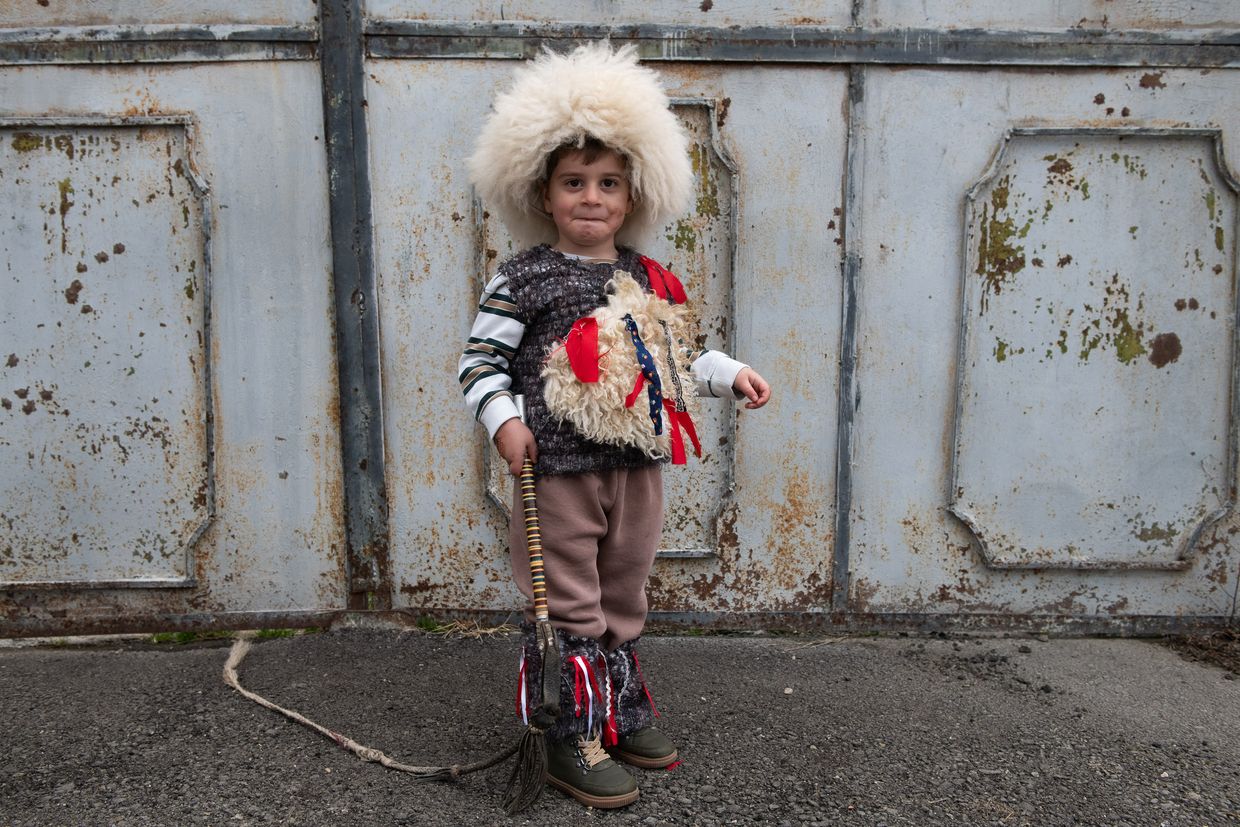
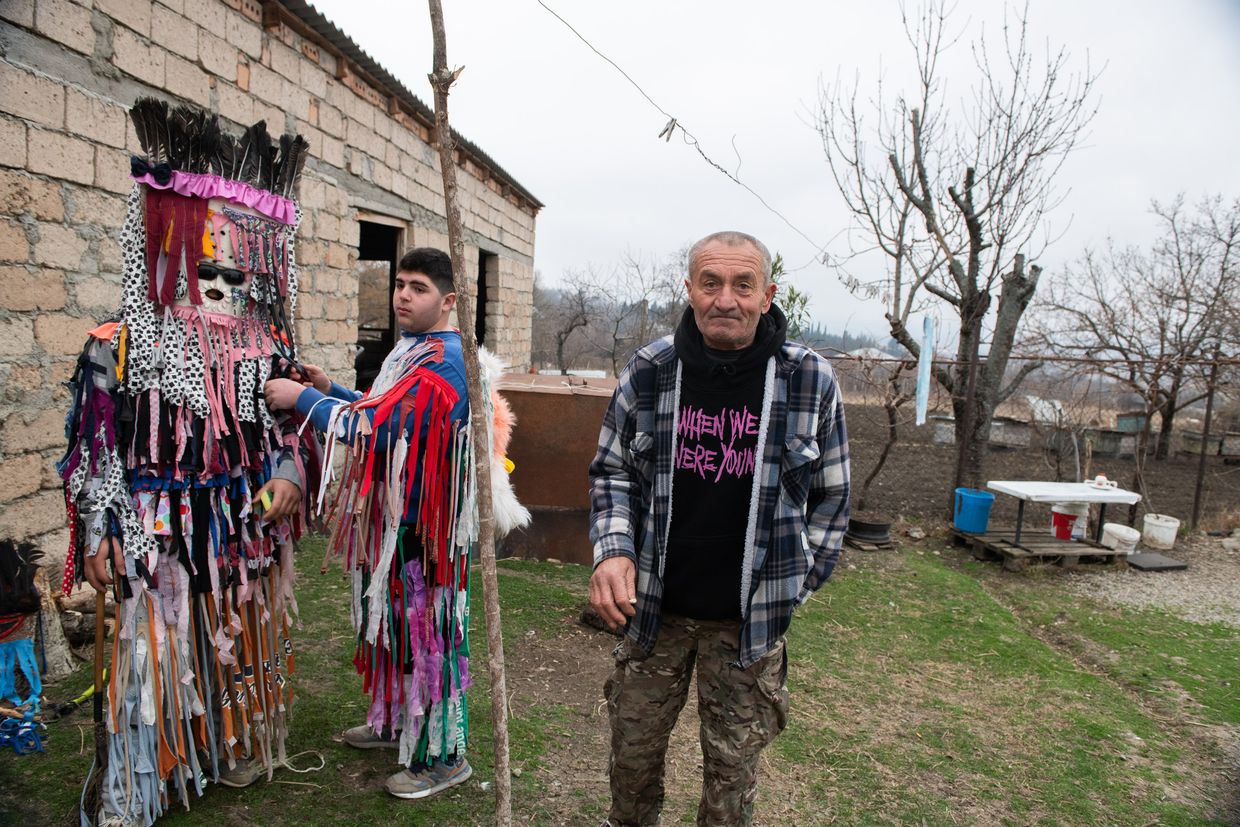
‘Berikaoba has begun here for the last 20–25 years, and it starts from here with a small supra’, Nodar says.
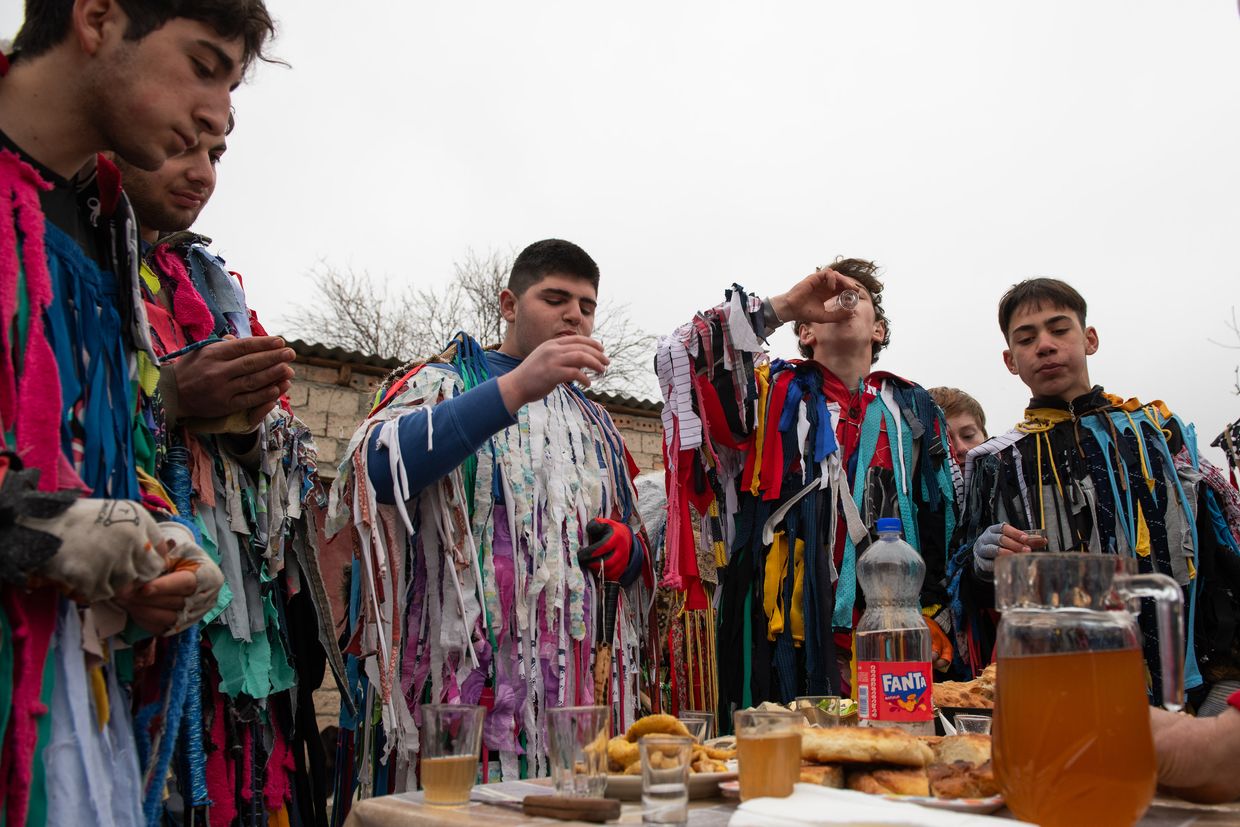
Indeed, a table is set in the middle of Nodar’s yard, with some wine, chacha, and pastries; Berikas need to toast to God, good fortune, and prosperity before they start pillaging the village, and even young boys will drink.
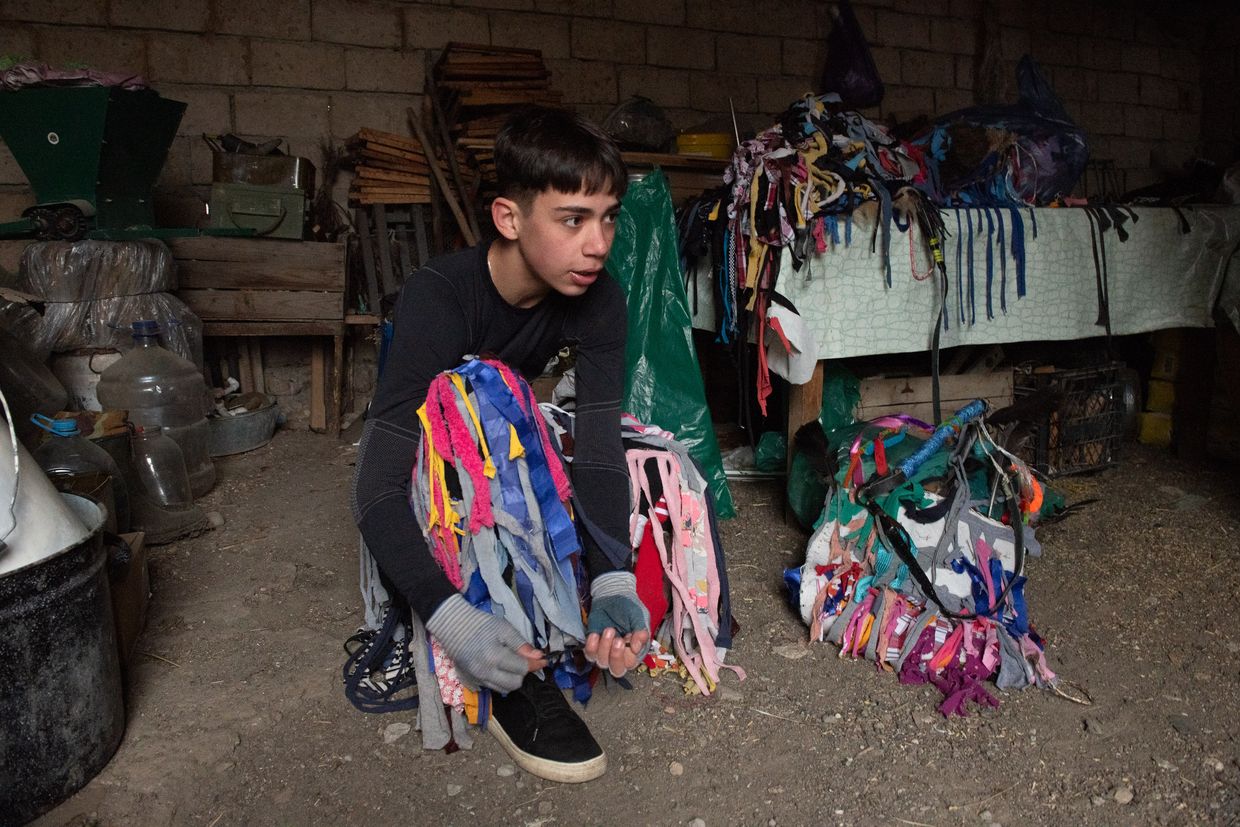
‘It’s a heavy costume, so the day before we try to rest a lot,’ 15-year-old Kakhi Loladze says while getting into what looks like a bunch of colourful rags that hang around the body, making it shapeless, and the face unrecognisable.
In a few minutes, he is no longer a teenage boy but a mischievous character, and signals to be treated as such. There is a strict rule in Berikaoba: the participants must remain anonymous, and it’s prohibited to call them by name. They refer to each other simply as Beriko, never take the mask off, and scream in high-pitched, altered voices.
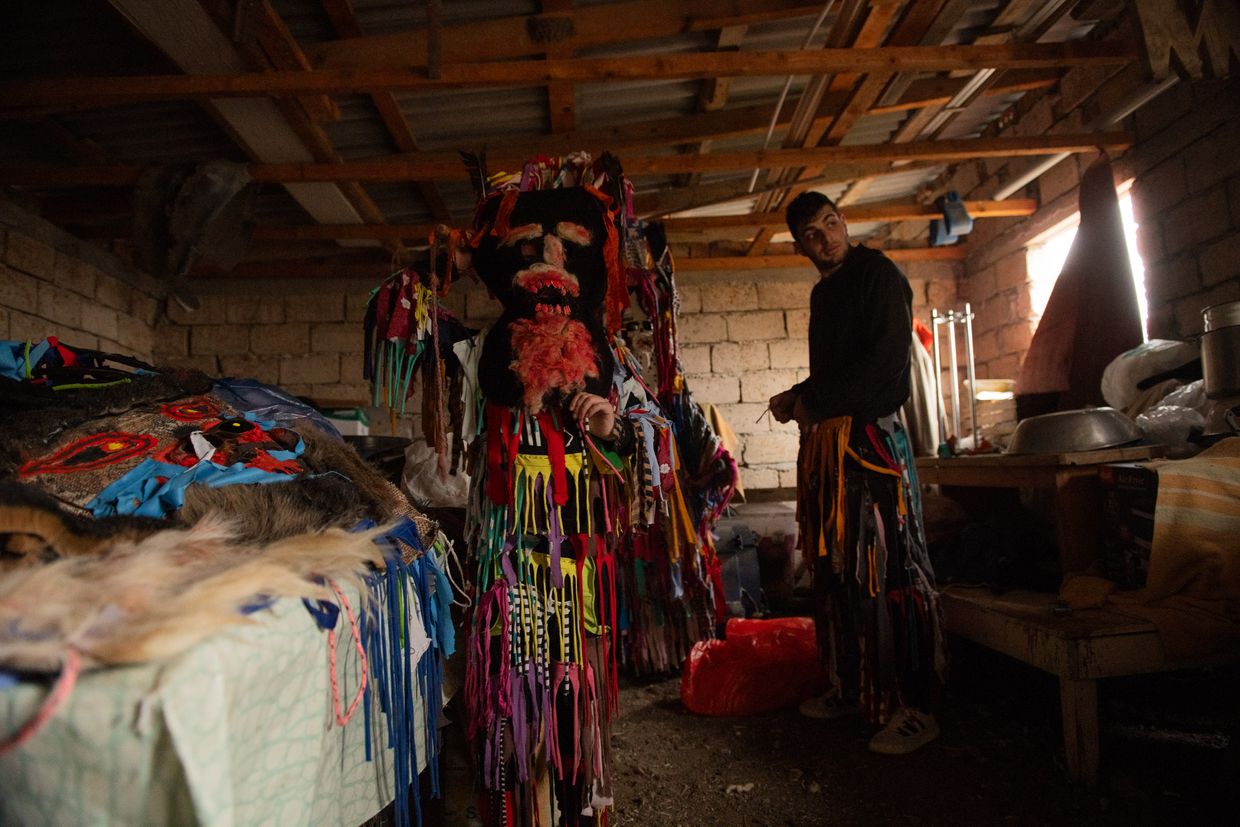
Soon, older Berikas join, mostly men in their 20s. You need a lot of energy to run through the village streets for hours, so older men assume the role of organisers, instructing the young not to go over the top and to be respectful to the numerous journalists who come to record the event — some of these rules would be dropped later.
After toasting, the Berikas have a small council and descend, screaming and snapping their whips, towards the minivan that will take them down to the church of St Mary where Berikaoba officially begins.
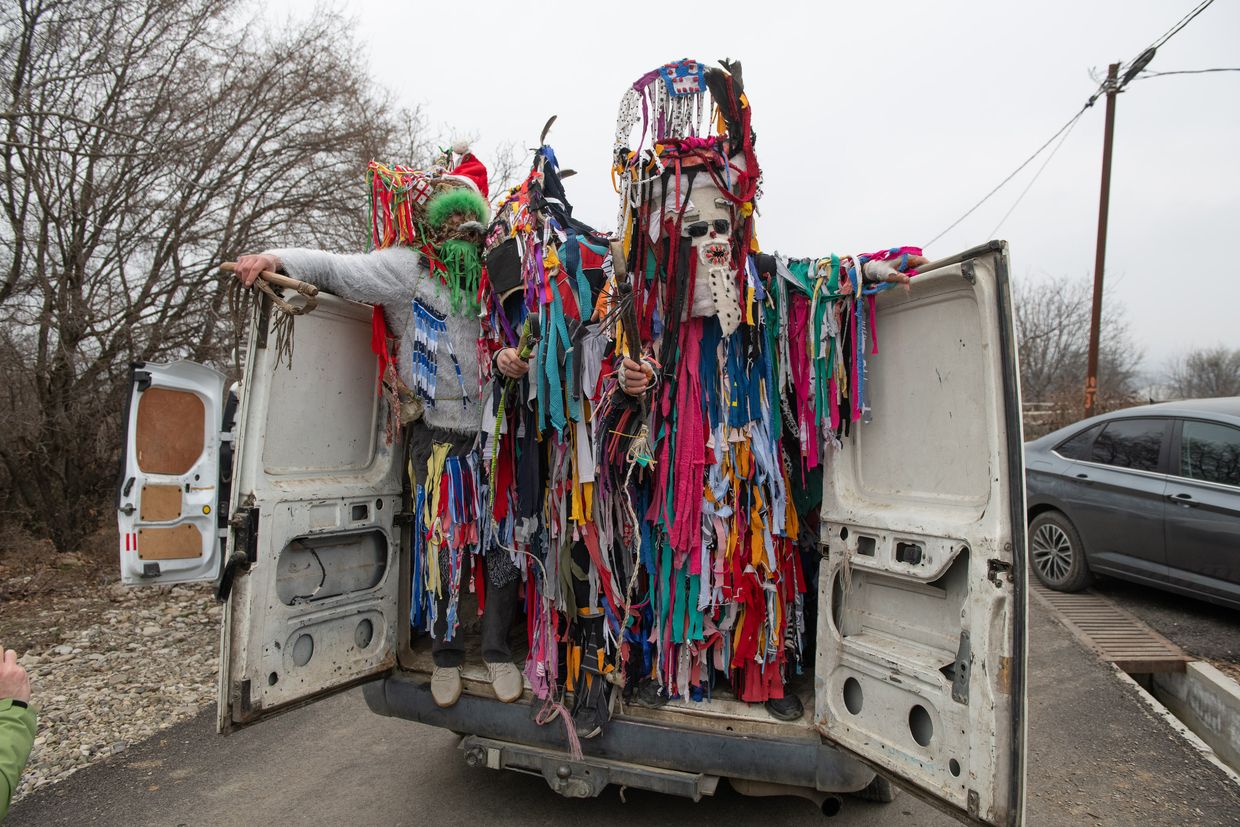
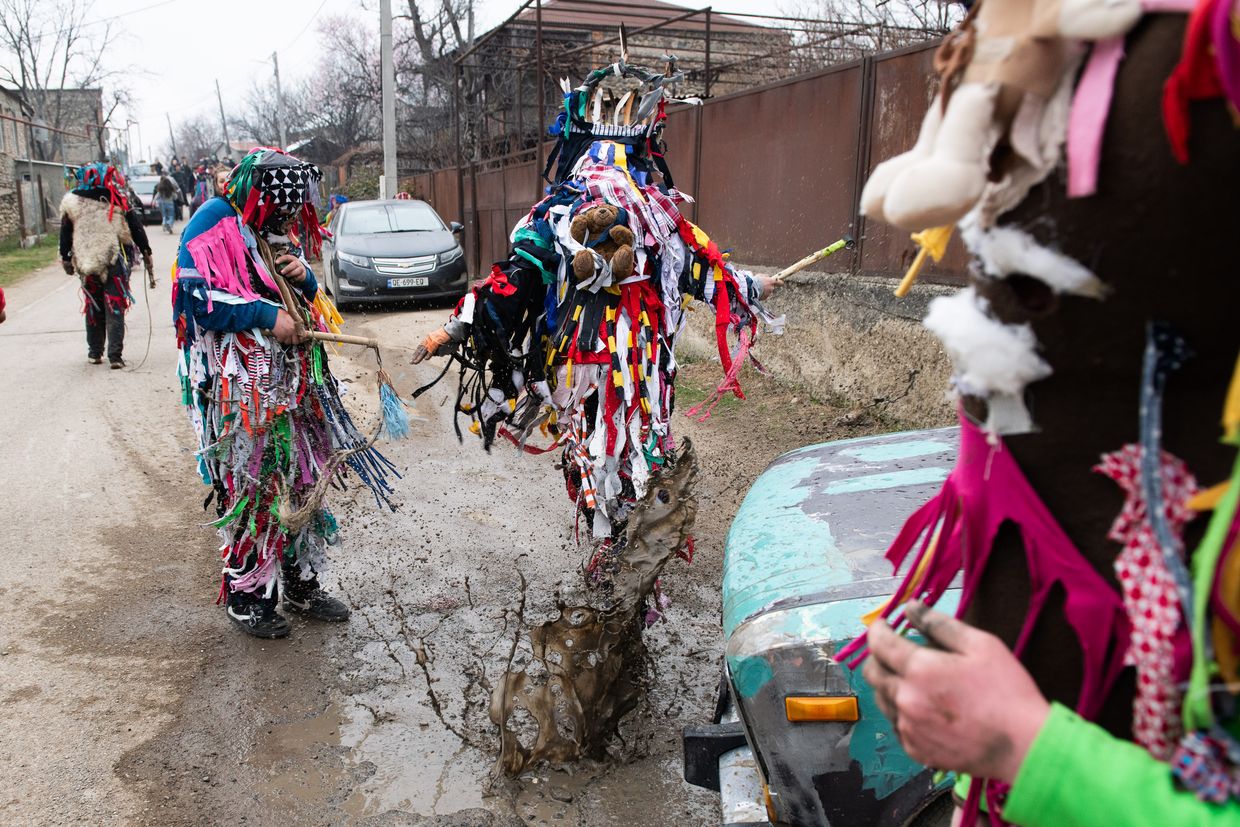
From there, the Berikas run down the main street, engaging in all sorts of tomfoolery in the process — climbing fences, capturing village chickens, and jumping in mud, but above all, terrorising their neighbours. Young children cry and even grown men jump away when a Berikos tries to grab them and smear their faces with mud.
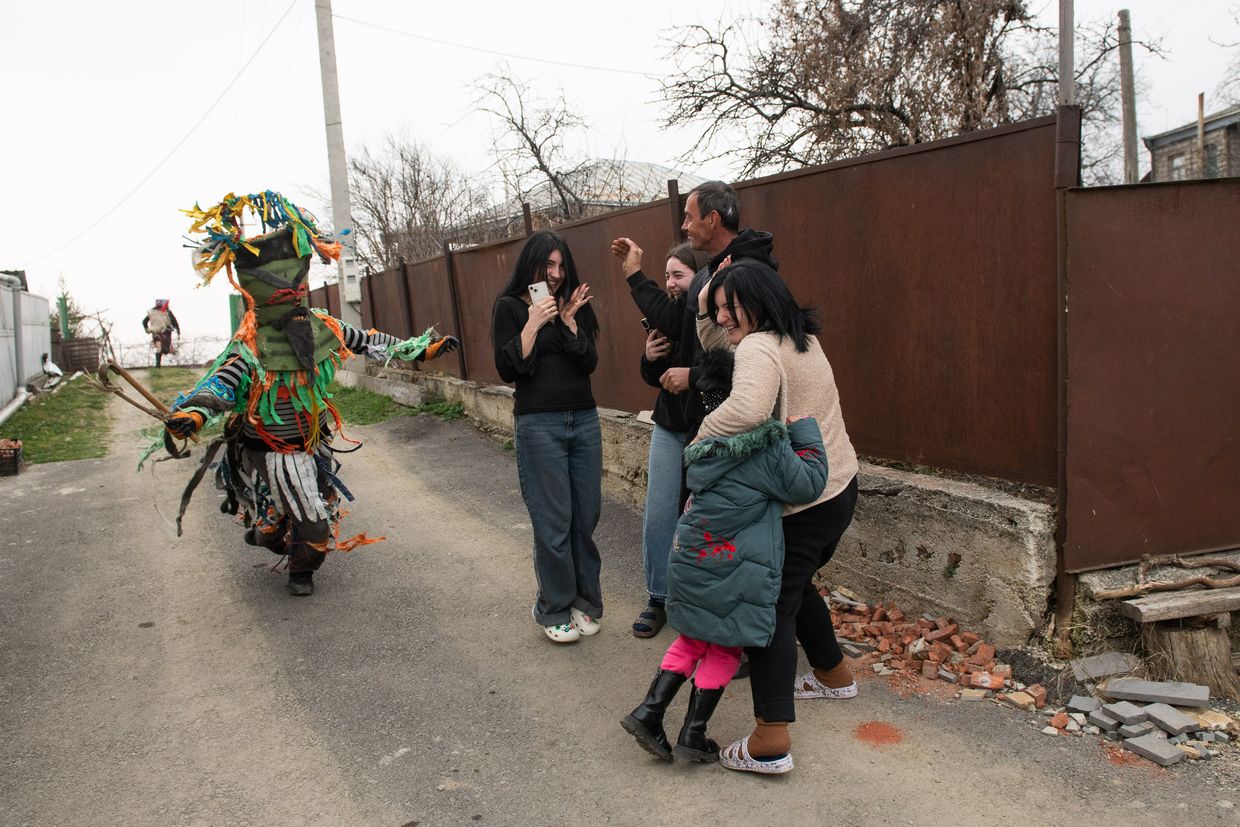
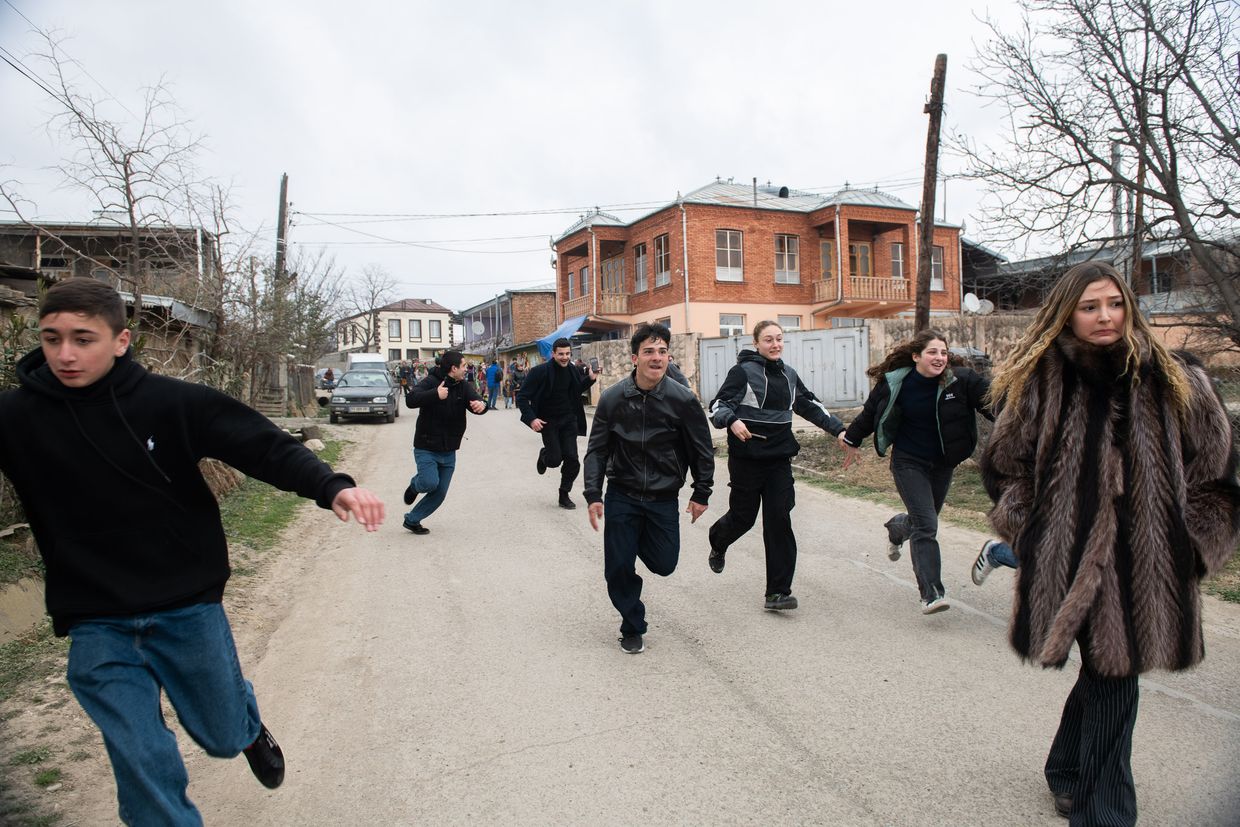
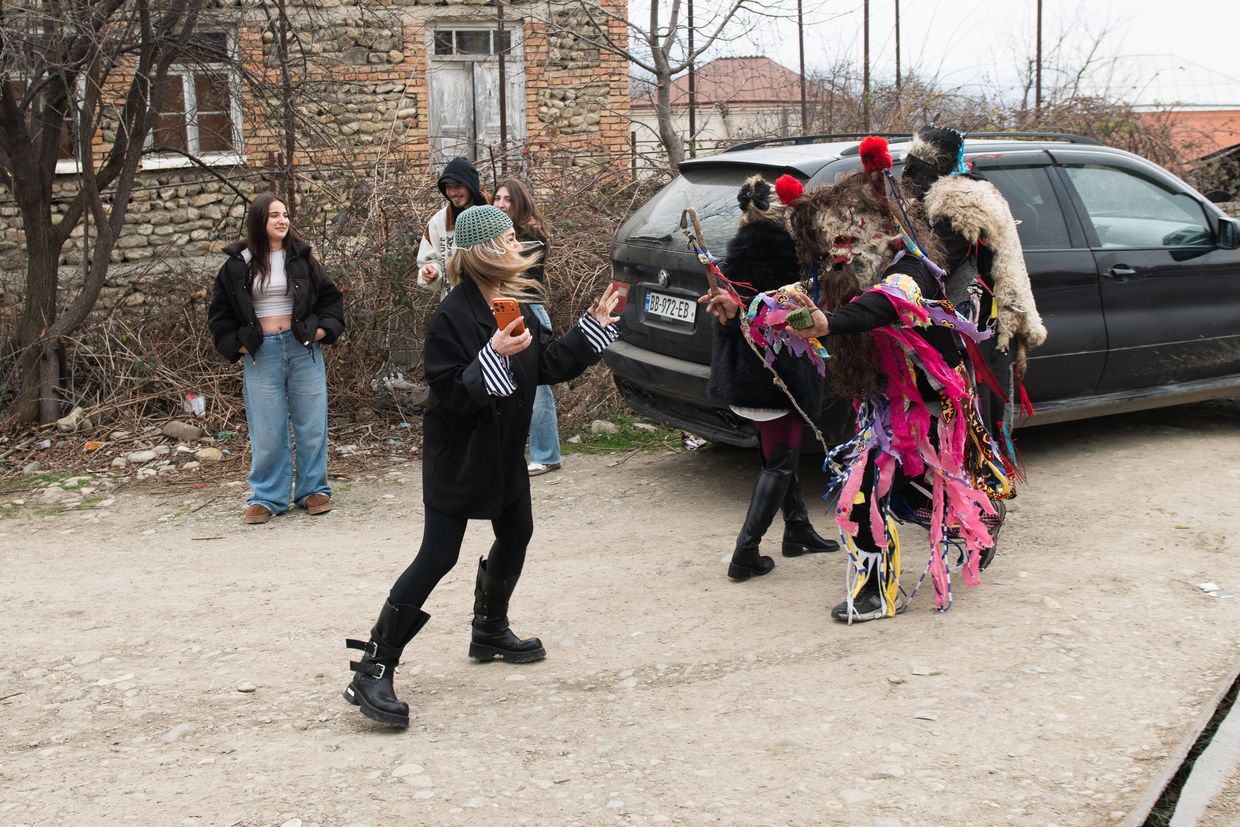
All Berikos have a piece of sponge or fur tied to their palm, and their helpers carry bottles of water for muddying the dry earth. Berikos mean good, though, as the mud is a symbol of spring and the renewal of the season.
The elderly of the village are more prepared than the young, who flinch away; grandmothers and grandfathers stand in the doors prepared with bread, wine, and some money, and Berikos happily take part in drinking on the go.
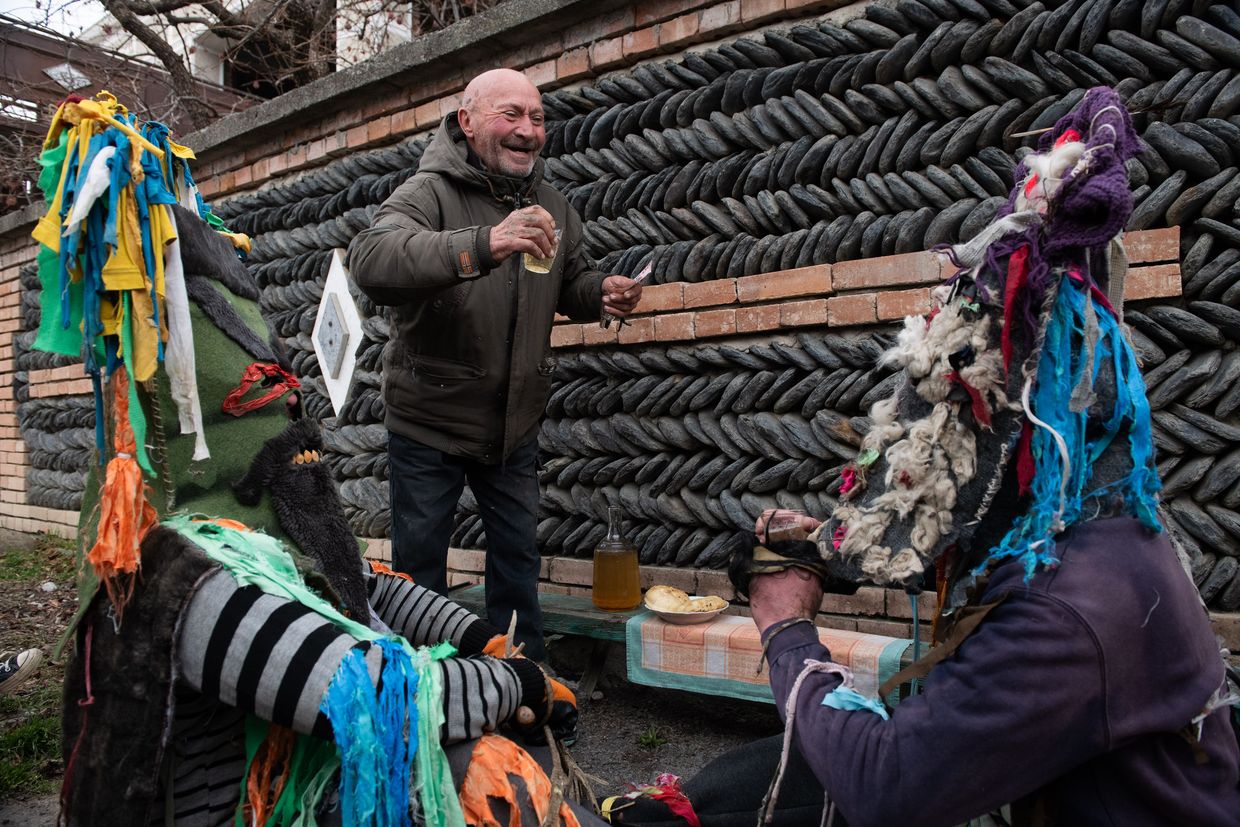
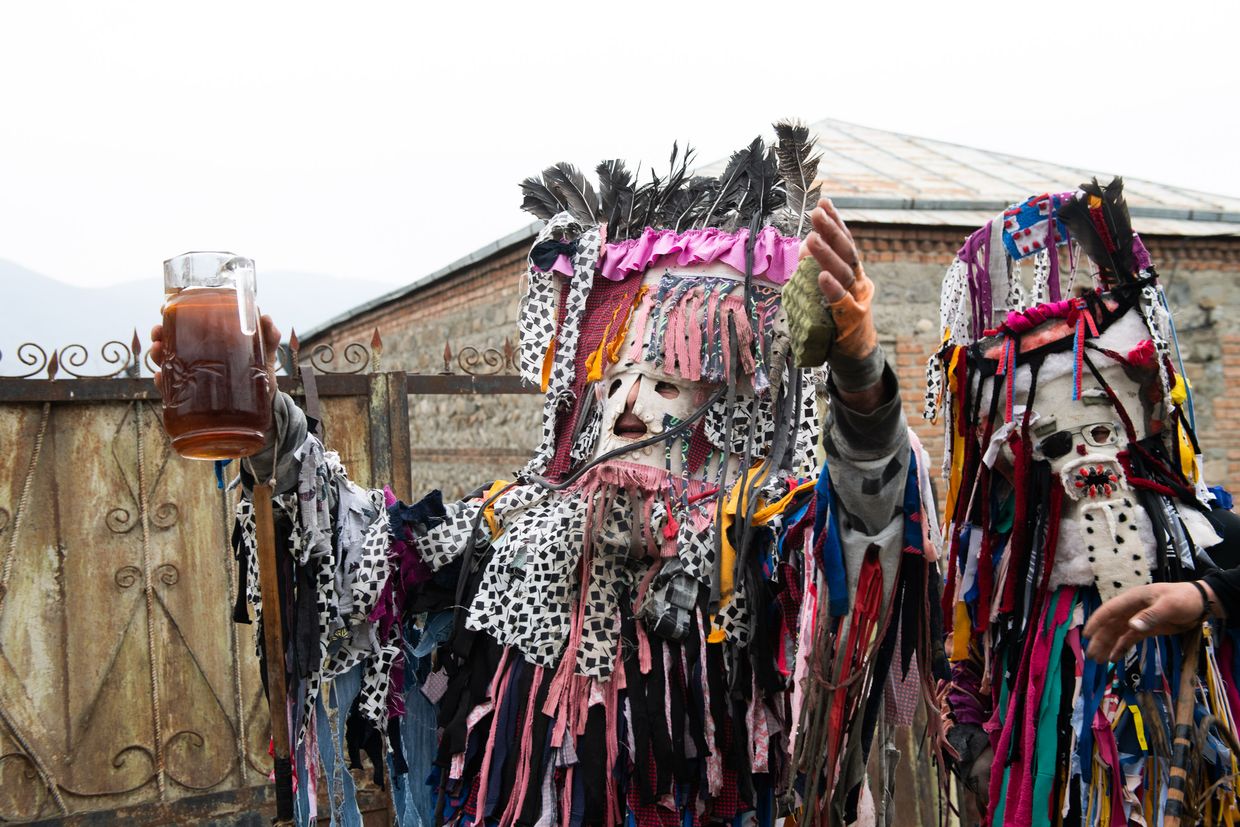
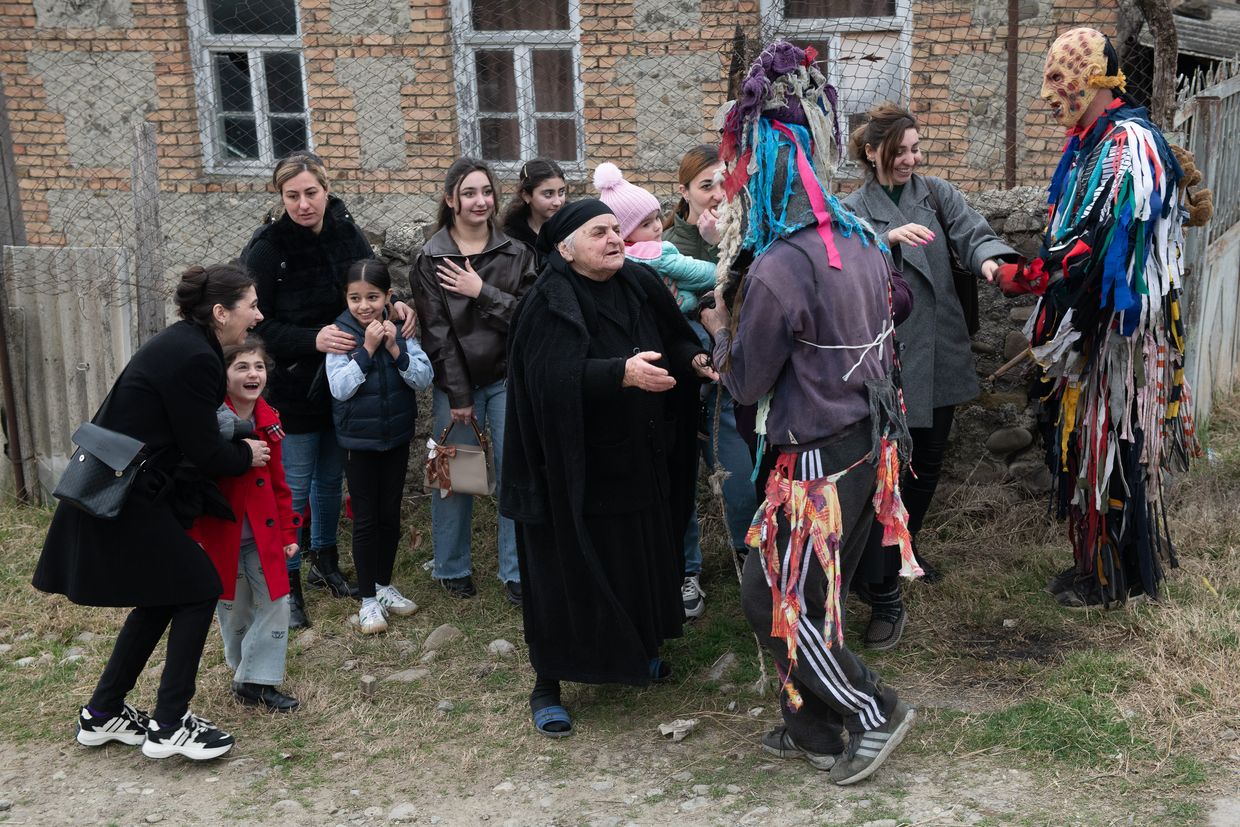
The cars are not spared either — the Berikas won’t let them pass and will smear the windows with mud until the ‘tax’ has been paid. Some ‘victims’ get angry because of the smearing and scream back, but mostly, the Berikas are greeted with laughter and even with food in some of the houses. In the old days, the Berikas would curse the house that left them empty-handed, but this has changed.
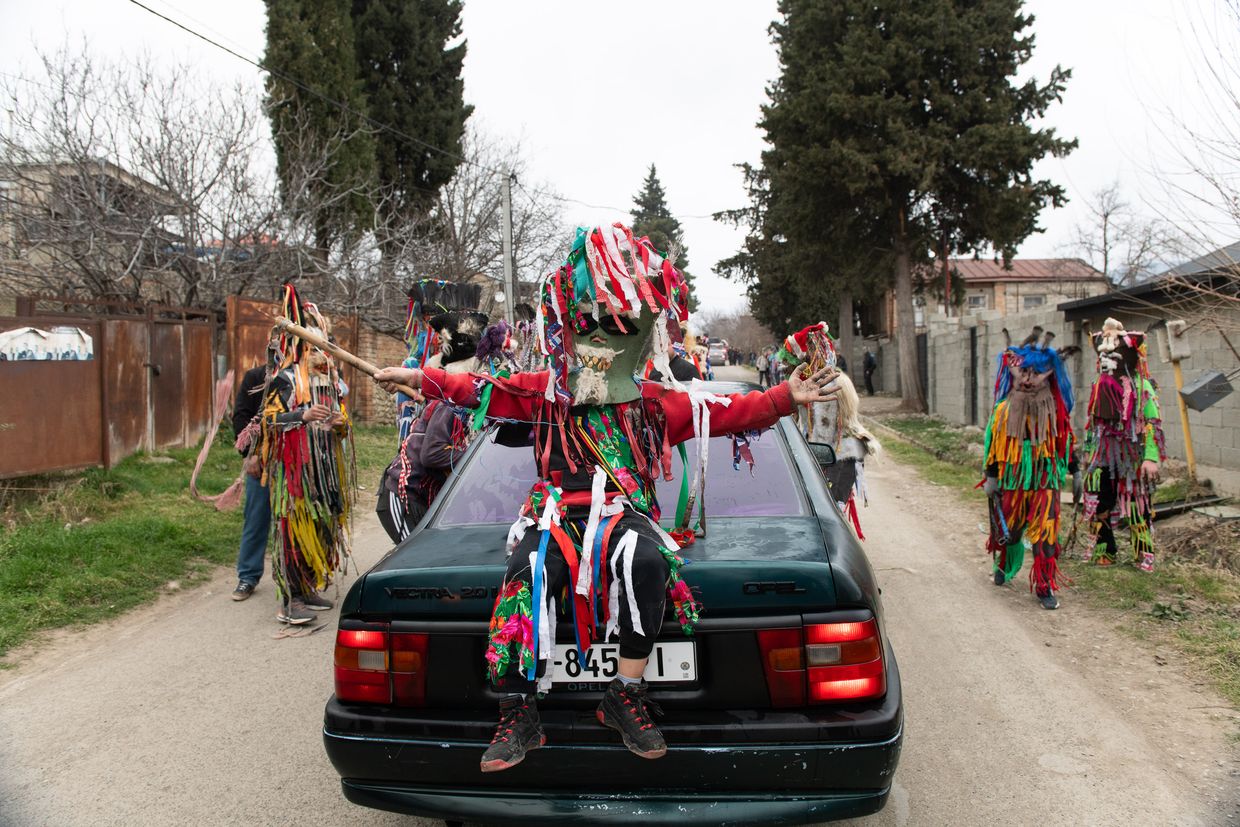
‘We modify [the festival] a little bit almost every year, and we believe that the better we handle Berikaoba, the more prosperous the year will be for the village’, Mariam Saginashvili, a local student and long-time supporter of the tradition, says.
According to tradition, only men participate in Berikaoba, but Mariam says she’d gladly try it herself sometime if not for the physical effort. Running around in the costume wears the men down too, so they switch near the middle of the village, in a house by the school. This is done not only to get fresh Berikas into the business but to conceal the ‘crimes’ of previous ones — no one must find out who did what in Berikaoba.
Another mandatory stop is the memorial of Giorgi Kirakozashvili, a local soldier who died in the August 2008 War. Here, the Berikas take off their masks to pay respects and toast in the memory of the fallen.
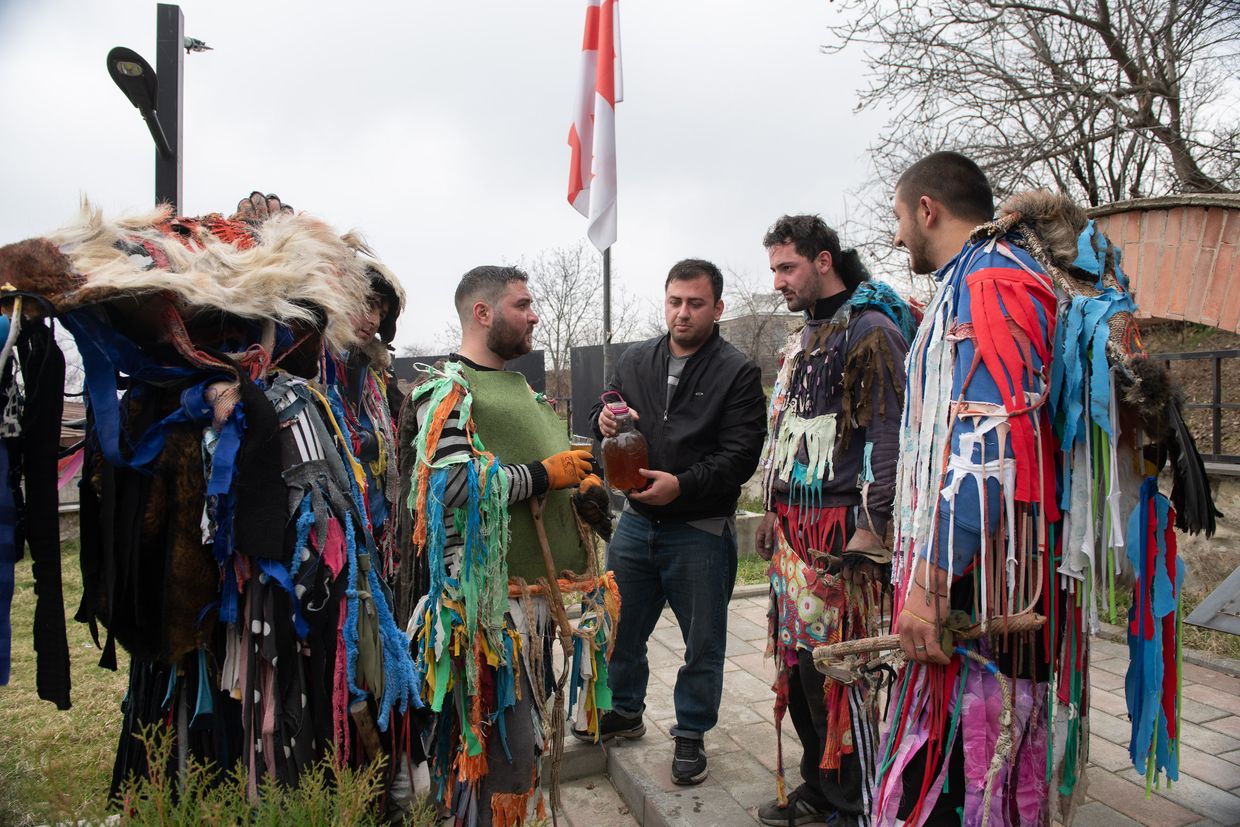
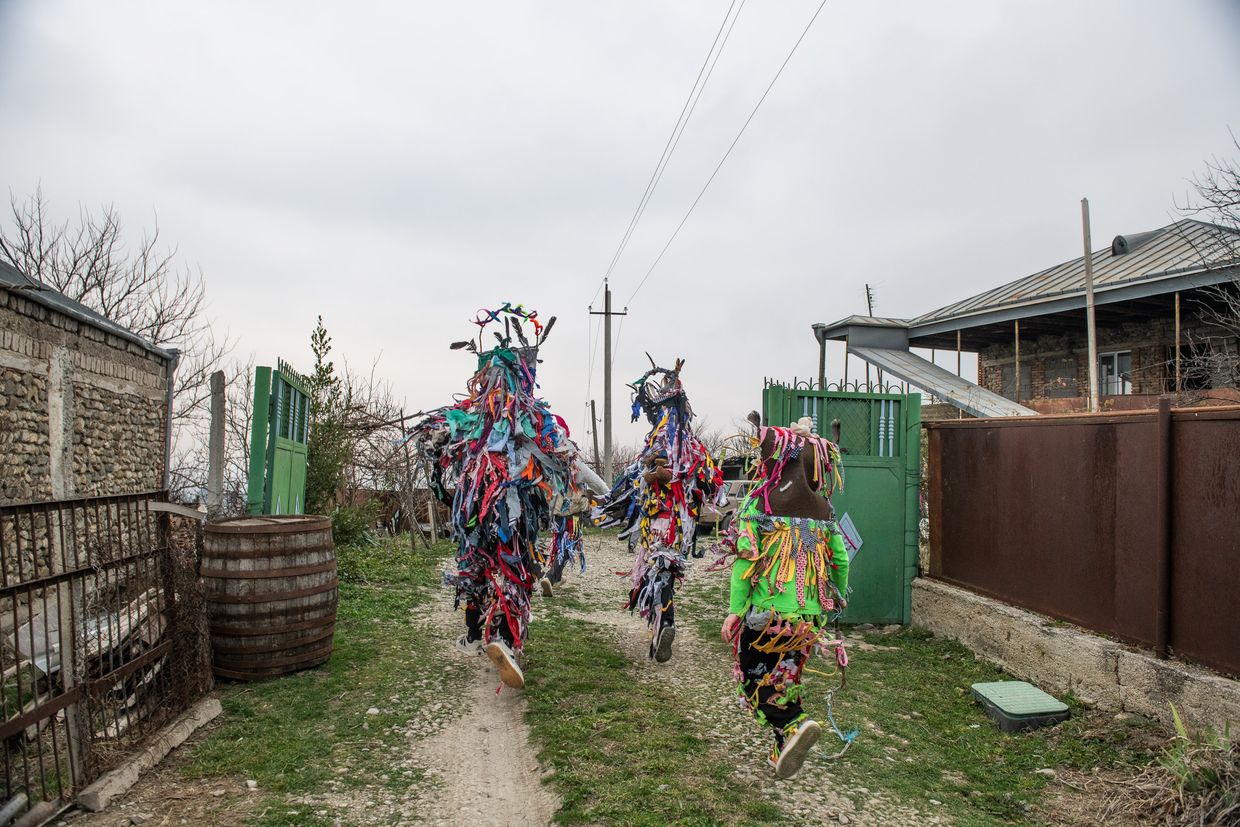
After that, the Berikas carry on wreaking havoc until the end, when they gather in the house next to Didi Chailuri’s football field that transforms into festival grounds for the occasion.
While the Berikas gather forces for the final act, the villagers have fun watching traditional wrestling, tasting specially baked sweet-and-savoury Kada bread, and mounting Kachaia — a wooden swing for two people that is specially constructed for the festival.
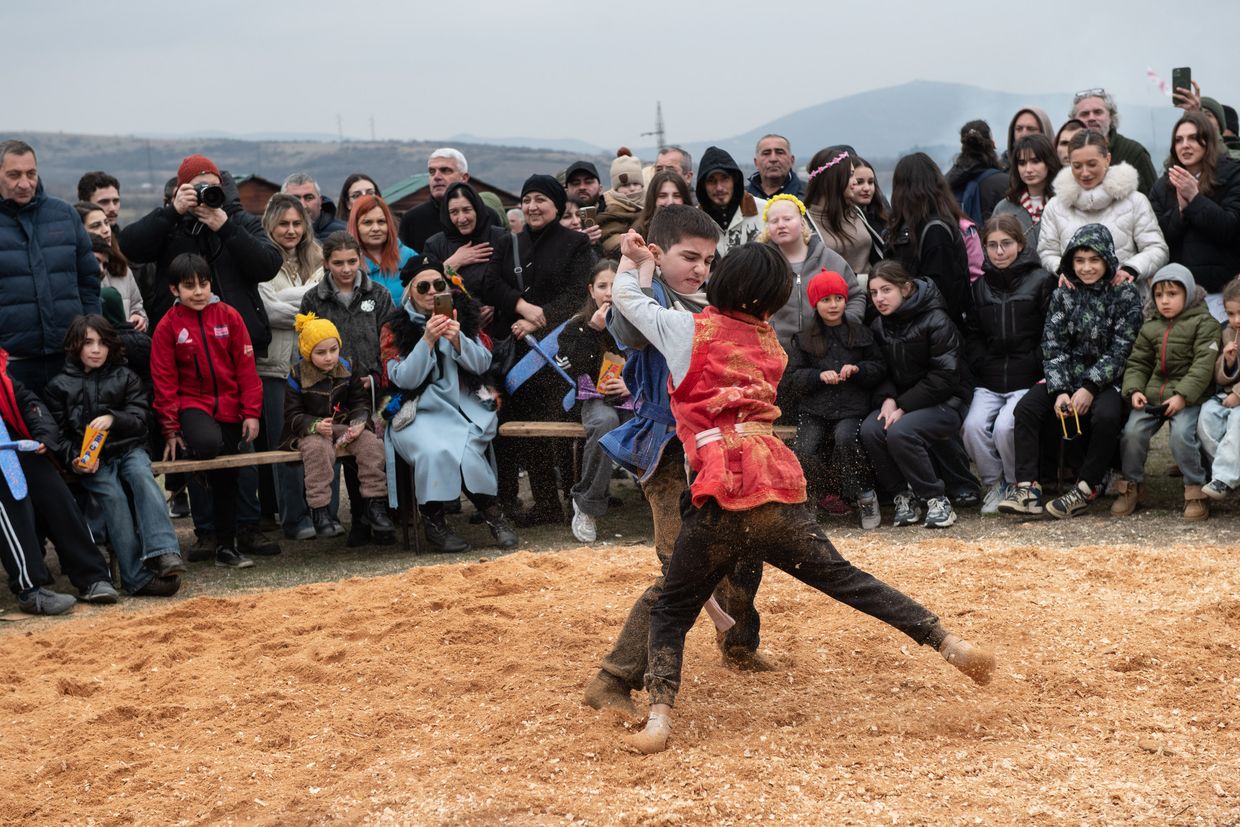
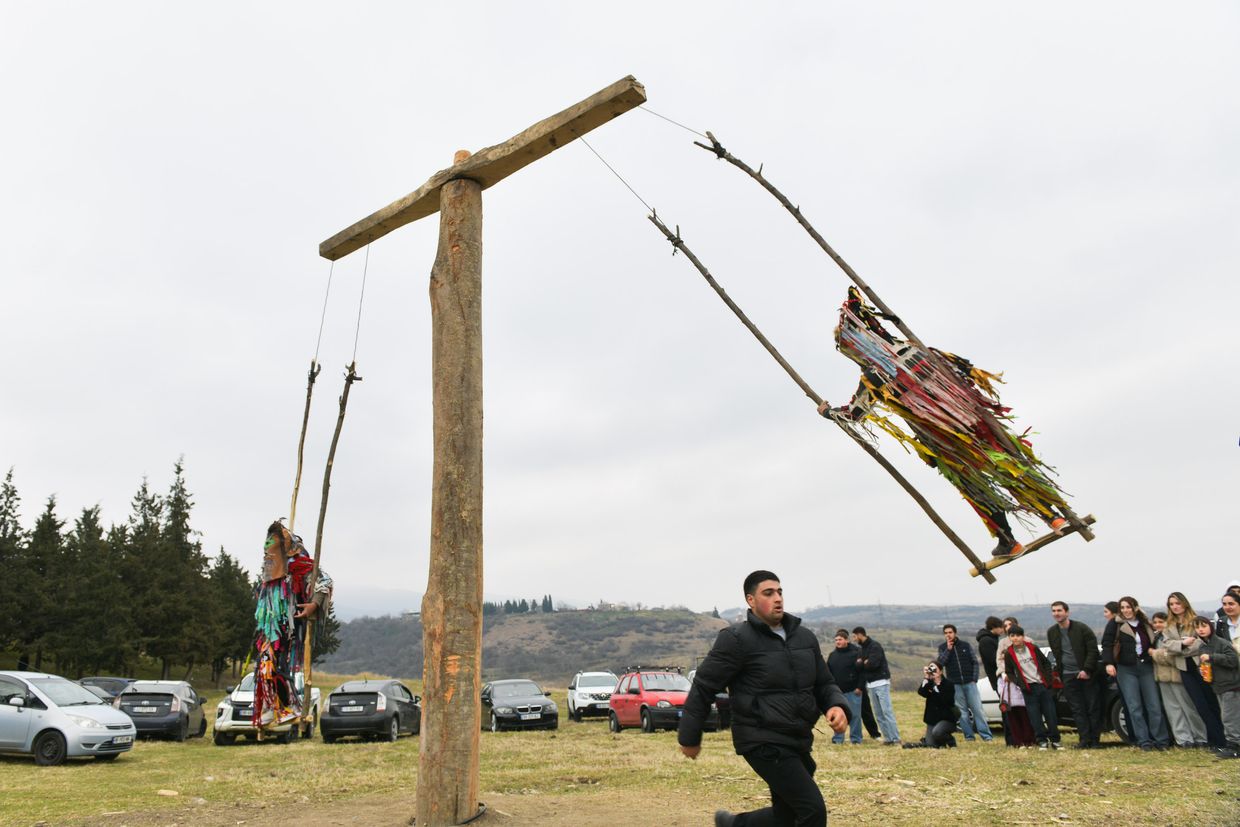
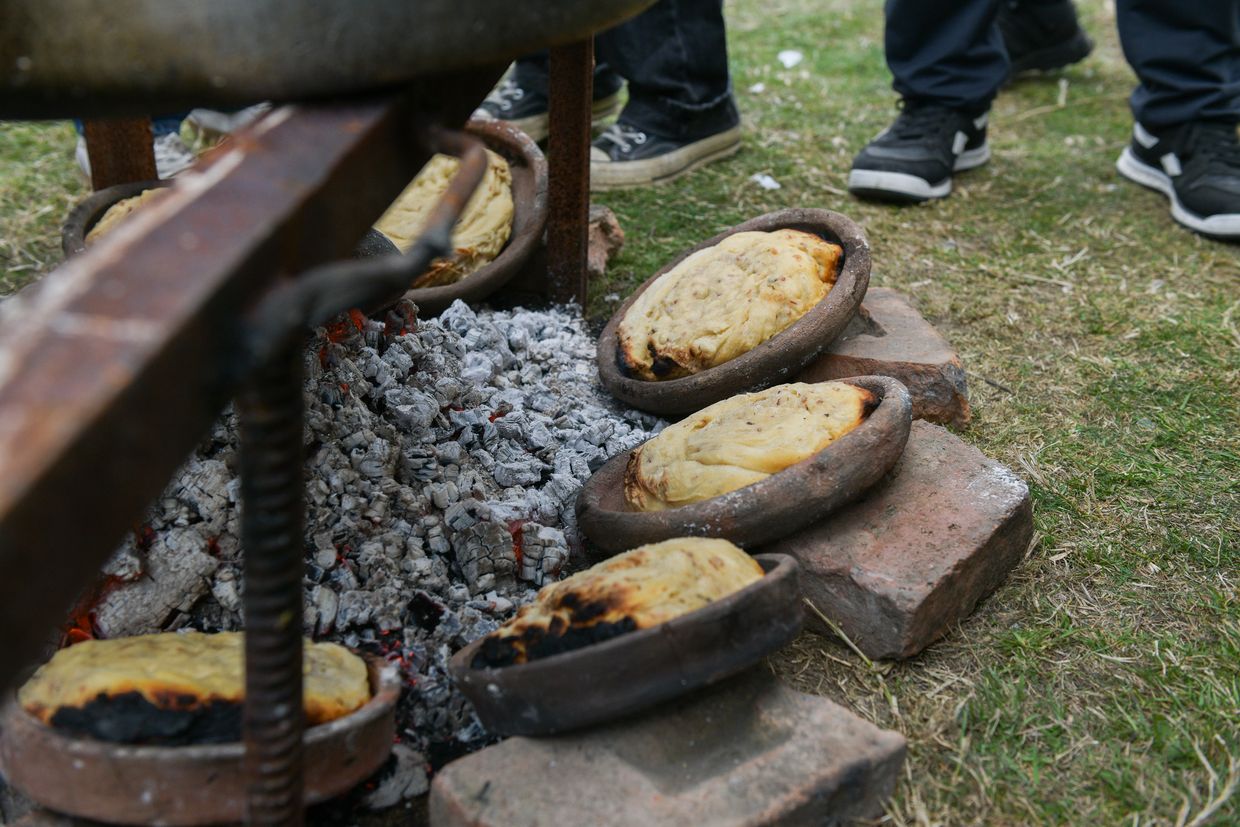
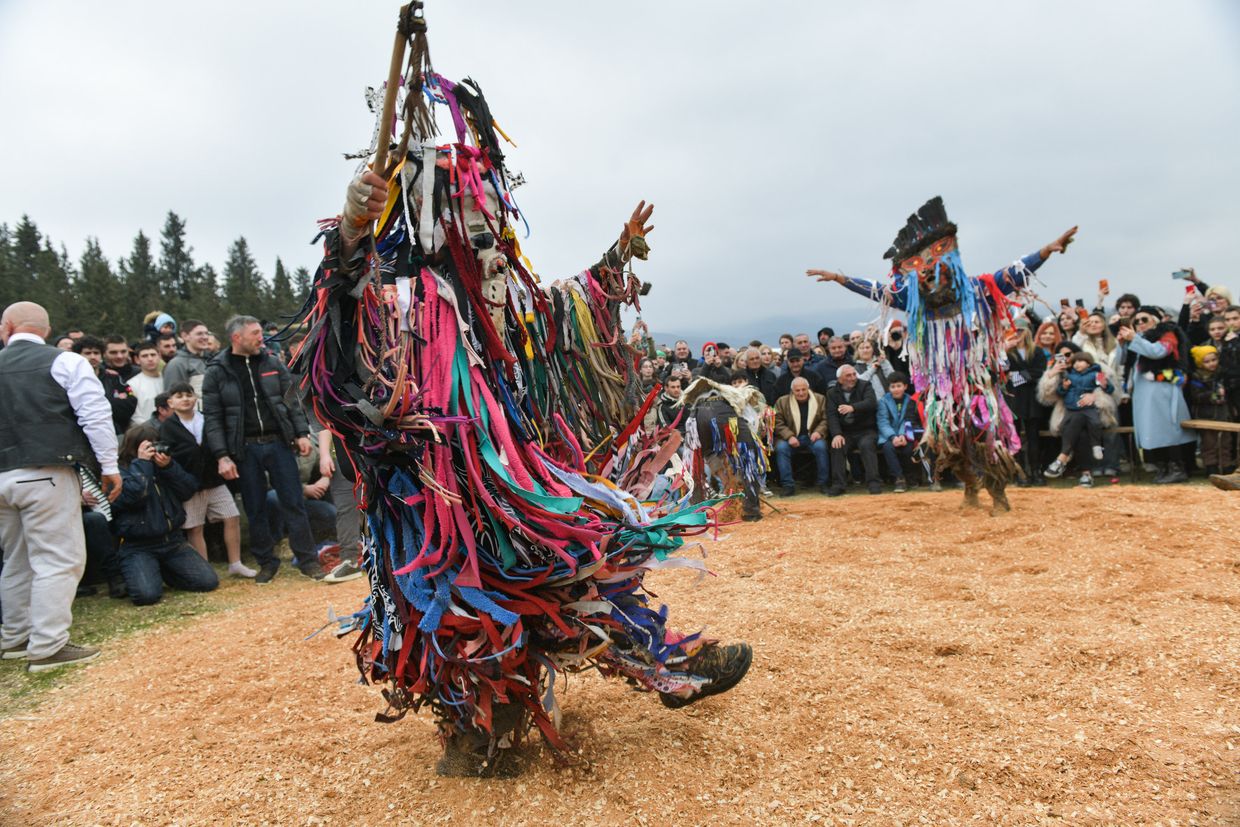
Soon, the Berikas will break into the wrestling circle with screams. They dance, mock-fight, and beat the ‘boar’ in the final sacrifice. The masks fall off, but the celebration is not over; the Berikas will gather later to feast on the bounty they pillaged that day.
It’s still cold in Didi Chailuri, but the winter has been chased away by their whips, explosions of colour, and above all, humour and mischief.