Authorities in the North Caucasus republics and Azerbaijan continue to deal with the aftermath of heavy rainfall that began on the night of 27-28 March, resulting in the largest-scale flooding in the region in 100 years.
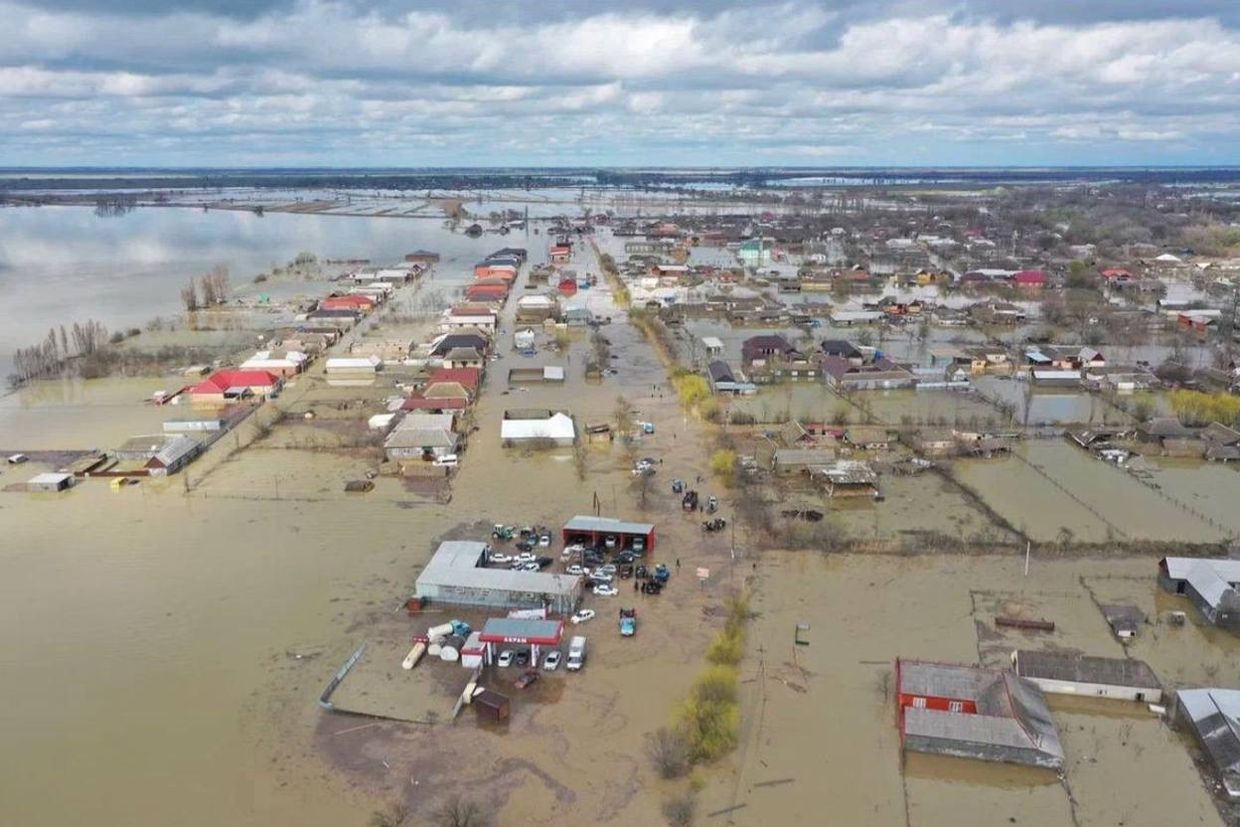
The most severe situation has been reported in Daghestan, where, according to the regional office of the Ministry of Emergency Situations, hundreds of residential buildings and household plots have been flooded, and thousands of residents have been evacuated. Water levels in some areas reached up to 1.5 metres.
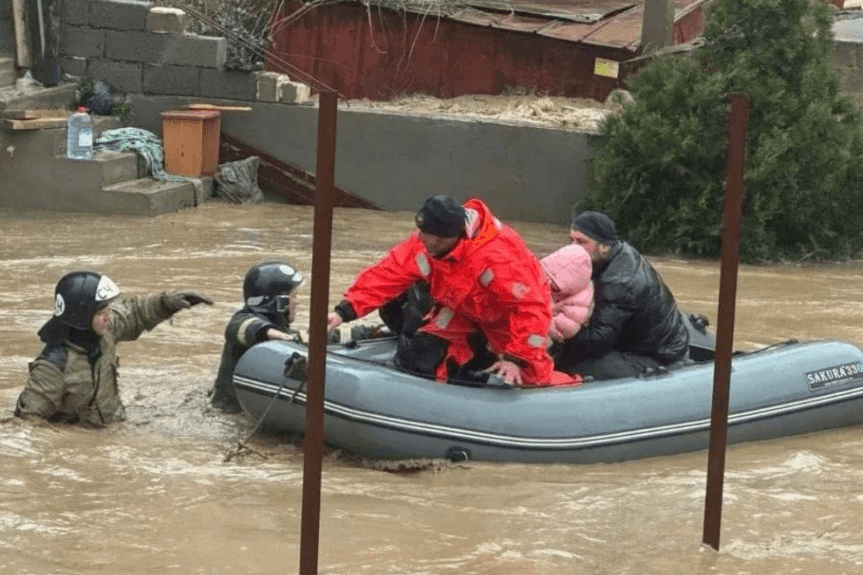
Rescue services in Daghestan reported on Monday morning that 760 residential houses and 950 adjoining territories were flooded as a result of the disaster. A total of 3,338 people have been evacuated from danger zones, including more than 1,000 children. Some of those evacuated have been accommodated in temporary shelters. Emergency response operations are ongoing, with rescuers deploying high-mobility vehicles to transport residents to safer areas.
‘We continue to eliminate the consequences of the disaster. The situation remains difficult in the Khasavyurt district, where residents of four villages — Adilotar, Kadyrotar, Tutlar, and Novy Tsilitl — had to be evacuated. Residential buildings and infrastructure facilities have been affected. ‘People are staying in temporary accommodation centres and are provided with everything necessary; some chose to stay with relatives’, wrote Daghestani Head Sergei Melikov on his Telegram channel on Monday.
More than 320,000 people in 283 settlements were left without electricity, including residents of 30 districts and parts of four cities: Makhachkala, Kizlyar, Kaspiysk, and Khasavyurt.
As of Saturday noon, power engineers had restored electricity to 70% of affected consumers in Daghestan. The emergency hotline has received more than 100,000 calls, according to Melikov’s administration.
A state of emergency has been declared in the capital, Makhachkala, as well as in Buynaksk and the Khasavyurt district. Authorities reported flooding of streets and private homes, as well as widespread water and power outages. Sections of roads have been closed, including due to washouts and the risk of mudflows.
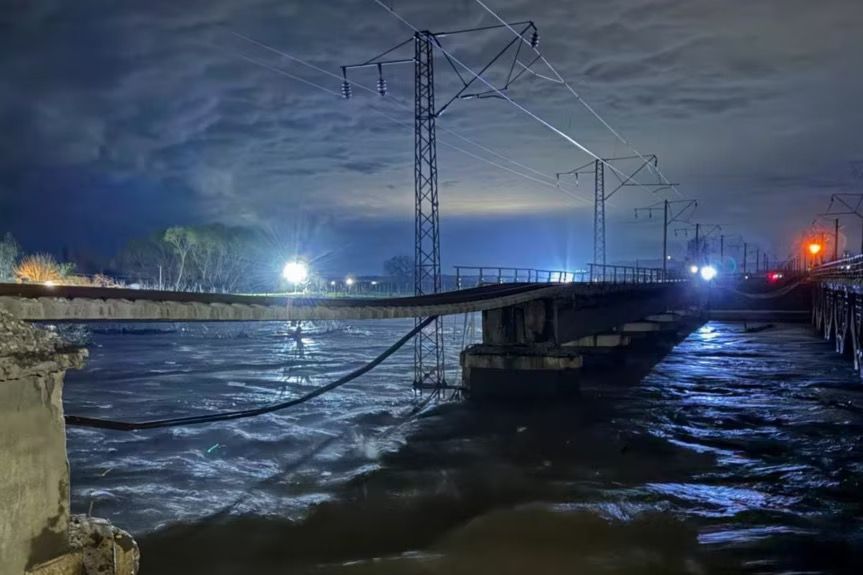
Transport infrastructure has sustained significant damage. In Khasavyurt, a railway bridge collapsed due to flooding, after which train traffic was temporarily suspended. The cause of the collapse was the erosion of the bridge supports.
Regional authorities also reported damage to agricultural infrastructure in Daghestan. According to the republic’s Ministry of Agriculture, prolonged rainfall led to the erosion of farmland and disruption of irrigation systems.
The flooding has also affected social infrastructure. For example, more than 40 patients had to be evacuated from a hospital in the village of Batayurt. Eight kindergartens have been temporarily closed.
As of 30 March, some flooded areas have been cleared of water. According to the Ministry of Emergency Situations, water has receded from more than 500 houses and hundreds of household plots, although flooding persists in a number of settlements. Emergency services continue pumping out water and clearing debris.
The natural disaster has also affected other regions of the North Caucasus. In Chechnya, a state of emergency was declared on 29 March. The most difficult situation there has been reported in the Gudermes district. In the settlement of Kundukhovo and the village of Braguny, hundreds of homes were flooded due to rising water levels. Around 2,000 people have been affected. Initially, about 500 residents were evacuated, later the number increased to 1,100.
In Ingushetia, a high alert regime has been introduced due to adverse weather conditions. Authorities reported the risk of rising river levels and mudflows in mountainous areas.
On the evening of 29 March, a state of emergency due to severe weather was also declared in the Prigorodny district of North Ossetia, where the roadbed of a highway from Oktyabrskoye to Tarskoye disintegrated , a pedestrian bridge collapsed, and a retaining wall gave way.
According to the Ministry of Emergency Situations, as of the morning of 30 March, more than 100 people remained in temporary accommodation centres.
Azerbaijan flooded after heavy rain batters the region
On 27 March, heavy rain in Baku and other parts of the country led to serious consequences.
The pro-government media outlet APA wrote that over 450 people, including 75 children, were evacuated from various areas across the country.
Some of the worst scenes of damage were Baku’s Sabunchu district and the area’s tunnel. The place has gained notoriety for the deaths of two drivers during a flood in October 2024.
On Friday night, the tunnel was closed by the Baku Traffic Police.
The area surrounding Sabunchu railway station was completely flooded and more than 20 cars were stuck in the deluge.
Baku’s Bina district also was affected by the heavy rain, with some streets and homes flooded.
Similar situations unfolded outside of the capital and across the country, such as in Sulutapa, a suburb of Baku, where residents attempted to clear the streets of water on their own.
Fatima Movlamli, the mother of imprisoned journalist Vusala Movlamli, stated on social media that their yard and house were flooded, and they had received no assistance from the state as of Sunday.
Beyond the flooding itself, there has been related damage to infrastructure.
In the city of Zardabi, in the Guba district, a sewer pipe burst during the flooding, causing wastewater to flood streets and homes. A similar accident occurred in the town of Haji Zeynalabdin.
In Khachmaz, houses were flooded, and one of the road bridges collapsed. According to state-run media outlet Azertac, the flooding affected more than 500 homes.
The large bazaars Sadarak and Ar-Riyad which are located in Baku and in Absheron district, as well as stores in Sumgayit, were affected by the flood. It is unclear how, or if at all, some shop owners will receive compensation for the damages.
Qafqazinfo wrote that due to the heavy rains, ‘some entrepreneurs have suffered’, and that Absheron Shopping Centre ‘will support entrepreneurs in compensating for the damage and mitigating the consequences’. They have begun ‘to pay insurance compensation to the owners of insured properties’.
As a result of the heavy rain, landslides occurred in Baku, Sumgayit, and in Gusar district.
On Sunday, Baku city administration held a meeting with the heads of city utilities departments.
According to Qafqazinfo, ‘the monitoring conducted at the meeting revealed that slums built illegally and without compliance with building codes were the hardest hit by the rain’.
Rovshan Aghayev, an independent economy expert, raised questions on Azerbaijan Television (AzTV) if the heavy rain alone was responsible for such widespread flooding.
‘It’s not because of poor infrastructure, is it? It’s not because of the lack of an autonomous rainwater drainage network, is it?’ he sarcastically said, adding: ‘Yes, precisely because of the heavy, above-normal rainfall, according to officials’.
He noted that the country’s poor governance is evident not only in the capital, Baku, ‘which succumbs to the onslaught of rain at least twice a year’.
‘However, the same government television channels that broadcast daily colorful reports from villages being rebuilt in liberated territories [Nagorno-Karabakh and surrounding areas], located a maximum of 30–40 kilometers from our village, ignore the villages flooded by such swamps’, he said.
‘So, poor management is at the root of all the problems. Anything else is just an excuse’, he concluded.