Recent controversies spark concern in Georgia’s booming surrogacy industry
In recent years, Georgia has emerged as a major global fertility hub — yet there is no proper regulatory framework, leaving surrogates at risk.


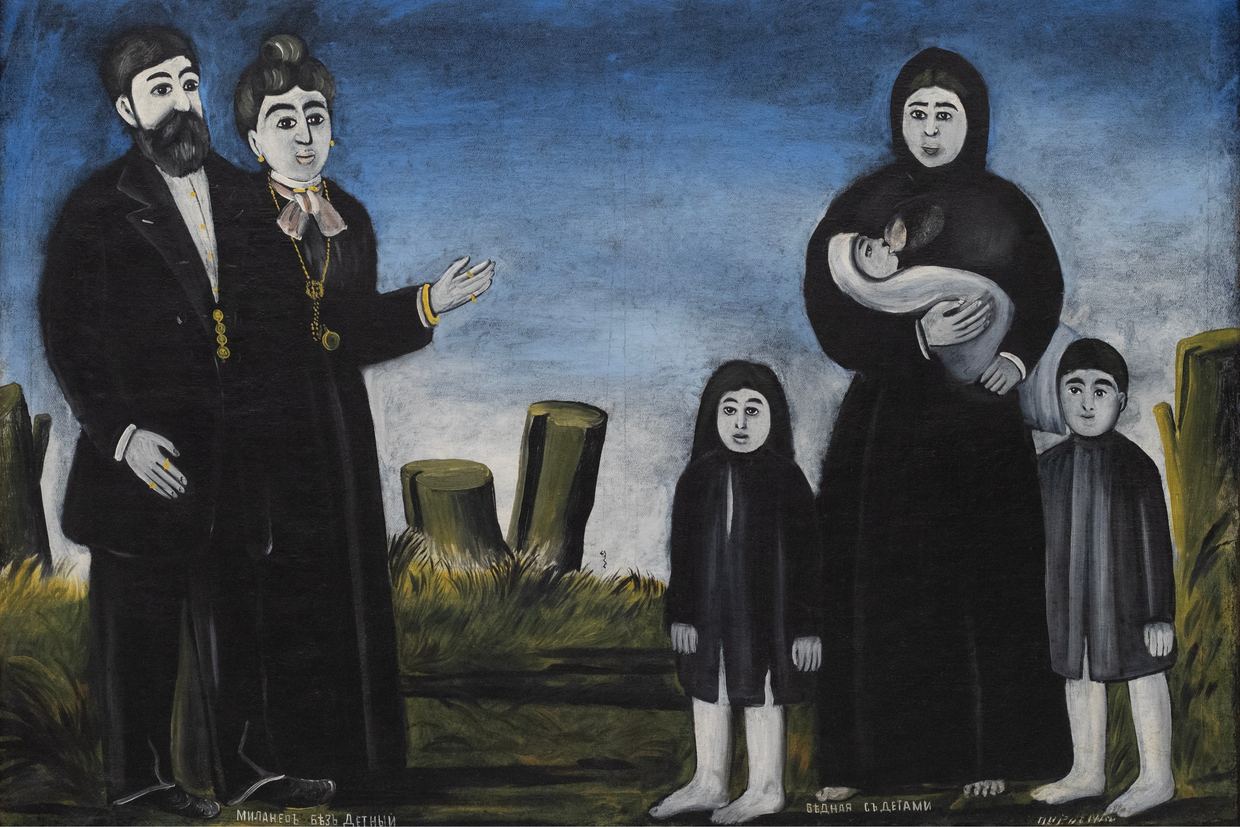
In 1910, the destitute, self-taught Georgian artist Niko Pirosmani painted a simple, yet devastating scene: a wealthy, childless couple staring at a poor woman holding her newborn, with the other two kids in tow.
Over 100 years later, scenes of a similar nature have become almost second-nature in Georgia, where international demand for surrogate mothers remains high — the wealthy and childless taking advantage of the fertile yet poor.
Lana, 21, told OC Media that she became determined to become a surrogate after seeing an advertisement on Facebook, noting that her financial situation was very bad at the time.
‘They paid me for the first six months, but at seven months the payment issues started. And after I gave birth, the real problems began — they kept saying the money would come today, tomorrow, “don’t worry” ’, Lana says.
However, the money never came. Soon, other surrogates came forward — from Ukraine, Kazakhstan, and other countries — all of whom had similar problems.
‘I hid everything from my parents, of course — only a few people knew. I had to take my own young child to my grandparents, because there was no way I could keep her with me — I had no money’, she says.
She and the other women eventually decided to go to the Prosecutor General’s Office.
‘I helped lead and write the complaints in Georgia, and then we had to go to Sapari — there was no other way’, Lana says.
Sapari is a local rights organisation working to prevent violence against women, combat discrimination, and increase women’s political participation. As a part of this work, they have emerged at the forefront of advocating for the rights of surrogate mothers in Georgia.
 Mikheil Gvadzabia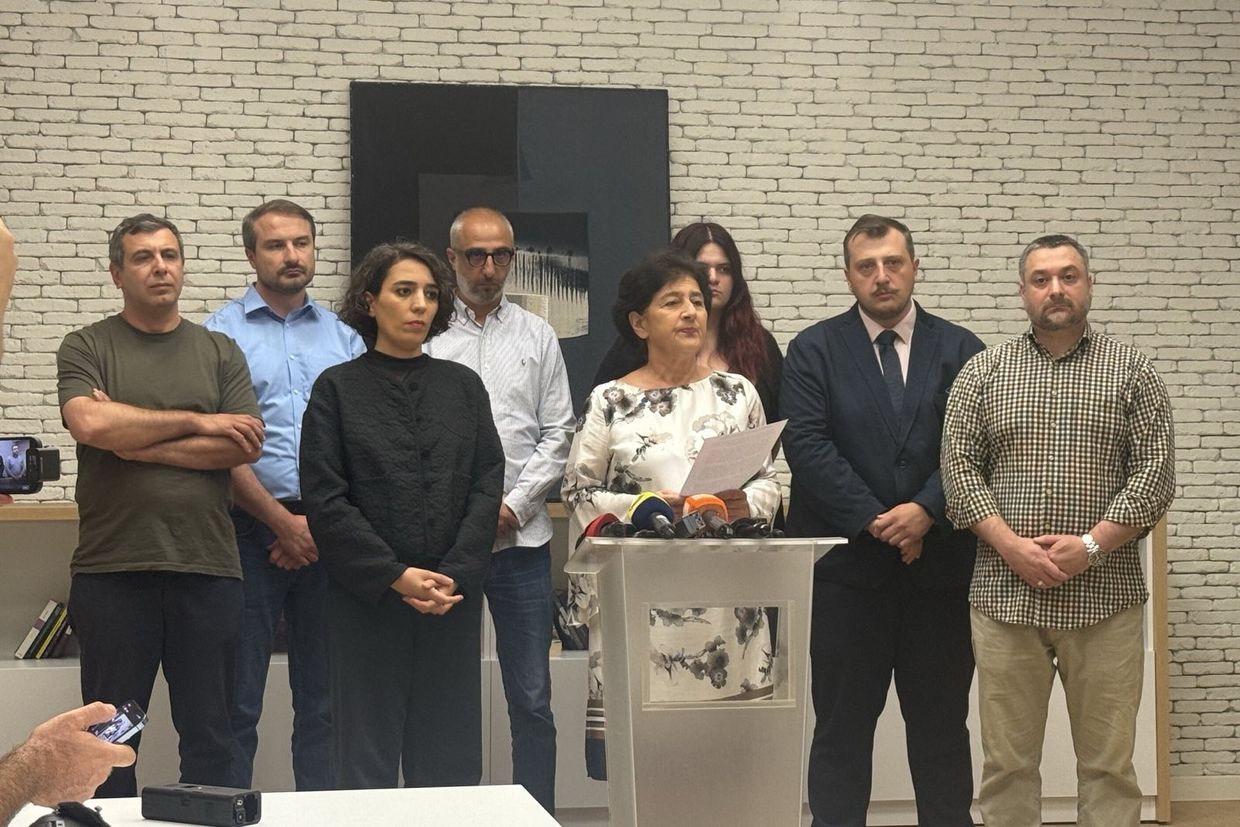
Booming business
Surrogacy in Georgia has been regulated by law since 1997, and is governed through several normative acts and decrees.
In recent years, the country has emerged as a major global fertility hub thanks to skilled doctors, cheap prices, and permissive legislation. Notably, commercial surrogacy — a controversial practice wherein the surrogate receives financial compensation beyond the reimbursement of medical and other expenses — is still legal, unlike in former surrogacy hubs like India, Thailand, and Nepal.
There have been positive reports of people traveling from Israel, Belgium, and the US who travelled to Georgia multiple times for fertility treatments and surrogate arrangements, all of which were successful. At the same time, the Turkish businessperson Galip Öztürk — who later faced corruption charges — was also reported to have had 21 children in one year through multiple surrogates in Georgia.
New clinics have continued to crop up across the country, with a notable increase following Russia’s full-scale invasion of Ukraine in 2022, which shut down Ukraine’s former role as a key supplier in the global egg and surrogacy trade.
According to data provided by the Justice Ministry, between April 2012 and September 2022, a total of 4,026 children were born through surrogacy in Georgia. Among the adoptive parents, Chinese nationals dominated the scene.
In 2023, discussions began at the government level about banning commercial surrogacy — at the time, then-Prime Minister Irakli Gharabishvili questioned the fact that no one records ‘who takes the babies born here’.
‘There is information suggesting that children born here might be taken by same-sex couples, and this could cause many problems’, he said.
However, despite such comments, the draft law tightening these rules was withdrawn from parliamentary committee hearings. At the time, specialists in the field criticised the government-initiated bill, saying the initiative posed a threat both to the very existence of assisted reproductive medicine and to the country’s economic development.
A number of controversies in recent months have also sparked increased concern.
In February 2025, a shocking story shook Tbilisi media — a baby died at one of Georgia’s surrogacy operations, which triggered a deeper investigation into the respective reproductive medicine agency, Kinderly.
The following month, over 15 surrogate mothers appealed to the Prosecutor General’s Office to open an investigation against Kinderly over lack of payment. According to the women, who spoke to RFE/RL, they had been evicted from their apartments after Kinderly stopped paying rent to the landlords — eventually, Kinderly placed them in a former hostel located alongside the railway.
The women — who also came from Kyrgyzstan, Kazakhstan, Uzbekistan, Tajikistan, Ukraine, and Russia — told RFE/RL that they had also not received the $16,000 they were contractually paid, despite having already given birth.
According to Sapari lawyer Nino Andriashvili, cases like these are just ‘the tip of the iceberg’.
‘Unless we have decent legislation and rules, I doubt we will see the situation improve in Georgia. I live in an area where there are lots of clinics as well as rental apartments for the surrogates’, she tells OC Media.
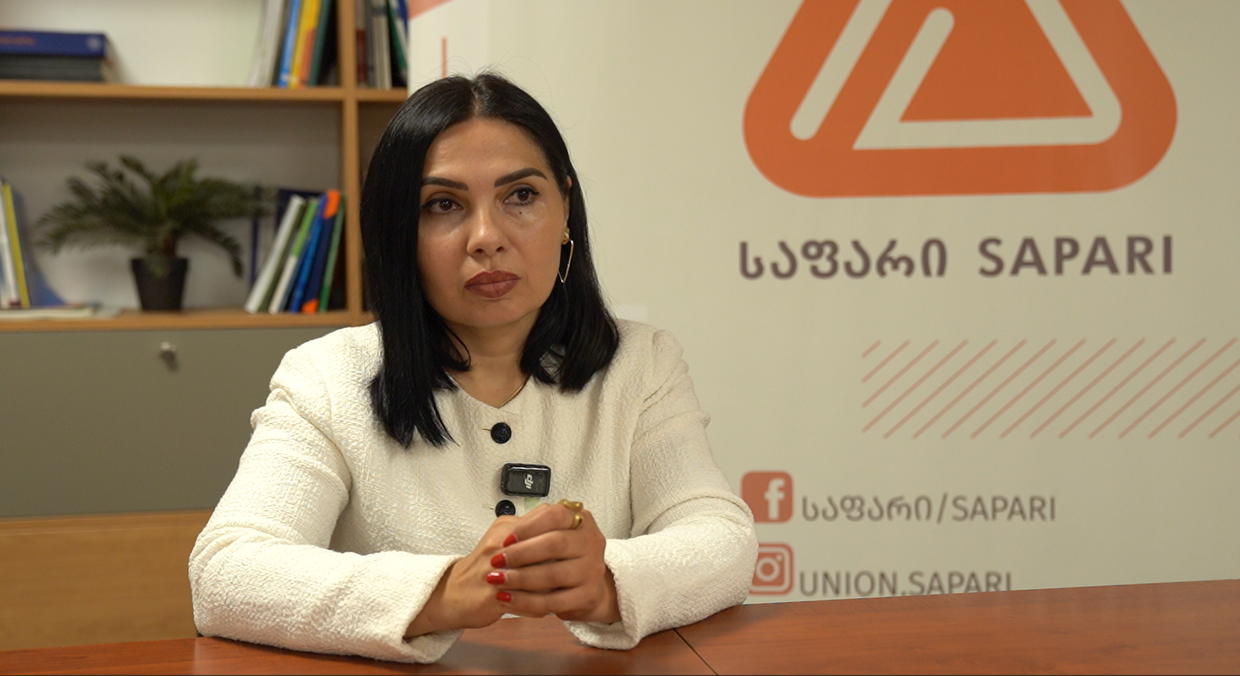
However, she adds that at least a positive ‘precedent-setting decision’ had already been granted to several surrogate women, providing them the legal status of trafficking victims.
Andriashvili, who is also working on behalf of the women who spoke to RFE/RL, says that the court will begin hearing the case in around a month’s time, but that it was important the women give their testimony as soon as possible due to increased pressure on the surrogates to leave Georgia.
On 2 October, Georgian police detained Armenian citizen and Kinderley’s general director Armen Melikyan. Kinderley’s Ukrainian co-founder, Ruslam Timoshenko, has also been formally charged in absentia. Both are accused of jointly misappropriating over $670,000 belonging to intended parents and surrogate mothers. If convicted, they face up to 11 years in prison.
A vacuum in legislation leads to exploitation
As more and more scandals become public knowledge, pressure appears to be mounting on the government to regulate the sector more strictly.
Lika Chkonia, the chair of the Georgian Association of Reproductive Medicine and Embryology, is one of the defenders of Georgian surrogacy programmes — and of importing foreign women to act as surrogate mothers.
‘There are not enough Georgian surrogates — I mean Georgian nationals. Kazakh women, for example, are extremely well-organised and very reliable to work with’, Chkonia tells OC Media.
She notes that they conduct ‘very precise and thorough due diligence’ to avoid complications — ‘we do not spare any expense when it comes to choosing the right surrogate and achieving successful outcomes’. She adds that they also only work with agencies they fully trust — ‘precisely to avoid the kinds of stories you hear on the news or see on Facebook’.
However, even with these precautions, she supports the need for increased regulation.
‘We don’t even have mandatory medical or background checks for surrogates today. Some agencies operate however they want, and I honestly don’t even know under which ministry’s jurisdiction they fall — the Ministry of Health has denied responsibility’, she says.
‘It is clear that there is no proper regulatory framework in place, and everyone in this field needs it — for their own safety and for the protection of all parties involved. In such a sensitive sector, people must not be allowed to do whatever they please — they must do what is right’.
Armine Avetisyan
When contacted a second time, Chkonia refused to provide any additional comments, as did spokesperson Nataliua Nijharadze.
George Kavkasidze, a board member of the Georgian Association of Reproductive Medicine and Embryology, shared similar sentiments as Chkonia in his comments to OC Media.
‘There are no national guidelines or eligibility criteria. This vacuum allows exploitation — and recent scandals have emerged precisely from this regulatory void’, Kavkasidze says.
For Lana, the experiences she faced have led her to think twice about what it means to be a surrogate mother in Georgia.
‘I would never do this again. If it wasn’t for the press and social media, no one would have helped us or paid attention’, Lana concludes.