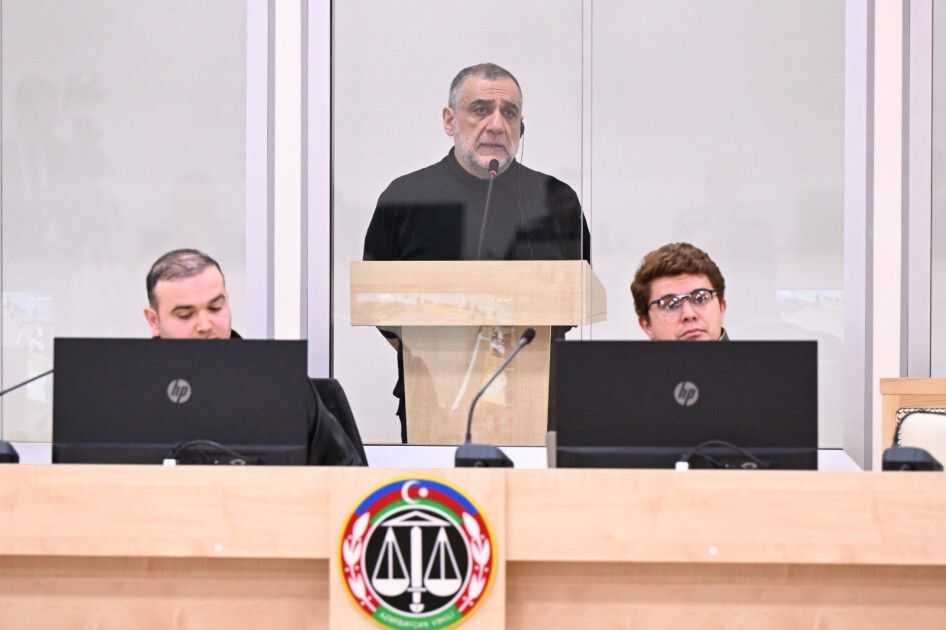
The Baku Military Court has sentenced former State Minister of Nagorno-Karabakh Ruben Vardanyan to 20 years in prison. Vardanyan was convicted of crimes against peace and humanity, war crimes, terrorism, and the financing of terrorism.
Vardanyan’s case had been separated from those of 15 other Armenian prisoners, who similarly attended hearings for over a year. The 15 defendants were accused of committing a total of 2,548 crimes, including genocide, slavery, enforced disappearances, torture, financing terrorism and creating a criminal association. Unlike other detainees, Vardanyan’s defence team included an international lawyer.
On 5 February, the Baku Military Court sentenced five former Nagorno-Karabakh officials to life imprisonment, while two former presidents received 20 years in prison due to their age. Seven other defendants were sentenced to prison terms ranging from 15 to 19 years. Vardanyan was the last to be sentenced.
 Arshaluys Barseghyan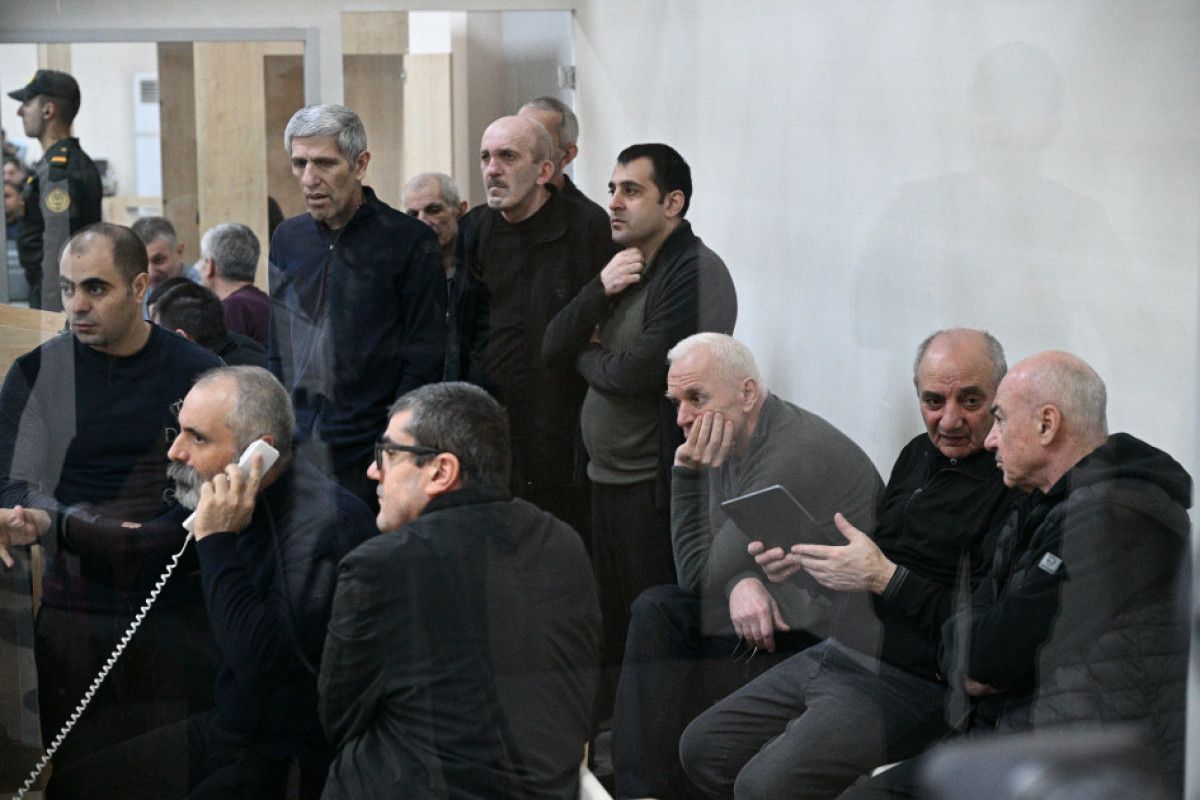
Vardanyan had been captured as he tried to leave Nagorno-Karabakh for Armenia following the final Azerbaijani offensive into the region in September 2023 and subsequent Armenian surrender.
An ‘imitation of justice’
Vardanyan gave his closing statement to the court on 10 February, the last hearing prior to Tuesday’s verdict. He also recited the text in full to his family members, who later shared his audio message, in which Vardanyan said he refused ‘to participate in the imitation of justice’.
During his speech, Vardanyan discussed Armenia–Azerbaijan relations and the prospect for peace. Currently, the two countries are closer than ever before to finally signing a peace treaty, which was initialled in August 2025.
‘What I said, and what I want to say again, is that we must understand that we have a long road ahead of us to peace, and it’s very difficult. We will need to undergo a major internal rebirth, to restore ourselves, first and foremost, because peace can only exist, I repeat, when there are two equal neighbours’, Vardanyan said.
He highlighted that nothing will work if one humiliates themselves before the other, emphasising that in such a case, peace could not exist.
‘I hope we recognise this and understand that everything depends solely on ourselves, on the extent to which we can restore our self-respect and restore ourselves while maintaining the rationality of truly living in a region at peace’.
Hand-in-hand with his focus on peace, Vardanyan also focused on the surrender of Nagorno-Karabakh, stating that ‘Artsakh was, Artsakh is, and Artsakh will be, existentially speaking. That it was, is, and will be’.
‘The question isn’t about legal form, but rather that no one can simply erase this. And I am deeply convinced of this’, he stated.
He added, however, that he would do everything possible in his lifetime to ensure that the ‘three leaders of the three parties to the conflict lay flowers at the graves of the fallen, of any nationality, any religion, and apologise to all the mothers for their children’s deaths’.
Vardanyan ended his speech by noting his regret that Azerbaijan did not take the opportunity to conduct ‘a proper trial that would have truly laid the foundation for long-term peace’.
‘Instead, they staged an incomprehensible, unprofessional show that, unfortunately, brought no benefit to anyone, least of all to the Azerbaijani state. I’m certain’, he concluded.
Vardanyan had twice declared a hunger strike in prison against his criminal trial in Baku, which he labeled a ‘farce’ in a message to the international community.
‘What is happening in the courtroom cannot be called a trial — this is a political show, in which my right to a fair hearing is being deliberately disregarded’, Vardanyan wrote to his lawyer in February 2025.
Following the verdict on Tuesday, Vardanyan’s family called the ruling ‘devastating, though not unexpected’.
‘Throughout this period, Ruben was denied fundamental guarantees of due process, including meaningful access to legal defence, contact with his international counsel, and the ability of independent media to attend the proceedings. The hearings were held behind closed doors and in conditions incompatible with the standards of a fair trial under international law and even Azerbaijani laws’, the statement read.
They further vowed to continue efforts ‘to secure his release and the release of all Armenian detainees held on politically motivated grounds’ in Azerbaijan.
Arshaluys Barseghyan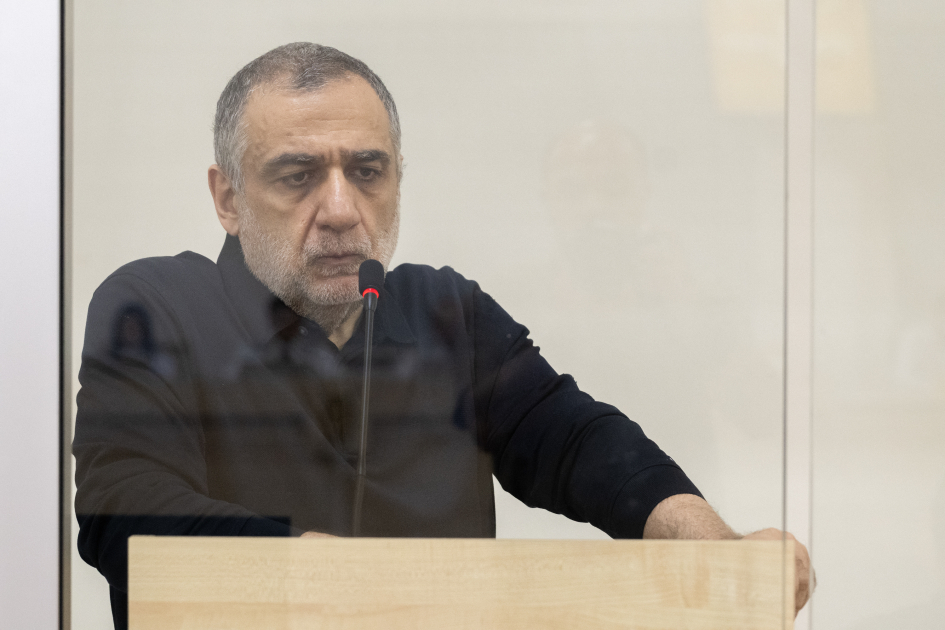
For ease of reading, we choose not to use qualifiers such as ‘de facto’, ‘unrecognised’, or ‘partially recognised’ when discussing institutions or political positions within Abkhazia, Nagorno-Karabakh, and South Ossetia. This does not imply a position on their status.