‘There’s practically nothing left’ — the havoc wreaked by a landslide in western Georgia
The landslide destroyed a third of the village of Kursebi, leaving 45 families in temporary housing.

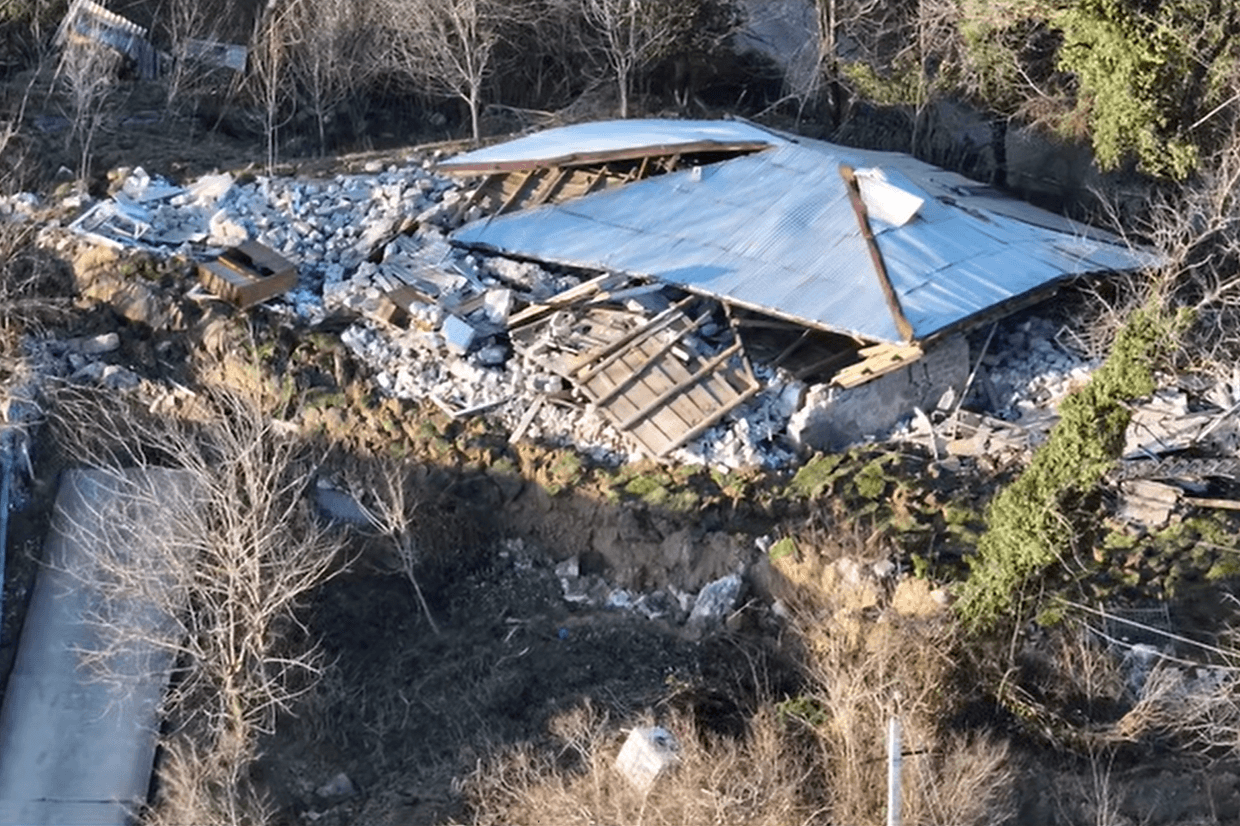
It was around 04:00 on 12 March when Otar Gogolashvili was awoken by a phone call from his elderly aunt, complaining about unusual sounds outside. The wind was blowing and the electricity was out, so Gogolashvili assumed she had just been frightened. But when he stepped outside and saw a huge crack running through the foundations of his house, he realised there was something to be worried about.
‘I ran back, called out to my family, woke the children, shouted that something terrible was happening. The noises outside were frightening — rumbling, crashing’, he tells OC Media.
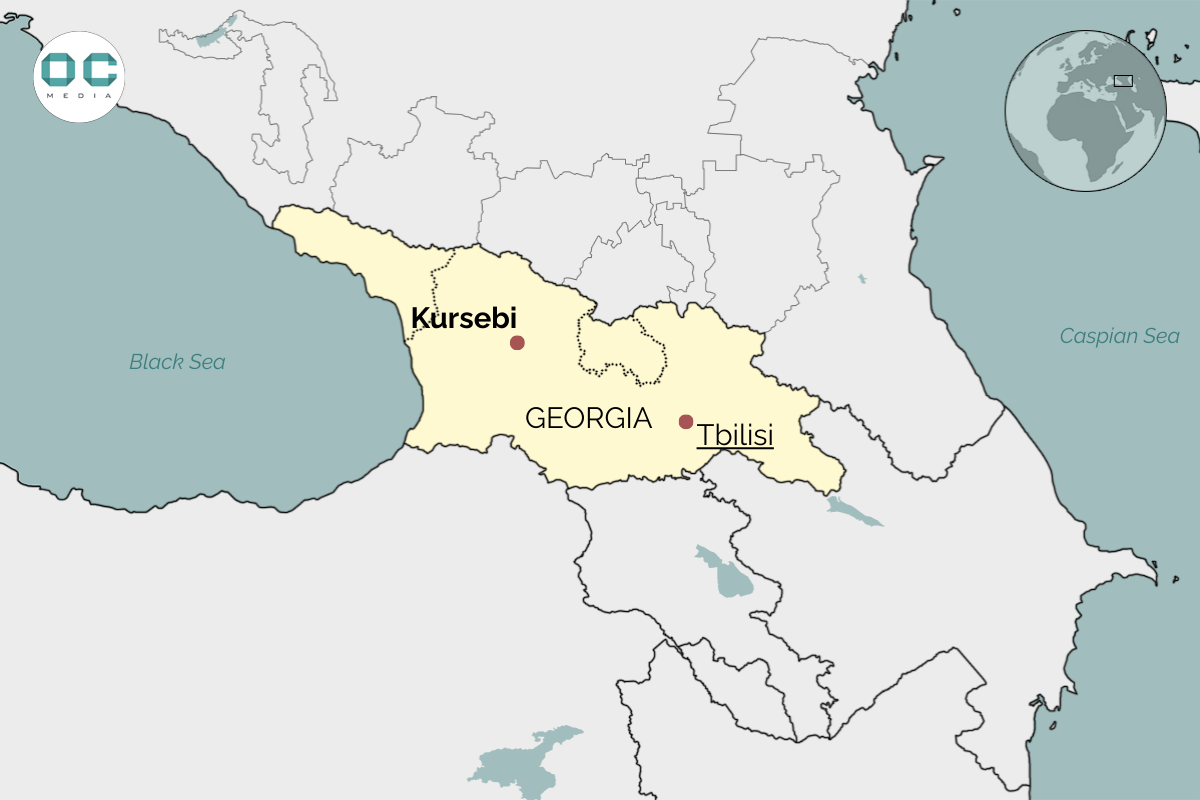
Thus began a devastating landslide in Kursebi, a village in Georgia’s western Tkibuli municipality, which would soon sweep away homes, roads, and farmland.
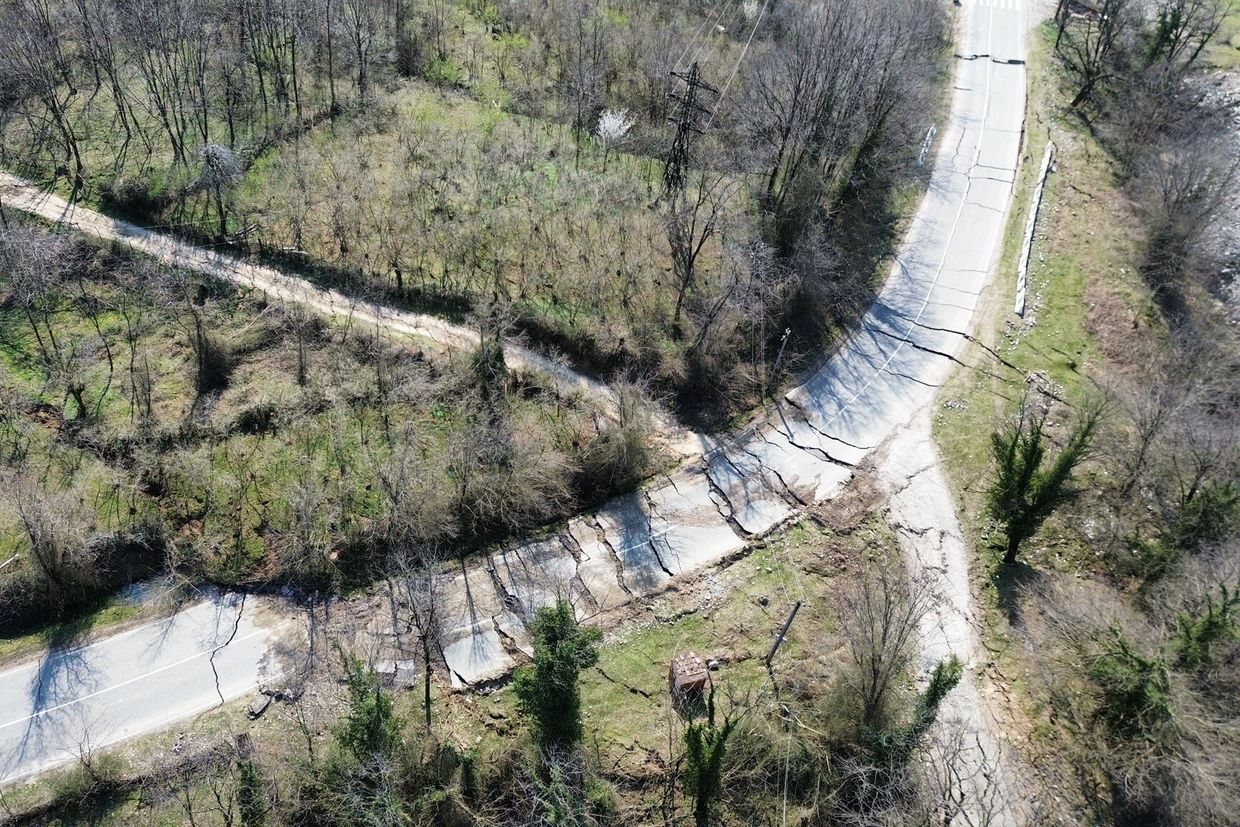
Otar, alongside his wife, first put his half-asleep twin children in the car. They were already leaving the yard when a relative called to tell him that the main road was unsafe, as the landslide was already moving there, carrying dirt, a house, and even formerly buried bodies from the cemetery.
The alternative route turned out to be no safer.
‘[We were on the way when] concrete collapsed behind and ahead of us, leaving [the car] stranded on an “island”, unable to move forward or back’.
‘The car’s headlights saved me: some young men from our neighbourhood were up above and saw the light from my car. I was shouting to them, “Help me, save my children!” They struggled a lot, slowly making their way to us, taking one child, then another’, Otar recalls.
‘In the space of 10 minutes, the entire rock gave way and carried everything with it — my car included’, he says, adding:
‘There’s practically nothing left. I’m completely devastated. Homeless, no car, no livestock remains. We can only hope for God’s help’.
Local resident Khatia Berodze was similarly woken up by a relative, in this case her mother who received a call from a neighbour saying a landslide was coming.
‘First, I got [my son] Gabriel outside and covered him with a warm blanket — it was very cold. Outside, there were extraordinary voices: a kind of rumbling, cracking of trees’.
‘We called out to our neighbours, who live nearby [...] They rushed out as well, and within two to three minutes we were all in the car and drove away’, she adds.
Rescuers who arrived at the scene later that morning further helped locals evacuate, and they eventually all gathered in the yard of the village school, located on higher ground on the opposite bank of the river Tskaltsitela, which flows through the village.
‘We have to continue living somewhere, right?’
As of publication, 45 families have been evacuated from Kursebi and are currently accommodated in hotels in the municipalities of Tkibuli and neighbouring Kutaisi. More than 10 houses are reported to be destroyed, with many others damaged. The landslide has affected up to 58 hectares — according to locals, roughly a third of the village. The Kutaisi–Tkibuli highway and part of the village cemetery were also damaged.
The authorities have stated that geologists continue to ‘monitor the landslide’, emphasising that it is still impossible to make an accurate assessment of the situation since the slope remains unstable.
All families living in the disaster zone will be subject to permanent resettlement. The fate of those whose homes are located near the zone remains unclear.
‘If anything survives, hasn’t collapsed, and the situation settles down, maybe we can dismantle [our house] and use the materials [for the future]. We have to continue living somewhere, right?’, Khatia says. While her house still stands, it is uninhabitable due to major damage.
‘Everything is left there — our belongings, everything my parents worked so hard for’, she adds.
Alongside homes, vehicles, and personal belongings, many domestic animals were also left behind in the landslide-affected area. Some managed to release them before leaving houses, while rescuers entering the yards freed others. Some, including Berodze’s dog, found his own way back to their owners.
‘He reached the road, we were standing a bit farther away, calling “Bruno, Bruno!” and that’s how the dog came out. We’re so glad we saved him’, Khatia recalls.
According to locals, the authorities have offered temporary rental assistance, reportedly covering an initial period of six to 12 months and up to ₾1,000 ($370) per month. The issues of assessing the damage and providing future compensation are still ahead.
‘No one can give us exact numbers yet’, Mariam Berodze, no relation to Khatia Berodze, tells OC Media.
Originally from Kursebi, she now resides in Tbilisi. On the morning of the disaster, she rushed to the village with her sister after receiving a call from their mother, who, like many others, was not able to take much out of the house while escaping.
‘People are relying on whatever they managed to grab — whatever they could get their hands on at that very moment is all that remains’, Mariam adds.
She has been monitoring the situation in Kursebi from an elevated point using a drone, later showing the aerial footage to her family and neighbours.
‘There are two types of people: those whose homes were immediately swept away and destroyed by the landslide, and those like me, who stand every day measuring bit by bit, checking how [our] houses stand, whether they’re tilting, whether cracks are forming. It’s truly horrifying’, she says.
Possible warning signs — ‘maybe we just didn’t pay attention’
According to Georgia’s National Environmental Agency, hazardous geological processes, including landslides, are widespread in the Imereti region, which includes the Tkibuli municipality.
In its annual bulletins, the agency assesses settlements by geological dynamics. In Kursebi, two points indicated landslide risk: one for landslides alone, and another for a combination of landslides and rockfalls.
Following the 12 March events, the agency stated that in recent years, its geologists had ‘assessed 25 households and two road sections in the Kursebi village, of which five families had already been resettled’.
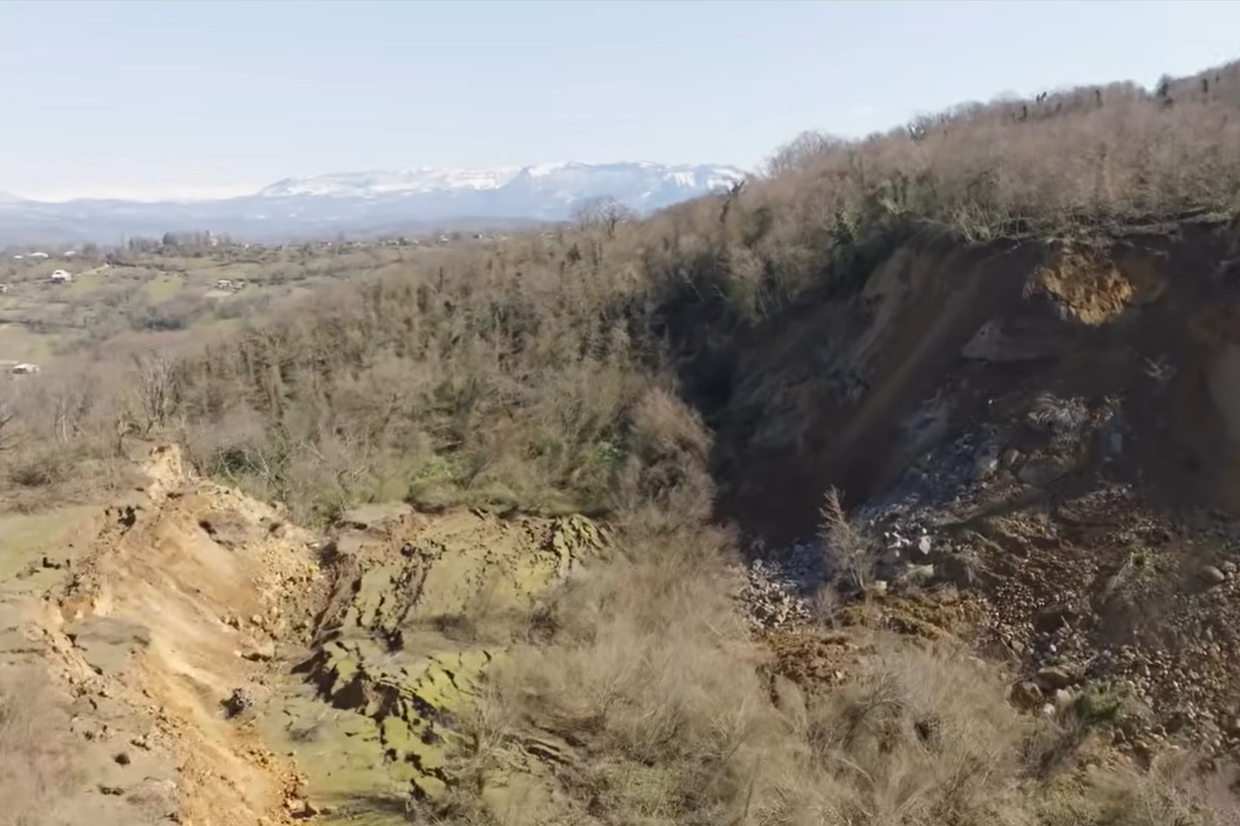
On 15 March, Merab Gaprindashvili, head of the agency’s Geology Department, confirmed on Georgia’s Public Broadcaster (GPB) that Kursebi lies within a landslide-prone area, but added that ‘no one can predict exactly when such a process will occur’.
Asked whether there had been any warning signs before the landslide, residents of Kursebi recalled some suspicious episodes.
Otar remembers that about a week earlier, near the village church, where a concrete road had been laid, metal parts of the drainage system had become deformed. Neighbours thought it was just poorly done construction.
‘Maybe we just didn’t pay attention’, he says.
Another local, Nana Gelashvili-Alpaidze, told RFE/RL that the village’s water supply had been cut off shortly before the landslide. Her family later discovered that the pipe connected to the reservoir had shifted in the ground. Although it was repaired that evening, the same issue appeared again the next day.
Debates over the effectiveness of monitoring and early warning systems for hydrological and geological hazards in Georgia have resurfaced repeatedly in recent years, particularly after the mudslide at the Shovi resort in Racha, which claimed 32 lives.
 OC Media
In 2025, the State Audit Office itself concluded that there is no ‘well-functioning and reliable process for delivering early warning messages, based on hydrometeorological and geological data, to populations at risk’. One of the reasons cited was the absence of an appropriate legal framework.
Earlier in March, over a week before the Kursebi landslide, a government decree was issued approving the State Programme for Disaster Prevention.
Asked what kind of monitoring is carried out in landslide-prone areas, Gaprindashvili said that monitoring equipment has been installed on 28 landslide bodies across the country, yielding ‘quite good results’, though ‘it is still no guarantee’.
‘I would say that one of the most effective measures is the prior assessment of territories’, he noted, referring to the practice of conducting geological evaluations of households in various regions. He noted that ‘over the past 10 years, around 100,000 citizens have learned what kind of area they live in’.
Residents of Kursebi who spoke to OC Media said they had not previously been aware that the village was prone to landslides.
Khatia, who worked at Tkibuli City Hall from 2015 to 2021 and spent four years as the mayor’s representative in Kursebi, says that the village ‘was not really considered a landslide-prone area in any alarming sense’.
‘There were small landslide spots, but nothing major — just minor, localised cases from which we relocated residents’, she added. Khatia believes that the five families mentioned in the agency’s statement may have been resettled from the wider Kursebi community, which includes two other villages in addition to Kursebi itself.
According to the 2014 census, more than 1,600 people live in Kursebi. Like in the rest of the countryside, many have left at different times to continue their studies or to work in the capital, but they have not severed their connection with their home village.
‘Memories go with the houses, photo albums go with them. Everything you love is tied to that home, and it brings such a terrible feeling, you can’t even put it into words’, Mariam concludes.