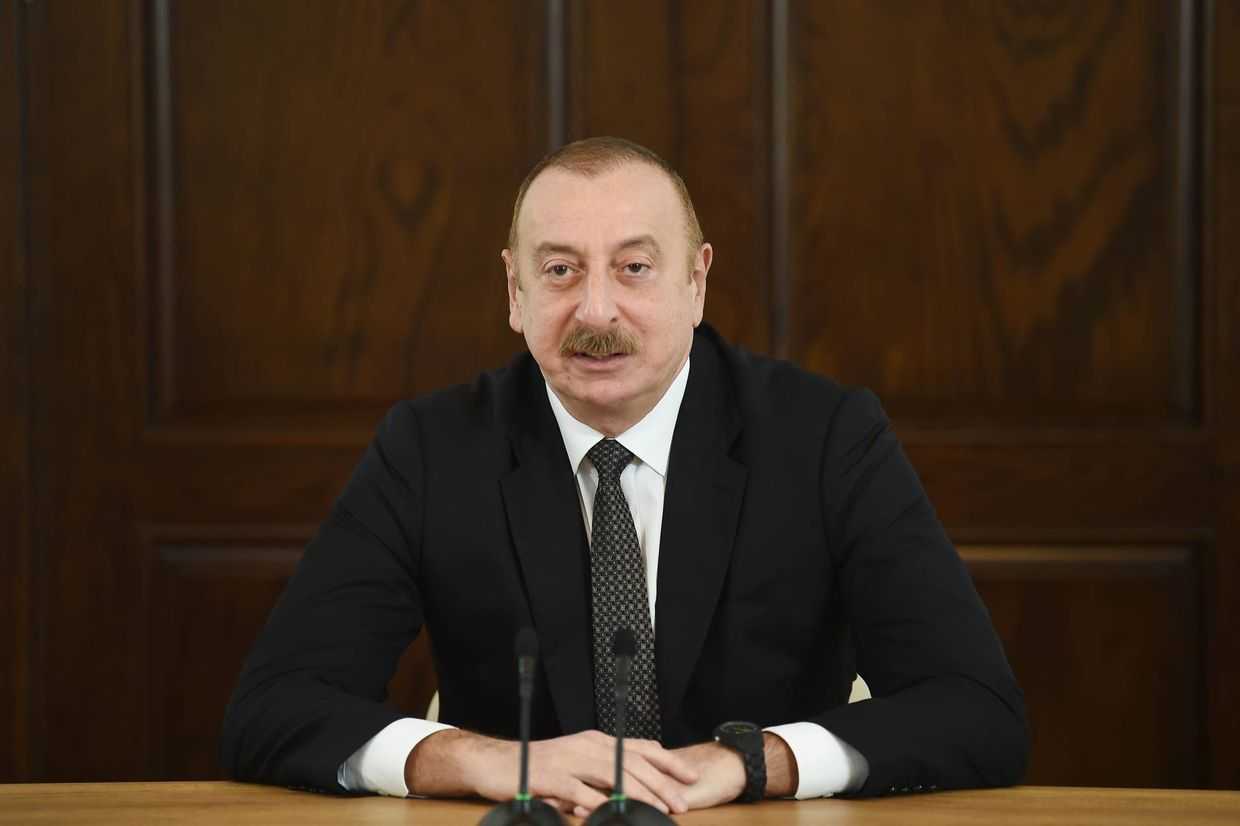
Azerbaijani President Ilham Aliyev has said that his country does not intend to send peacekeeping forces to Gaza. The announcement follows earlier reports suggesting that Azerbaijan was being eyed for handling a ‘stabilisation force’ following a ceasefire and seeming end of the war in Gaza.
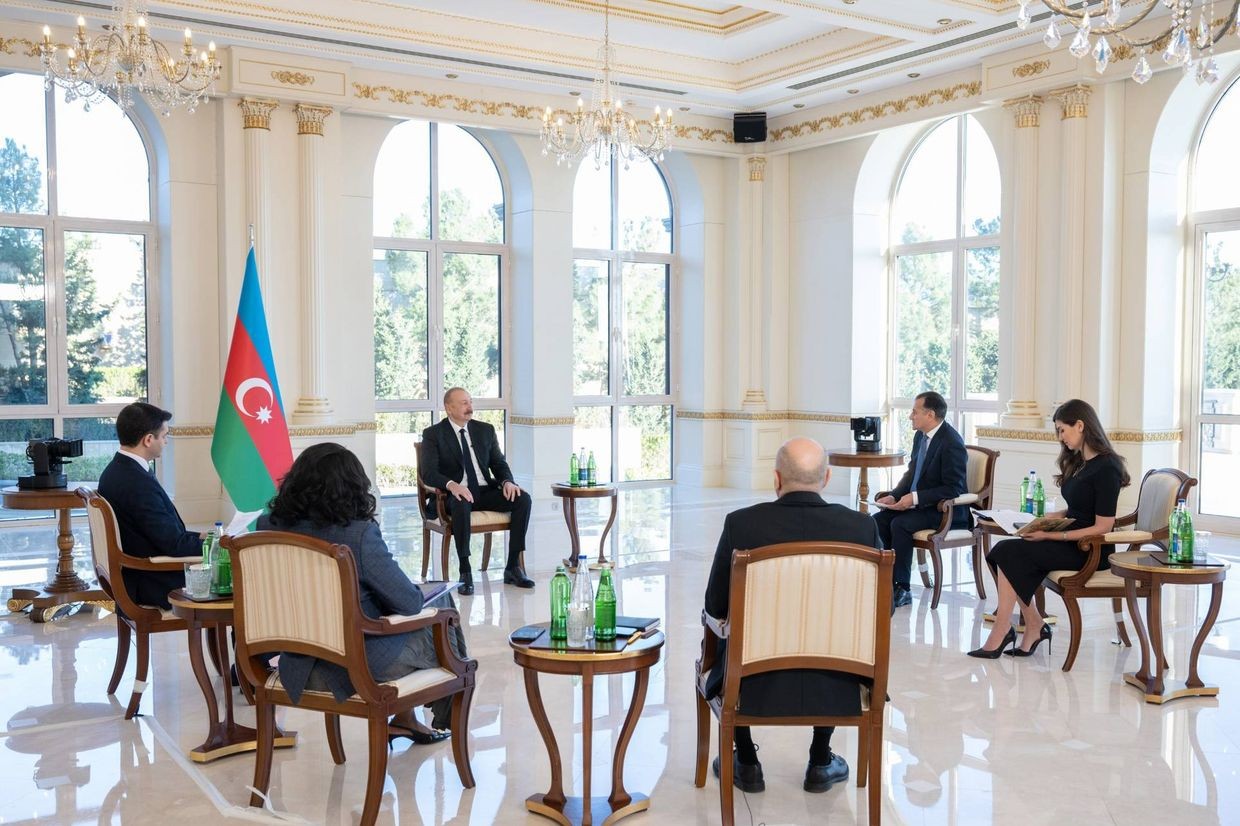
Aliyev made the statements regarding the possibility of sending peacekeepers in an interview with several pro-government local media outlets on Monday.
During one interview, he appeared to suggest that Azerbaijan was not interested in sending a contingent due to Palestine not supporting Baku’s position regarding the Nagorno-Karabakh conflict.
Aliyev also said that he thought ‘Arab countries themselves must resolve the problems of Arab countries’.
‘I remain deeply convinced that non-Arab Muslim countries should not get ahead of themselves. This will lead to no good. There is the Arab League; the Arab League has a position that is quite clear, and we follow it’, Aliyev said.
Nonetheless, Aliyev said that Azerbaijan had always supported Palestine and the creation of a Palestinian state in the UN as part of the Non-Aligned Movement.
He added that the Palestinian embassy operates in Azerbaijan, ‘partially with the support of Azerbaijani financial aid’.
Aliyev additionally said that Azerbaijan was not provided with information about its possible participation in peacekeeping efforts by the US, including on the ‘mandate of the operation’ and its kind.
He criticised the US Representative to the UN, Mike Waltz, for saying that Baku had agreed to field a peacekeeping mission, insisting that ‘we did not give our consent’.
‘We did not give our consent, and we informed the US administration through diplomatic channels that such false statements are unacceptable and create a false impression’, he said, adding that Azerbaijan sent the US a ‘questionnaire of more than 20 questions’.
‘Until these questions are clarified, no participation by Azerbaijan in any mission is envisioned’, Aliyev concluded.
In October, Politico reported that Azerbaijan, alongside Indonesia and Pakistan, was a top contender to supply troops for the US-backed stabilisation force in the Gaza Strip.
Politico cited an unnamed US defence official as saying that these three countries had expressed the ‘most interest’ in joining the force.
 Yousef Bardouka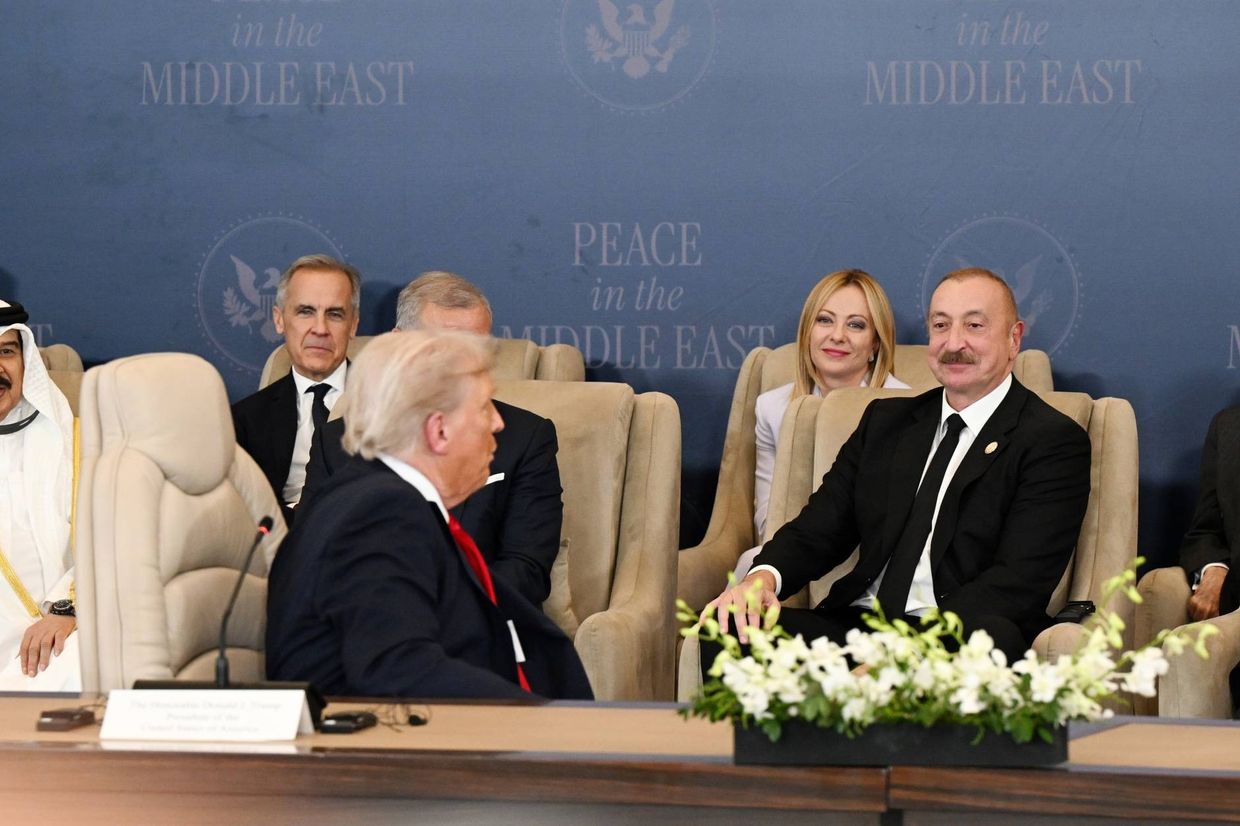
However, Aliyev said in one of the recent interviews that he wished to avoid conflicts which could lead to casualties and that ‘every Azerbaijani citizen is precious to us’.
‘We have no intention of risking the lives and health of Azerbaijanis for the sake of others. When we were in trouble, we were left to our own fate’.
Azerbaijan’s growing military industry
Aliyev dedicated a large portion of the interview to discussing arms production in Azerbaijan.
According to him, last year, Azerbaijan produced military products worth ₼1.4 billion ($820 million), most of which was sent to the Azerbaijani military, with some being exported to ‘approximately 20 countries’.
According to the Organised Crime and Corrupting Reporting Project (OCCRP) ‘since 2015, Republic of the Congo has bought a huge weapons stockpile from Azerbaijan, with over 500 tonnes of weapons delivered to the country in multiple shipments’.
The organisation found that for this shipment, Azerbaijan ‘used a Turkish port on the eastern shores of the Sea of Marmara’, adding that these operations were not officially recorded.
‘In January 2020, more than 100 tonnes of weaponry was sent from Azerbaijan to Republic of the Congo’s Guard, including 775 mortar shells and over 400 cases of rockets designed to be launched out of trucks’.
The OCCRP additionally reported local opposition figures in the African country claimed that ‘previous weapons from Azerbaijan were used to fuel a brutal post-election offensive in 2016 that led to a humanitarian crisis’.
As Aliyev stated, Azerbaijan has set itself the goal of developing the military industry and, in this regard, has invested ₼1 billion ($590 million) in military production in 2024–2025.
For the purposes of military production, Azerbaijan has issued licenses to 15 companies, seven of which have already begun working.
‘Half of this amount came from the private sector. Again, since this area is somewhat closed to the public, detailed information is not provided. However, this process has become widespread’, Aliyev stated.
Nicholas Castillo
This article was translated into Russian and republished by our partner SOVA.