On Tuesday, the Armenian Parliament adopted 27 January as the ‘day of remembrance of victims who died defending the homeland’. The date, which has no specific significance of its own, precedes Armenian Army Day and has sparked criticism, with some calling it ‘unacceptable’.
The bill was adopted a week before the date. Its adoption will create two consecutive non-working days in Armenia starting in 2026.
‘On the first day, we will pay tribute to the memory of those who died defending the homeland, honour their memory, and the next day, as a symbol of continuing life and unbreakable will, we will celebrate Army Day’, Vice Parliamentary Speaker Ruben Rubinyan said during the discussion of the proposal on Monday.
Rubinyan, a member of the ruling Civil Contract MP and Gegham Nazaryan, an independent MP formerly a member of the opposition Armenia Alliance faction, put forward the initiative in 2025, which passed its first reading in November of the same year. Nazaryan’s son, Abgar, was killed during the Second Nagorno–Karabakh War in 2020.
Armenia has until now lacked a national day to commemorate fallen soldiers throughout the whole period of Nagorno-Karabakh conflict.
Before Armenia’s defeat in the Second Nagorno-Karabakh War, Armenia commemorated three different events on 9 May — the capture of Shusha (Shushi), the establishment of Nagorno–Karabakh Defence Army, as well as the Red Army’s victory of the Great Patriotic War (World War II).
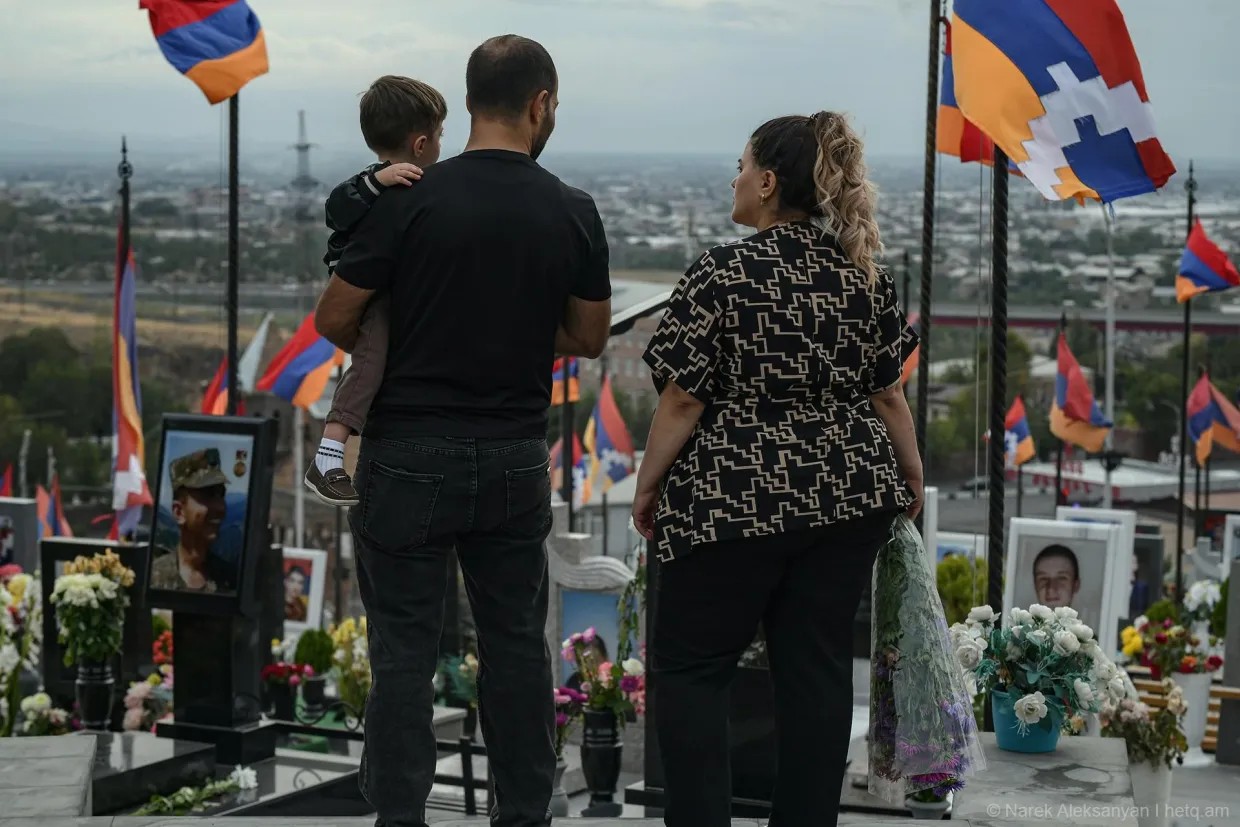
Yerablur Military Cemetery in Yerevan, the main destination of commemoration of the victims of Nagorno-Karabakh conflict, currently sees large numbers of visitors on dates linked to the Second Nagorno–Karabakh War, as well as the following attacks on Armenia and Nagorno–Karabakh, which in 2023 ultimately led to the mass exodus of nearly the region’s entire Armenian population.
The proposal intended to select a neutral date, not linked to any specific military event, to honour the memory of those who fell throughout the years. According to the bill’s authors, the chosen date did not aim to forgo or replace any other days of historical significance to Armenia’s army.
Despite the arguments, the authors failed to win over the opposition on the date, which described it as ‘unacceptable’, citing several reasons, including that the day was specifically dedicated to the Armenian army.
‘The word victim is being attempted to be linked to the army’, Artsvik Minasyan, the secretary of the Armenian Alliance faction, said in parliament on Monday.
‘Secondly, this process also showed that it is more of a PR move than a genuine act of reverence and remembrance. Otherwise, nothing would have prevented choosing, in a spirit of unity, a date that was not broadly linked to any military event, nor associated with a specific target, but rather encompassed a more comprehensive, inclusive meaning appropriate to the martyrs’, Minasyan added.
In turn, Rubinyan said alternative dates were considered, but a lack of consensus led MPs to return to the initially proposed 27 January proposal.
Rubinyan further elaborated that following the first reading, they made amendments stipulating that the law would enter into force immediately upon adoption, rather than on the tenth day following its official publication.
‘At our request, the president will sign the law as soon as possible so that it enters into force this year’, Rubinyan wrote in a Facebook post on Tuesday, following the voting in parliament.
This article was translated into Russian and republished by our partner SOVA.