Armenian government accused of ‘selectively’ publishing Nagorno-Karabakh negotiation documents

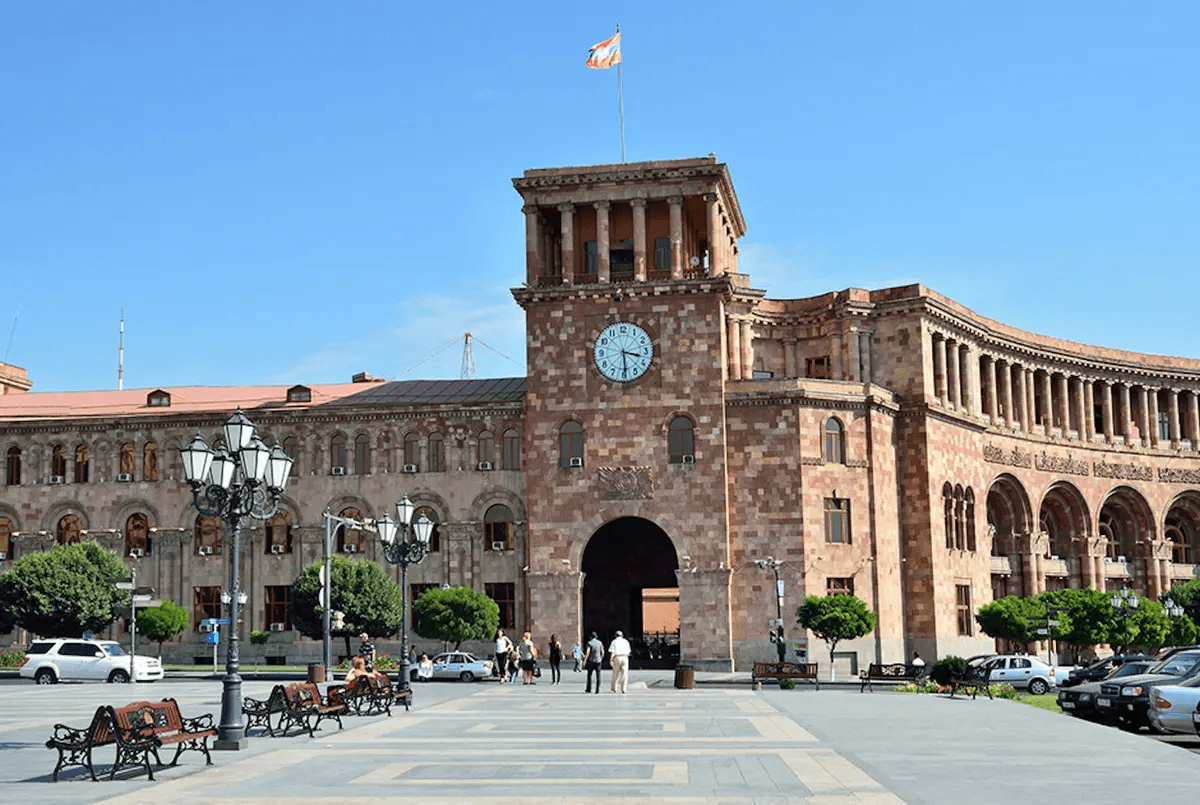
The Armenian government has published a number of documents of negotiations for the settlement of the Nagorno-Karabakh conflict. The documents have sparked heated discussions online and further intensified the conflict between Armenia’s current and former leaders.
The documents, totalling 13, were published on Tuesday, a day after the OSCE Minsk Group ceased its activities on 1 December.
The Minsk Group, which was the primary mediator between Azerbaijan and Armenia, officially dissolved after Yerevan and Baku agreed to such an action following the Washington summit in August.
 Yousef Bardouka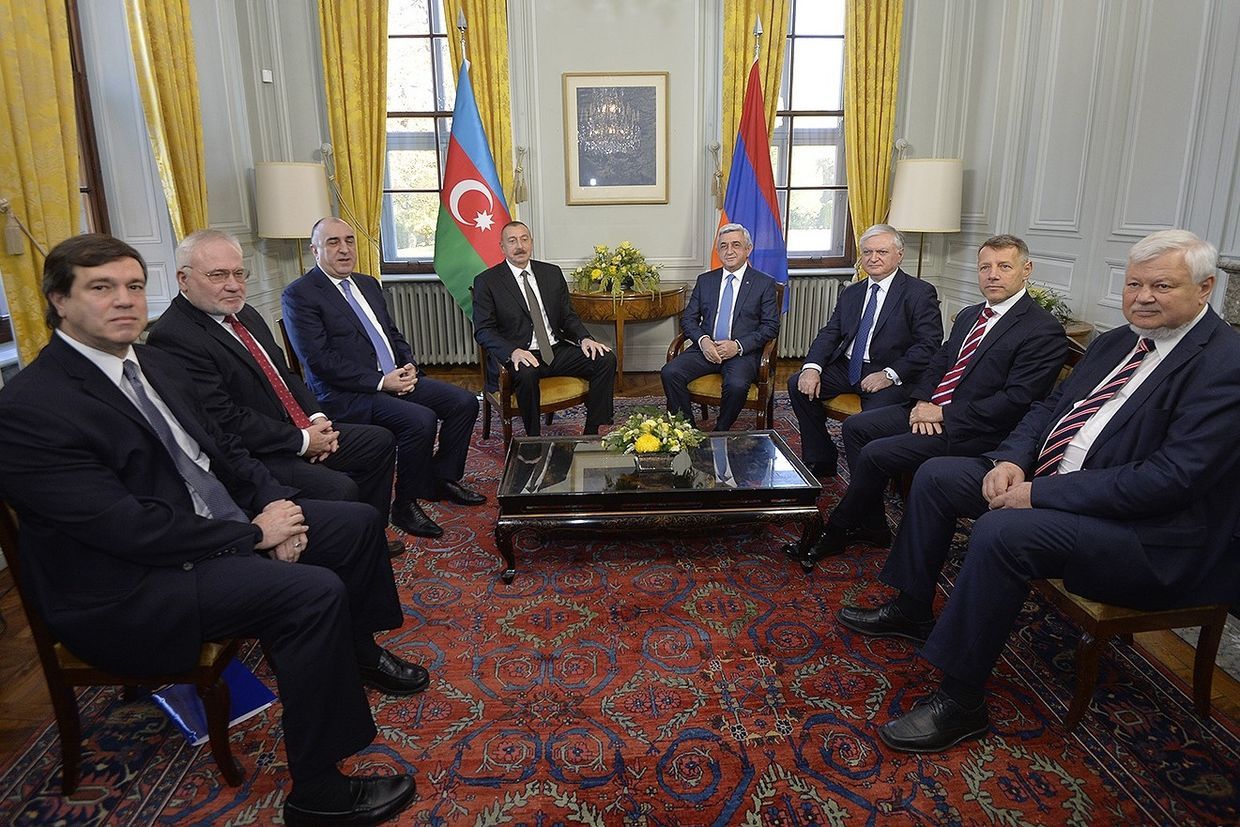
Previously, Armenian Prime Minister Nikol Pashinyan announced that Armenia would release key negotiation documents related to the conflict by the end of this year.
The statement followed comments from former presidents Robert Kocharyan and Serzh Sargsyan, which Pashinyan described as a confession that they used the conflict as a tool aimed at undermining Armenia’s statehood.
OC Media
‘Sargsyan knew that war was now inevitable’
In a tone echoing Pashinyan, the Armenian government followed the release of the documents with its own analysis published on its official website.
In the analysis, the government argued that the documents’ ‘final conclusion’ was that a series of ‘myths’ had taken hold in Armenia for decades over the Nagorno-Karabakh conflict. Those narratives were allegedly shaped by the political elite ‘that came to power through the Karabakh movement’.
‘The main subject of the negotiations was that all seven regions surrounding Karabakh should be returned to Azerbaijan in a package or phased version, and the status of Karabakh itself should be negotiated only under the territorial integrity and sovereignty of Azerbaijan’, the article insisted.
The article further argued that no new documents were introduced at the negotiating table after Pashinyan came to power in 2018, insisting instead that the proposal presented in 2019 in fact dated back to 2016.
It was only in January that Pashinyan acknowledged there had been an offer on the table in 2019, similar to the Lavrov Plan, whose existence he had previously denied. Pashinyan has been accused of rejecting this offer and of paving the way for the Second Nagorno-Karabakh War in 2020.
According to CivilNet, the Lavrov Plan was submitted in 2015, and rejected by Armenia in 2016. The plan would have seen the return of several regions to Azerbaijan, and the deployment of international peacekeepers to the Lachin Corridor, which connected Armenia to Nagorno-Karabakh. According to Sargsyan, Azerbaijan had raised objections to sections of the plan that would allow Nagorno-Karabakh to hold a referendum over its independence. According to Civilnet, Russia again presented the Lavrov Plan to Pashinyan’s government in April 2019, but Armenia rejected it again in April 2020.
The government’s analysis centred heavily on a letter sent from Sargsyan to Russian President Vladimir Putin in August 2016.
In part, the government argued the letter answered the long-standing public debate over why Sargasyan’s team had accused Pashinyan of planning to ‘surrender the lands’, after Pashinyan assumed power in May 2018.
‘Serzh Sargsyan knew that war was now inevitable, and the outcome of the war was more than predictable. And he needed those statements about surrendering the lands for his political comeback later’, the government analysis concluded.
Pashinyan accused of ‘partially and selectively’ publishing documents
The published documents drew criticism online, with many noting that they did not include the Key West proposal — a package negotiated by Kocharyan in 2001.
Instead, the government released a leaked document titled ‘Meghri and Karabakh Exchange Option’, which was also negotiated by Kocharyan. The document itself was previously published by ArmTimes.
Journalist Tatul Hakobyan, who had previously covered the negotiations during the conflict and has also published some documents pertaining to them, assessed the title of the document as ‘very manipulative’. He stated that ‘there has never been a document with such a title’, claiming it was only a draft that one of the co-chairing countries once presented.
‘The [social media] posts of ruling party MPs, officials, and supporters of Civil Contract already provide sufficient grounds to claim that the government has partially and selectively published several documents on the Artsakh [Nagorno-Karabakh] settlement in order to show that the previous [leaders] were handing over Meghri, while they are keeping Meghri’, Hakobyan wrote on Facebook.
Hakobyan insisted that the government should publish the Key West package in order for the public to have comprehensive information about the negotiations that took place.
‘The methodology for publishing documents is also unclear: if you published a publicly available statement by the presidents of the co-chair countries, why don’t you publish the others? Similarly, by what criteria is Serzh Sargsyan’s specific letter to Putin published and other similar correspondence not published?’, Karen Harutyunyan, Editor-in-Chief of CivilNet, wrote in a Facebook post.
In turn, political opponents accused Pashinyan of paving the way for war in 2020 by rejecting the 2019 offer.
Levon Zurabyan from the opposition Armenian National Congress party, insisted that the government provide Armenia’s response to the 2019 proposal. He argued that Pashinyan was either hiding Armenia’s official response, or Armenia had provided ‘no official response’.
‘Which reveals an even more terrifying reality: that Pashinyan simply ignored the Minsk Group proposal, in effect rejecting negotiations and opening the door to a devastating war’, Zurabyan wrote.
In turn, the head of Kocharyan’s office, Bagrat Mikoyan, insisted in an interview with Yerevan Today that Pashinyan ‘rejected’ the 2019 offer and ‘that rejection led to war’.