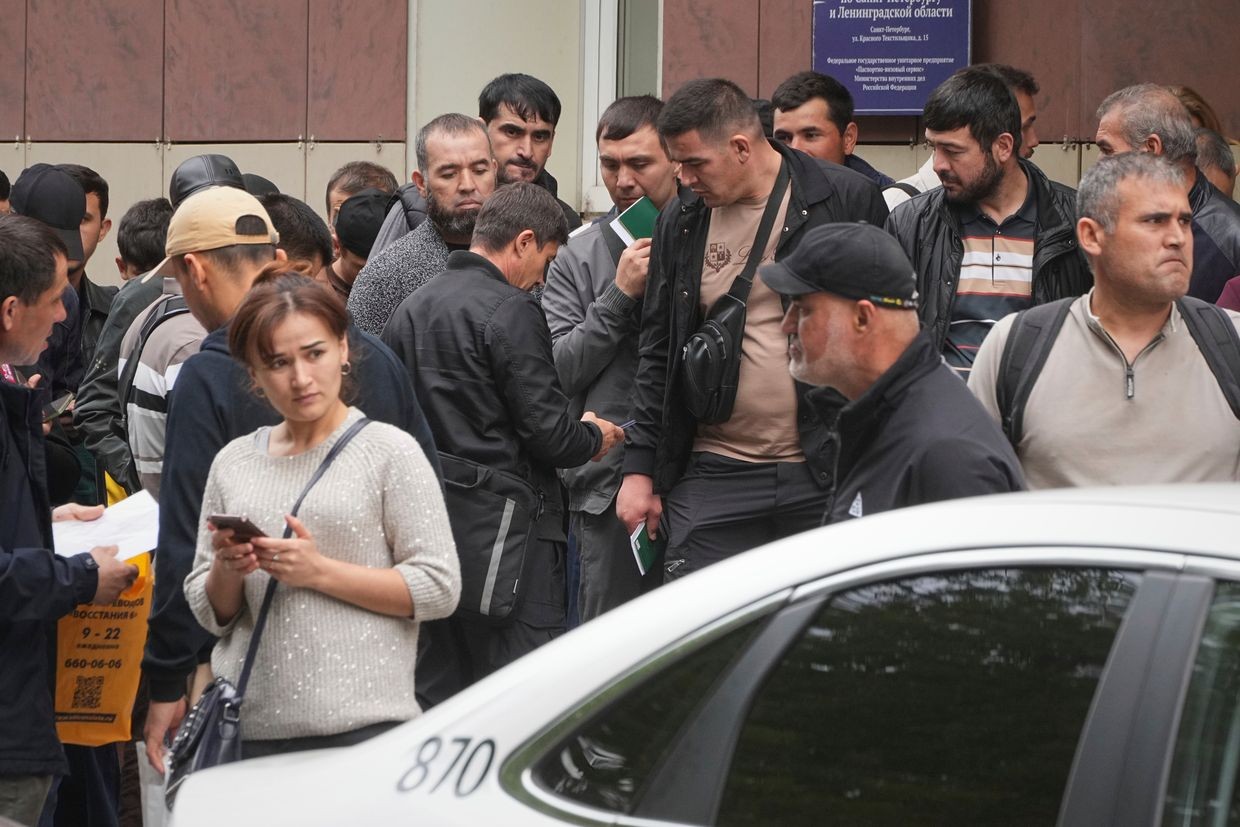
Seasonal labour migration from Armenia to Russia has dropped by around 30% since Russia’s full-scale invasion of Ukraine. While the number reached up to 100,000 labour migrants in 2022, it now does not exceed 70,000.
The figures were presented on Wednesday by Tatevik Bezhanyan, a migration programme expert at the Armenian Caritas organisation.
According to Bezhanyan, several factors have contributed to the decline, including tighter migration legislation in Russia, the ongoing war, and the growth of Armenia’s construction sector.
Following Russia’s full-scale invasion of Ukraine, in 2023–2024, some Armenian labour migrants began relocating their families to Russia, partly due to the depreciation of the ruble, which made sending remittances to Armenia less financially beneficial, Bezhanyan said.
However, regulations affecting migrant families have since tightened. As of 1 April 2025, children must pass a Russian language exam by correctly answering at least 90% of the questions in order to enrol in school.
Additionally, new measures that took effect on 1 March 2026 are also expected to impact the number of seasonal workers in Russia. This includes new medical examination requirements and newly introduced quotas for employing foreign nationals.
Since 2025, there has been introduced digital surveillance.
Migrants in Moscow and the Moscow region are required to use a mobile application for migration registration. Failure to regularly update the app or be absent from the registration address for over three days could result in a person being added to the migration monitoring registry. Even if someone just temporarily leaves their place of residence, they must notify the local police department.
Bezhanyan also noted that Armenian migrants might face issues due to discrepancies between official salaries and actual income.
‘When a person tries to send to Armenia an amount equal to or greater than their salary to their relatives, the data is immediately transferred to the migration service. The police have access to this information, and the person must provide an explanation for the origin of the funds’, Bezhanyan said. Failure to do so could even result in deportation.
Furthermore, the Russian Security Service can request that telecom operators block a migrant’s access to their mobile phone if they overhear a conversation or see a message which the Russian authorities could consider ‘a security threat’.
‘Even a small expression of sympathy for Ukraine could serve as grounds for this. Therefore, I urge our citizens to be more cautious’, Bezhanyan said.