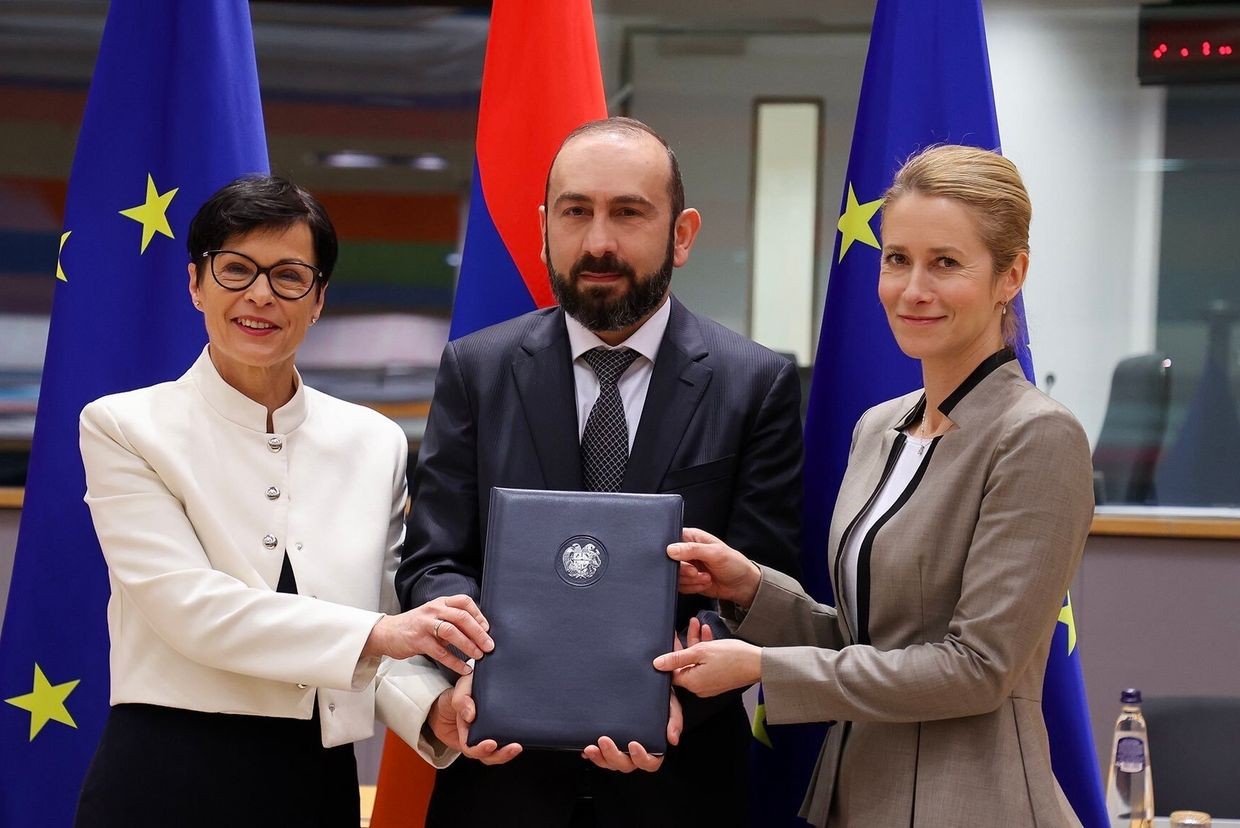
Azerbaijan’s Foreign Ministry has expressed concerns over a strategic agenda signed by Armenia and the EU earlier in December, requesting that ‘harmful provisions’ — including a nonexistent section calling Armenian prisoners in Baku ‘prisoners of war’ — be removed.
The Azerbaijan Foreign Ministry shared its concerns on Tuesday, claiming that the signed document ‘distorts the realities’ and is against the ‘peace agenda’ between Azerbaijan and Armenia.
The Azerbaijani statement came in response to a new strategic agenda adopted by the EU and Armenia in Brussels on 2 December. The EU also announced an allocation of €15 million ($17 million) ‘towards sustaining peace and a more resilient Armenia’.
The Azerbaijani Foreign Ministry claimed the classification of Nagorno-Karabakh Armenian residents as refugees was a ‘vivid example of the bias against Azerbaijan’, asserting that Nagorno-Karabakh Armenians ‘voluntarily migrated’ and ‘refused reintegration plans proposed by Azerbaijan’.
 Arshaluys Barseghyan
‘While it is entirely irrational to bring an issue of purely bilateral nature that directly concerns Azerbaijan and Armenia into an agenda with another party, such an approach also disregards the fact that Azerbaijan likewise has its own legitimate court proceedings against Armenia’, the statement read.
The ministry also disputed the inclusion of the issue of Armenian detainees in Azerbaijan and the reference to them as ‘prisoners of war’, though the actual text of the agenda did not include any such phrasing.
The only reference to Armenian prisoners held in Azerbaijan was mentioned in the Foreign and Security Policy section of the agenda. Among other things, that section expressed the EU’s commitment to ‘continue advocating for the release of Armenian prisoners and other detainees’.
The ‘prioritisation of their release is a serious distortion of realities [sic]’, the Azerbaijani Foreign Ministry said.
Another issue raised was the proposed Trump Route, which was agreed upon during the Washington summit in August, hosted by US President Donald Trump, and is intended to be a route connecting Azerbaijan to its exclave of Nakhchivan through Armenian territory.
However, Azerbaijani officials have continued to refer to the Trump Route as the ‘Zangezur corridor’, a term rejected by Yerevan due its perceived territorial claims on Armenia.
In its statement, the Azerbaijani Foreign Ministry also complained that the agenda did not include mentions of the Trump Route.
Nate Ostiller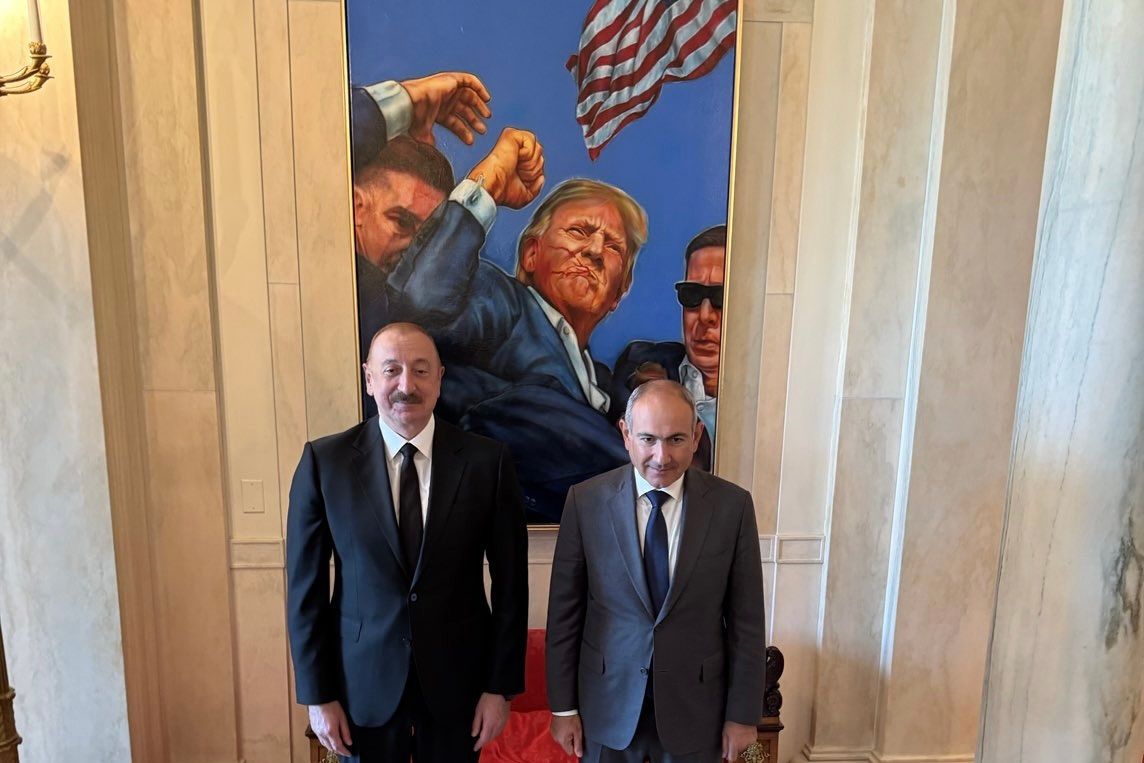
According to the Azerbaijani Foreign Ministry, this agenda ‘serves to promote Armenia’s militarisation’ and ‘casts serious doubt on Armenia’s intentions’.
The ministry highlighted that they expect Armenia and the EU to remove ‘these harmful provisions which do not reflect the current realities’.
‘For our part, we will continue to monitor the situation closely and draw the necessary conclusions’, the statement concluded.
On Wednesday, the Armenian Foreign Ministry denied the Azerbaijani accusations.
In an interview with Armenpress, Foreign Ministry spokesperson Ani Badalyan broke down the content of the signed agenda, suggesting that it ‘reflects the substance of the bilateral and deepening partnership’ between Armenia and the EU, and the EU’s ‘commitment to supporting Armenia’s sovereignty, territorial integrity, democracy, and socio-economic resilience’.
‘It is evident that this, in itself, contributes to efforts aimed at further consolidating peace in the region’, Badalyan said, adding that the signed agenda ‘also includes our shared vision for the future, reflecting our joint commitment to strengthening stability, prosperity, and peace in the region’.
This article was translated into Russian and republished by our partner SOVA.