Chechen authorities purchase 144 special SIM cards with access to services blocked in Russia

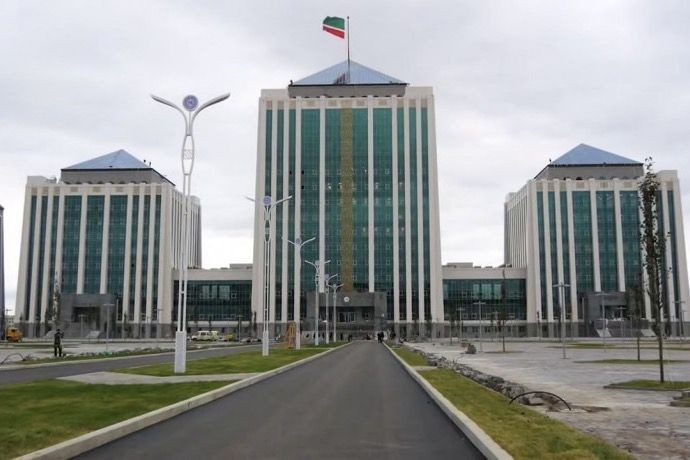
The Committee of the government of Chechnya for State Orders has announced a procurement of specialised mobile communication services for government figures, according to information published on the state portal on 20 February. Among them are SIM cards that would allow access to services banned in Russia.
The contract provides for the supply of 144 SIM cards while retaining the existing subscriber numbers of the customer’s representatives, as well as the provision of 50 additional SIM cards in reserve.
According to the tender’s documentation, the initial contract price exceeds ₽2.3 million ($30,000) and the term of service is one year. The supplier is expected to be selected by 3 March.
The technical specification states that the service must provide unlimited outgoing calls within the operator’s network across Russia, 5,000 minutes per month for calls to numbers of other networks, 50 GB of internet traffic without speed restrictions, and no fewer than 1,000 SMS messages per month for each number. The supplier must also ensure unlimited access, without the use of VPN services, to a number of foreign platforms that are currently restricted or blocked in Russia.
The list of services to which access must be provided includes Instagram, Facebook, WhatsApp, Twitter (now known as X), Facebook Messenger, as well as the email services Mail.ru, Yandex Mail, and Gmail. The documentation also mentions the messenger TamTam, which VK plans to discontinue supporting from 27 February. Telegram and the Russian national messenger Max are not included in the list.
The tender documents state that the communication services must meet ‘high security standards’. In particular, the network must allow for the installation of certified cryptographic equipment intended for use in ‘special mobile telephones’. Access is also required to the Special Federal Subsystem of Confidential Cellular Communication (SFPSCC), which, according to open sources, was originally developed for government authorities and security agencies.
Among the additional requirements is the possibility, if necessary, of providing separate satellite communication with special encrypted access points. The contractor must also ensure the possibility of using an IP address from the address pool of the Russian National Guard.
Previously, in March last year, the Chechen authorities publicly called for a review of restrictions on certain messengers. Chechen Press Minister Akhmed Dudaev stated that access to Telegram in the region should be restored. He described the restrictions as ‘unjustified’ and urged federal authorities to reconsider the relevant decisions.
In March 2022, both Facebook and Instagram were blocked in Russia after their parent company Meta was designated an extremist organisation, citing the existence of posts calling for violence against Russian military personnel and leadership. Use of these platforms for personal purposes is not prosecuted, but commercial use is banned.
In turn, Discord was blocked in October 2024 due to the distribution of user-generated content that ‘violates Russian law’.
Shortly afterwards, in December 2024, Viber was blocked for allegedly violating Russian legislation, including the dissemination of illegal content and the use of the service for terrorist purposes.
That same month, WhatsApp was added to the register of information dissemination organisers, obliging it to store user data and provide such data at the request of Russia’s Federal Security Service (FSB). Although the messenger remains available for now, its future in Russia remains uncertain.
Furthermore, Russia has seen an increase in the number of blocked materials promoting VPN services. From the beginning of 2025 to April 2025, Russia’s communications regulator Roskomnadzor blocked 12,600 such materials, almost twice the figure recorded in 2024.
Roskomnadzor also restricted access to 469 VPN services at the end of February 2026. A month ago, this figure stood at 439.
In March 2025, a law was adopted in Russia prohibiting the use of foreign messengers for communication with citizens and clients in state and financial organisations. Violations are punishable by fines of up to ₽700,000 ($56,000).
Since the beginning of August, users of WhatsApp and Telegram in Russia have reported failures when making calls. The newspaper Kommersant, citing telecommunications industry sources, wrote that from 1 August operators had been testing selective blocking of voice calls in these messengers.
 Elizaveta Chukharova
In the North Caucasus, mobile internet disruptions have previously been recorded in connection with the use of electronic warfare systems against drones. Authorities in North Ossetia and Daghestan have acknowledged the use of jamming equipment, including measures affecting mobile communications.
Telegram is now reportedly facing a complete block in Russia. It is expected to be blocked in early April, according to sources cited by RBC, who described the move as a final decision. Throughout the past year, many users had reported slowdowns in the messenger’s performance.