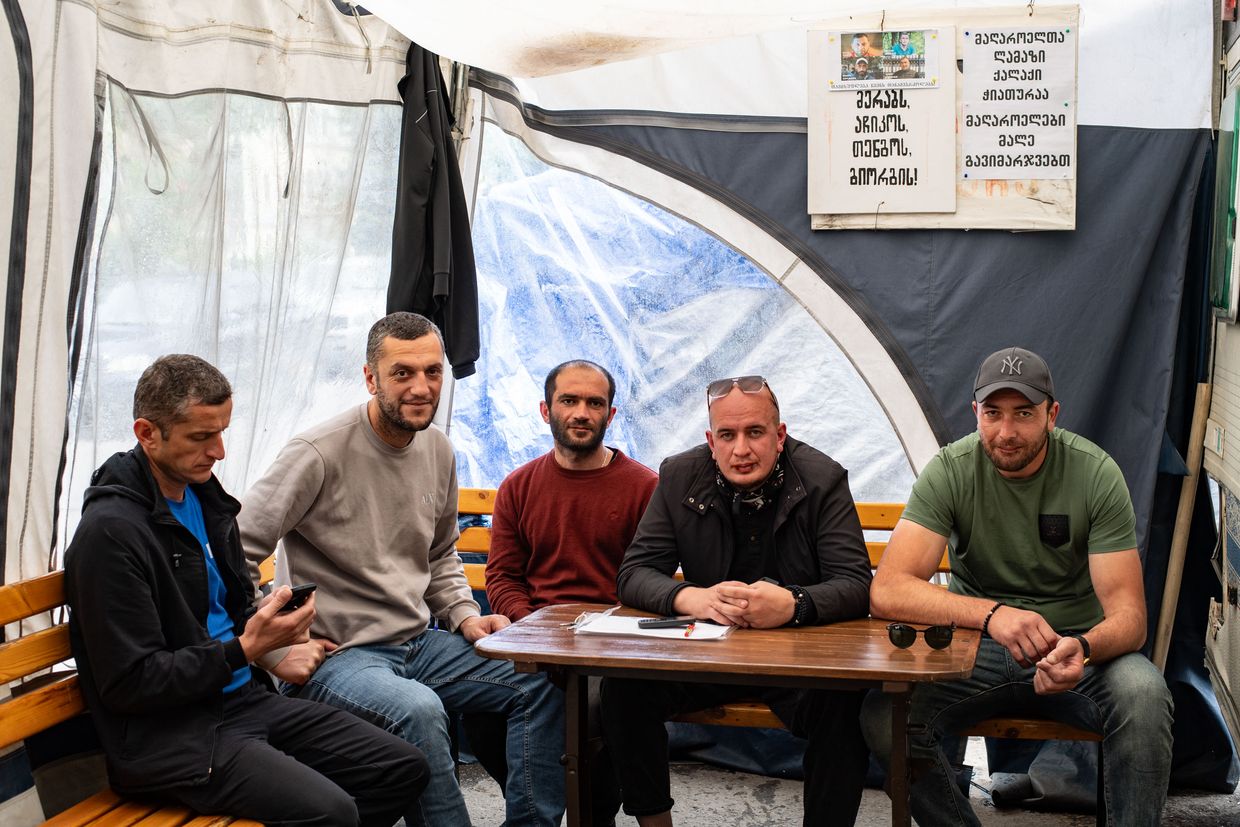
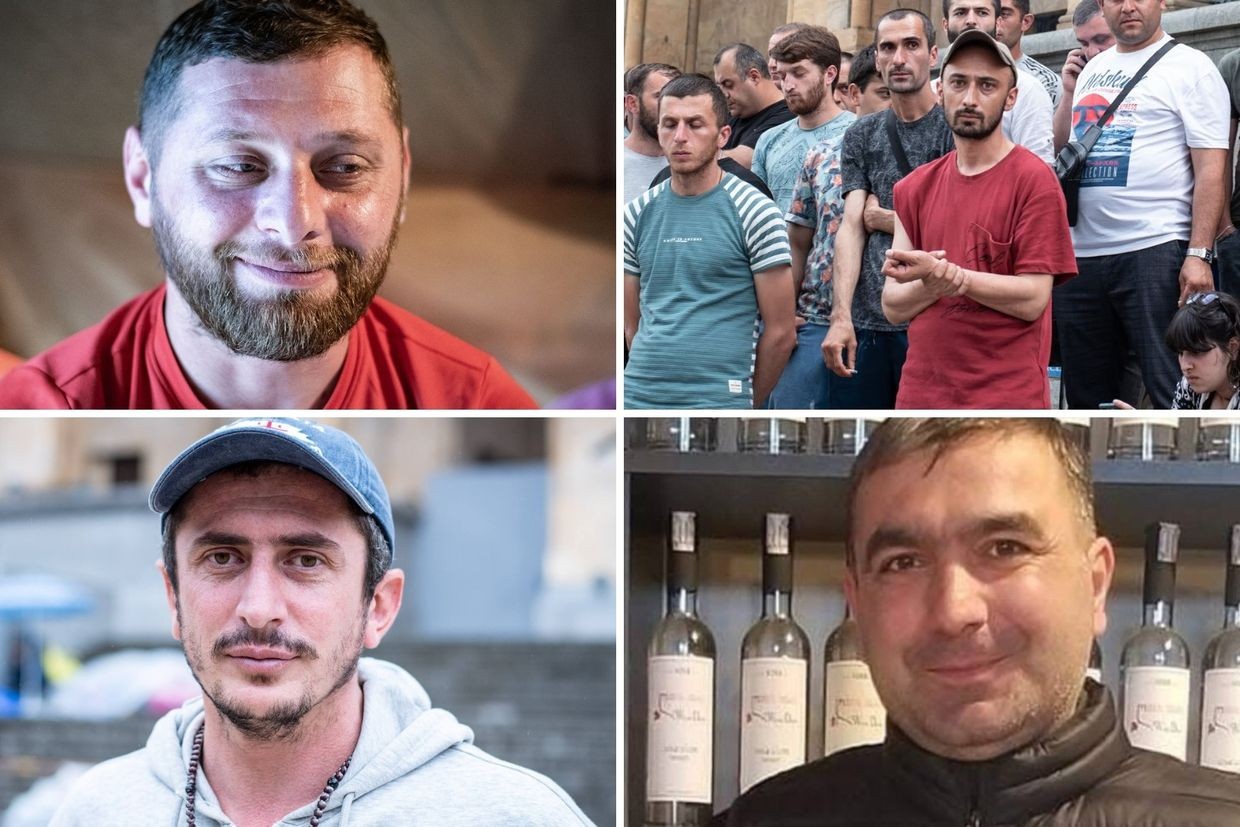
The Kutaisi City Court has sentenced four protesters from the mining town of Chiatura to multiple years in jail on violence-related charges. The prosecution has accused all four of attacking the director of a local mine in April 2025.
With the ruling announced on Tuesday, Judge Tamar Mazanashvili sentenced Giorgi Neparidze and Merab Saralidze to six years and three months in prison on charges of organising group violence, while the other two detainees, Archil Chumburidze and Tengiz Gvelesiani, were sentenced to four years and three months for participating in group violence.
All four were detained on 29 April and charged for attacking Tengiz Koberidze, the director of Shukruti mine. The detentions happened during the active phase of a strike in Chiatura demanding improved labour conditions. As other participants of the strike reported back then, Koberidze insulted protest participants, calling them a ‘herd of cattle’, which triggered the scuffle.
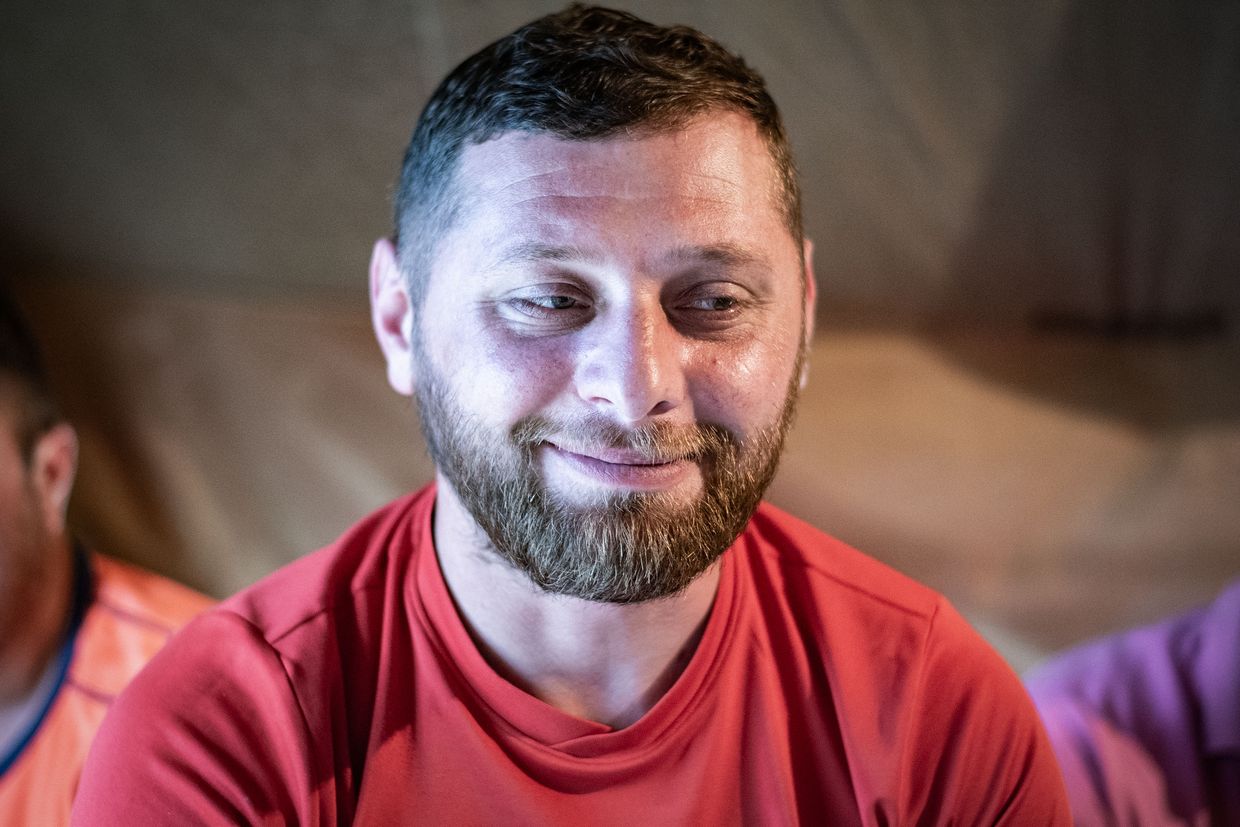
Saralidze and Chumburidze are miners who have been long employed by the mining company Georgian Manganese. Saralidze participated in protests and strikes for better labour conditions for several years, including in the mass hunger strike in the summer of 2023.
Gvelesiani, originally from Chiatura but living in Tbilisi, was an active supporter of protests in Chiatura and often went to the strikes and other actions organised by locals.
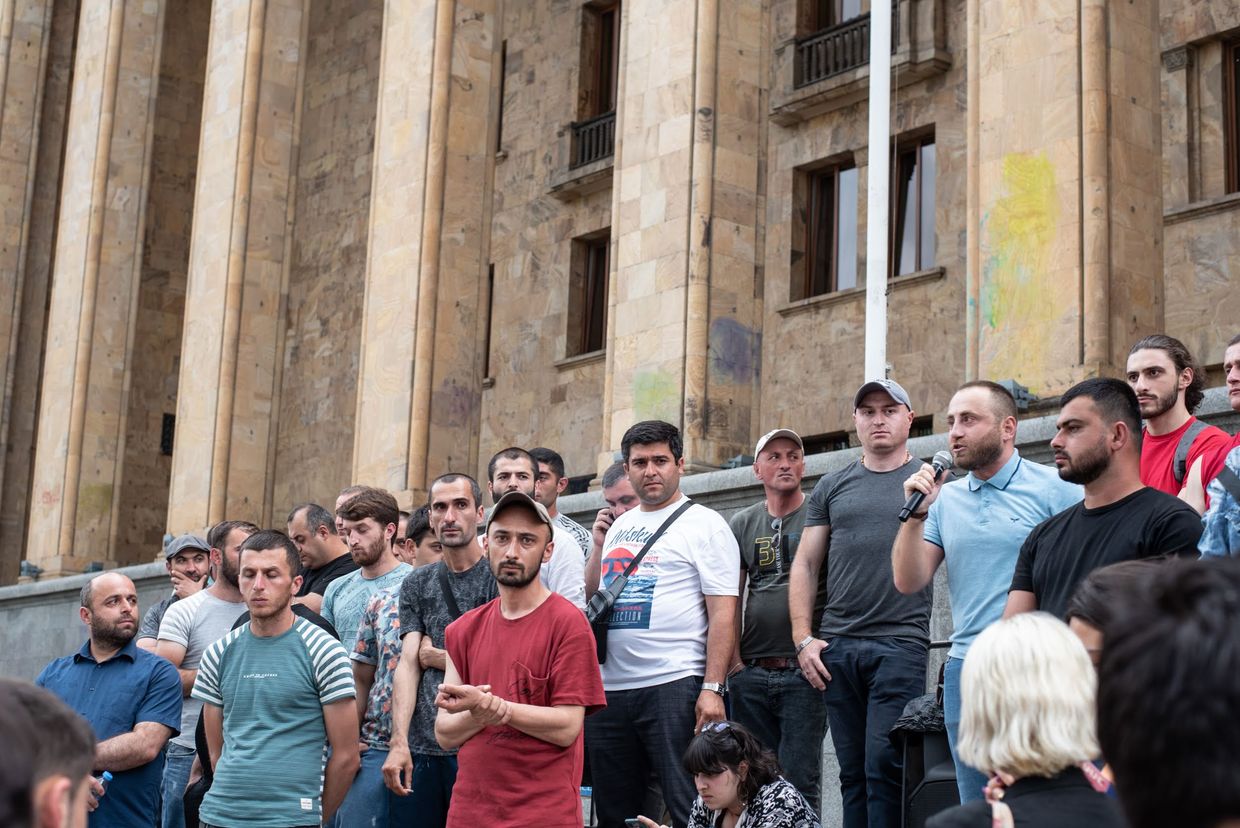
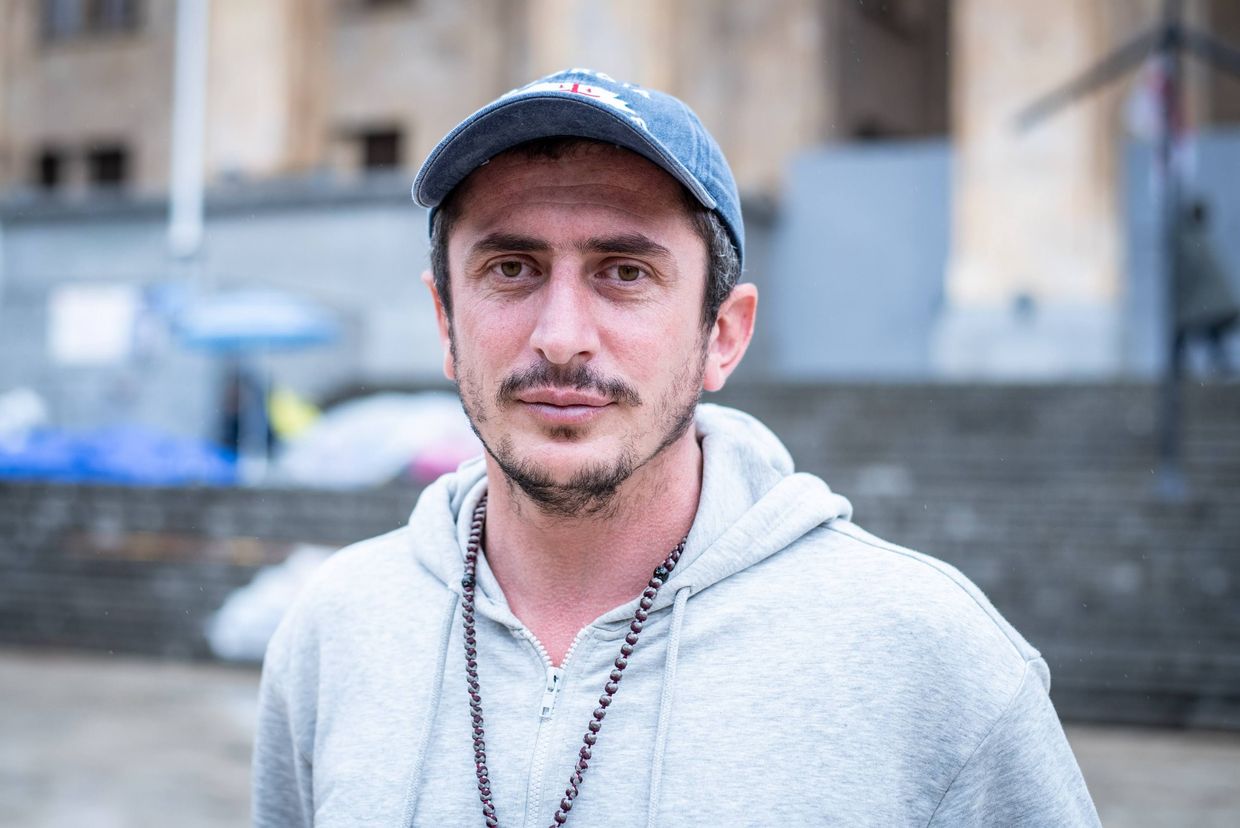
Neparidze is a resident of Shukruti, a village heavily affected by manganese mining. Since 2019, Shukruti residents have considered Neparidze to be their leader. They have been protesting damages caused by mining operations to their houses on and off since.
Neparidze, along with seven other people sewed their lips shut for 30 days demanding compensation for their damaged houses from the company. Later, in 2024 Shukruti residents went on a hunger strike for another 42 days with the same demands.
‘Problems want be solved by jailing us’
During their final speeches, Saralidze and Neparidze said that they were being punished for actively protesting for their rights.
‘They arrested me and they felt comfortable’, Saralidze said. He also recounted that when the first reports of their arrests came, initially, pro-government TV Imedi reported different names of those participating in the attack. The list included Tariel Mikatsadze and Mirza Loladze, two active protesters who were in the initiative group of the ongoing strike during the arrest.
However, the two were in Tbilisi when the attack took place and Imedi eventually identified Chumburidze and Gvelesiani as attackers instead. Saralidze has said that this supported his theory that the company sought to punish those protesting against it.
According to the defence, there was no video or photographic evidence against the detainees — only witness testimonies.
Saralidze also spoke about distrust towards the court system in Georgia. He recounted how Prime Minister Irakli Kobakhidze referred to the detainees as criminals before they were sentenced.
‘When the top person in the country announces that we will remain in custody, this for me means that he pressures the court’, he said.
In his turn, Neparidze emphasised that ‘problems which Chiatura has [...] will not be resolved by keeping us in jail’.
Before the verdict was delivered, he expressed hope that the judge would not come under the influence of ‘either the prime minister or the prosecutor’.
‘We are freer than many people who are formally at liberty, because we always speak directly and openly about the problems in our city — and not only in our city, but in our country as a whole’, he added.
Criticising Georgian Manganese, Neparidze called on the authorities to ‘start’ by probing the company, if fighting corruption is truly their priority.
During previous protests, Neparidze had been criminally prosecuted for several other cases, including for interfering in journalists’ work, for which he was acquitted eventually, as well as blocking the entrance to the mine.
In the course of his trial, Neparidze received a new criminal charge for insulting a judge, which carries a two-year sentence. The case is still ongoing.

After being charged, the four did not spend a single day outside prison, as the court repeatedly sided with the prosecution’s requests to extend their pre-trial detention. Their extended time in jail ahead of the trial was emphasised by Gvelesiani in his final statement before the verdict was delivered, noting that he had spent nine months in prison despite being innocent.
‘We are accused of causing harm to someone’s health, while 80% of Chiatura’s population suffers from oncological diseases — and you know who is responsible for that,’ he said, pointing to Georgian Manganese’s operation and its impact on the environment and public health in Chiatura.
‘This is precisely an organised crime committed collectively against the people of Chiatura,’ he added, as quoted by Publika.
Chumburidze limited himself to a brief final statement, in which he stressed that he was ‘unjustly imprisoned’.
‘I hope the judge will take all of this into account and allow us to live in peace. I am innocent, and I hope you will consider that,’ he said.
‘They calculated it precisely’
The latest protest began in Chiatura at the end of February 2025, and consisted of a series of demands directed at the miners’ employer, including the restoration of underground operations in the mines — work that Georgian Manganese had suspended in October, citing ‘financial unprofitability’.
The miners stated that the shuttering of operations was causing serious financial hardship for the town, whose residents rely primarily on mining as their source of income — Georgian Manganese is the largest employer in the town.
‘[At first] the protest was going quite successfully: wages were paid during that period, and alongside that, talks began about resuming [underground] work’, one of the protesting miners, Tariel Mikatsadze, told OC Media in July 2025.
However, the restarting of the work process came with certain conditions, one of which was a ‘reorganisation’ announced on 22 April 2025, which miners feared would leave many unemployed.

A week after this announcement, police detained four protest leaders, which fundamentally changed the agenda of their colleagues.
The miners have repeatedly tried to secure the release of the four from prison, including by ending another hunger strike they had launched in April to protest the ‘reorganisation’.
They claimed that they were indirectly promised by the authorities that the detainees would be released if the protests were called off.
‘When they couldn’t break us in any way — neither with provocative statements nor with actions — then they managed to arrest our four comrades completely illegally and unfairly, Mikatsadze said in July, adding that:
‘After their arrest, our demands and chances changed radically. They had calculated it precisely and achieved exactly what they intended’.
 Mariam Nikuradze