Ex-soldier who fought in Ukraine sentenced for brutal Nalchik murder of elderly woman

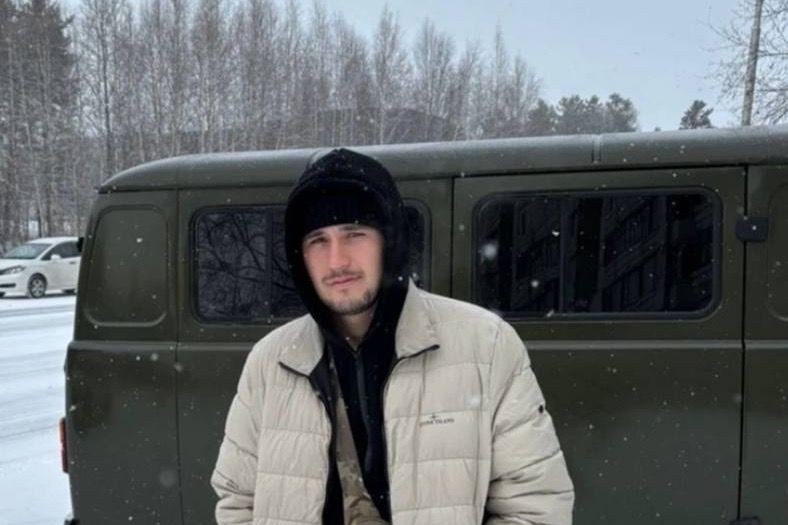
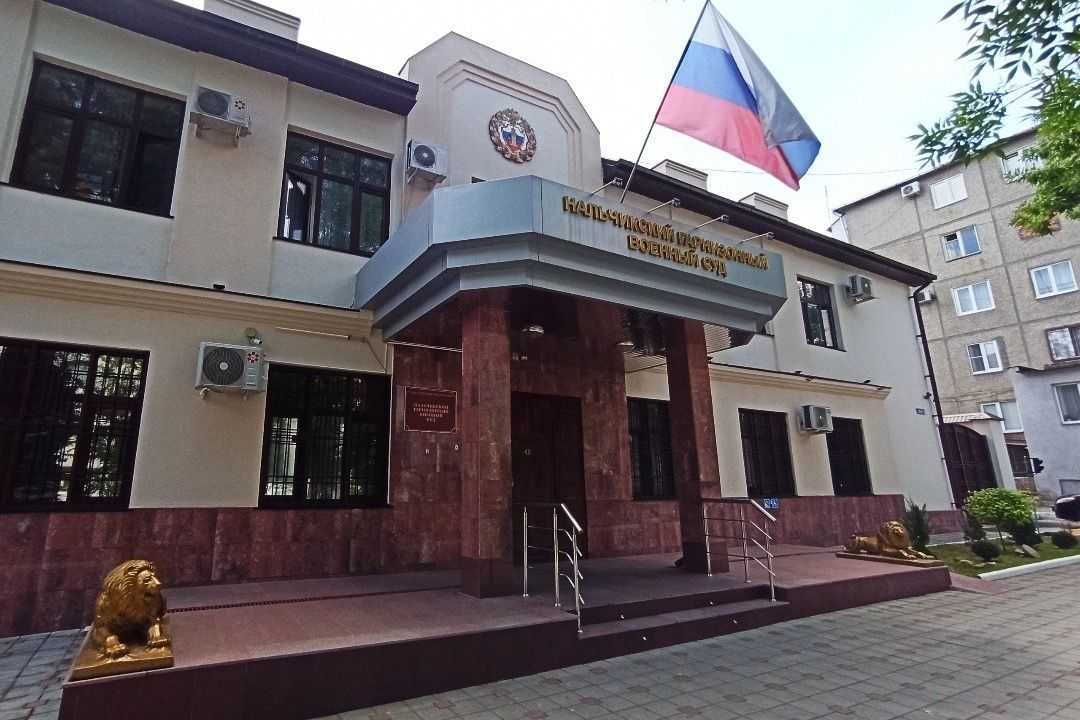
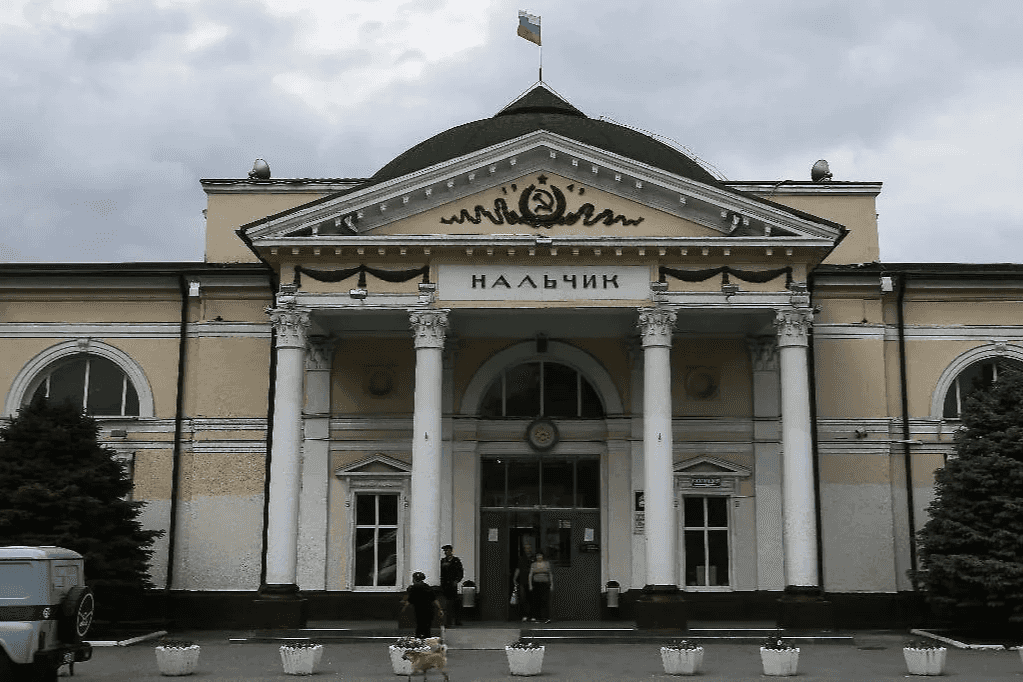
A court in Kabardia-Balkaria has sentenced Rustam Nogmov to 15 years for murdering an elderly woman in Nalchik in a seemingly random but brutal assault. Nogmov is the son of an assistant to the head of the regional department of the Federal Penitentiary Service (FSIN) and a former soldier who fought in the full-scale war in Ukraine.
The local Investigative Committee announced Nogmov’s sentencing on 20 February.
He was found guilty of murdering 86-year-old Nalchik resident Nina Seleznyova and sentenced to 15 years’ imprisonment in a high-security prison.
The court found Nogmov guilty under the article of the Russian criminal code concerning ‘the murder of a person known by the perpetrator to be in a helpless state, committed with particular cruelty and out of hooligan motives’, as well as under the article on ‘desecration of a corpse’. He was also fined ₽25,000 ($325). In addition, the court ordered the convicted man to pay ₽3 million ($40,000) in compensation for moral harm to the victim’s husband.
On the morning of 30 January 2025, in a public garden near Ashurov Street in Nalchik, 24-year-old Nogmov, while under the influence of alcohol and drugs, noticed 86-year-old Nina Seleznyova, who was out on her morning walk. Nogmov did not know Seleznyova.
According to the investigation, Nogmov, ‘having no reason’ and ‘acting out of hooligan motives’, aware that the elderly woman was unable to resist due to her age, attacked her, inflicted multiple blows to various parts of her body and then strangled her.
 Elizaveta Chukharova
Additional details that formed the basis for qualifying his actions under the article on desecration of a corpse were not disclosed in the official statements of the Investigative Committee. At the same time, local media reported that Nogmov bit off the tip of the victim’s nose (bite marks were also found on other parts of her body), and that, using a ‘hard blunt object’, allegedly a branch, he inflicted post-mortem injuries to her internal organs.
The course and results of the investigation were placed under the supervision of the central office of the Investigative Committee of Russia at the instruction of its chairperson.
Seleznyova went for walks every morning. On the day of the murder, she left home before 05:00. When she did not return for breakfast, her husband, Eduard Seleznyov, began searching for her. The woman’s phone was found in the garden. Her body was later discovered in bushes nearby.
Elizaveta Chukharova
According to the newspaper Gazeta Yuga, alcohol, mephedrone, and methadone were found in Nogmov’s blood. Case materials state that on the eve of the crime he and an acquaintance purchased 1.5 grams of mephedrone online. During the trial, testimony was heard from witnesses, including a police officer who said that when Nogmov was brought to a local police station he denied involvement in any crime and claimed that he did not remember the moment of the killing.
Nogmov’s father told the court that his son had ‘always been positively characterised’, was preparing to seek employment with the border service and had undergone checks by the Federal Security Service (FSB). He described his son as ‘a well-brought-up and unspoilt person’ and said that he could only have committed the murder ‘unconsciously’.
‘I worked for 20 years as an operative among convicted persons of various categories […] I did not observe any deviations in him; I would have immediately identified them’, his father said.
His mother testified that her son returned home in the morning and went to sleep. When she woke up, she saw his dirty clothes and immediately put them in the wash. In her earlier statements read out in court, she said that there was not only dirt but also blood on his clothes. Because of this, she thought he might have been in a fight. However, he assured her that he had not fought with anyone and that she had ‘nothing to worry about’.
The defendant’s elder brother said he had never noticed him using drugs. According to him, after returning from the war, his brother had become ‘nervous and restless’ and would ‘flinch at any rustle and wake up’.
During the proceedings, the defence insisted that the defendant be declared legally insane at the time of the crime. The lawyer referred to the results of an initial forensic psychiatric examination conducted in Kabarda-Balkaria, which concluded that Nogmov ‘could not understand or control his actions’ as a result of consuming narcotic substances in combination with alcohol. However, a subsequent examination carried out in Moscow at the Serbsky National Medical Research Centre for Psychiatry and Narcology reached the opposite conclusion, finding that he was aware of his actions. The court relied on the latter assessment.
The defence asked for Nogmov to be acquitted and for his participation in combat operations against Ukraine and the receipt of a state award to be considered mitigating circumstances. Prosecutor Nikolai Khabarov cited the commission of the crime while intoxicated as an aggravating circumstance.
In his final statement, Nogmov asked the court ‘not to punish him severely’. After hearing the prosecution’s arguments, he admitted guilt and expressed condolences to the victim’s family: ‘Yes, I began using drugs, I started spending time with the wrong people and not giving time to my parents. I did not want this, God sees, I never even had such thoughts. I do not understand how it happened, and I ask you to forgive me, if you can’.
Earlier, the victim’s husband had appealed to the head of the Federal Penitentiary Service of Russia, requesting that the accused be transferred to a detention facility in another region, as his father holds the post of assistant to the head of the FSIN department for Kabarda-Balkaria. The convicted man’s brother also works within the penitentiary system.
The sentence may be appealed in accordance with the law.