Editor’s note: this article was amended to include President Mikheil Kavelashvili's signing of the laws on the same day.
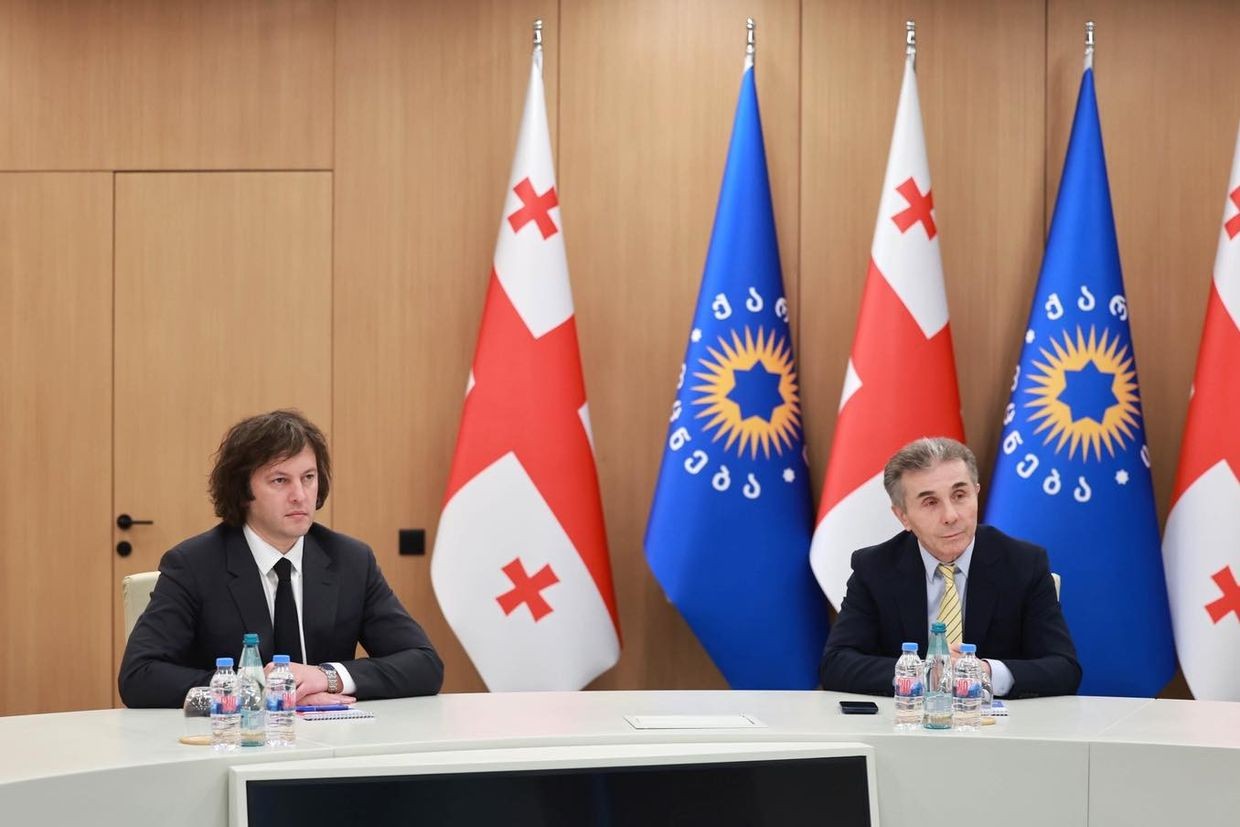
Georgia’s ruling Georgian Dream party and its allies passed legislative amendments that significantly extend the government’s control mechanisms over international funding, while criminalising the questioning of the government’s legitimacy.
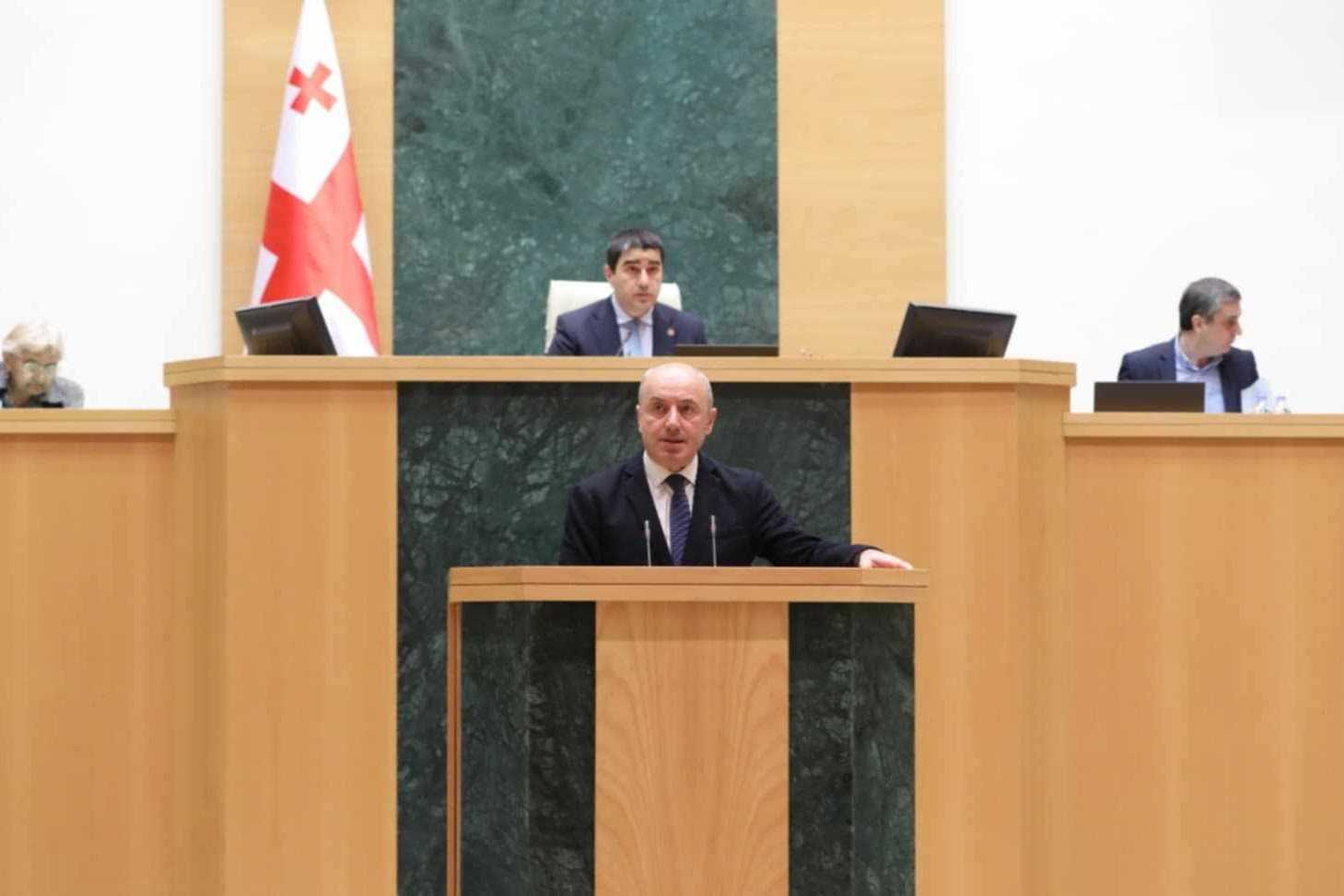
The legislative amendments, which were initiated in January and February against the backdrop of increased state pressure on critics, were passed by parliament on Wednesday in their third and final reading. The amendments were supported by 78 MPs, while nine voted against.
Georgia’s President, Mikheil Kavelashvili, has signed the amendments on the same day, and they have been published on the Legislative Herald, meaning they have now entered into force.
As part of the changes, the ruling party has once again sought to amend the law on grants, which was already previously revised in the spring of 2025. As a result, receipt of foreign grants — with limited exceptions — is now subject to government approval.
However, under the latest amendments, the definition of a grant itself has been dramatically expanded, giving the government greater control over the funding of non-state actors.
According to the consolidated version of the bill, in addition to the existing definition, grants will also be considered as funds or in-kind contributions provided by the foreign actors — including foreign citizens — to a Georgian citizen, a person holding residence rights in Georgia, or a Georgian legal entity, that are used, or could be used, for:
- ‘Activities carried out, or intended to be carried out, with the aim of influencing the Georgian government, state institutions, or any part of society, in order to shape, implement, or change Georgia’s domestic or foreign policy’;
- And ‘activities that derive from the political or public interests, approaches, or relations of a foreign government or foreign political party’.
Under the previous legislation, international organisations, financial and credit institutions, and foreign governments and foreign entrepreneurial and non-entrepreneurial entities, were already considered grant providers. They remain included under the new law as well.
Under the amendments, a grant would also be defined as funds or in-kind contributions provided in exchange for technical assistance, if the state determines that those resources are intended for the activities described above. If the state reaches such a conclusion, technical assistance provided free of charge would also be considered a grant.
All such funding will require prior approval from the Georgian government.
The amendments would further define the term, ‘other state legal entities whose activities substantially involve matters related to Georgia’. In one specific example, Georgian Dream mentioned organisations that are registered abroad but whose activities are ‘substantially carried out in Georgia’.
Such an entity would be able to receive a grant only with prior consent from the Georgian government.
Critics strongly condemned the amendments, describing them as yet another attempt to restrict political freedoms.
The ruling party defended the amendments as an effort to prevent ‘revolutionary processes’ in Georgia, which the authorities claim foreign donors have sought to promote.
 Mikheil Gvadzabia
Restrictions on political activities
Under the amendments, the head of any political party that violates the law on political associations by receiving foreign funding will be held criminally liable.
The amendments also made punishable what Georgian Dream calls ‘foreign lobbying’, which refers to the ‘direct or indirect transfer or granting of money, securities, other property, property benefits, or any other advantage in exchange for carrying out activities on a political issue related to Georgia for a citizen or legal entity of another state’.
The amendments to the law on political associations, passed alongside the grant amendments, will also establish grounds for prohibiting party membership for persons employed under a labour contract by an organisation that receives more than 20% of its annual income from a ‘foreign power’.
Persons who fall under that category will be barred from joining a party for eight years.
This effectively excludes a significant portion of individuals with backgrounds in civil society or the media from the right to engage in party politics.
Previous Georgian Dream legislation defines the term ‘entity pursuing the interests of a foreign power’ broadly, extending it to any media and civil society organisation that receives more than 20% of its income from a ‘foreign power’, a term that is itself also broadly defined.
Ban on questioning government legitimacy
The grant amendments were still under consideration when the ruling party introduced additional changes within the same legislative package, seeking to impose penalties on those who do not recognise the legitimacy of the authorities.
The new provision would apply to Georgian citizens, stateless persons with status in Georgia, and legal entities.
The article, called ‘extremism against the constitutional order of Georgia’, lists punishable acts as:
- Systematic and public calls for ‘mass violations of Georgia’s laws, mass disobedience of state authorities, or the creation of alternative state authorities’;
- Arbitrary, public, and systematic ‘presentation of oneself or another person as a Georgian authority’, or ‘other systematic actions by the same person’.
The ruling party said that for criminal liability to apply, these actions must be aimed at ‘establishing a perception of the illegitimacy of Georgia’s constitutional order or its constitutional bodies and must harm Georgia’s interests or create a real threat of such harm’.
The initiative, passed alongside the grant restrictions on Wednesday, has not emerged in a vacuum. It comes in the reality following the disputed 2024 parliamentary elections, whose results many opponents and critics still refuse to recognise, citing major violations. The ruling party continues to dismiss such attitudes as irrational.
The ruling party maintained that, in enforcing the law, due regard will be given to the line protecting freedom of expression.
‘The key factors are systematic nature and publicity. A performance expressed by a single individual, of course, will not be considered a criminal offence’, Georgian Dream MP Archil Gorduladze said during one of the hearings.
Nika Simonishvili, a lawyer and an ex-head of the Georgian Young Lawyers Association (GYLA), disagreed, noting that the initiative does not draw a clear line. Instead, Simonishvili argued it further narrows the space around freedom of expression.
‘The content of the provision is so expansive that virtually any undesirable political expression could fall under it’, he said.
Lengthy prison sentences
Under the amendments introduced in spring 2025, receiving foreign grants without government approval is punishable by a fine.
However, the latest changes would bring in prison sentences, allowing for violations of the grant law to be punished by imprisonment for up to six years — as well as options for fines or community service. The corresponding amendments were incorporated into the criminal code.
A similar penalties was added to the legislation in cases where political parties receive foreign funding, as well as in relation to what the ruling party calls ‘foreign lobbying’.
In cases involving the non-recognition of the government, penalties include fines, 400–600 hours of community service, or up to three years imprisonment.
Legal entities accused of not recognising the government’s legitimacy could be subject to a fine or liquidation and a fine.
In addition, the Criminal Code was amended to include a ‘motive of non-recognition of the constitutional order or constitutional bodies’ as an aggravating circumstance. If such a motive is established in the commission of a crime, it will result in an additional year being added to the sentence.
Georgian Dream has significantly accelerated the adoption of restrictive legislation after the beginning of anti-government protests in late November 2024, which were sparked by the ruling party’s announcement that it was halting the country’s EU membership bid until 2028.
It has repeatedly claimed that the new bills were necessary to fight the ‘influence of external powers’. Nonetheless, critics of the ruling party have emphasised that these changes aimed to undermine the media and civil society in an already fragile democracy.
OC Media