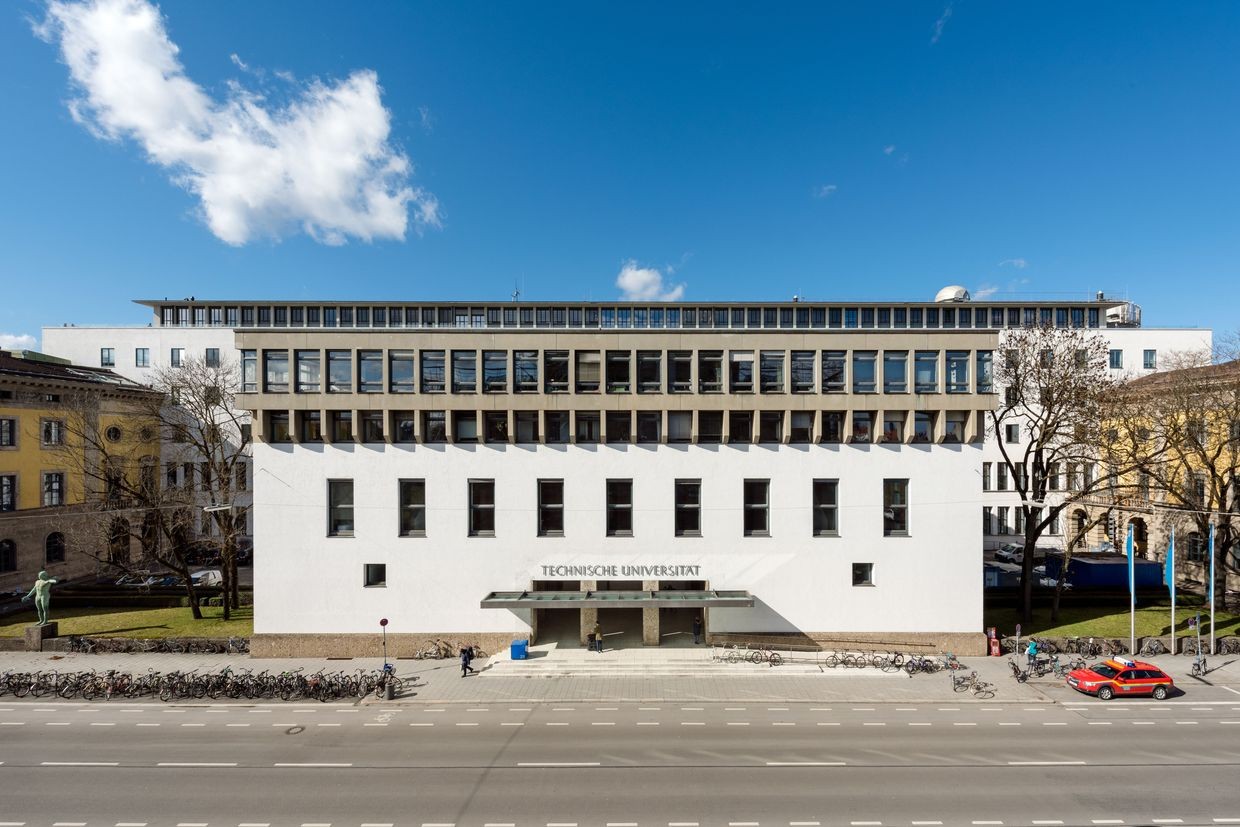
Germany’s Technical University of Munich (TUM) has continued to remain silent on a research centre at its partner university in Georgia whose founder has attributed his work to Nazi Germany, with a prominent German academic privately expressing irritation at OC Media’s coverage story.
OC Media previously reported that Iberian Cultural Heritage Centre at Kutaisi International University (KIU) draws on theories linked to the Nazi-era SS. The centre’s head, Aliko Tsintsadze, has stated that parts of his work build on research conducted by the Ahnenerbe, a unit under Heinrich Himmler.
The report also found that KIU’s German strategic partner, the TUM, claimed to not have been informed of either the centre’s establishment or the introduction of new bachelor’s programmes by the centre in astrolinguistics and astroarchaeology — fields widely regarded as pseudoscientific.
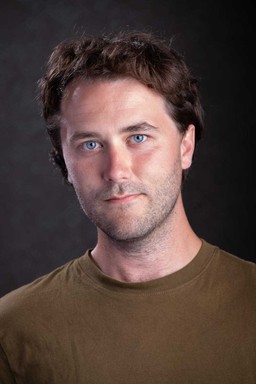
Wolfgang Herrmann, former long-serving president of TUM and now honorary president of KIU, previously told OC Media he had no knowledge of the centre, despite chairing the university’s International Advisory Board — one of its executive bodies responsible for the curriculum of the university. At the time, he also rejected that the programmes had ever existed.
‘There is no such study programme at KIU’, Herrmann said. ‘Nor have they been presented at the International Advisory Board […] These programmes have never been attached to us. We have never seen them. They have not ever been proposed to the KIU’.
‘Astrolinguistics is so far away from the focus of this new university that we must not even talk about it in this context’, he said.
Herrmann’s categorical denial has since the publication of the article circulated among several German academics. In an email conversation seen by OC Media, Herrmann repeated claims that the article was based on ‘misinformation, that has caused considerable confusion in recent days’. At least one of the other professors agreed that this was the case.
However, publicly available records contradict this account.
On 12 February, Georgian authorities included the programme in the national curriculum. Documents still available on the government’s official legislative portal show that 20 places were allocated to students of ‘astrolinguistics and astroarchaeology’ at Kutaisi university.
The programme was removed from the national curriculum less than two weeks later, after widespread criticism in Georgia.
An audio recording from February, in which TV host Nodar Meladze contacted KIU’s hotline, further indicates that the university was preparing to accept enrolments, starting from September 2026, at the time.
 Rasmus Canbäck
References to the study programmes removed
There are also signs that references to the programmes have been retroactively removed. At least one KIU webpage, referred to in the previous report, from October 2025 — advertising a vacancy for a lecturer in astrolinguistics — is no longer accessible. The link instead leads to the general news section of the website. OC Media could, with the help of AI, verify that the webpage had previously existed.
Following the publication of OC Media’s investigation, KIU released a video featuring Herrmann, branded with TUM insignia, in which he defended the partnership.
‘What a success story, already for the first six years of collaboration. TUM has been the lead university for the establishment of the new autonomous KIU’, Herrmann said. ‘TUM is the key reference partner. It has been and will be in the future’.
TUM did not respond to questions about whether it had approved the video or its use of branding.
Herrmann also did not respond to follow-up questions regarding whether the International Advisory Board had addressed the controversy, nor to the evidence indicating that the disputed programmes had been announced and briefly opened for enrolment.
Contract worth millions of euros
KIU was founded in 2020, following several years of planning involving TUM from at least 2017 onward. The university, which is exempted from regular legislation on higher education, is primarily funded by Bidzina Ivanishvili’s Cartu Group. Ivanishvili, a billionaire widely seen as the power behind Georgia’s ruling Georgian Dream party, has played a central role in shaping the project.
A source with knowledge of the arrangement told OC Media that TUM initially received around €800,000 ($930,000), with annual payments later increasing to between €5 million ($5.8 million) and €7 million ($8.1 million) depending on the nature of study programmes that TUM and its subsidiary TUM International was involved in. This was independently verified by a second source with insights in KIU. TUM International told OC Media that it is no longer involved in the project.
Due to legal restrictions in the State of Bavaria, where higher educational institutions are exempt from regular German transparency legislation, the agreement could not be obtained from TUM.
Even though the study programmes were cancelled, there has been no changes on the status of the Iberian Cultural Heritage Centre, which is still operating at Kutaisi International University.
This article was translated into Russian and republished by our partner SOVA.