How the tragedy of the mandarin mirrors Georgia’s democratic demise
Unlike the celebrated wine industry, the mandarin is not an ancient Georgian tradition but rather a manufactured Soviet tool hanging by a thread.

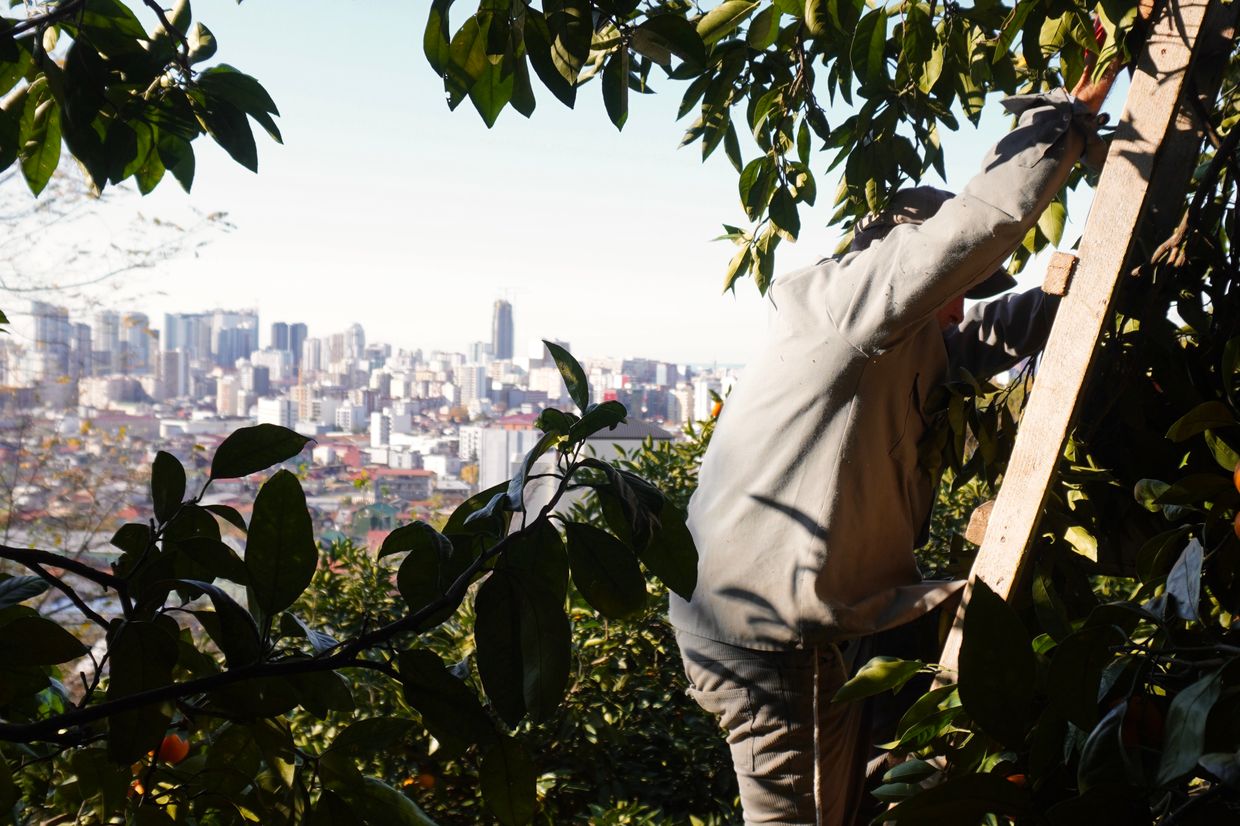
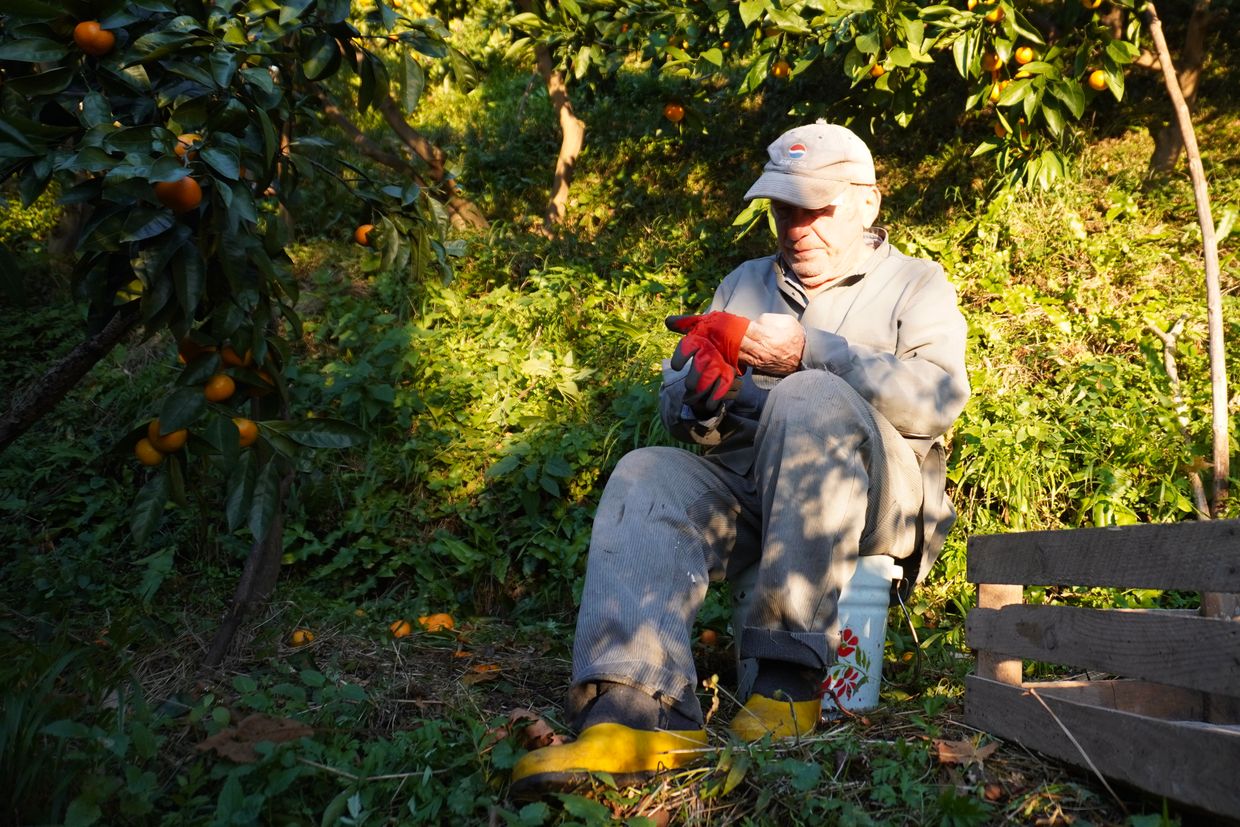
Perched on the hillside above Batumi, local mandarin farmer Zviad has witnessed the skyline multiply like cancer cells. High-rises and glass hotels erase the horizon of his childhood, as construction and tourism swallow the land and labour of Adjara. Zviad must climb higher each year, to the top terrace of his 0.2 hectare grove, just to catch a glimpse of the Black Sea.
‘In 10 years, they will all look like that’, he says, pointing to the neighbour’s abandoned mandarin grove, where the withering branches of unpicked citrus hang heavy.
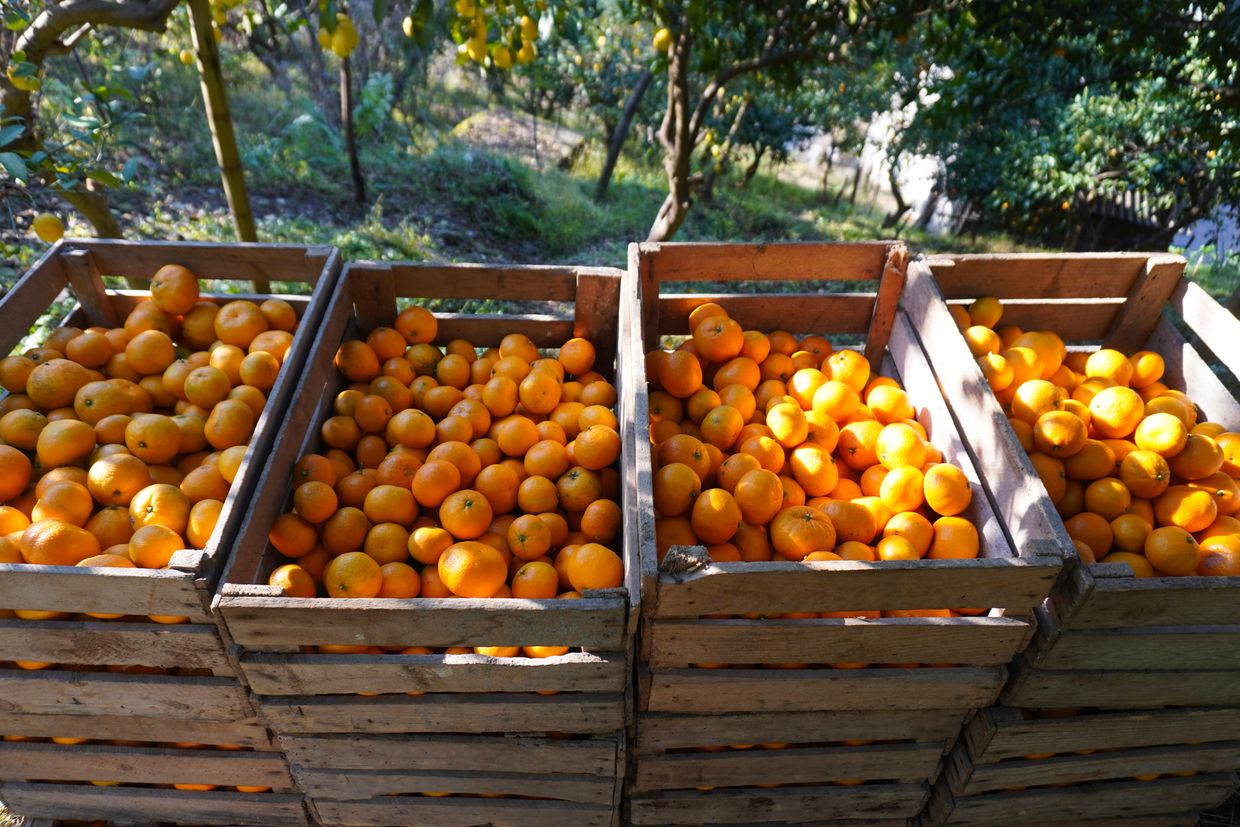
A former sailor, Zviad quit sailing the seas in 1986 — six years after his 130 mandarin trees produced their first full harvest. Selling his surplus at the time was not a problem with the Soviet state as his guaranteed buyer. The state didn’t care if his fruit was slightly bruised or small; it simply needed mass quantities to ship to the frozen north, propping up the mirage of Soviet ‘self-sufficiency’. The fixed price that he received was small but certain.
The manufactured tradition
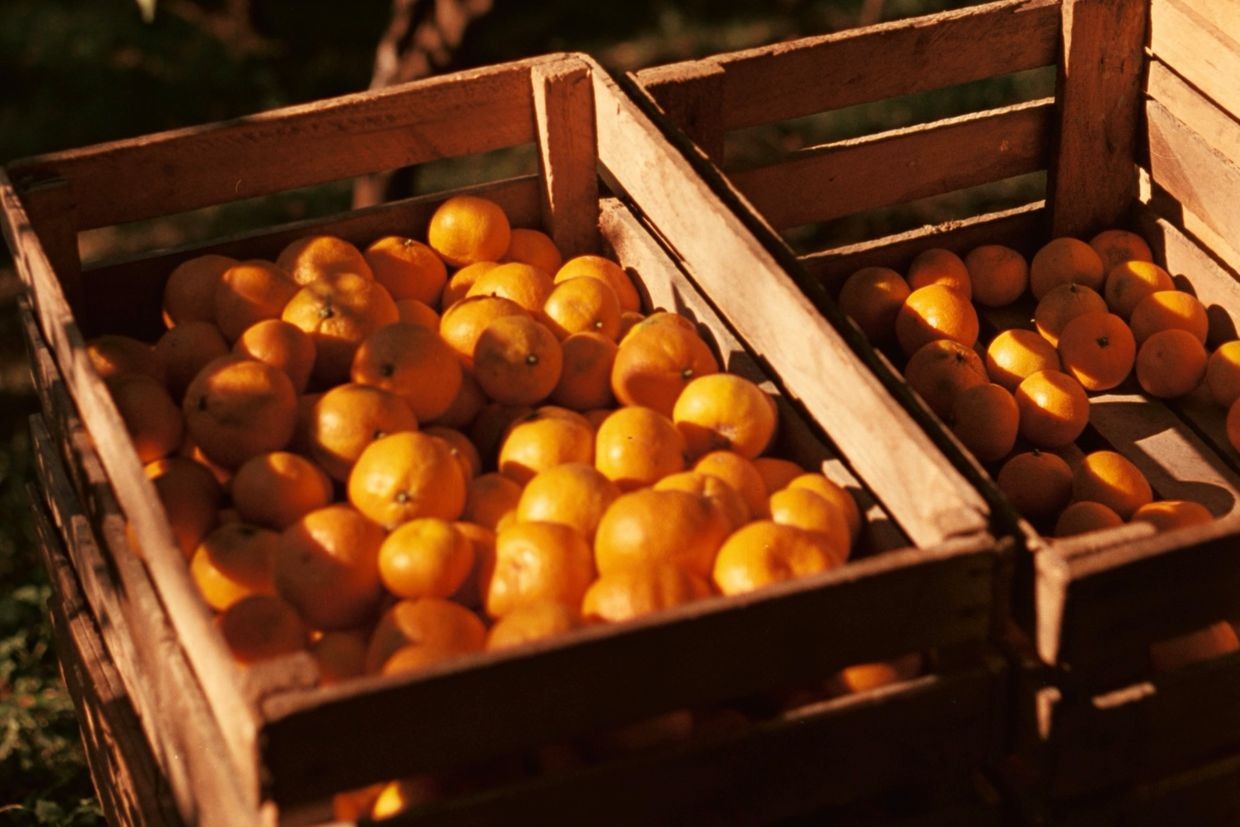
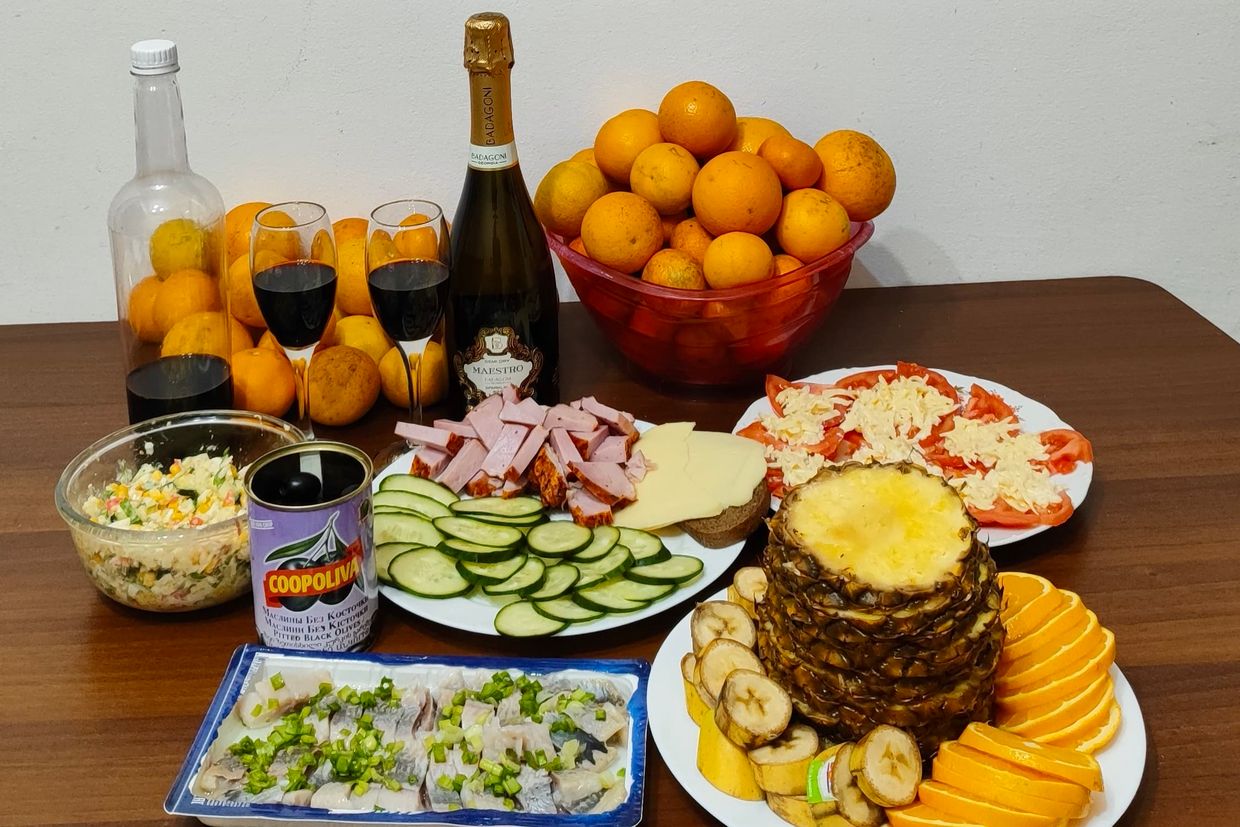
Designed to feed the ravenous demand of a ‘closed’ economy, the hillsides of Adjara and Abkhazia were strategically transformed by the Soviet Union into mandarin monocultures. From Moscow to Siberia, the arrival of these ‘exotic’ fruits became a cultural event for those facing brutal winters, symbolising the subtropical warmth of the empire’s southern frontier. A New Year’s table centrepiece, mandarins became the ultimate seasonal currency: a luxury of scarcity and — at the grey markets — price.
Distribution of this citrus engine, however, was so inefficient, experts say, that it birthed the legendary ‘suitcase trade’, defining the entrepreneurial spirit of Georgian farmers in the 1980s. Zviad’s peers bypassed the sluggish state distribution with calculated defiance and swagger — transforming their mandarin surplus into a sophisticated second economy. Easily spotted in their wide, flat caps–nicknamed aerodromes for their oversized brims, Georgian farmers would haul unwieldy suitcases stuffed with over 50 kilogrammes of mandarins through the terminals of Batumi airport, often bribing Aeroflot pilots to stow their crates.
At the kolkhoz markets of Moscow and Leningrad, the coveted fruit was sold at 10 times the state-regulated price. A single successful trip to the imperial centre could earn a farmer more money than a year of state wages. The Kremlin ultimately tolerated this ‘grey market’ as a necessary compromise to keep the party elite and urban intelligentsia satiated when the official system failed to deliver the fresh fruit.
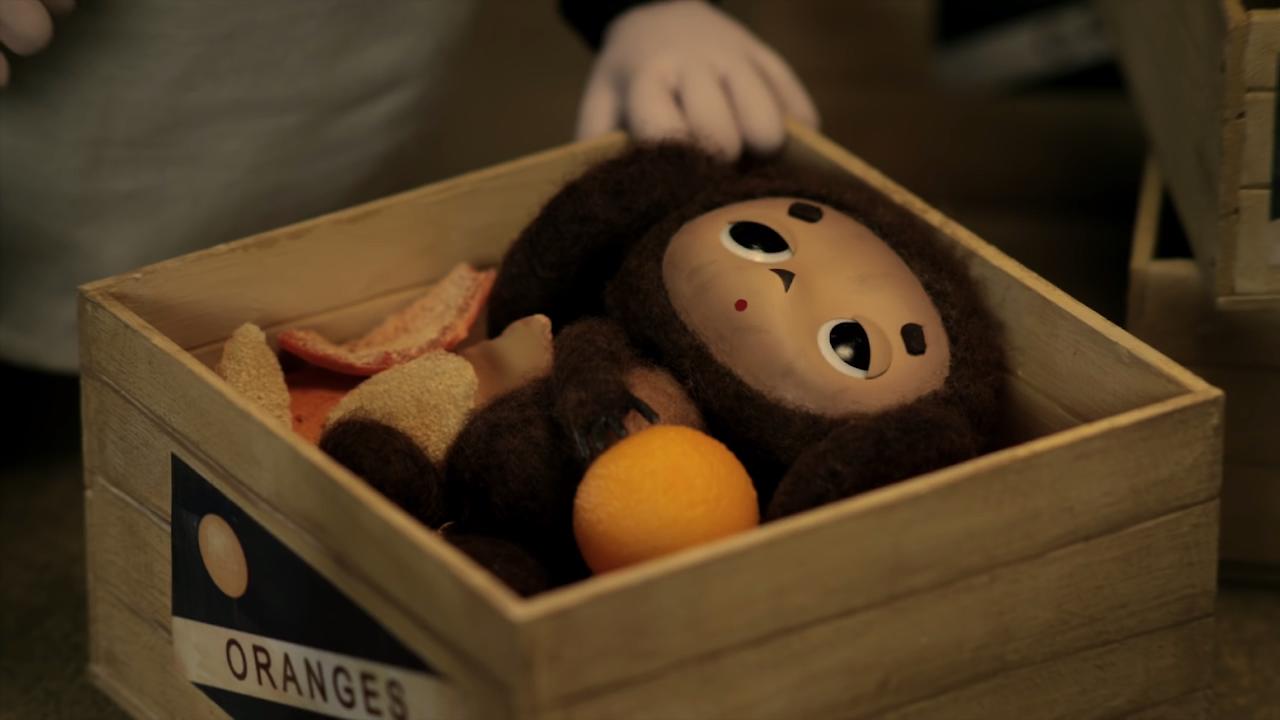
Even Cheburashka, the beloved USSR cartoon character, was famously discovered in a crate of foreign oranges — a nod by Jewish director Roman Kachanov to the Kremlin’s secret supplemental dependency on Israel’s Jaffa oranges necessary to maintain the ‘self-reliant’ facade.
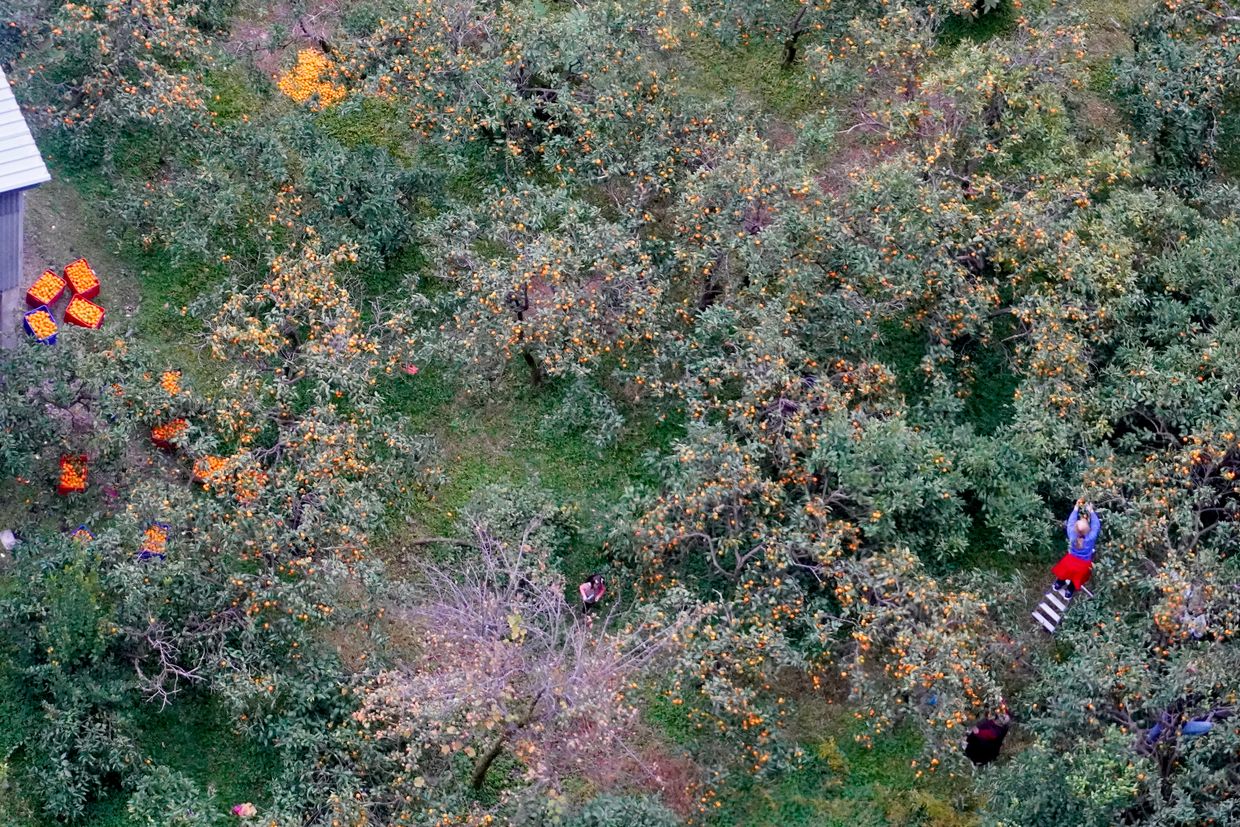
Today, the craving has outlasted the Soviet state that turned mandarins into an empire-wide obsession, remaining an iconic — often nostalgic — staple of the winter season. In Adjara, the industry remains a dwindling patchwork of 24,000 families tethered to trees planted by their grandfathers. Walk the surrounding neighbourhoods of Batumi in December and you are bound to come home with a honey-like satsuma citrus in your pocket.
But without major reforms, it is unclear how much longer Adjara will be home to this citrus basket. Unlike the celebrated wine industry, the mandarin is not an ancient Georgian tradition but rather a manufactured tool of the USSR that hangs on by a thread in the modern market.
The volatile subsidy trap
When the Soviet Union collapsed, the ‘guaranteed buyer’ disappeared.
Except it didn’t.
Instead of enabling a competitive market, newly independent Georgia rebranded the old state buyer into a subsidy-per-kilogramme programme — one that keeps the mandarin industry bound to the imperial orbit.
As experts note, today’s payment of ₾0.40 ($0.15) per kilogramme is an economic sedative, a meager sum designed to prevent the rural unrest that would come with total mandarin market collapse. It pays farmers just enough to keep growing the same low-quality fruit for the familiar Russian market, but not enough to fund the regenerative efforts required to meet stringent EU standards.
‘[The state] didn’t want farmers to strike. They were afraid of the response that might come in the face of change’, Malkhaz Chkadua, Batumi’s Regional Coordinator of Transparency International Georgia, tells OC Media.
‘They know how many Georgian farmers rely on that immediate income. If they cut that budget source, it would not be politically profitable for the Georgian government. This was a short-term solution that is now having negative impacts, to the point that the citrus industry might not survive’.
Price-per-kilogramme subsidies are considered an ‘old, bad’ practice, abandoned long ago in the West, explains Irakli (Rati) Kochlamazashvili, a leading figure in the agricultural policy sector and Deputy Chair of the Georgian Farmers’ Association.
‘Since the nineties, the EU has shifted to “hectare subsidies” that incentivise quality over quantity’, Kochlamazashvili, tells OC Media, noting that the same issue exists with wine grapes — in 2025, over ₾200 million ($74 million) was spent on grape subsidies alone.
Unable to meet Western market requirements, Zviad’s surplus is continuously funneled to the only buyer that will accept it: Russia. While farmers are often blamed for producing ‘non-standard’ fruit from over-age trees, the subsidy effectively traps them in that low-quality category by guaranteeing payment for mediocrity. As long as Russia and its Commonwealth of Independent States (CIS) neighbours continue to absorb 99% of Georgia’s citrus exports, there is no incentive for growers to improve quality, preventing the industry from ever standing on its own or becoming a global competitor.
The mandarin’s fate mirrors the battle for Georgia’s future: a choice between the subsidised passivity of a Soviet past or the necessary reforms required for a European horizon.
‘In Soviet times, Georgia was the only citrus supplier for a closed economy. Today, the world is open, and we haven't progressed enough’, Kochlamazashvili asserts.
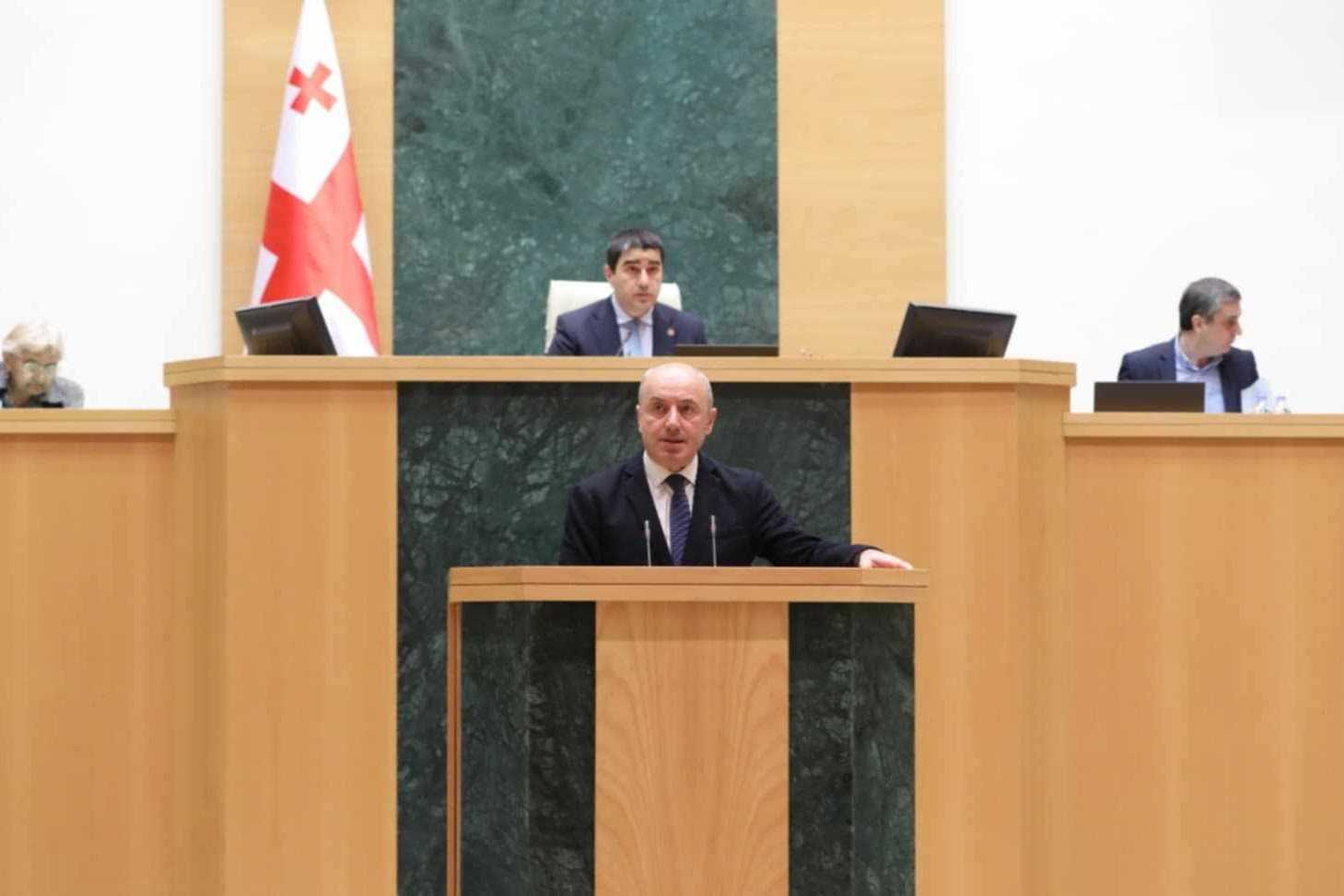
The system that binds Zviad to this dying economic structure is a microcosm of the political backsliding facing Georgia itself. By continuing to subsidise low-quality fruit, the ruling Georgian Dream party maintains a fragile dependency on the former Soviet sphere, prioritising short-term stability over the modernisation required for Western markets. The state has effectively sacrificed the path of European integration for a subsidised anchor to the past — a ‘stability’ that experts say is proving to be a mirage.
The no-buyer crisis of today
This season, farmers like Zviad are left with crates of fruit but nobody to call. Despite favourable weather and a harvest that ripened fully, trade has plummeted. Long-standing exporters, who once moved up to 1,000 tonnes annually, are withdrawing from the Adjaran market entirely. For these middlemen, risk has outgrown the reward.
As logistics become more difficult due to Russia’s full-scale invasion of Ukraine, Georgia’s reliance on the unstable Russian market becomes even more precarious. Russian buyers have become a liability. Between the depreciating rouble and complex transaction hurdles, exporters can no longer be guaranteed full payment in a stable currency, leaving them to back out. The numbers reflect this exodus: from January to November 2025, total export volumes were 2.6 times lower compared to the same period in 2024.
The loss of Ukraine as a major buyer since the 2022 invasion has created a nearly total reliance on the unpredictable Russian route. With the traditional sea route to Odessa closed, the primary export vein now runs through the notorious ‘Larsi bottleneck’, a mountain border crossing where 10-day queues frequently turn truckloads of fresh citrus into rot. And it isn’t just the physical landscape that has become impassable, but the global one.
As export options vanish, other competitors rush to fill the void. Egypt and Turkey are squeezing out Georgia’s fragile share in Russia with their superior logistics and reliable delivery. To circumvent sanctions, Russia has even established formal barter schemes with Pakistan — exchanging grain and lentils for 15,000 tonnes of Pakistani mandarins last season.
The invisible leash
The mandarin industry also remains a tool of political leverage, a leash that can be tightened or loosed by Moscow to signal its political discontent. In 2006, Russia’s agricultural and food safety watchdog, Rosselkhoznadzor, banned all imports of Georgian fruit and wine, citing ‘sanitary concerns’ and ‘pests’. In reality, it was a politically motivated attempt to destabilise the Georgian economy; a punishment for the pro-Western Rose Revolution and subsequent moves toward the EU.
The seven-year embargo that followed should have been a wake-up call that forced the Georgian fruit industry to find new markets, much like the wine industry did. Instead, mandarins remained largely stuck in the post-Soviet sphere, with some farmers reverting to a kind of ‘suitcase trade’ by renting buses to sell or exchange fruit in Tbilisi, Kakheti, and Azerbaijan. In 2013, after the Georgian Dream party came to power, the Russian market was reopened and the mandarin industry immediately returned to its old orbit.
Mandarin trade remains a pawn in a political game of economic coercion today. For example, citrus from Abkhazia is once again flooding the Russian market since the recent lifting of the 2024 mandarin embargo. This ban was widely thought to be a ‘form of retribution’ from Moscow, used to destabilise the leadership in Abkhazia and create conditions for more compliant politicians to return to power.
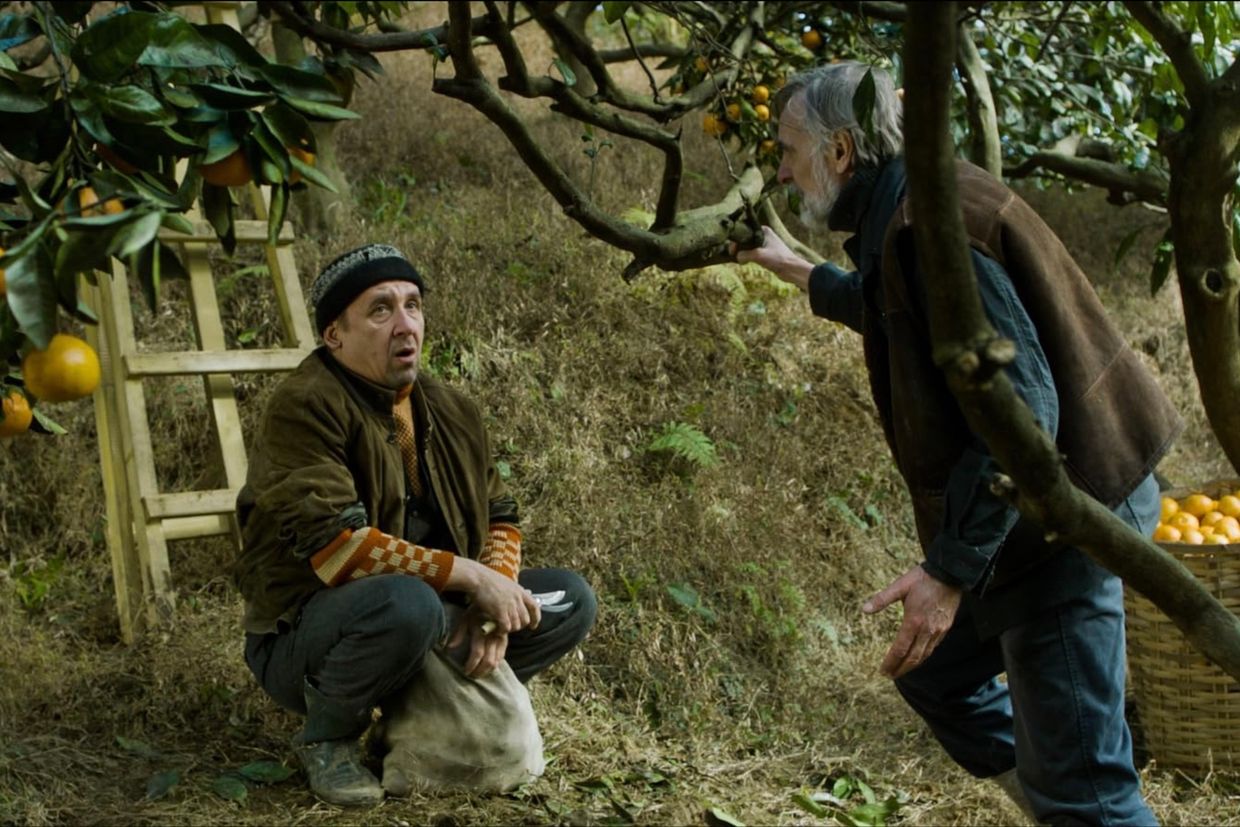
In the 2014 Oscar-nominated film Tangerines, set during the 1992-1993 war in Abkhazia, the violence is referred to as the ‘Citrus War’. While a metaphor for the absurdity of the bloody conflict, the concept has been adopted to describe the weaponisation of trade — in this case, an imperial power that uses market access to punish a former satellite for seeking Western integration.
The Turkish monopoly
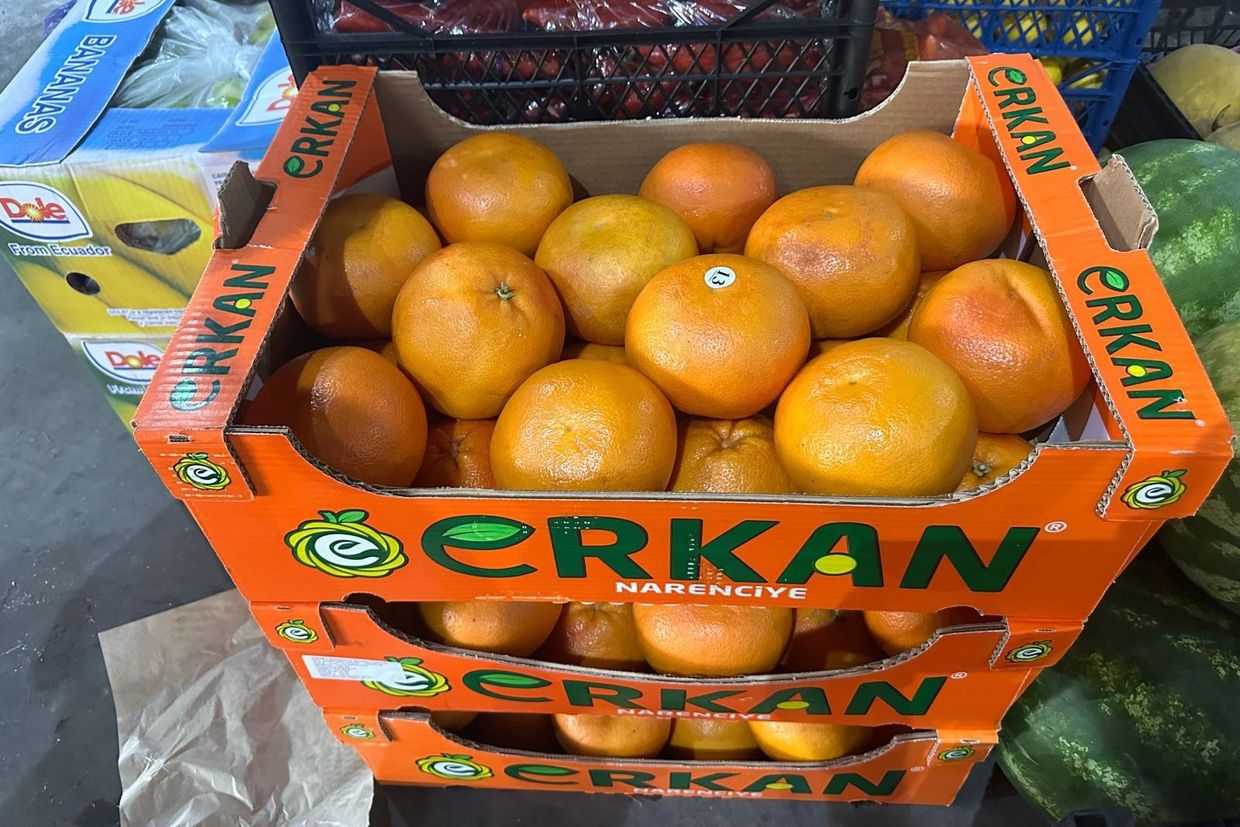
While Georgian satsumas still claim the sidewalks and bazaars during its 12-week season, the lucrative retail market belongs to another neighbouring titan. Inside supermarkets like Carrefour or Goodwill, the Turkish clementine — waxed, stickered, and reliable — accounts for 96% of all Georgian citrus imports. It is a dependency that Chkadua describes as political populism: ‘feeding our people from another people’s pocket’ while the domestic industry withers.
Zviad lives in a precarious limbo. He is subsidised to grow fruit for a volatile Russian market that is increasingly replacing him, while the high-margin shelves are dominated by Turkey.
As far back as the 1920s, secret trade agreements ensured a steady flow of Turkish oranges and lemons into the USSR. Because the Soviet rail system was slow and Georgian harvests were vulnerable to northerly frost, Soviet planners relied on Turkish vessels to reach the imperial centre via Odessa in 48 hours. This pragmatism eventually bypassed the Iron Curtain and exposed the systemic inefficiencies that continue to plague Georgia today.
Turkey, a global titan of exports, has turned the Georgian market into a playground for its ‘perpetual harvest’. By staggering cultivars, Turkish exporters enter the market early and stay long after the seasonal cliff evaporates Georgian supply in February. With centralised logistics and international certifications, Turkey achieves economies of scale that Adjara’s fragmented small-farm system cannot match, and at a price point that undercuts domestic production. Once the local supply vanishes, they hold the monopoly and claim a permanent retail presence.
For smallholders like Zviad, the barriers to grocery retail — standardised packaging, entrance fees, and 45-day payment cycles — are insurmountable. These imports threaten to freeze him out of his own market, and the displacement is often deceptive.
As Kochlamazashvili explains, ‘traders often forge documents to sell imported fruit as “local” because they know customers want Georgian products’. To break this cycle, he argues for an ‘import substitution strategy’, a shift away from the volatile markets of the past and toward reclaiming the domestic market.
The aging orchards
For small-scale farmers like Zviad, the reality looks bleak. His trees, nearly half a century old, are struggling. Decades of mono-crop farming have depleted the soil leaving his mandarins smaller and less vibrant than the fruit of his youth. Caring for his over-age trees requires chemical fertiliser costing around ₾200 ($75), a price tag that swallows his shrinking profit.
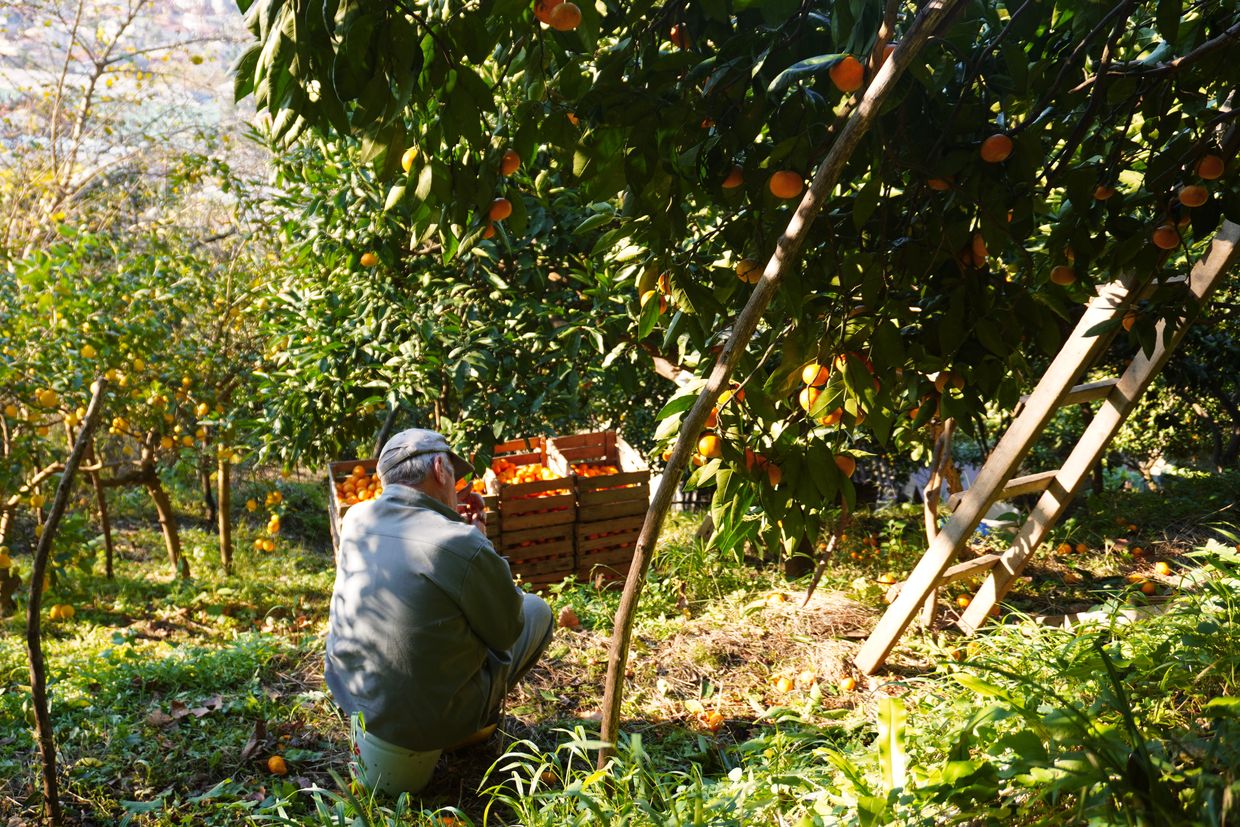
While state programmes offer to finance up to 80% of the cost of new sapling varieties, they offer no solution for the ‘five-year gap’. A farmer cannot afford to wait half a decade for new trees to fruit without a bridge income. Faced with the choice between five years of no revenue or selling low-quality fruit today, most choose the latter.
Across the entire region, only 35 hectares have been replanted with modern varieties. Even the Ministry of Agriculture in Adjara admits the failure of this pace. Jimsher Diasamidze, the region’s head of sectoral development, noted that the current participation is not enough to renovate old farms even over the next 10 years.
Yet, instead of addressing the inadequate subsidy model that keeps farmers trapped, the state often outsources the blame. Farmers are often accused of ‘laziness’ or a ‘lack of initiative’. This is especially true as many abandon their groves for the burgeoning tourism sector — Adjara’s primary competitor for land and labour — where the returns are immediate and the work less backbreaking.
Likewise, a convenient focus on ‘unfavourable weather’ shifts attention away from the root causes. While snow storms and northerly frosts are real threats to the delicate crop, their role in triggering subsidy increases has become little more than agricultural insurance against the inevitable rupture of an old system. Indeed, as experts note, using climate change as a scapegoat for poor yields is an easy distraction that bypasses systemic reforms like quality improvement and land consolidation.
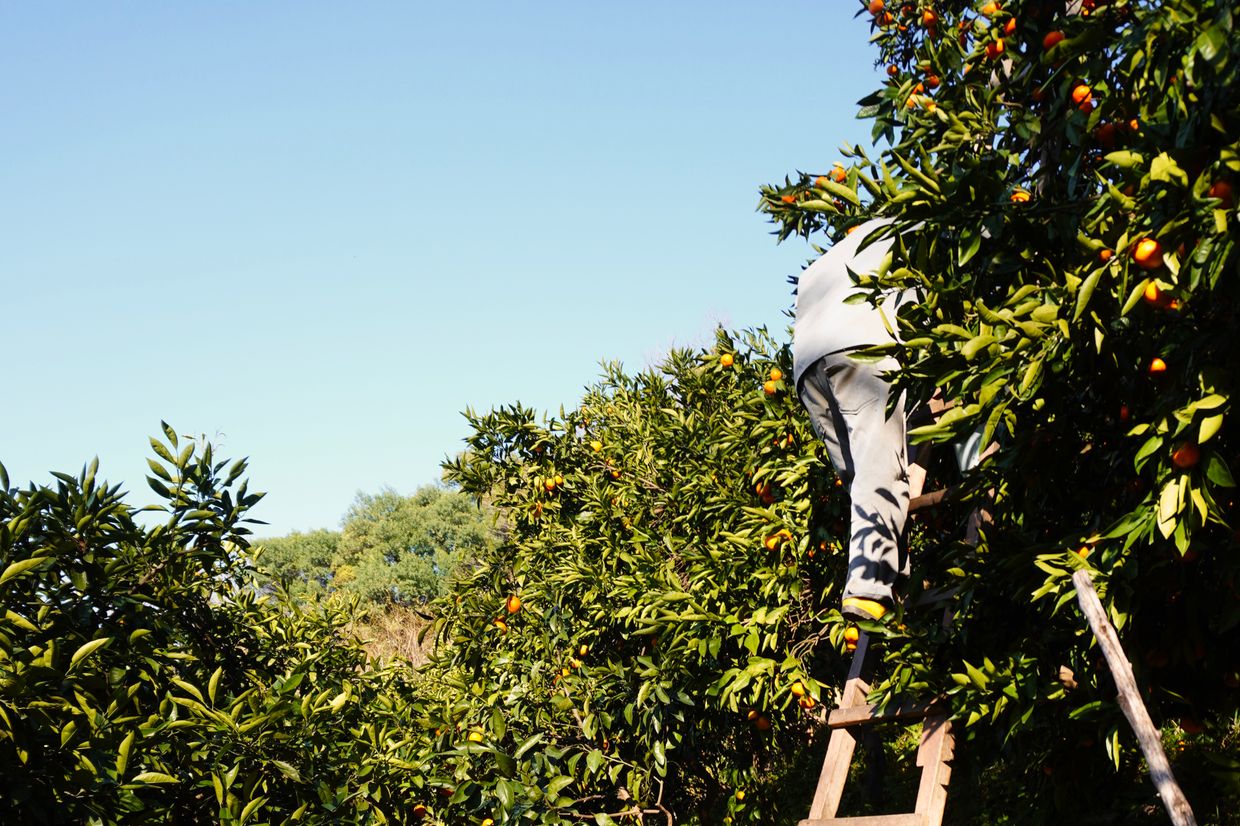
Without land consolidation, Georgian smallholders remain a fractured patchwork, unable to compete with the industrial-scale neighbours in Turkey.
‘Farming on a 0.2-hectare plot, as is common in Adjara, simply cannot provide a significant income for a modern family anymore’, Kochlamazashvili says. Unless small farmers consolidate or form genuine associations — which currently do not exist for citrus growers — the sector will continue to hollow out.
‘We need revolutionary changes. We must stop subsidising the past. At first, these [moves] are very painful and unsatisfactory, but if you want to develop your agriculture, then you should do exactly that while providing farmers with alternative means of survival’, Chkadua says.
The mandarin’s distant twin
The tragedy of the mandarin stands in stark contrast to the success of Georgia’s modernising hazelnut and blueberry industries. While citrus branches hang heavy in a volatile subsidy cycle, hazelnuts have generated a 71% revenue increase at a record $10.06 per kilogramme driven by high-value EU orders from Italy and Spain — even in the face of similar Turkish competition.
This is the result of a decade-long USAID extension model that prioritises consolidated, intensive farming, climate-controlled drying centres, pest-control, cold-storage infrastructure, and rigorous standards required by giants like Ferrero Rocher. Kochlamazashvili argues that for mandarins to mirror the hazelnut’s success and compete globally, the strategy must become fundamentally ‘business-oriented’.
‘We have festivals and agro-markets to help farmers sell directly to customers, but the mandarin industry is still export-oriented. If we don’t think smart and improve quality, this sector has the potential to disappear,’ he warns.
This existential threat is already visible in the next generation. Experts agree that without incentive or stable income, young people are dissuaded from continuing their family orchards. Drawn to the city for greater work and education opportunities, they will continue to abandon the over-age trees.
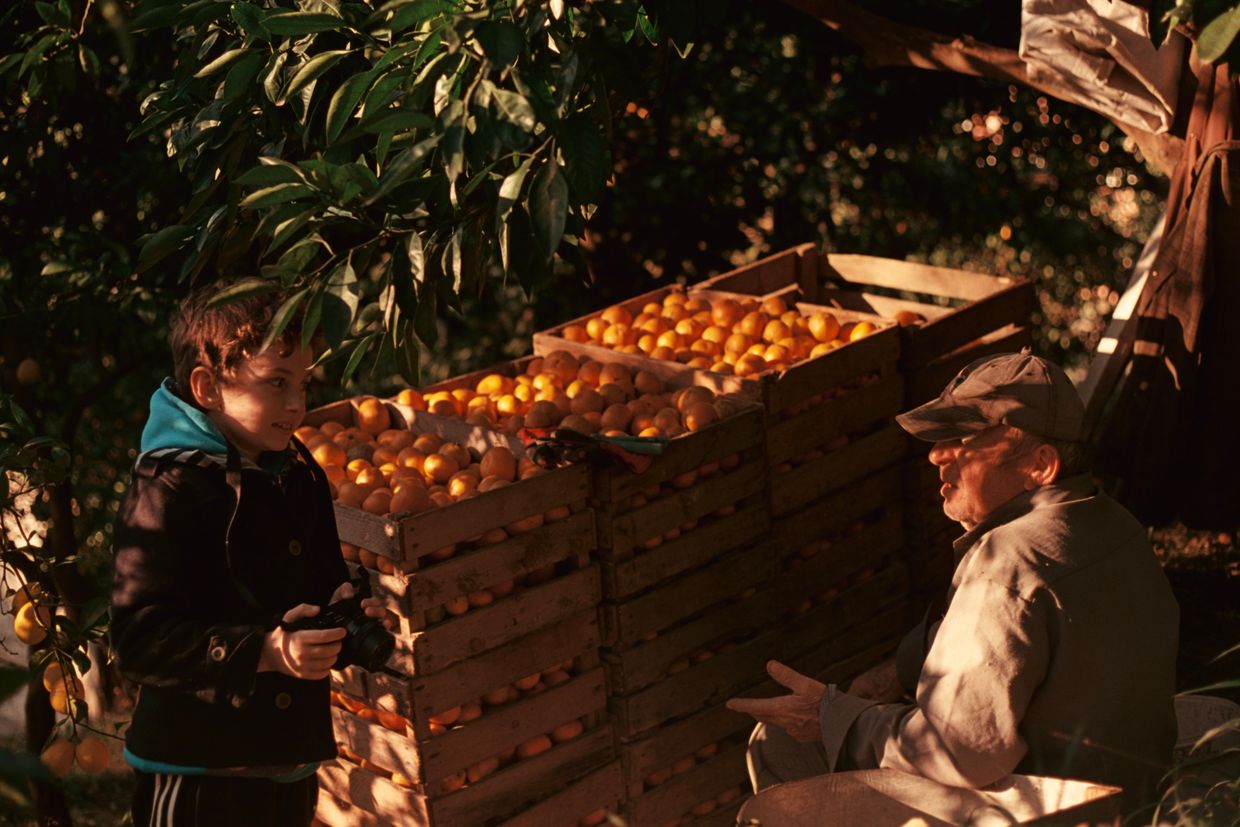
While Georgia’s citizens lean West, its citrus trees lean toward the former Soviet sphere. The mandarin is a living relic of dependency, destined for the same Russian market it served decades ago, trapping Georgian farmers in a subsidy cage made of ₾0.40 coins while export giants like Turkey freeze local fruit out of its own grocery aisles.
Just as the mandarin remains tethered to this former imperial centre, the nation’s fierce fight for a European future is being squashed by a government that claims a Western future yet overtly reverses democratic gains in exchange for convenient ties to the past. The tragedy of the mandarin embodies this political exchange as a warning, all while the clock ticks on Zviad’s 10-year omen.