Opinion | How Kadyrov uses the UFC — and its US stars — to normalise his repressive dictatorship
Ramzan Kadyrov has become notorious for co-opting MMA stars, including those from the US, to polish his justifiably tarnished reputation.
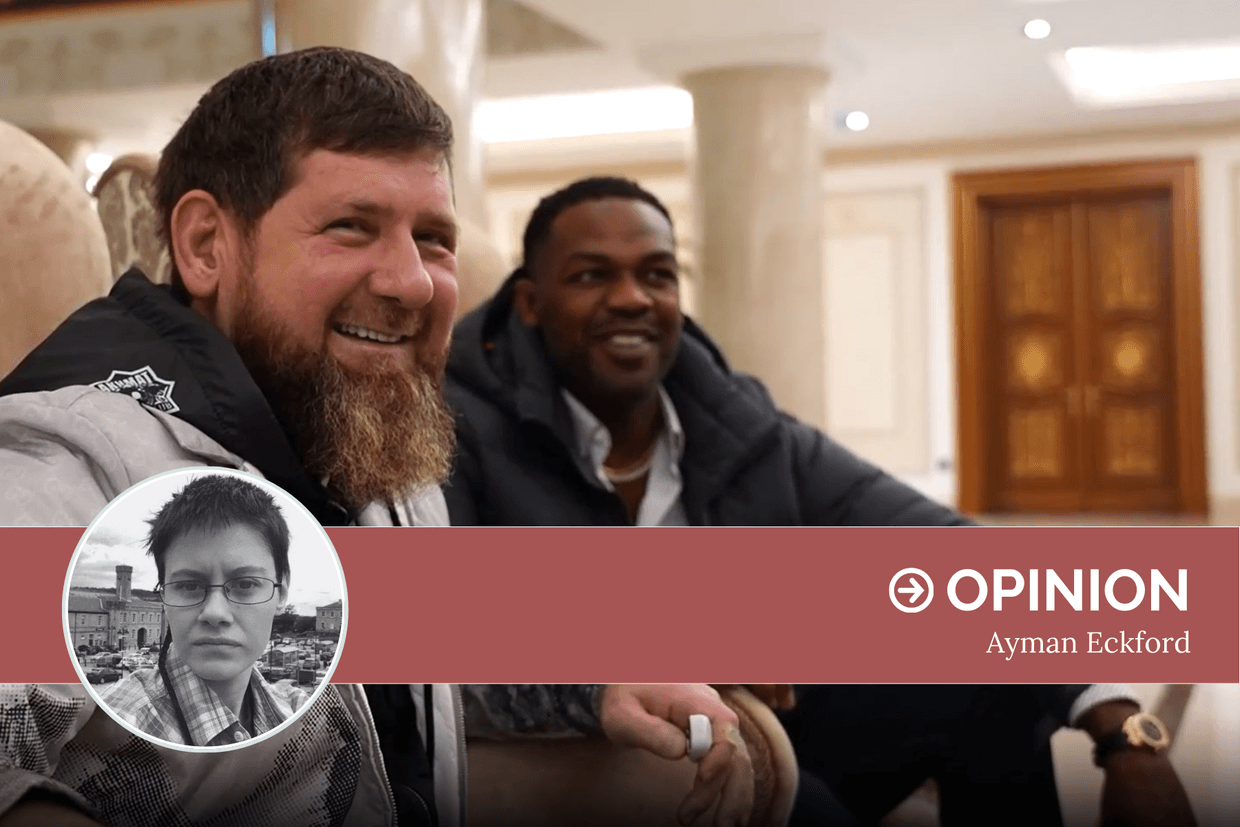
In November, Adam Kadyrov, the favourite son of Ramzan Kadyrov, the leader of Russia’s administration in Chechnya, finally reached adulthood — at least officially. Eighteen is the age Russian law recognises as the beginning of accountability, the moment a boy becomes, in theory, responsible for his own decisions. But Adam Kadyrov is no ordinary boy, and Ramzan Kadyrov is not a father content with ordinary milestones.
Among Russian liberals, Adam Kadyrov is a meme. Among Ukrainians, a symbol of Russia’s colonial arrogance. Among free Chechens, he is a punchline, a joke, a boy weighed down by medals gifted by his father rather than earned.
Inside Chechnya, where people mock the regime only in whispers, Adam Kadyrov’s name elicits a different kind of humour — the quiet, exhausted kind shared behind closed doors. Kadyrov called himself the Padishah — a title used to refer to shahs of Iran or rules of the Ottoman Empire — which made Adam Kadyrov a ‘padishah’s son’, even though Chechnya has never had shahs and the idea of one would be comical if the consequences weren’t so cruel.
Still, the eighteenth birthday of such a son cannot be simple. So Ramzan Kadyrov prepared a spectacle: celebrities imported, camera operators stationed, protocols rehearsed. Every gesture carried the weight of choreography, every smile timed. Amongst it all, American athlete Jon ‘Bones’ Jones — considered one of the greatest MMA fighters in history — played a main role in this theatre show.
While visiting Grozny, Jones posted pictures of himself dancing with Chechen women, posing with Ramzan Kadyrov’s sons, playfully grappling with Adam Kadyrov, and, most disturbingly, testing rocket launchers with the family — all of it uploaded to social media as if he were attending a harmless cultural festival instead of standing in the backyard of a man accused of the torture of civilians and systematic repression.
While rockets identical to the ones Jones posed with were landing on Ukrainian hospitals and apartment blocks, he was grinning with the very men committing war crimes. Russian propaganda has spent years painting the US as an enemy, yet here was an American celebrity willingly participating in the regime’s PR. It didn’t matter — Jones pretended that nothing wrong was happening in Chechnya. He later confirmed that he was participating in this show for money.
Jones is a former two-division UFC champion, one of the most decorated fighters in the sport. For Ramzan Kadyrov, this sort of prestige is currency. Following the meeting — which produced no protests, no boycotts, no demands for accountability — Jones faced no consequences. He faced none of the outrage that erupts when public figures comment even mildly on Israel or Palestine. His Muslim fans said nothing, despite the growing global interest of Muslim youth in combat sports. His American fans shrugged and moved on, partly because Jones already compromised himself.
Scandals that would end a Hollywood career barely dent an athlete’s fanbase. Jones himself was stripped of his UFC title in 2015 after fleeing a hit-and-run that injured a pregnant woman. He has also faced charges of domestic violence, and has struggled with cocaine abuse. Others in the sport have ties to extremist ideologies, criminal charges, or violent histories. In some corners of MMA culture, being a radical — even being openly sympathetic to fascist symbols — is not career-ending. So Kadyrov’s ‘PR department’ knew it wouldn’t matter what sort of athlete would work with them, or, even more probably, that the most problematic would be the most likely to agree to such meetings.
Kadyrov has been using MMA fighters for years — he now has a networking hub for celebrities unaware or unwilling to consider the political meaning of their visits. Through it, Kadyrov has posed with icons like Mike Tyson and Floyd Mayweather, both also similarly controversial and compromised celebrities. It almost feels as though Kadyrov has a particular fondness for celebrities with histories of domestic abuse or addiction — the kind of men who are easily bought, and who are unlikely to question whose image they’re promoting.
 Elizaveta Chukharova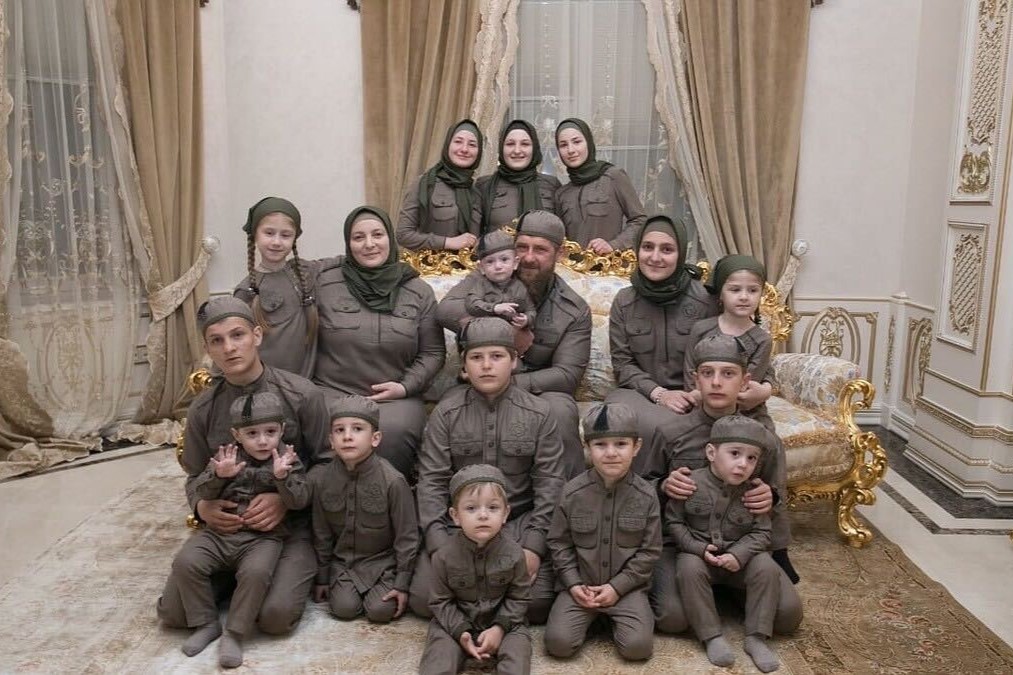
That’s why Justin Gaethje is an interesting case, an American UFC fighter who doesn’t come with the baggage of domestic-abuse charges or addiction rumours. He’s considered one of the ‘normal’, ‘good’ faces of American MMA — but even he engaged with the Kadyrov propaganda, coming to one of Ramzan Kadyrov’s son’s birthday parties (it was not clear whose) in 2022. He also took photos aiming Russian rifles, taken in the middle of the Russian-Ukrainian war.
But posing with celebrities is not the only way Kadyrov’s family is using MMA in their propaganda.
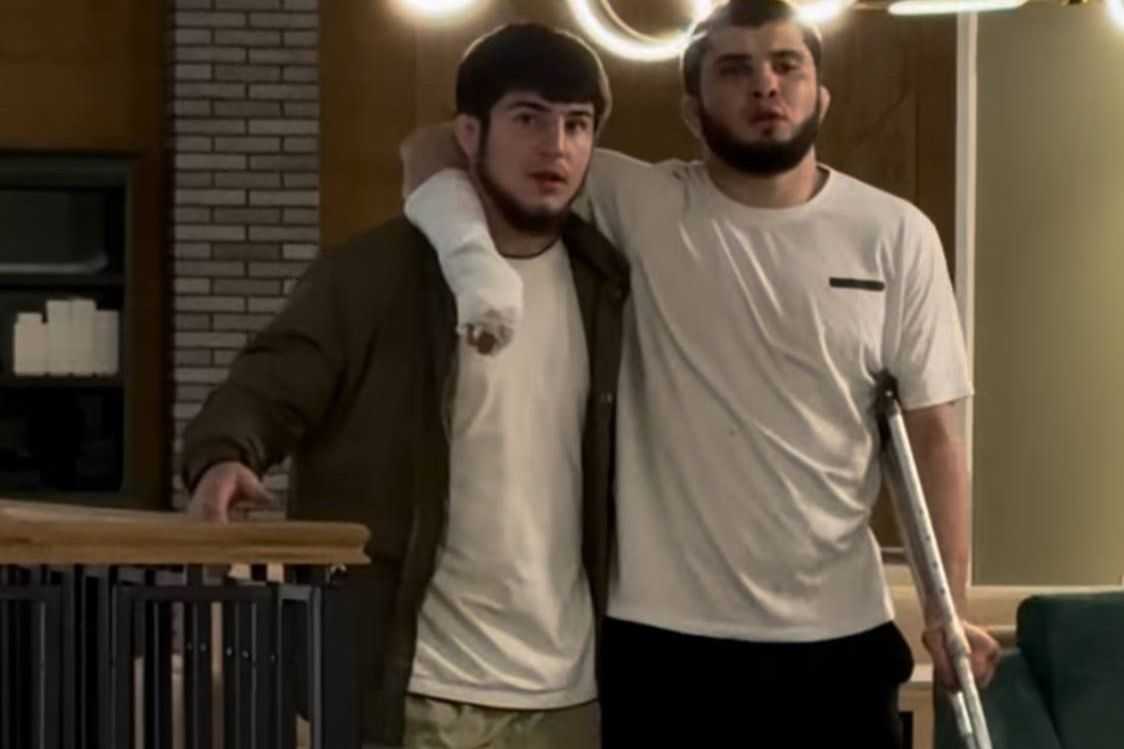
One of the clearest examples of how the Kadyrov family uses sport in propaganda took place in December 2022, when Zelimkhan (Ali or Eli) Kadyrov — then 16-years-old — made his professional MMA debut. From the moment he stepped into the cage, the fight resembled a bad sitcom episode more than sport.
Khamzat Chimaev, a Chechen UFC superstar and Eli Kadyrov’s mentor, stood in his corner, ensuring the world would watch. Eli circled his opponent, Islam Akbarov, casually, threw light punches, and delivered two left hooks that sent the man to the canvas. The finishing strikes were so soft they looked rehearsed, yet the referee stopped the fight instantly. The victory was announced with the usual certainty of a foregone conclusion. The fight was followed by the interview in which Eli Kadyrov thanked his father for ‘developing combat sports in Chechnya’. He ended with the chant ‘Akhmat Sila’ — a slogan that glorifies the Kadyrov family, especially his grandfather Akhmat, whose name Ramzan Kadyrov uses as a political brand. Eli Kadyrov was partly right — it was his grandfather’s agreement with Russia and his father’s special ‘sports development’ that made his victory possible.
The whole spectacle felt straight out of Sacha Baron Cohen’s film The Dictator, where a fictional tyrant ‘wins’ athletic competitions through blatant manipulation — only this time, it wasn’t a satire, it was real life.
Elizaveta Chukharova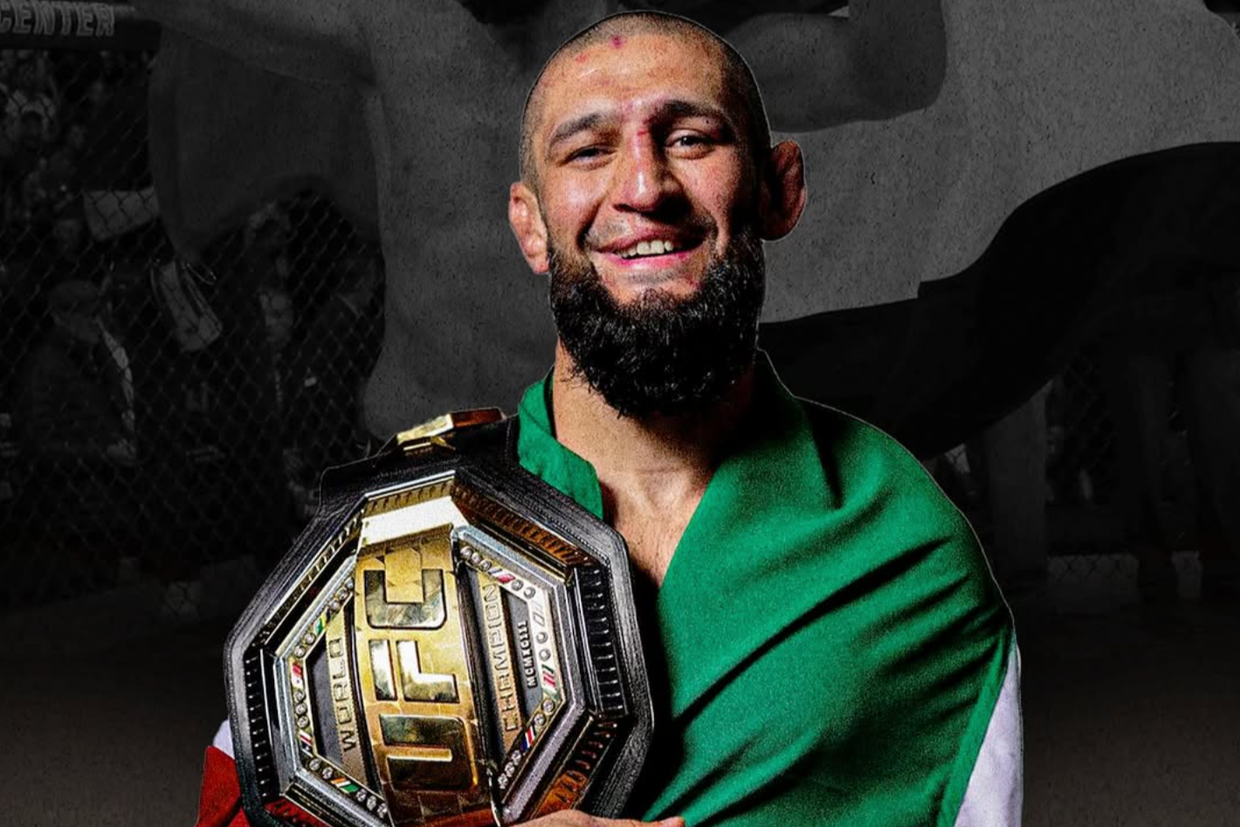
Martial arts provide the perfect distraction from torture chambers for Chechen youth, devastating poverty, and systematic terror. Young men around the globe are much more likely to follow their favourite fighters or watch MMA fights than read a Human Rights Watch report on Chechnya. And Ramzan Kadyrov knows precisely which demographic he wants to manipulate: Muslim youth, young men of colour, white working-class men in the West who often slip into pro-Russia narratives, and, of course, Chechen teenagers whose admiration can sometimes be shaped through sport.
He fears the alternative. He fears the global Muslim community recognising Chechens as part of an oppressed Ummah. He fears that Chechen youth will decide enough is enough and create diversions until they can build towards full-scale military resistance. He fears that conservative working-class white Westerners might notice that ordinary Chechens respect their beloved ‘traditional family values’ far more than Kadyrov himself ever has.
Or, more likely, Kadyrov isn’t even fully aware of the global situation, and the entire political campaign around martial arts was crafted by his more media-savvy employees. Kadyrov and his sons seem far more invested in boosting their own egos — playing athletes, posing with ‘cool guys’, surrounding themselves with fighters they admire. They’ve never shown any real analytical understanding of politics; but they have a team around them that knows exactly how to use it in propaganda.
The cost of all this is paid by ordinary Chechens. As the NIYSO Telegram channel dryly noted, these lavish appearances and imported stars are funded ‘from the budget and the pockets of ordinary Chechens’, many of whom live without reliable electricity or hot water.
But it works. All the young men with whom I spoke in the UK about Chechnya who tried to justify Kadyrov were MMA fans, their source of information being their favourite fighter’s social media pages.
In the end, this isn’t a story about an eighteenth birthday, a fake MMA match, or yet another photograph of Jon Jones with a rocket launcher. It’s the story of how a Russian puppet who is despised by his own people uses sport — the language millions of young men listen to without hesitation — to polish his image and bury the names of those who disappeared into his prisons. And as long as MMA fighters’ social media posts remain louder than the voices of actual Chechens, the show will continue.