Opinion | Not even Kadyrov’s own children are safe from the impunity they created on the roads
By flaunting their own traffic rules, the Kadyrov family has created a reality in which even their own children are no longer safe.
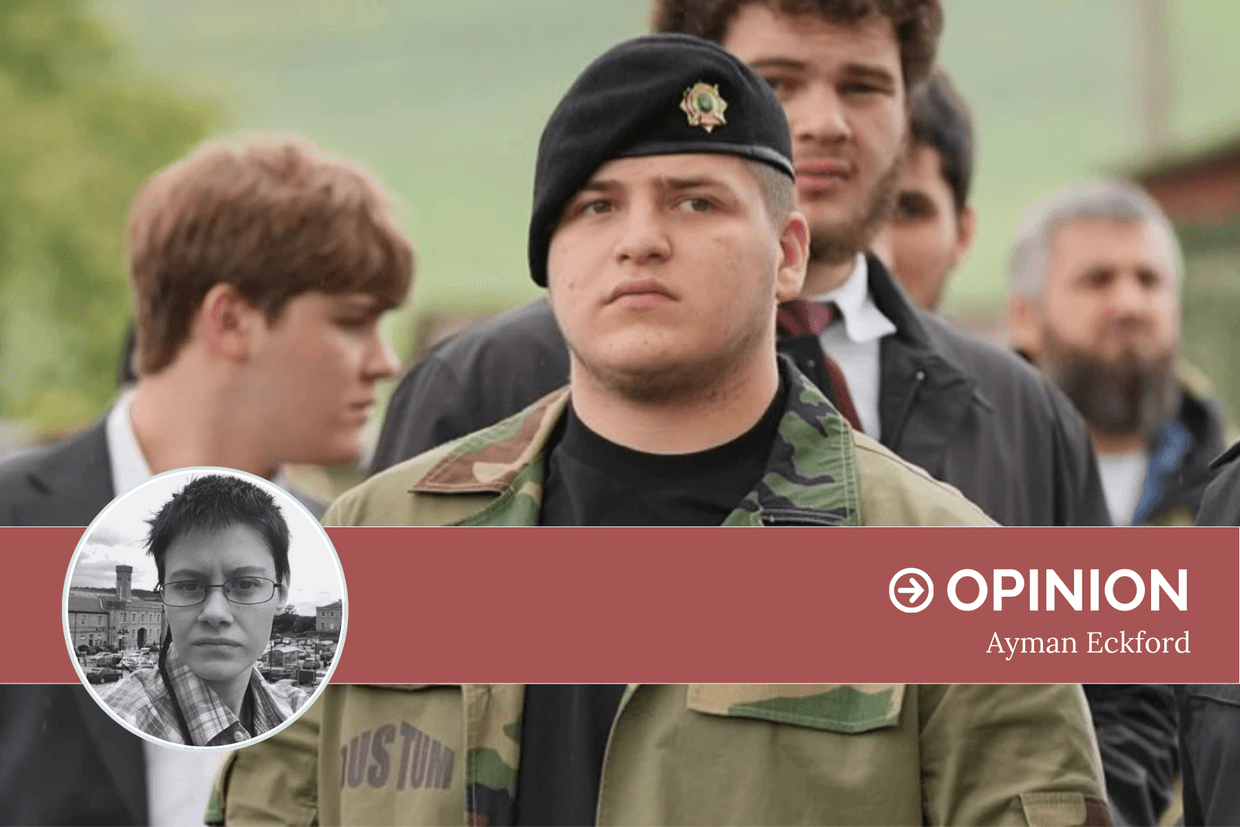
On Friday, the Chechen opposition Telegram channel NIYSO, which has strong connections inside the Chechen community, reported a car crash in which one of the victims was a high-ranking member of the Russian administration in Chechnya, or a close relative of the republic’s leader, Ramzan Kadyrov. Due to extreme secrecy and security measures, the main theories were that it was either Kadyrov himself or his favourite son, eighteen-year-old Adam. The news was soon confirmed to be related to Adam, with Novaya Gazeta and RFE/RL among others reporting the news.
The young man is now in serious condition and was evacuated to Moscow, the capital of the country his father serves. The cause of the crash appears to be simple: Adam Kadyrov’s motorcade, travelling at high speed along Staropromyslovskoye Highway, collided with a car that was entering the highway from Tasuyeva Street. While the truth of the matter may never be known, the majority of commentators and analysts believe the root cause was poor driving on the part of Kadyrov.
 OC Media
But this story is bigger than just another car crash.
The Kadyrov family has a long and peculiar history with traffic accidents and traffic law. The authorities in Chechnya also have a peculiar relationship with road safety.
After the Russian Society of Blue Buckets — a grassroots protest movement that emerged in Russia in 2010 against politicians’ self-serving use of emergency blue flashing lights — criticised Ramzan Kadyrov for reckless driving and abusing road privileges, he responded with mockery, sarcastically telling the media that he would start travelling by horse instead of by car.
At the time, however, silencing Russian activists and independent media was far more difficult than it would later become, or that it had always been in de-facto occupied Chechnya where Kadyrov had unlimited power of repression. Because of unwanted attention and probably to please the Kremlin that wanted a ‘perfect’ image of a new, ‘Russian’ Chechnya, Kadyrov launched a highly publicised ‘fight’ for traffic law enforcement.
For years, Kadyrov’s family and other officials working within the Russian administration in Chechnya have spent significant public funds on campaigns against traffic violations. For example, in August 2015, Kadyrov equated drivers who deliberately violate traffic rules with terrorists and proposed harsher punishments.
‘If a receipt confirming payment of the fine is not presented within 24 hours, the car will be put up for sale’. he said at the time.
Kadyrov promised to punish everyone for traffic violations, including his own relatives. Kadyrov’s officials promoted ‘safe driving’ on social media and sometimes even used WhatsApp to announce new rules.
At first glance, it may seem that Kadyrov, his family, and his allies are obsessed with traffic safety. The reality, however, is far more complex.
‘Those laws are only for ordinary people’, one Chechen activist living in Europe told OC Media.
‘Traffic police don’t even stop Kadyrov’s motorcade when it speeds. In villages, the roads are very narrow, so when Kadyrov’s motorcade passes, people literally hide to avoid being hit. And then Kadyrov and his men post those glossy videos about the importance of traffic laws? Of course no one takes them seriously’.
The facts confirm this hypocrisy — the history of the Kadyrov circle’s abuse of traffic laws is grim.
On the night of 4 December 2018, a Mercedes driven by the head of Chechnya’s Shali district — Kadyrov’s cousin Turpal-Ali Ibragimov (who is ironically nicknamed ‘Fast’) — slammed at high speed into a Zhiguli car. As a result of the crash, two passengers in the Zhiguli, a mother and her daughter, were killed on the spot. The head of the family was taken to hospital. But despite the casualties, Ibragimov was not punished. Kadyrov insisted on so-called ‘peace’ agreements between the families to prevent retaliation, while Ibragimov’s security guards confiscated witnesses’ phones to prevent photos from appearing online.
There are other notorious cases.
In July 2025, a traffic collision in Grozny killed a married couple and left two of their children critically injured. Human rights groups and activists identified the driver at fault as Yasin Zakriev, head of Chechnya’s Audit Chamber and Kadyrov’s nephew. According to the Russian human rights organisation Memorial, Zakriev’s vehicle rammed into the victims’ car from behind; Zakriev was unharmed. The victims were buried the following day after which local authorities staged a ‘reconciliation’ between the grieving family and Zakriev — a practice widely used in Chechnya to suppress legal claims. No criminal case was opened, and Zakriev faced no consequences.
Elizaveta Chukharova
In a separate crash in Argun, three members of one family — Bisolt and Zabura Aduyev and their son Umar — were killed, leaving behind two daughters. The driver responsible for the crash was alleged by human rights activists and journalists to be 18-year-old Yakub Chalayev, the son of Zamid Chalayev, commander of the Akhmat Kadyrov Special Police Regiment. This information was never confirmed by authorities, however. Even so, the pattern is clear to see.
‘They don’t even try to hide it’, the Chechen activist told OC Media. ‘Kadyrov’s children post videos where they don’t wear seatbelts, hold phones while driving, and speed recklessly. How can anyone take traffic laws seriously after that?’.
Indeed, many of the younger members of the Kadyrov family are known for dangerous behaviour on the roads.
Many have likely forgotten that Kadyrov had another nephew — Turpal-Ali. Despite his young age, he openly carried a handgun, issued orders, and drove cars without restriction. Laws and regulations then, as now, meant little to Moscow’s appointees in Chechnya.
In 2007, Turpal-Ali, then 13-years-old, was involved in a serious car crash as the driver and was left disabled.
Under Russian law, which Kadyrov’s family formally swore to protect in Chechnya, it is illegal to let such a young person drive a car, and because of his age, Turpal-Ali couldn’t obtain a driving license, but Kadyrov’s family didn’t care. The boy paid the price. He was treated in multiple hospitals, including abroad in Germany, but later died.
Eighteen years later, the pattern appears to have repeated itself — this time involving Kadyrov’s favourite son, Adam. For the Kadyrov family, the ability to break their own laws has become a symbol of power and privilege. They flaunt this impunity before the population, playing a dangerous game.
But eventually, they will fall into the trap they created themselves. When laws are not applied equally, they stop functioning altogether. While corruption or elite discrimination may take time to affect those in power, traffic laws operate instantly. No amount of power can shield someone from the physical reality of danger on the road. By placing themselves above the law — to demonstrate superiority over ordinary Chechens and loyalty to Moscow — the Kadyrov family has created a reality in which even their own children are no longer safe.