Law enforcement officers in Makhachkala have kept a queer 28-year-old citizen of Kazakhstan in pre-deportation for nearly three months before sending him back to Kazakhstan. The man had been detained following a denunciation by an acquaintance.
The information became public after the man spoke to the Telegram channel Ostorozhno, Novosti about the incident.
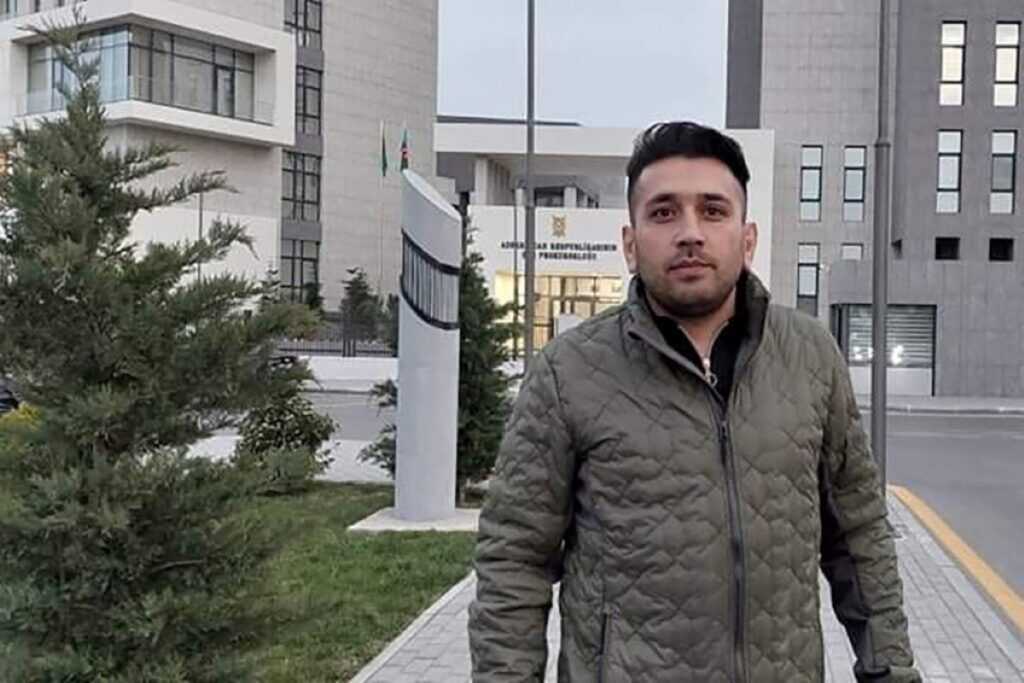
The individual, referred to by journalists under the pseudonym Murad, said he arrived in Daghestan in early November 2025 to visit relatives. According to him, some friends visited him, including Timur (name also changed), who openly identifies as a queer person. The guests later left for a rented flat, and the following day, officers from the criminal investigation department came to Murad’s home. They stated that Timur had reported to police that he had been beaten at Murad’s flat.
Murad told journalists that he denied the accusations, but he was nevertheless taken to the police station. There, he said, officers demanded that he unlock his mobile phone, warning that if he refused, the device would be sent for forensic examination, which could take up to one month. Murad then agreed to provide access.
Officers then examined his private correspondence and social media accounts, finding a three-year-old message exchange in which he had sent intimate photographs to an acquaintance. Murad said he was then threatened with criminal charges concerning the production and distribution of pornography involving a minor, despite there being no such materials on his device.
According to Murad, officers prohibited him from making telephone calls and questioned him about the person to whom he had sent the photographs. Later, he said, one of the officers informed him that a denunciation had been filed against him.
‘In the end, the officer said to me: “You know, Murad, you’re not a bad guy. I’ll tell you honestly, just between us. There was a denunciation against you”. It turned out that Timur, who was allegedly beaten, gave the police my address and said that I was producing child pornography’, Murad explained.
He also alleged that during questioning, officers made insulting jokes and suggested that he perform oral sex on them. After it was established that he was a Kazakh citizen, he was sent for a medical examination.
Murad was ultimately detained for two days on charges of disobeying the lawful order of a police officer, and a decision was taken to deport him from Russia. His appeal against the court ruling was unsuccessful. He says he spent 76 days in a detention centre before being transferred to Kazakhstan.
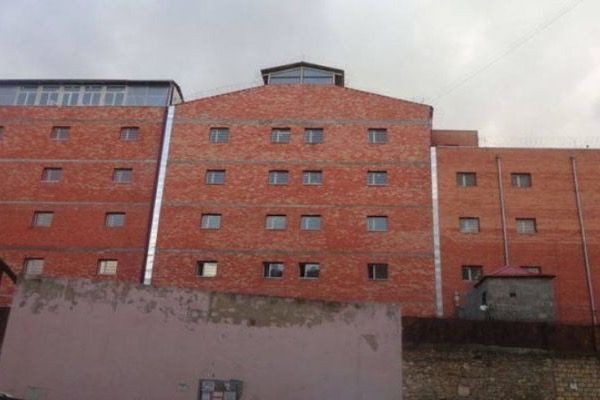
During this time, Murad was held in the Makhachkala detention facility. His relatives, Kazakh representatives, and lawyers reportedly made repeated, but unsuccessful, inquiries to Daghestan’s police authorities regarding his whereabouts and legal status.
Widespread public awareness of such round-ups in Daghestan emerged in May 2025 following the detention in Makhachkala of porn blogger Matvei Volodin (USSRboy).
Using his phone, security officers allegedly invited local men to staged meetings. These men were then detained, beaten and insulted at police stations, threatened with criminal charges, and intimidated with outing — the public disclosure of information about a person’s homosexuality without their consent. Many were filmed on mobile phones, and criminal cases were opened against some on charges of distributing pornography — the most common article used in cases against detained homosexual men.
Urban cafés have reportedly become sites of such ‘hunts’. People are taken to police stations from staged dates or simply from the street — for example, for wearing clothing considered too bright by local standards.
After Volodin’s detention, invitations to rented flats began to be sent to queer men in Daghestan from accounts using his name. There, they were allegedly met by security officers who confiscated their phones and searched their contacts for further targets. Following interrogation and coercion into cooperation, one of the victims left the country and spoke about what he described as provocations by the Interior Ministry to RFE/RL.
The incidents follow an ever-increasing crackdown on Russia’s queer community.
In November 2024, Russia banned the non-existent International LGBT Movement, and in March 2025 it was added to the official list of extremists and terrorists. The authorities claim that the ‘movement’ promotes social and religious discord. As a result, positive references to the LGBTQ+ community and gender transition have been prohibited in the country, despite lawyers and human rights defenders arguing that such measures are unlawful.
The North Caucasus ranks highest in terms of discrimination against queer people, according to the findings of a nationwide study conducted by the Vykhod group and the Sfera Foundation made in 2024.