3.5/5★
Mariam Megvinyte’s latest play contrasts Thebes’ fall in the Oedipus cycle with the Georgian Civil War, all via a feminist perspective.
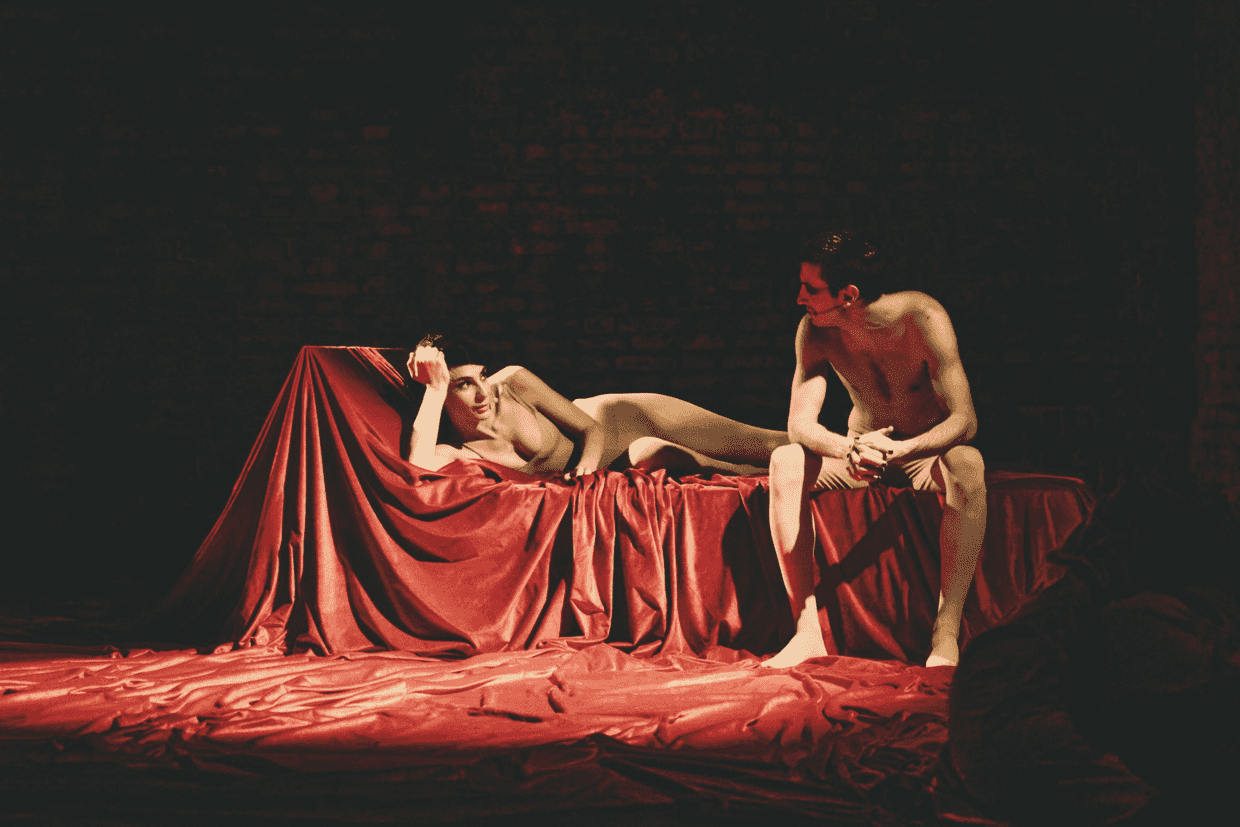
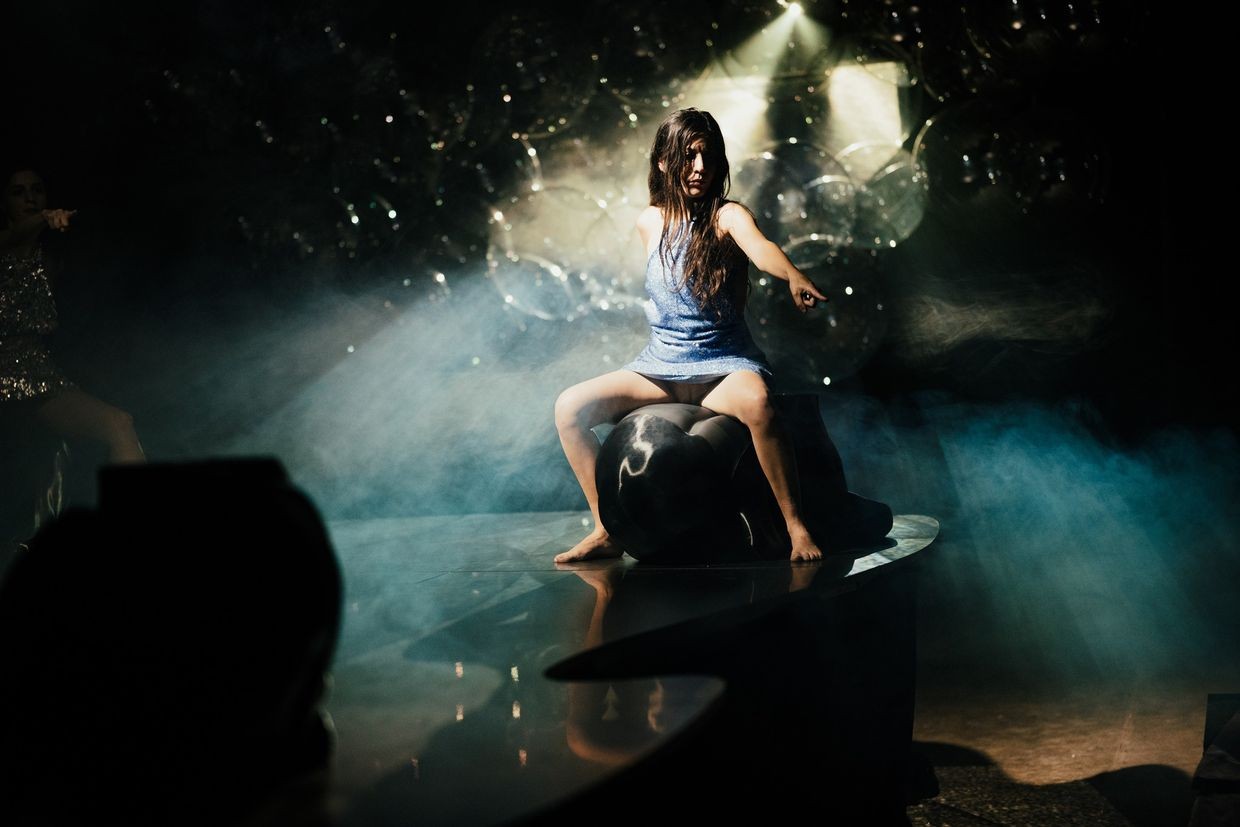
As the audience took to their seats in Tbilisi’s independent Haraki Theatre an unsettling sound accompanied the normal shuffling of placements — loud, synchronised deep breaths of four women. Even as the lights dimmed, the breathing continued, taking up space and focus. Only once everyone’s attention was firmly on the stage did the women begin to speak, turning into a Greek chorus warning of poisoned children and cursed cities.
‘It was said that if the curses do not return from the mountain to the road, the city will live under a curse until then […] If not war, the feeling of suffocation will drown you’, the women warn — a prophecy Megvinyte wants the audience to conceive as being just as relevant to the Greek city of Thebes in classical antiquity as to Tbilisi during the Georgian Civil War in the 1990s.
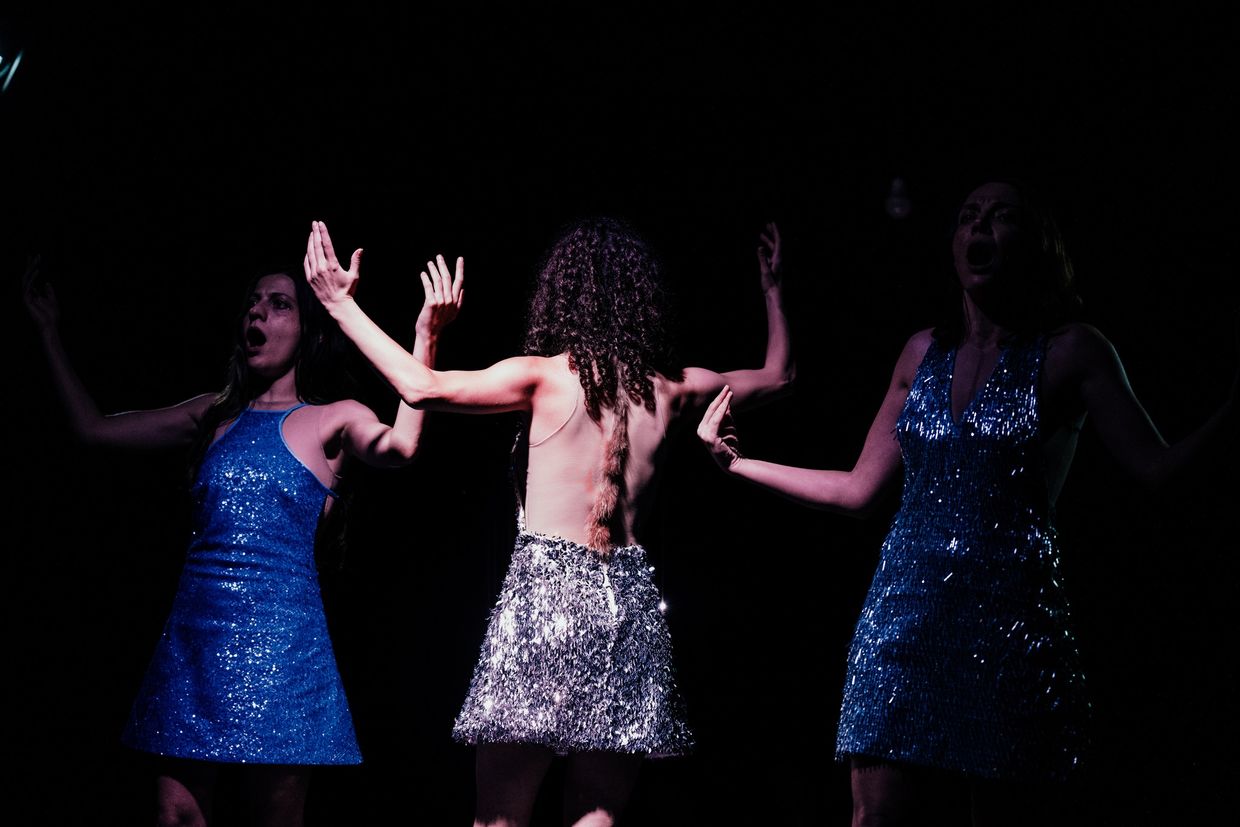
As the play’s title, Jocasta: Raw Material, suggests, Megvinyte’s text — as staged by director Sandro Kalandadze — originates from the Theban plays by Sophocles. In that classic trilogy, a prophecy warns that the son of Jocasta and Laius, the King of Thebes, will one day grow up to kill his father and marry his mother. While his parents attempt to circumvent this prediction, fate cannot be avoided, and one day Jocasta unknowingly ends up marrying her son Oedipus, later giving birth to Antigone, Eteocles, Polynices, and Ismene — her children and grandchildren. When the truth comes to light, the family is torn apart, as is Thebes.
In the text by Sophocles, Oedipus and his daughter Antigone act as the main protagonists. Jocasta, the maligned wife who commits suicide when she learns of her incestous marriage, is not given much of a voice. Megvinyte seeks to rectify this, following Jocasta first at 17, when she gives birth to Oedipus, and again at 36, after her husband’s death.
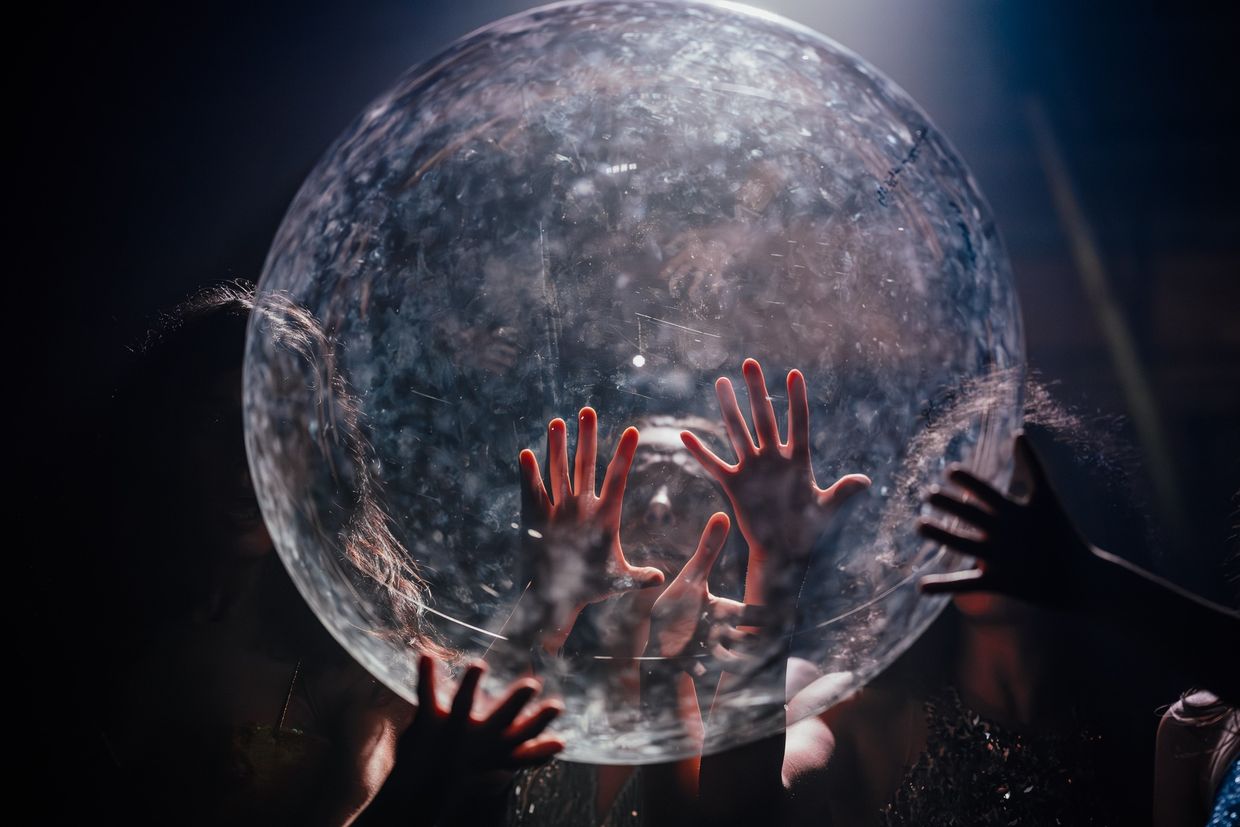
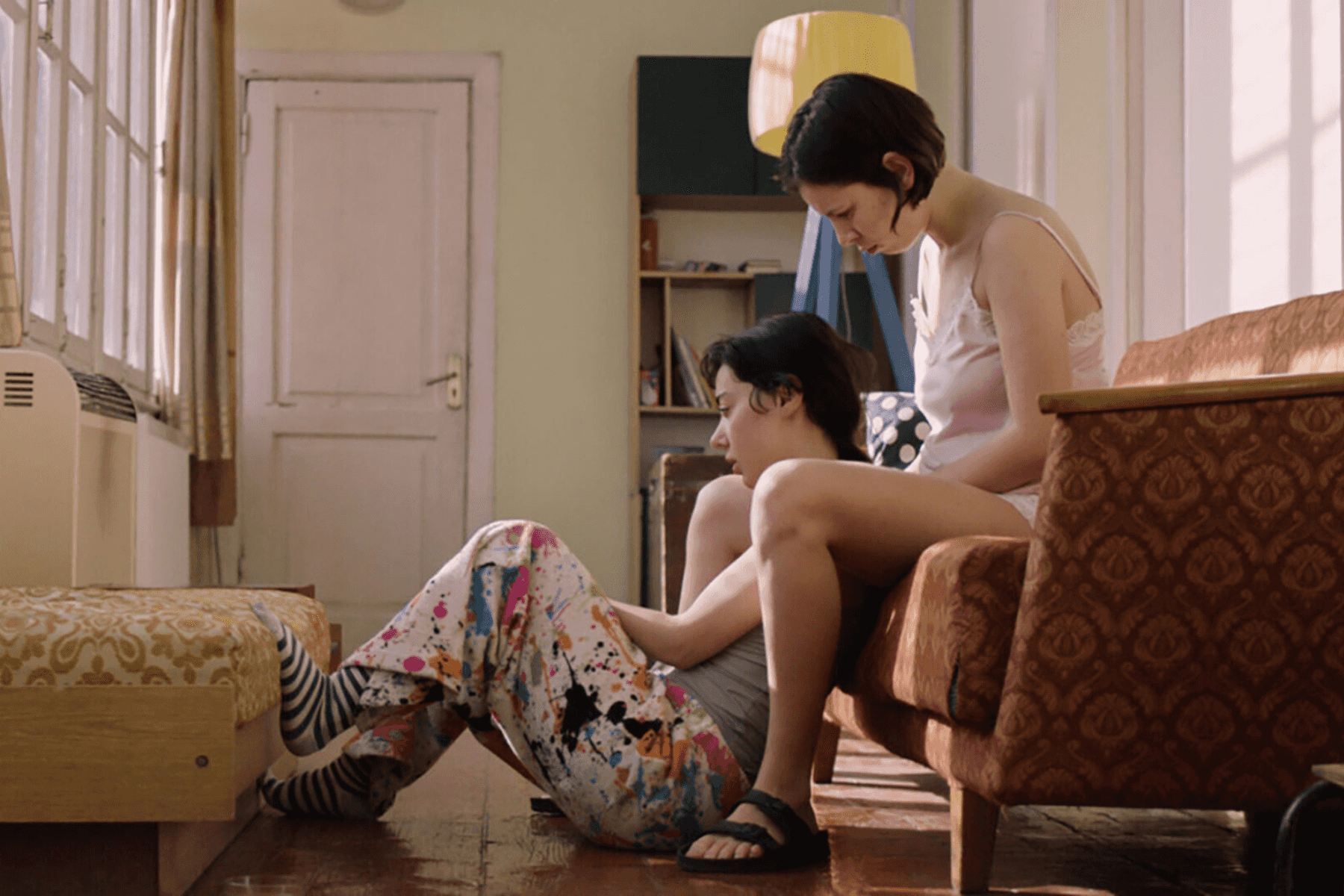
In between monologues and philosophical discussions surrounding motherhood and what it means to be a woman in a body that you may or may not feel belongs to you, the audience hears from Antigone, who has grown up in a collapsed state with much more idealistic views on society, and Clara, a Canadian journalist who arrives in Tbilisi on the eve of the Georgian Civil War with a sense of naïveté.
These discussions dominate the first half of the play, with minimal staging allowing Megvinyte’s poetic language to shine. The topics discussed — from examining how societal decay impacts language production to realistic, modern-day, dark confessions relatable to a Georgian audience (from viewing Russian President Vladimir Putin as a strongman to fearing a child’s homosexuality) — are also intriguing, the constant back-and-forth between the four women, as acted by Gvantsa Enukidze, Nini Iashvili, Anano Makharadze, and Ana Nikolashvili, constantly drawing the audience in, despite the minimal staging.
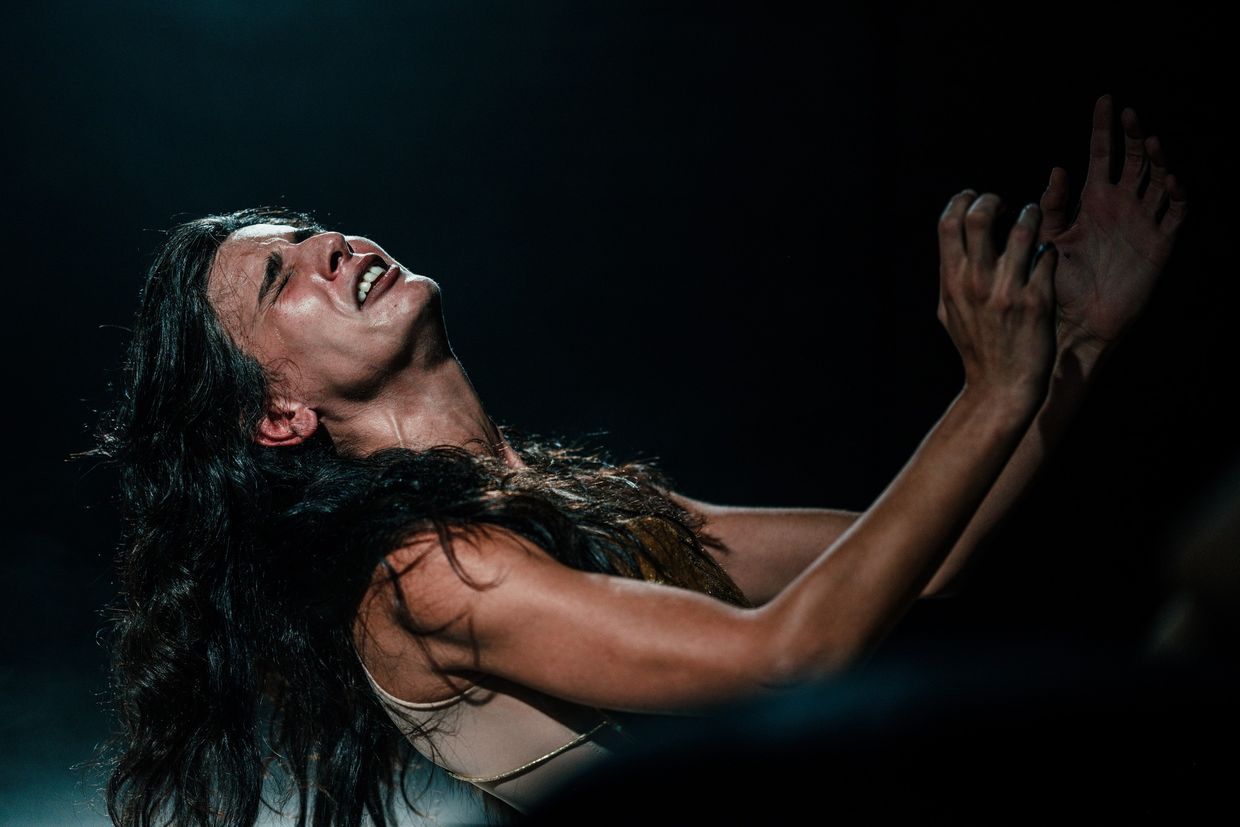
If the entire performance continued in this strain, it would have been a tour de force — unfortunately, the play’s second half takes a more modernist, abstract approach, with full audience participation. Vocal meditations are held, as well as a sing-a-long. A long monologue takes place questioning whether one can really feel and live without hands. The jumps between topics are confusing and unclear, when all of a sudden the play culminates in a tragedy allegedly based on real stories known, but never publicly repeated, about rape and murders of women by Georgian soldiers during the civil war. It is a brutal about face that gives the audience emotional whiplash, weakening the conclusion and the story itself, one that deserves to be publicised.
Despite these setbacks, the play is one that will continue to linger in the mind, long after leaving the theatre. The comparisons between classical Greek mythology and modern-day conflict help humanise the characters, and skillfully operate as a way to give women throughout history a voice. It also provides a good entrance into questioning what it means to live through a civil war as a woman, asking the audience, whether Georgian or otherwise, to examine their own memories or histories.
Jocasta: Raw Material premiered with English subtitles at Haraki Theatre on 27 March 2026. The next performances are scheduled for 23–24 April 2026.

Subscribe to the Culture Dispatch
A bi-weekly newsletter featuring film, book, and music recommendations from the Caucasus, handpicked by our team.